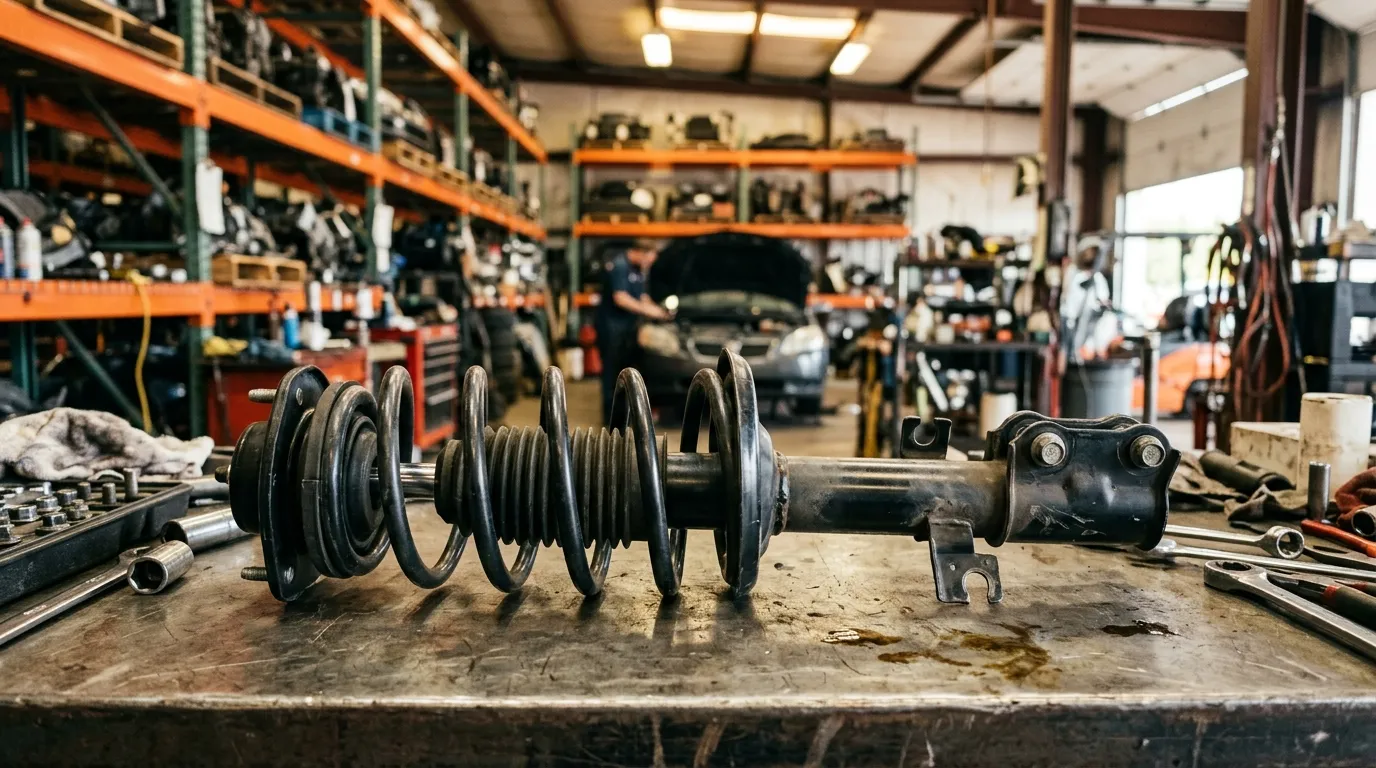
Vehicle price comparison
Dodge Challenger vs Kia K5 Strut prices
Saurabh Kumar
Co-Founder & CTO, Part Price Guide
Built the pricing pipeline that collects and normalizes used OEM part listings from salvage yards and online marketplaces across the US.
Ambika Sharma
Co-Founder & COO, Part Price Guide
12 years of project management and technical operations experience. Reviews price guides for sample size, fitment accuracy, and data freshness.
Price face-off
Median price comparison
Condition comparison
How does the price differ by part grade?
Market analysis
Why does the Dodge Challenger strut cost more?
A used Dodge Challenger strut carries a median asking price of $165, which is 10% higher than the Kia K5 at $150. Supply also plays a role: Dodge Challenger has 4,638 priced listings versus 476 for Kia K5, and more listings generally mean more choices and more competitive pricing.
Grade A (excellent condition) parts make up 78% of Dodge Challenger listings compared to 60% for the Kia K5, so buyers looking for top-condition units will find more options on the Dodge Challenger side.
The Dodge Challenger average ($215) runs 30% above its median ($165), indicating a tail of high-priced listings — likely low-mileage or remanufactured units pulling the average up.
Our guide covers 9 model years for the Dodge Challenger (2015–2023) but only 4 for the Kia K5 (2021–2025), so the Dodge Challenger data reflects a broader range of generations.
The Dodge Challenger strut is interchangeable across 13 model years versus just 6 for the Kia K5 — that wider compatibility window means more donor vehicles in salvage yards and tends to push prices lower.
At Grade B (good) condition, the Kia K5 is 31% cheaper ($132 vs $190) — the gap widens compared to the overall median difference.
The Dodge Challenger has 16 known trim variants compared to 3 for the Kia K5, which means buyers need to be more careful about matching the exact engine or drivetrain configuration on the Dodge Challenger.
Buyer's checklist
What to check before buying a used strut
- Check the shaft for pitting or rust — a pitted shaft will chew through the new seal and start leaking immediately.
- Look for oil weeping around the seal area. A light film is normal on older units; dripping means it's spent.
- Confirm whether the strut mount and spring are included, or if you'll need to transfer yours over.
- Match the part to your vehicle's suspension type (standard, sport, electronic/adaptive) — they're not interchangeable.
Full price guide
Dodge Challenger Strut
$30 – $690 · 4,638 listings
Full price guide
Kia K5 Strut
$45 – $430 · 476 listings
Common questions
Dodge Challenger vs Kia K5 strut FAQ
Is a used Dodge Challenger strut cheaper than a Kia K5?
Kia K5 has the lower median by $15 (10%). The Kia K5 strut ranges from $45 to $430 across 476 listings, while the Dodge Challenger ranges from $30 to $690 across 4,638 listings.
Can I use a Dodge Challenger strut in a Kia K5?
This comparison describes pricing, not interchangeability. Even when two parts share similar prices, they may require different engines, trims, electronics, or mounting points. Always match the seller's part number against your VIN before purchasing.
How many listings does this comparison cover?
This comparison draws from 4,638 priced Dodge Challenger listings and 476 priced Kia K5 listings — 5,114 in total.
How does condition grade affect the price?
Part condition significantly impacts price. Grade A (Excellent): Dodge Challenger $182 vs Kia K5 $150. Grade B (Good): Dodge Challenger $190 vs Kia K5 $132. Grade A parts are in excellent condition, B is good, and C is fair — always confirm grading criteria with the seller.
Are there different trim variants to choose from?
Yes. The Dodge Challenger strut has 16 trim variants and the Kia K5 has 3. Variants differ by engine size, drivetrain, or part number — matching the right variant is critical for proper fitment.
More comparisons