Engine price snapshot
- Low
- $478
- Average
- $2,984
- High
- $11,755
Part price guide
Saurabh Kumar
Co-Founder & CTO, Part Price Guide
Built the pricing pipeline that collects and normalizes used OEM part listings from salvage yards and online marketplaces across the US.
Ambika Sharma
Co-Founder & COO, Part Price Guide
12 years of project management and technical operations experience. Reviews price guides for sample size, fitment accuracy, and data freshness.
Part overview
Across 179 vehicle models, the typical used engine lists for $2,494, with model-level medians ranging from $478 to $11,755. Based on 181,123 priced salvage yard listings tracked by PartPriceGuide.
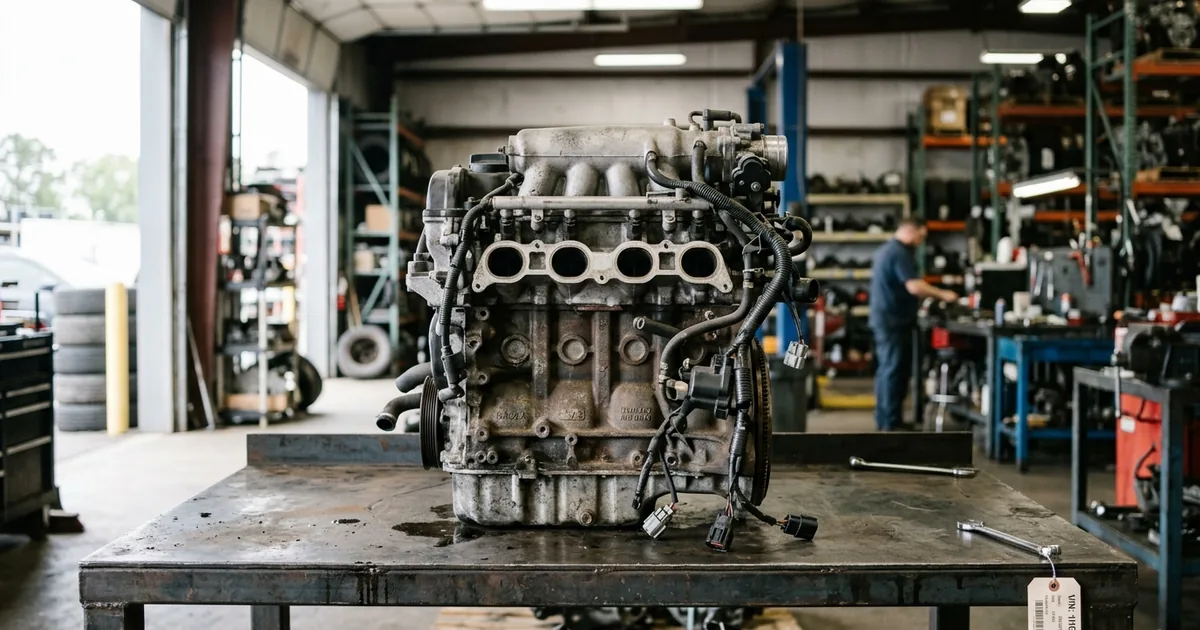
The engine is the motor that powers the vehicle — a complete assembly including the block, heads, and internal components.
Common reasons to replace: catastrophic internal failure (thrown rod, spun bearing), severe overheating damage, or high-mileage oil consumption.
A used engine costs $478 to $11,755, with a median asking price of $2,494. Based on price data across 179 vehicle-specific guides. Prices exclude shipping, core charges, and installation.
Condition comparison
| Grade | Price range | Relative range | Listings |
|---|---|---|---|
| Grade AClean / low wear | $499–$11,755 | 179 | |
| Grade BStandard used | $352–$11,804 | 178 | |
| Grade CVisible wear | $230–$10,000 | 115 | |
| Grade XUngraded | $400–$13,038 | 179 |
Median by grade
Median asking price by seller-reported condition grade · $478–$11,755 overall range
Vehicle-specific reference
179 of 184 guides currently priced
Price data updating
Price data updating
Price data updating
Price data updating
Price data updating
Compare by vehicle
Keep comparing
Common questions
Across 179 vehicle-specific guides with current pricing, used engine guide medians run from $478 to $11,755, with a typical median of $2,494. Condition grade, mileage, and fitment move the price within that range.
Usually, yes. Buying a used engine from a salvage yard or auto recycler typically costs a fraction of the new engine replacement cost at a dealership. Compare the grade-level medians above against any replacement quote you've received, and remember our figures exclude shipping and installation labor.
Salvage yards, junkyards, pick-and-pull lots, and online used parts marketplaces all sell used engines. Our index tracks asking prices nationally, so you can benchmark a local quote against the market range before you buy.
Expect to pay toward the upper half of the $478–$11,755 range for a grade-A engine with low mileage. Check the grade table above for the current grade-level medians, and confirm whether shipping and any core charge are included in the quote.
They can be — condition grade is the key. Grade A parts come off low-mileage vehicles with little to no damage, grade B is average, and grade C or ungraded parts are the gamble. Buy grade A or B from a yard that offers a return window or warranty, and confirm the mileage of the donor vehicle before paying. The grade-level medians above show what each tier should cost.
Yes. A motor is another name for a engine. Other common names include engine assembly. The prices on this page apply regardless of what it's called in your region or by your mechanic.
The engine block is the core structural casting that holds the cylinders, pistons, and crankshaft — it's what typically needs replacing after a bottom-end failure like a spun bearing or a cracked case. But most shops and salvage buyers prefer a complete used engine (a "long block" or full assembly) because it already has the head, timing components, and accessories fitted and known to run together. Buy just a bare block only if you or your machinist are doing a full rebuild with everything re-assembled to spec.
A used engine is pulled from a donor vehicle and sold with its original mileage and wear history; a crate engine is a new or professionally remanufactured unit built to spec and sold in a crate, with a warranty and known zero (or near-zero) hours. Crate engines cost significantly more than a salvage-yard used engine but carry far less risk since there's no unknown accident or maintenance history. Choose a used engine to save money on a running vehicle; choose a crate engine when reliability and warranty coverage matter more than price.
Buying a used engine is often the most cost-effective solution for major mechanical failures, providing significant savings over brand-new crate or remanufactured options. To ensure reliability, always verify the donor vehicle's recorded mileage and request a leak-down or compression test report from the salvage yard before purchase. Additionally, replacing critical wear components like the timing belt, water pump, and main seals prior to installation can maximize longevity.
Engine compatibility depends on the specific year, trim level, fuel delivery system, and emission standards of your vehicle, not just the model name. You should check the Hollander interchange code and verify the engine code stamped on the block to ensure exact fitment. Cross-referencing your vehicle's VIN with the seller ensures that wiring harnesses and mounting points match perfectly.
Inspect the oil cap and dipstick for milky residue, which indicates head gasket failure or water intrusion. Look closely for cracks in the engine block, inspect the spark plugs for heavy carbon build-up or oil fouling, and manually rotate the crankshaft to ensure the assembly turns smoothly without binding. Asking the yard for video footage of the engine running prior to removal provides extra peace of mind.
The lifespan of a used engine largely depends on the donor vehicle's maintenance history and its mileage at the time of removal. A low-mileage used engine that has undergone thorough inspection and proper installation can easily run for over 100,000 additional miles. Performing routine oil changes and replacing perishable sensors during installation helps preserve the engine's remaining operational life.
Installing a used engine requires specialized tools, including an engine hoist, heavy-duty jack stands, and advanced mechanical knowledge. The process involves disconnecting complex wiring harnesses, exhaust plumbing, drivetrain connections, and fluids, making it challenging for beginner mechanics. Most vehicle owners opt for professional installation to prevent accidental sensor damage or alignment issues.
Buying a used engine is generally much faster and less expensive than rebuilding a damaged engine, which involves costly machining and extended labor. However, if your original block is intact and rare, a custom rebuild offers guaranteed zero-mile internal components. For standard daily drivers, a verified used assembly from a reputable auto recycler delivers the best balance of cost and turnaround time.