Strut price snapshot
- Low
- $55
- Average
- $153
- High
- $621
Part price guide
Saurabh Kumar
Co-Founder & CTO, Part Price Guide
Built the pricing pipeline that collects and normalizes used OEM part listings from salvage yards and online marketplaces across the US.
Ambika Sharma
Co-Founder & COO, Part Price Guide
12 years of project management and technical operations experience. Reviews price guides for sample size, fitment accuracy, and data freshness.
Part overview
Across 179 vehicle models, the typical used strut lists for $126, with model-level medians ranging from $55 to $621. Based on 274,733 priced salvage yard listings tracked by PartPriceGuide.
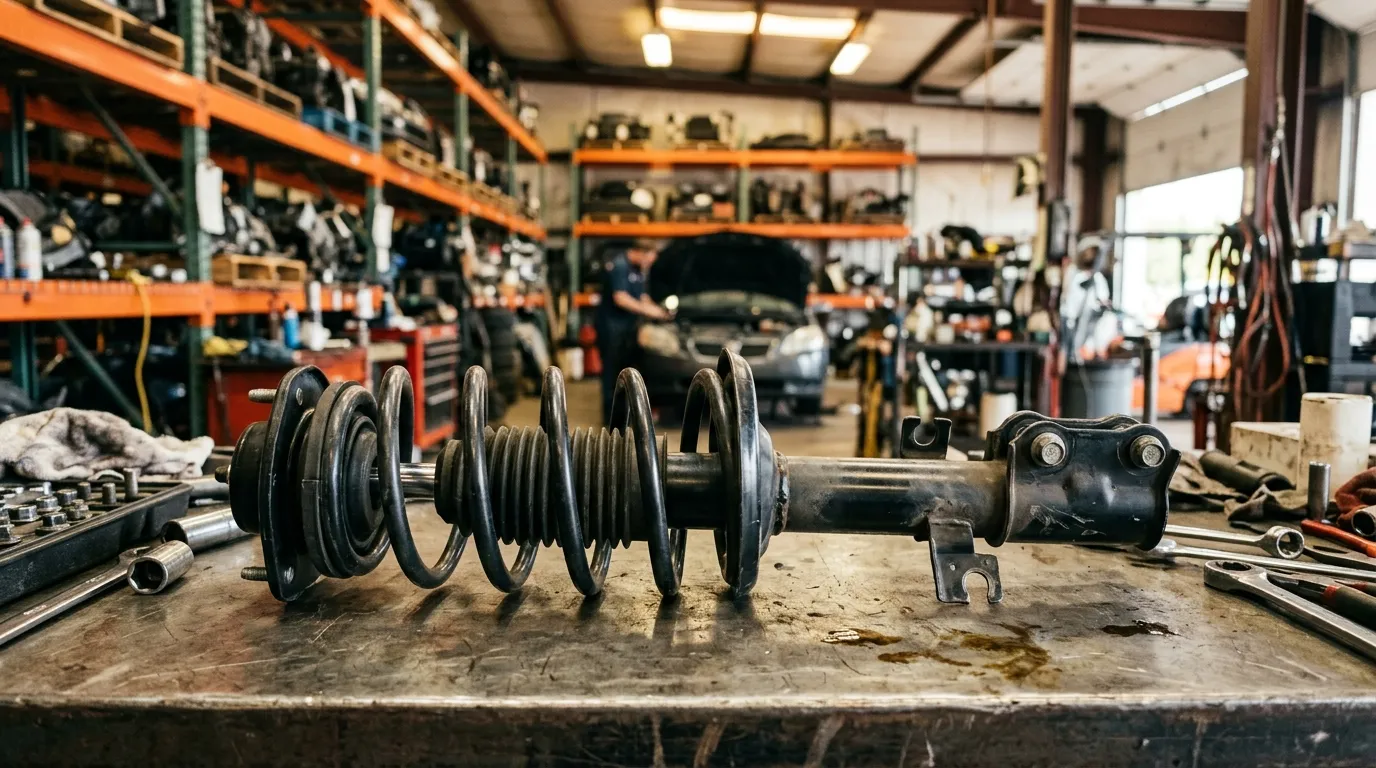
A strut is an integrated suspension component combining a shock absorber and coil spring to cushion bumps and maintain tire contact with the road.
Replaced due to leaking hydraulic fluid, clunking noises over bumps, excessive vehicle bouncing, or uneven tire tread wear.
A used strut costs $55 to $621, with a median asking price of $126. Based on price data across 179 vehicle-specific guides. Prices exclude shipping, core charges, and installation.
Condition comparison
| Grade | Price range | Relative range | Listings |
|---|---|---|---|
| Grade AClean / low wear | $60–$621 | 179 | |
| Grade BStandard used | $50–$650 | 176 | |
| Grade CVisible wear | $35–$217 | 113 | |
| Grade XUngraded | $50–$500 | 177 |
Median by grade
Median asking price by seller-reported condition grade · $55–$621 overall range
Vehicle-specific reference
179 of 184 guides currently priced
Price data updating
Price data updating
Price data updating
Price data updating
Price data updating
Compare by vehicle
Keep comparing
Common questions
Across 179 vehicle-specific guides with current pricing, used strut guide medians run from $55 to $621, with a typical median of $126. Condition grade, mileage, and fitment move the price within that range.
Usually, yes. Buying a used strut from a salvage yard or auto recycler typically costs a fraction of the new strut replacement cost at a dealership. Compare the grade-level medians above against any replacement quote you've received, and remember our figures exclude shipping and installation labor.
Salvage yards, junkyards, pick-and-pull lots, and online used parts marketplaces all sell used struts. Our index tracks asking prices nationally, so you can benchmark a local quote against the market range before you buy.
Expect to pay toward the upper half of the $55–$621 range for a grade-A strut with low mileage. Check the grade table above for the current grade-level medians, and confirm whether shipping and any core charge are included in the quote.
They can be — condition grade is the key. Grade A parts come off low-mileage vehicles with little to no damage, grade B is average, and grade C or ungraded parts are the gamble. Buy grade A or B from a yard that offers a return window or warranty, and confirm the mileage of the donor vehicle before paying. The grade-level medians above show what each tier should cost.
Yes. A strut assembly is another name for a strut. Other common names include macpherson strut, quick strut, suspension strut, complete strut assembly. The prices on this page apply regardless of what it's called in your region or by your mechanic.
No — a strut is a structural suspension assembly that combines the spring and damper and supports the vehicle's weight; a shock absorber only damps motion. Most modern front suspensions use struts; many rear suspensions use shocks. If your vehicle has struts, a bare shock won't fit.
A factory strut is a fixed-valving damper paired with a spring, engineered to stock ride height and stiffness for daily comfort. A coilover is an aftermarket performance assembly where the spring sits on a threaded sleeve around the damper, letting you adjust ride height (and often stiffness) — it's built for lowering and handling, not OEM replacement. Buy a used strut for a stock replacement; buy a coilover kit only if you're modifying the suspension.
Buying used OEM suspension struts can be an effective short-term or budget solution, especially when purchasing complete assembly units (quick struts) with springs included. Low-mileage salvage struts preserve original factory valving and ride height matching. However, inspecting for oil leaks and testing damping resistance before installation is critical.
Inspect the main hydraulic shaft for oil leaks, severe rust pitting, or bending that compromises seal integrity. Examine the upper strut mount bearing for smooth movement and check rubber spring seats and dust boots for cracking or tearing. Verifying that the coil spring has no structural cracks or heavy rust ensures proper spring rate support.
Yes, suspension mechanics strongly recommend replacing struts in left and right pairs across the same axle to maintain balanced vehicle handling. Installing a single replacement strut can cause uneven ride height, pulling during braking, and unpredictable cornering stability. Sourcing a matched pair from the same salvage vehicle provides consistent suspension performance.
Common signs of failing struts include excessive vehicle bouncing over bumps, pronounced nose-diving when braking, uneven tire tread wear, and hydraulic oil leaking down the body. You may also hear clunking noises over rough roads due to worn upper mount bearings. Replacing worn units restores ride comfort, steering response, and braking control.
Yes, buying a complete used strut assembly that includes the spring, top mount, and dampener is much safer and easier to install. It eliminates the need for dangerous coil spring compressors, allowing you to bolt the complete unit directly into the vehicle chassis. This saves significant installation time and reduces mechanical injury risks.
Yes, you should always get a professional wheel alignment immediately after installing a used suspension strut. Removing and reinstalling strut mounting bolts alters camber and toe angles, which can cause rapid tire wear and steering pull if left uncorrected. Setting alignment to factory specifications ensures safe handling and long tire life.