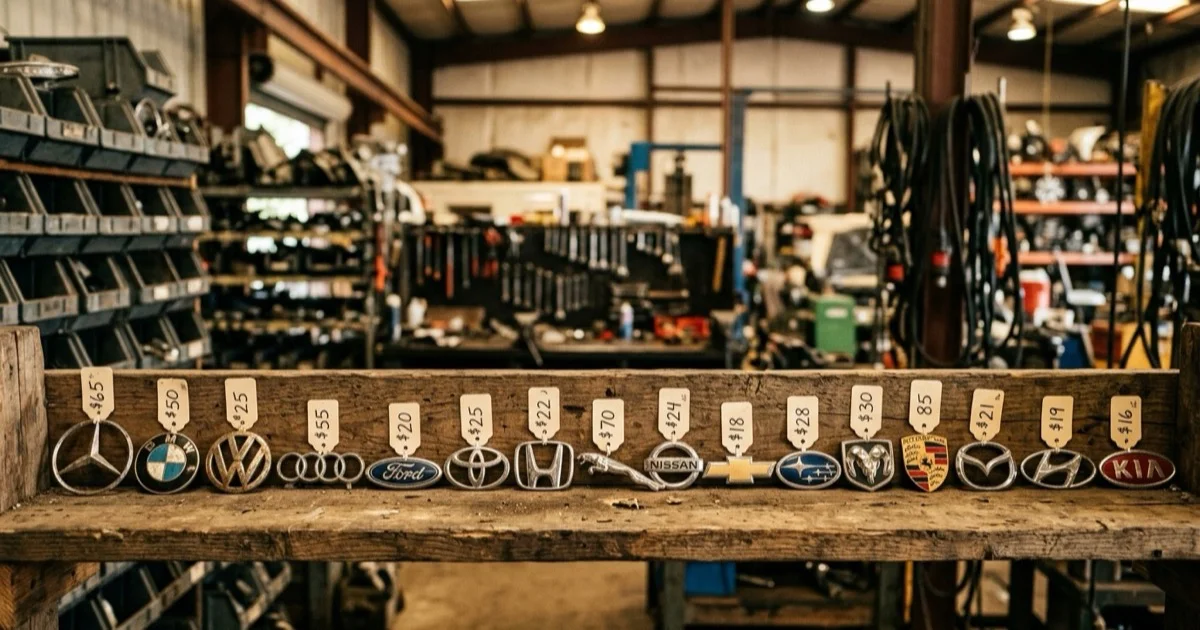
Lexus, Mercedes, and BMW have the most expensive used parts, while Mazda, Subaru, and Dodge have the cheapest. That ranking comes from PartPriceGuide's analysis of salvage yard pricing across 20 car brands and 55 part categories, covering over 80,000 priced listings nationwide.
The spread is large. A Lexus part runs $426 on average versus $144 for the same category Mazda part. Nearly 3x. That gap adds up fast when a repair needs multiple components.
- Most expensive brands: Lexus ($426), Tesla ($273), Mercedes ($261), Volkswagen ($249), BMW ($248)
- Cheapest brands: Mazda ($144), Subaru ($168), Dodge ($174), Nissan ($175), Chevy ($187)
- The luxury-to-economy gap is smaller in salvage yards than at dealer parts counters
- High-volume domestic brands (Ford, Chevy, Dodge) cluster in the affordable middle
- Data source: 55 part categories across 20 makes, based on median salvage yard asking prices
Complete Brand Ranking: Most to Least Expensive
We averaged the median salvage yard price across all available part categories for each make. Here's how every brand in the PartPriceGuide index stacks up:
| Rank | Brand | Avg Median Part Price | Models in Index | Data Points |
|---|---|---|---|---|
| 1 | Lexus | $426 | 1 | 5 |
| 2 | Tesla | $273 | 1 | 5 |
| 3 | Mercedes | $261 | 2 | 10 |
| 4 | Volkswagen | $249 | 2 | 10 |
| 5 | BMW | $248 | 2 | 10 |
| 6 | Toyota | $247 | 9 | 45 |
| 7 | Hyundai | $229 | 6 | 30 |
| 8 | Ford | $219 | 12 | 60 |
| 9 | Chrysler | $216 | 1 | 5 |
| 10 | Acura | $204 | 2 | 10 |
| 11 | Jeep | $198 | 5 | 25 |
| 12 | Honda | $196 | 8 | 40 |
| 13 | Kia | $196 | 7 | 35 |
| 14 | Ram | $195 | 1 | 5 |
| 15 | GMC | $188 | 5 | 25 |
| 16 | Chevy | $187 | 8 | 40 |
| 17 | Nissan | $175 | 8 | 40 |
| 18 | Dodge | $174 | 3 | 15 |
| 19 | Subaru | $168 | 5 | 25 |
| 20 | Mazda | $144 | 2 | 10 |
Why Luxury Brands Cost More
Three factors explain why Lexus, Tesla, and Mercedes sit at the top of the ranking:
Lower salvage supply. Luxury vehicles are less likely to be totaled in minor collisions because their higher value justifies more expensive repairs. Fewer totaled vehicles means fewer parts entering the salvage pipeline, which keeps prices high.
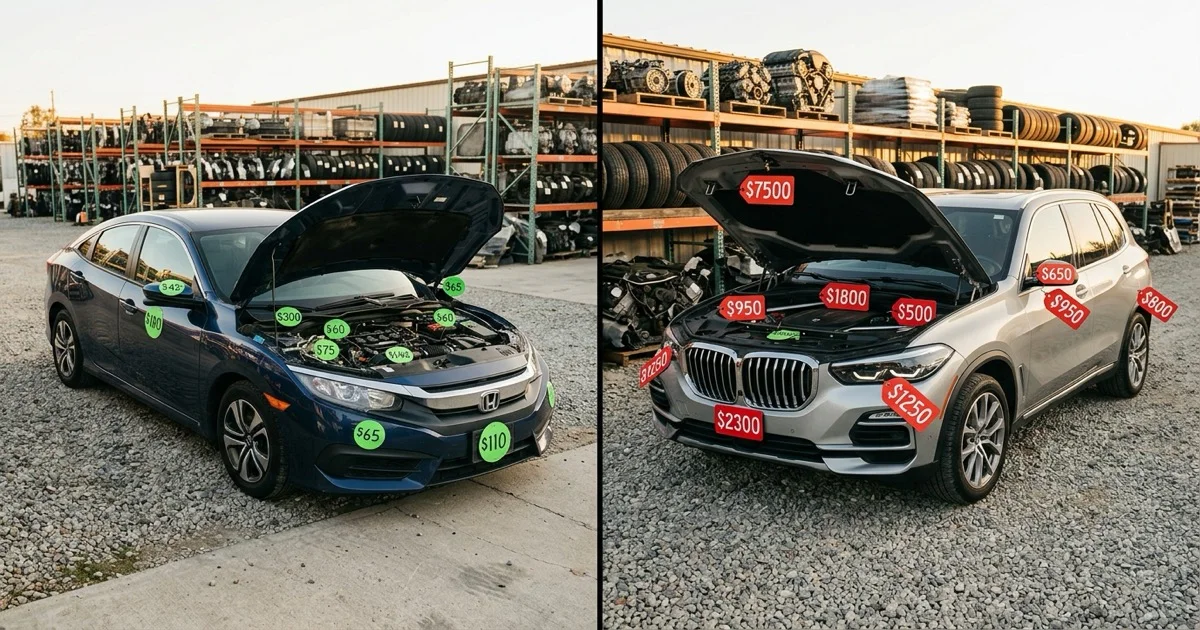
Higher donor vehicle value. Salvage yards price parts as a percentage of the donor vehicle's value. An engine from a $60,000 BMW X5 commands more than the same displacement engine from a $25,000 Chevy Equinox, even when the mechanical complexity is similar.
Specialized components. Luxury brands use more model-specific parts with limited cross-compatibility. A BMW X5 engine has a median price of $7,000 compared to $1,347 for a Chevy Equinox engine, a 5x spread driven partly by the complexity of BMW's turbocharged inline-six designs.
Tesla's #2 ranking reflects the EV factor: battery packs and drive units are expensive to source, and fewer Teslas have reached salvage yards compared to established brands with decades of vehicles in the junkyard pipeline.
Best Value Brands for Used Parts
The bottom five brands in our ranking represent the best value for used parts buyers:
Mazda ($144 average) benefits from shared Ford platforms on older models and relatively simple mechanical designs. With just 2 models in our index, Mazda parts are consistently the most affordable.
Subaru ($168 average) parts are plentiful in salvage yards, partly because Subaru's boxer engines and AWD systems create a steady supply of totaled vehicles. High crash rates in snowy climates where Subarus are popular keep inventory flowing.
Dodge ($174 average) and Nissan ($175 average) benefit from massive production volumes. More vehicles built means more eventually reach salvage yards, driving prices down through supply.
Chevy ($187 average) rounds out the affordable tier. With 8 models in our index and GM's platform sharing strategy, many Chevy parts interchange across multiple models and years, expanding the effective supply pool.
For buyers weighing their next vehicle purchase with long-term repair costs in mind, these five brands offer a real advantage. See our cost of ownership analysis for model-level rankings.
Where the Price Gap Hits Hardest
The luxury-economy price gap isn't uniform across all parts. It's widest on complex mechanical assemblies and narrowest on commodity components:
Largest gaps (luxury brands cost 3-5x more):
- Engines: BMW X5 engine at $7,000 vs commodity models under $1,000
- Transmissions: luxury models averaging $1,498 for Grade A vs $850 for Grade C
- Headlight assemblies: LED and adaptive units from luxury brands run $600+ vs $200-300 for standard halogen
Smallest gaps (under 2x difference):
- Brake calipers: $75 median across all brands, minimal luxury premium
- Water pumps: $76 median, largely commodity-priced regardless of brand
- Starters: $86 median, with minimal brand premium
The more engineered and brand-specific a component, the wider the premium. Generic wear items that share designs across the industry? Minimal price difference regardless of badge.
What This Means for Your Repair Budget
If you're buying parts for a vehicle from one of the top five most expensive brands, here's what helps:
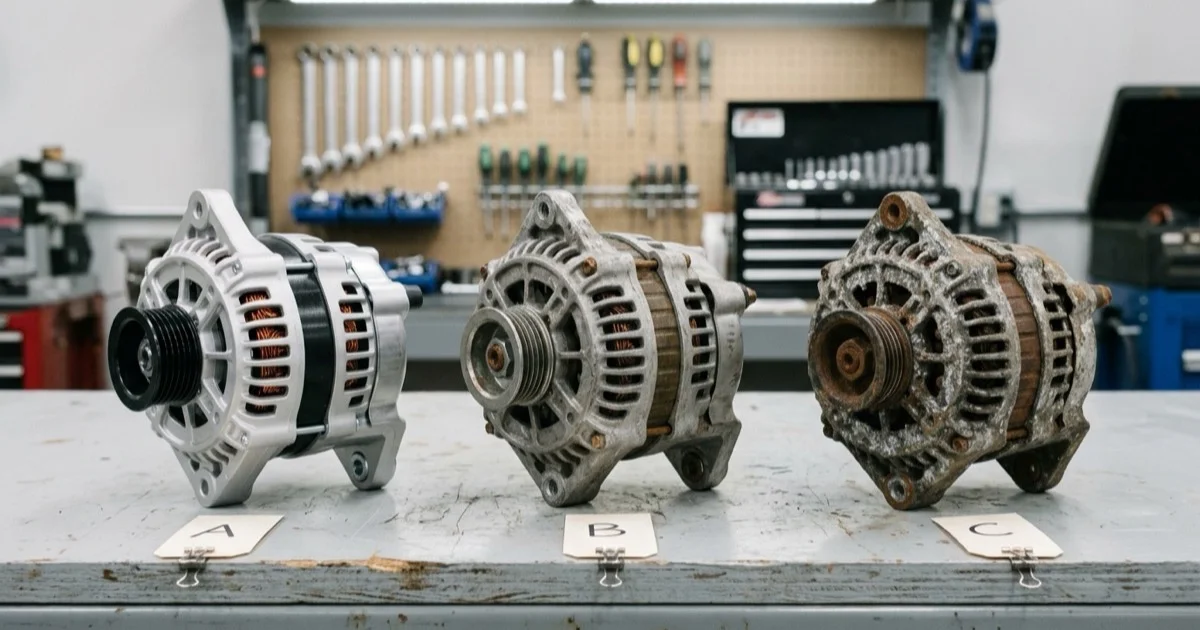
Shop Grade B and C parts. The grade discount on luxury brand parts can be big. A Grade C engine saves an average of 56% compared to Grade A, and on an already-expensive luxury engine, that discount can mean $1,000+ in savings.
Check cross-compatibility. Many luxury brands share platforms with mainstream siblings. Acura shares with Honda, Lexus with Toyota, and some BMW components interchange with other German brands. A compatible part from the mainstream sibling can sometimes fit at a lower price.
Compare against the full market. Use PartPriceGuide's price comparison tools to see how your specific part and model compares against the market average before you buy.
To see how part condition affects price across brands, check our A-Grade vs C-Grade part pricing analysis. For year-level depreciation patterns, see the model year price depreciation guide.