Grade A used parts cost 36% more than Grade C on average, but the premium is only worth paying on safety-critical and high-failure-rate components. That figure comes from PartPriceGuide's analysis of graded pricing across 39 part categories where A, B, and C grade data is available.
The real question isn't whether Grade A is better, it always is, but whether the price gap on a specific part justifies the quality difference for your situation.
- Average A-to-C discount: 36% across 39 part categories with graded pricing data
- Biggest dollar savings on Grade C: engines ($1,370 less), transmissions ($648 less), differentials ($215 less)
- Biggest percentage savings: exhaust manifolds (64% cheaper at Grade C), differentials (57%), engines (56%)
- Smallest Grade C discount: throttle bodies (6%), heater cores (18%), instrument clusters (20%)
- Grade B sits close to Grade A, averaging just 8% below A, not a strong middle-ground value
What A, B, and C Grades Actually Mean
Salvage yards grade used parts on a letter scale that reflects condition, mileage, and cosmetic quality:
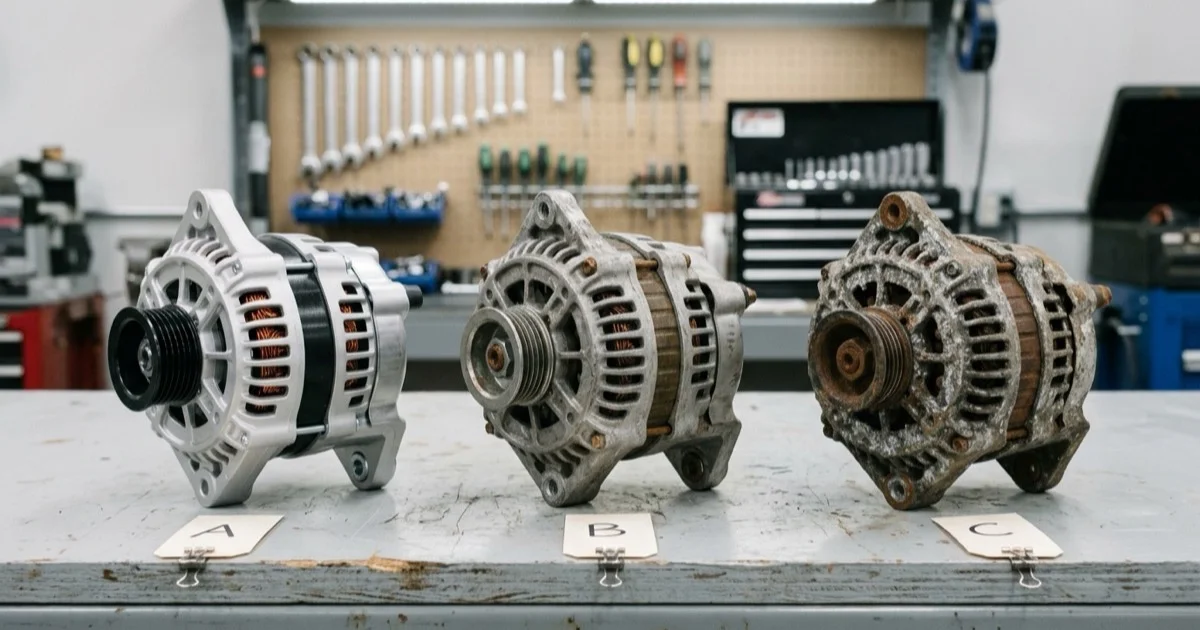
Grade A: Excellent condition. Low mileage on the donor vehicle (typically under 60,000 miles), no cosmetic damage, fully tested and functional. These parts are the closest thing to new you'll find in a salvage yard.
Grade B: Good condition. Moderate mileage (60,000 to 120,000 miles), minor cosmetic wear that doesn't affect function, and fully operational. The most common grade in salvage inventory.
Grade C: Fair condition. Higher mileage (120,000+ miles), visible cosmetic wear, and functional but with more expected remaining wear. These parts work but have less life left in them.
Grade X: Untested or ungraded. The yard hasn't inspected the part to assign a condition grade. Pricing on X-grade parts varies widely.
The specific mileage thresholds and inspection criteria vary between yards, so always ask what standards a specific salvage yard applies when they assign grades.
The Average Price Gap: 36% From A to C
Across all 39 part categories where we have A, B, and C grade pricing data, the average discount from Grade A to Grade C is 36%. But that average hides a massive range:
- Exhaust manifolds show a 64% gap ($250 Grade A vs $90 Grade C)
- Throttle bodies show only a 6% gap ($80 Grade A vs $75 Grade C)
The pattern: high-value mechanical assemblies with wide mileage-dependent wear characteristics show the biggest grade premiums. Commodity parts with binary failure modes (they work or they don't) show minimal grade premiums.
Grade B pricing tells an interesting story. On average, Grade B parts cost only about 8% less than Grade A. In several categories, alternators, fuel pumps, steering columns, Grade B actually costs *more* than Grade A, likely due to inventory availability rather than quality differences. This makes Grade B a poor value in most cases: you pay nearly Grade A prices without getting Grade A condition.
A vs B vs C Grade Prices for 39 Parts
Here is the complete graded pricing comparison across every part category in the PartPriceGuide index where all three grades have data:
| Part | Grade A Median | Grade B Median | Grade C Median | A-to-C Gap |
|---|---|---|---|---|
| Engine | $2,450 | $2,138 | $1,080 | 56% |
| Transmission | $1,498 | $1,195 | $850 | 43% |
| Turbocharger | $432 | $365 | $496 | -15% |
| Differential | $380 | $400 | $165 | 57% |
| Transfer Case | $312 | $243 | $207 | 34% |
| Steering Rack | $273 | $245 | $160 | 41% |
| Torque Converter | $250 | $372 | $300 | -20% |
| Exhaust Manifold | $250 | $250 | $90 | 64% |
| Drive Shaft | $211 | $195 | $127 | 40% |
| Air Bag | $210 | $221 | $130 | 38% |
| Car Radio | $188 | $183 | $100 | 47% |
| Front Seat | $184 | $187 | $145 | 21% |
| ABS Module | $182 | $173 | $108 | 41% |
| Radiator | $178 | $175 | $100 | 44% |
| Steering Column | $175 | $176 | $115 | 34% |
| Steering Wheel | $174 | $174 | $75 | 57% |
| AC Compressor | $162 | $133 | $100 | 38% |
| AC Condenser | $159 | $159 | $80 | 50% |
| Power Steering Pump | $157 | $171 | $75 | 52% |
| Engine Computer | $150 | $153 | $94 | 37% |
| Strut | $140 | $125 | $75 | 46% |
| Center Console | $137 | $140 | $95 | 31% |
| Axle Shaft | $136 | $136 | $75 | 45% |
| Intake Manifold | $126 | $146 | $100 | 21% |
| Control Arm | $125 | $135 | $65 | 48% |
| Fuel Pump | $125 | $138 | $80 | 36% |
| Instrument Cluster | $125 | $100 | $100 | 20% |
| Transmission Control Module | $125 | $125 | $79 | 37% |
| Heater Core | $116 | $116 | $95 | 18% |
| Window Regulator | $113 | $125 | $65 | 42% |
| Alternator | $109 | $116 | $75 | 31% |
| Rear View Mirror | $103 | $103 | $65 | 37% |
| Ignition Switch | $95 | $100 | $63 | 34% |
| Starter | $95 | $100 | $65 | 32% |
| Water Pump | $95 | $75 | $51 | 46% |
| Master Cylinder | $82 | $99 | $51 | 38% |
| Blower Motor | $81 | $99 | $61 | 25% |
| Throttle Body | $80 | $85 | $75 | 6% |
| Brake Caliper | $79 | $95 | $50 | 37% |
Where Grade C Saves You the Most Money
In absolute dollar terms, Grade C delivers the biggest savings on the most expensive parts:
Engines: $1,370 savings (Grade A $2,450 → Grade C $1,080). This is the single largest dollar saving available through grade selection. On a used engine purchase, choosing Grade C with a 90-day warranty can cut costs by more than half.
Transmissions: $648 savings (Grade A $1,498 → Grade C $850). The transmission market shows a clear staircase pattern: A, B, and C each occupy a distinct price band with roughly $300 between steps.
Differentials: $215 savings (Grade A $380 → Grade C $165). A 57% discount makes Grade C differentials one of the best values in the salvage market, since differentials are mechanically robust and tolerate high mileage well.
Exhaust manifolds: $160 savings with a 64% gap. Exhaust manifolds are cast iron or stainless steel components that rarely fail from wear; they crack from thermal stress or corrode. A Grade C manifold without cracks functions identically to Grade A.
When the A-Grade Premium Is Worth It
Despite the savings, Grade A is worth the premium in specific situations:
Safety-critical components. ABS modules ($182 Grade A vs $108 Grade C), air bags ($210 vs $130), and brake calipers ($79 vs $50) are components where condition directly affects occupant safety. The modest dollar premium on these parts buys meaningful peace of mind.
Components with progressive wear. Struts, control arms, and steering racks wear gradually with mileage. A Grade C strut with 150,000 miles may need replacement again within a year, making the Grade A unit at $140 vs $75 the better long-term investment.
When the vehicle has significant remaining life. If you plan to keep the car another 5+ years, Grade A parts with lower mileage will likely outlast the vehicle. If you're nursing the car through its final 1-2 years, Grade C makes more financial sense.
Electronic modules. Engine computers and transmission control modules either work or they don't, but Grade A units from lower-mileage donors are less likely to have heat damage or intermittent failures.
A Grading-Based Buying Strategy
Based on the pricing data, here is a practical framework:
Always buy Grade A: Air bags, ABS modules, brake components, steering racks. The premium is modest in dollar terms and the safety margin is significant.
Grade C is fine: Exhaust manifolds, throttle bodies, heater cores, blower motors, instrument clusters. These parts show minimal grade-based performance differences and the price gap is either small or the part is inherently durable.
Decide based on your timeline: Engines, transmissions, struts, alternators, starters. If keeping the vehicle 3+ years, lean toward Grade A. If selling or scrapping within 1-2 years, Grade C with a warranty delivers the best value.
For brand-level pricing context that affects all grades, see our ranking of most expensive car brands for parts. And for year-level pricing patterns, check how model year affects used part costs.