A used strut costs between $35 and $725, with a national median of $228. That range comes from salvage yard listings across 63 vehicle models in the PartPriceGuide index, not estimates or dealer quotes, but actual asking prices from yards across the country.
The price you pay depends primarily on your vehicle type and whether you buy a complete assembly or a bare strut. A compact sedan strut runs $120 to $180, while a full-size truck or luxury SUV strut can hit $400 to $725. [INTERNAL-LINK: anchor text "strut replacement cost" -> target /blog/repair-costs/strut-replacement-cost]
- Median used strut price: $228 across salvage yard listings from 63 vehicle models
- Range: $35 to $725 depending on vehicle type, condition, and assembly type
- Budget range: Compact sedans and mid-size cars ($120 to $180 per strut)
- Mid range: Crossovers and standard SUVs ($200 to $300 per strut)
- Premium range: Full-size trucks, luxury SUVs, and vehicles with electronic struts ($350 to $725)
- Complete assemblies cost more but save 1 to 2 hours of labor over bare struts
Overall Used Strut Pricing
Across all priced listings in the PartPriceGuide index covering 63 vehicle models, here is what used struts actually sell for:
| Metric | Price |
|---|---|
| Minimum | $35 |
| Median | $228 |
| Maximum | $725 |
For most common sedans and crossovers, expect to pay between $120 and $300 at a salvage yard. Full pricing data for your specific vehicle is available on our strut price lookup.
*Source: PartPriceGuide.com analysis of salvage yard listings across 63 vehicle models, August 2026.*
Prices by Vehicle Type
Strut pricing varies more by vehicle category than almost any other suspension part. Here is how the segments break down:
Compact and Mid-Size Sedans ($120 to $200)
Vehicles like the Honda Civic, Toyota Corolla, Hyundai Elantra, and Nissan Altima are the highest-volume segment in salvage yards. Their struts use standard twin-tube designs with moderate valving, and supply is abundant. Expect to pay $120 to $200 per strut.
These models also have the widest interchange compatibility. A Civic strut may fit several Honda and Acura models, which increases your sourcing options and keeps prices competitive.
Crossovers and Mid-Size SUVs ($200 to $350)
The Toyota RAV4, Honda CR-V, Ford Escape, and Chevy Equinox fall into this range. Their struts are longer and heavier-duty than sedan units to handle the extra vehicle weight. Supply is good but not as deep as sedans, which pushes the median higher.
AWD variants often use different rear strut specifications than FWD versions of the same model. Confirm your drivetrain configuration before purchasing.
Full-Size Trucks and SUVs ($300 to $500)
Trucks like the Ford F-150, Ram 1500, and Chevy Silverado use front struts (on independent front suspension models) that handle towing loads and rougher terrain. These struts have heavier valving, thicker shafts, and larger mounting hardware.
Supply is moderate, and the parts are model-specific with limited interchange, which keeps prices elevated.
Luxury and Performance Vehicles ($400 to $725)
This is where prices climb sharply. BMW, Mercedes, Audi, and Lexus models often use electronically adjustable struts with integrated sensors and wiring harnesses. A used adaptive strut from a BMW 5 Series or Mercedes E-Class can run $500 to $725 because the electronics must be functional for the part to work.
Performance vehicles (Mustang GT, Camaro SS, WRX STI) also command premiums due to specialized valving and spring rates that differ from base-model versions.
Browse all 63 models with real pricing data on our strut price index.
What Affects Used Strut Pricing
Four factors explain most of the price variation within a given vehicle model:
Complete Assembly vs. Bare Strut
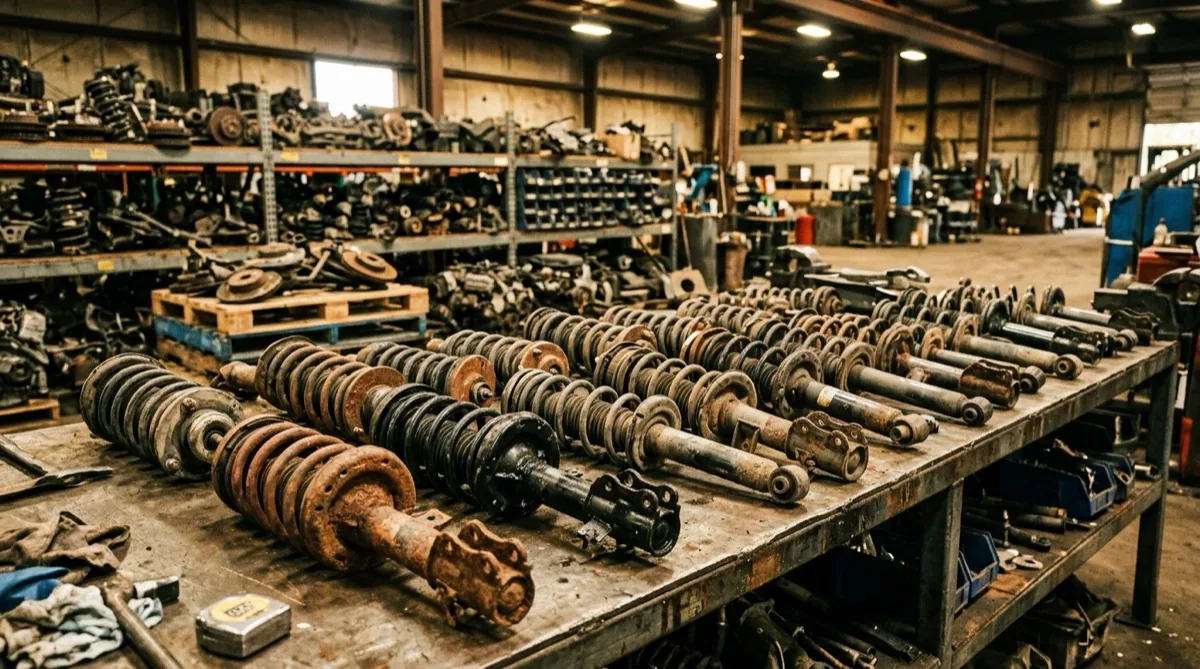
A complete strut assembly includes the strut cartridge, coil spring, upper mount, and bearing plate. A bare strut is just the shock absorber unit without the spring.
| Type | Typical Price Range | Pros | Cons |
|---|---|---|---|
| Complete assembly | $180 to $400 | Bolt-on replacement, no spring compressor needed, saves 1 to 2 hours | Higher upfront cost, heavier to handle |
| Bare strut | $35 to $200 | Lower cost, lighter to ship | Requires spring compressor (safety risk), more labor |
Mileage and Age
Struts degrade gradually. A unit from a vehicle with 40,000 miles has substantially more life remaining than one from a 120,000-mile vehicle. Most yards don't list exact mileage, but they do track the donor vehicle's odometer reading. Ask for it.
As a general benchmark, conventional struts last 50,000 to 100,000 miles. If the donor vehicle had 80,000 miles, you may only get 20,000 to 40,000 more miles from the used strut.
Condition and Leaking
The single biggest disqualifier for a used strut is oil leakage. A leaking strut has a failed seal and will not provide proper damping. Even a small weep around the shaft seal means the strut is near end of life.
Non-leaking struts in good cosmetic condition command full asking price. Units with surface rust but no leaks are negotiable, often 15 to 25 percent below list.
Electronic vs. Conventional
Electronic (adaptive) struts contain solenoid valves that adjust damping in real time. These are found on vehicles with adjustable suspension modes (Comfort, Sport, etc.). The electronics add $100 to $300 to the price over conventional struts for the same vehicle class, and they must be tested with a scan tool before purchase to confirm the solenoid responds correctly.
Where to Buy Used Struts
Used struts come from four main sources, each with different trade-offs:
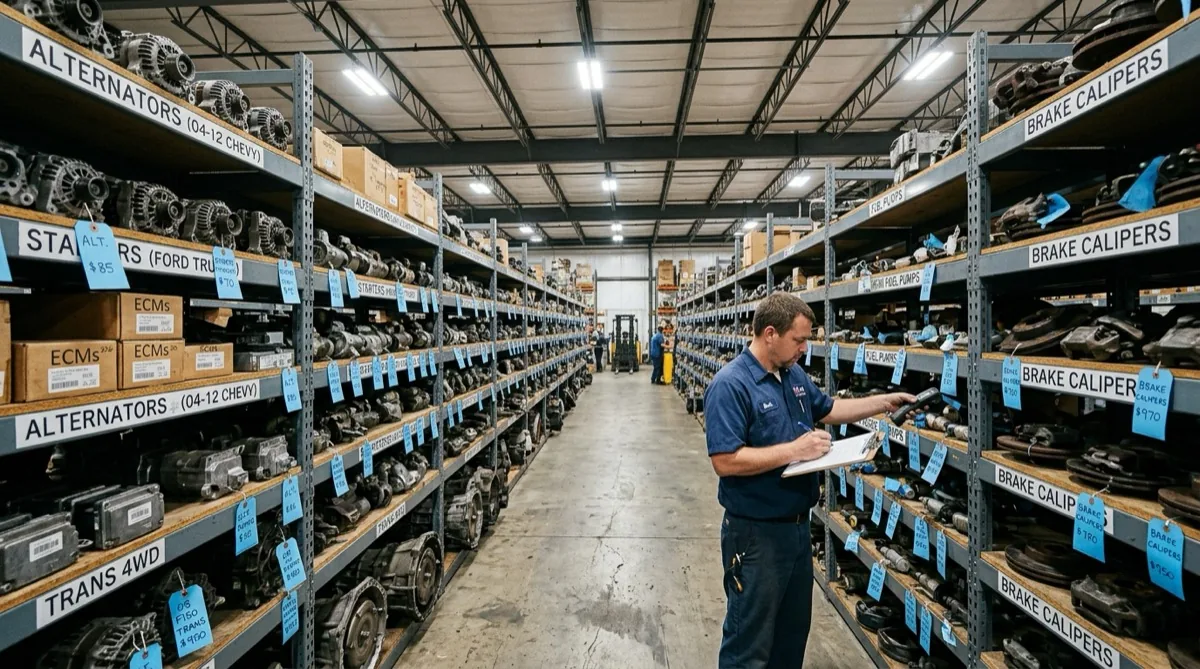
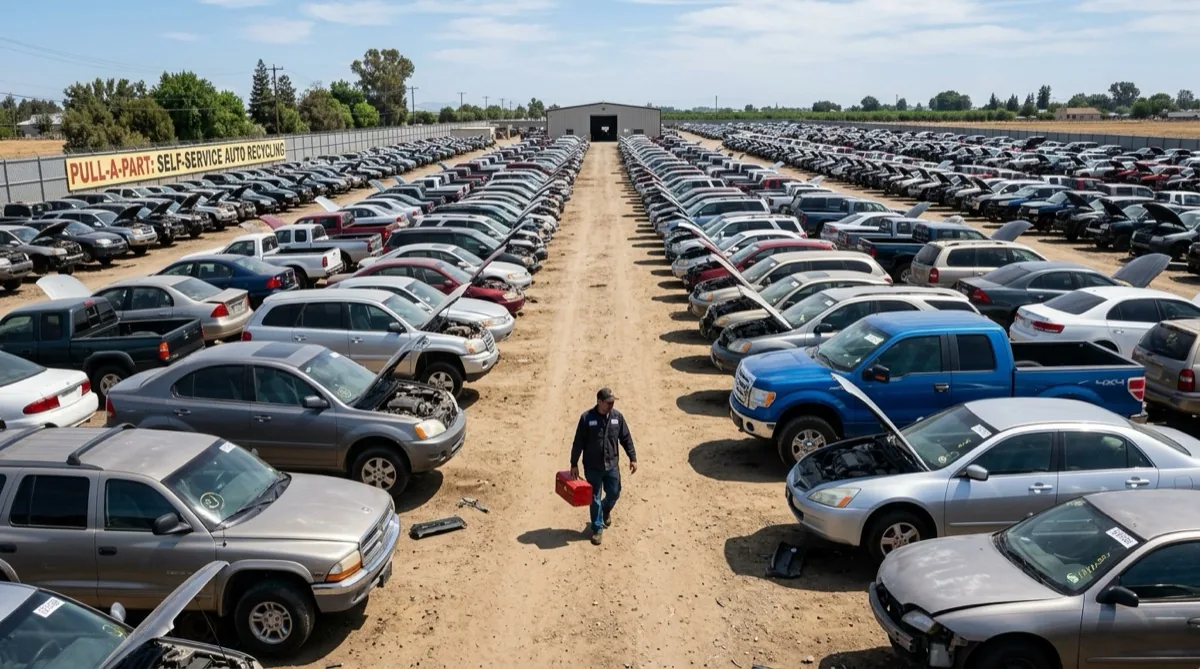
Self-service junkyards (Pull-A-Part, LKQ Pick Your Part) offer the lowest prices, typically 30 to 50 percent below full-service yards. You pull the strut yourself, which requires a spring compressor for some configurations. Expect to pay $35 to $150 for common models. The downside is no warranty and no pre-inspection by the yard.
Full-service salvage yards pull, inspect, and grade the struts for you. Prices run $150 to $400 for most models, and you get a 30 to 90 day warranty. This is where the bulk of listed inventory comes from. These yards typically test for oil leaks and grade condition before listing.
Online recyclers (Car-Part.com, eBay) provide the widest selection and are particularly useful for less common vehicles. Shipping adds $25 to $50 per strut due to size and weight. Factor in return shipping costs if the part arrives damaged or incorrect.
Local mechanic or installer networks sometimes source used parts through their own salvage contacts. Pricing is less transparent, but they handle fitment verification, which reduces the risk of buying the wrong part.
For all sources, confirm left vs. right side, front vs. rear position, and drivetrain compatibility (FWD, AWD, 4WD) before ordering.
[INTERNAL-LINK: anchor text "junkyard parts pricing guide" -> target /blog/price-analysis/how-much-do-junkyards-charge-for-parts]
Inspection Checklist Before Buying
Strut inspection takes about five minutes and prevents most bad purchases:
- Check for oil leaks. Run your finger along the strut body and shaft seal area. Any wetness or oily residue means a failed seal. This is the most common failure mode and a deal-breaker.
- Bounce test the shaft. Push the strut shaft down and release it. It should resist compression firmly and return smoothly without bouncing. A strut that rebounds freely or feels mushy has lost its damping ability.
- Inspect the upper mount and bearing. The mount should have no cracks, and the bearing plate should rotate smoothly. A worn bearing causes clunking noises over bumps and during turns.
- Look for housing rust and damage. Surface rust on the body is cosmetic. Deep pitting, dents, or cracks in the housing are structural and disqualify the part.
- Verify the spring condition (complete assemblies). The coil spring should have no cracks, no broken coils, and no signs of heat damage (discoloration). Measure the free height against spec if possible, as sagging springs cause ride height issues.
- Confirm the part number or interchange. Struts are position-specific (left front, right rear) and often differ between trim levels of the same model. Match the OEM part number or confirm interchange compatibility before paying.