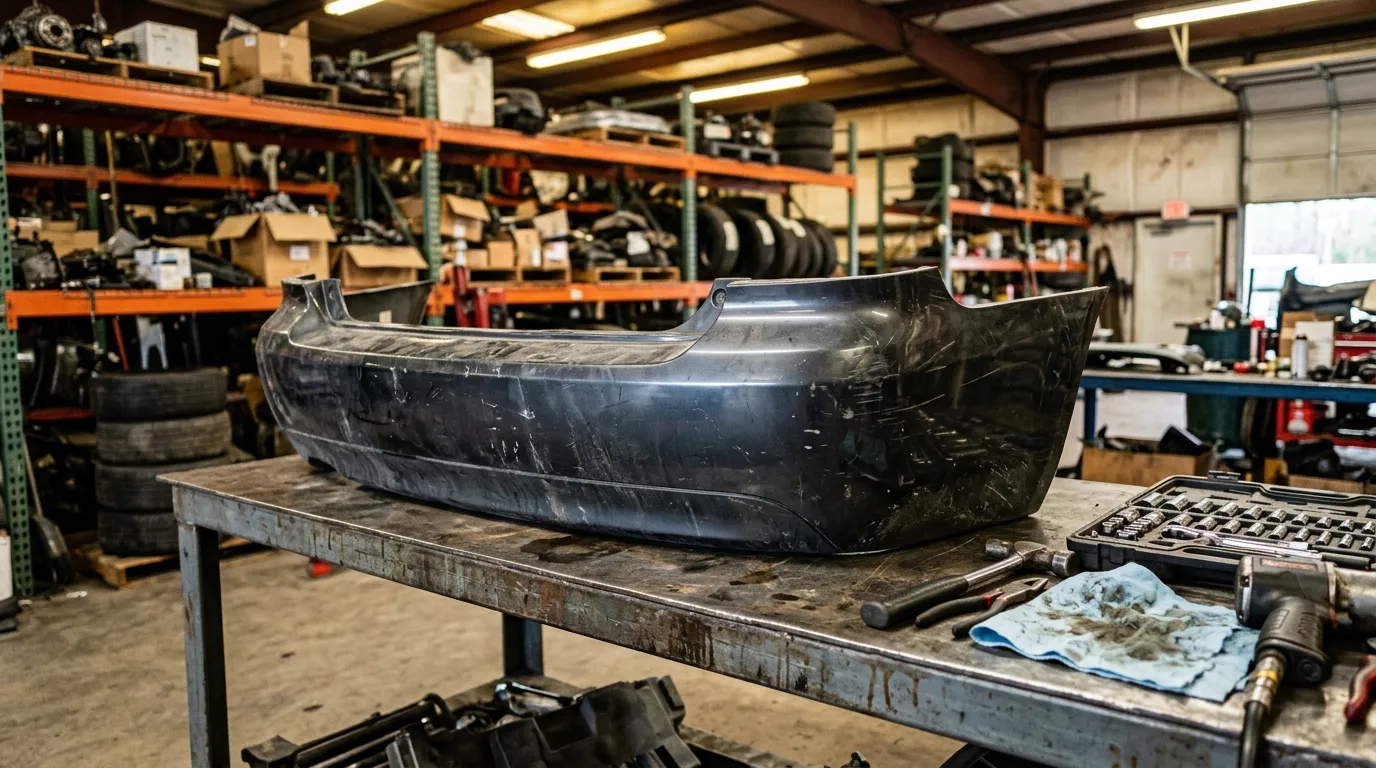
Vehicle price comparison
Ford Edge vs Lexus RX Rear Bumper prices
Price face-off
Median price comparison
Market analysis
Why does the Ford Edge rear bumper cost more?
A used Ford Edge rear bumper carries a median asking price of $261, which is 11% higher than the Lexus RX at $236. Supply also plays a role: Ford Edge has 2,496 priced listings versus 119 for Lexus RX, and more listings generally mean more choices and more competitive pricing.
Our guide covers 7 model years for the Ford Edge (2017–2026) but only 4 for the Lexus RX (2016–2025), so the Ford Edge data reflects a broader range of generations.
Buyer's checklist
What to check before buying a used rear bumper cover
- Check the area around the trailer hitch cutout (if any) for stress cracks.
- Confirm whether reflectors and parking sensors are included in the assembly.
- Inspect the step pad area on truck bumpers for cracking from UV exposure.
- Look for paint-match issues: rear bumpers fade differently than steel body panels because they're plastic.
Full price guide
Ford Edge Rear Bumper
$54 – $800 · 2,496 listings
Full price guide
Lexus RX Rear Bumper
$40 – $480 · 119 listings
Common questions
Ford Edge vs Lexus RX rear bumper FAQ
Is a used Ford Edge rear bumper cheaper than a Lexus RX?
Lexus RX has the lower median by $25 (11%). The Lexus RX rear bumper ranges from $40 to $480 across 119 listings, while the Ford Edge ranges from $54 to $800 across 2,496 listings.
Can I use a Ford Edge rear bumper in a Lexus RX?
This comparison describes pricing, not interchangeability. Even when two parts share similar prices, they may require different engines, trims, electronics, or mounting points. Always match the seller's part number against your VIN before purchasing.
How many listings does this comparison cover?
This comparison draws from 2,496 priced Ford Edge listings and 119 priced Lexus RX listings — 2,615 in total.
Are there different trim variants to choose from?
Yes. The Ford Edge rear bumper has 15 trim variants and the Lexus RX has 2. Variants differ by engine size, drivetrain, or part number — matching the right variant is critical for proper fitment.
More comparisons