Car AC repair costs $150 to $1,500 depending on the failed component. A refrigerant recharge, the cheapest and most common fix, runs $150 to $300. A compressor replacement, the most common major repair, costs $600 to $1,500 total. Low refrigerant from a slow leak accounts for roughly half of all "AC not blowing cold" complaints at repair shops, which means most AC problems land on the cheaper end of that range.
See also: how much do junkyards charge for parts.
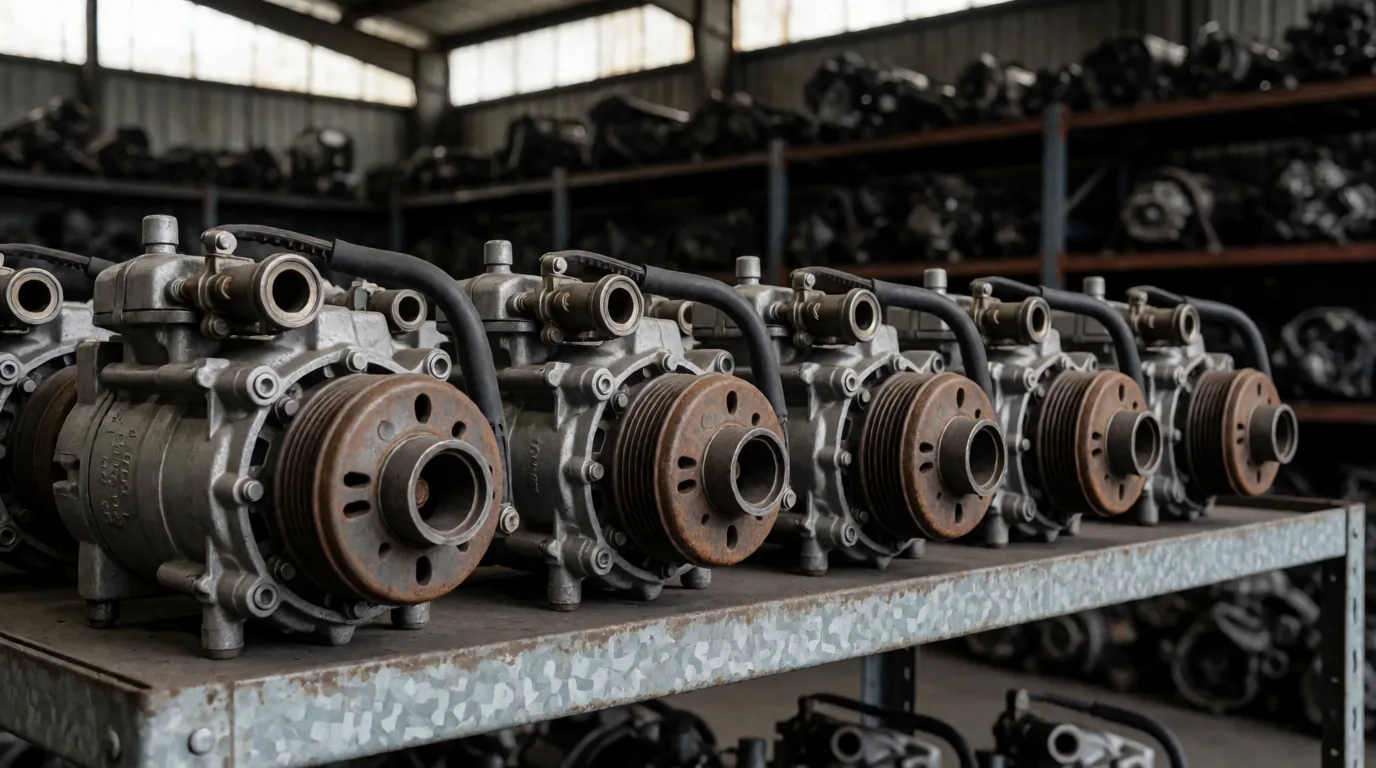
The AC compressor itself carries a $153 median price across 48,671 salvage yard listings in our index, and a replacement condenser runs $155 median across 36,771 listings. Sourcing either part from a salvage yard cuts the repair bill by 40–60% compared to new aftermarket pricing. The catch is that AC work requires specialized equipment: a recovery machine, vacuum pump, and manifold gauges that most DIYers do not own.
- Refrigerant recharge: $150–$300. The most common fix, covers roughly half of all AC complaints
- Compressor replacement: $600–$1,500 total ($153 median used, $300–$700 new, plus $200–$500 labor and $150–$300 recharge)
- Condenser replacement: $400–$900 total ($155 median used, $200–$450 new, plus $150–$300 labor and recharge)
- Evaporator replacement: $800–$1,200 total. The most expensive fix because dashboard removal is often required
- R-1234yf refrigerant costs 3–5x more than R-134a — vehicles made after 2017 increasingly use R-1234yf
- Dataset: 48,671 priced AC compressor listings and 36,771 condenser listings, August 2026
What AC Repair Costs
AC repairs break into six categories. The table below ranks them from cheapest to most expensive. Labor rates assume an independent shop charging $110–$150 per hour, consistent with RepairPal national estimates.
| Repair | Part Cost | Labor | Recharge | Estimated Total |
|---|---|---|---|---|
| Refrigerant recharge only | $30–$80 (refrigerant) | $80–$150 | Included | $150–$300 |
| Leak detection + seal | $20–$50 (sealant/dye) | $100–$200 | $150–$300 | $200–$450 |
| Expansion valve / orifice tube | $30–$80 | $100–$200 | $150–$300 | $280–$550 |
| Condenser replacement | $155 median used, $200–$450 new | $150–$250 | $150–$300 | $400–$900 |
| Compressor replacement | $153 median used, $300–$700 new | $200–$500 | $150–$300 | $600–$1,500 |
| Evaporator replacement | $100–$250 | $500–$800 | $150–$300 | $800–$1,200 |
Every AC repair that opens the sealed refrigerant system requires a full recharge afterward. That $150–$300 recharge cost appears in every row except the first because the recharge itself is the first repair. Shops cannot legally vent refrigerant into the atmosphere per EPA Section 608 regulations, so any repair that breaks open a line requires recovery, evacuation, vacuum testing, and refilling.
How Car AC Works (and Why It Fails)
Understanding the AC system's five components explains why certain repairs cost more than others and helps you evaluate a shop's diagnosis.
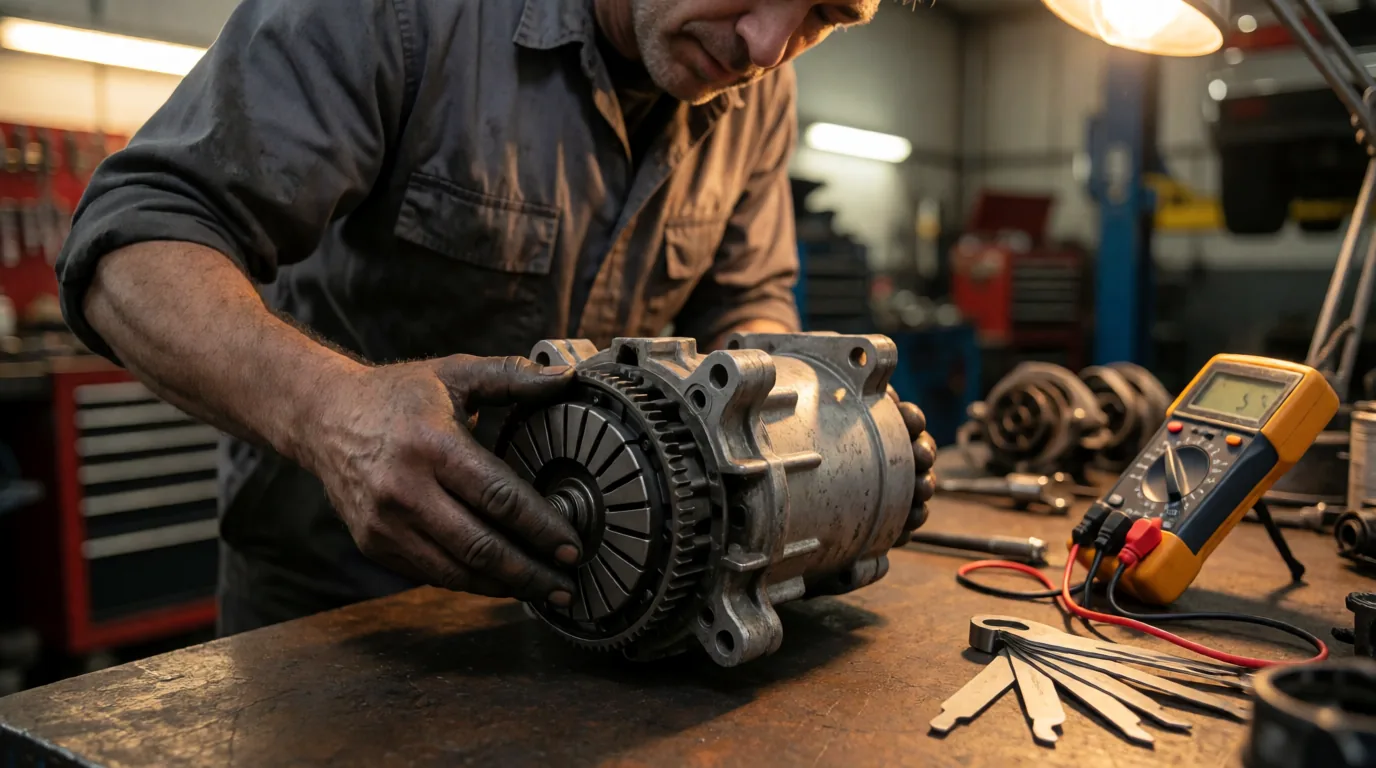
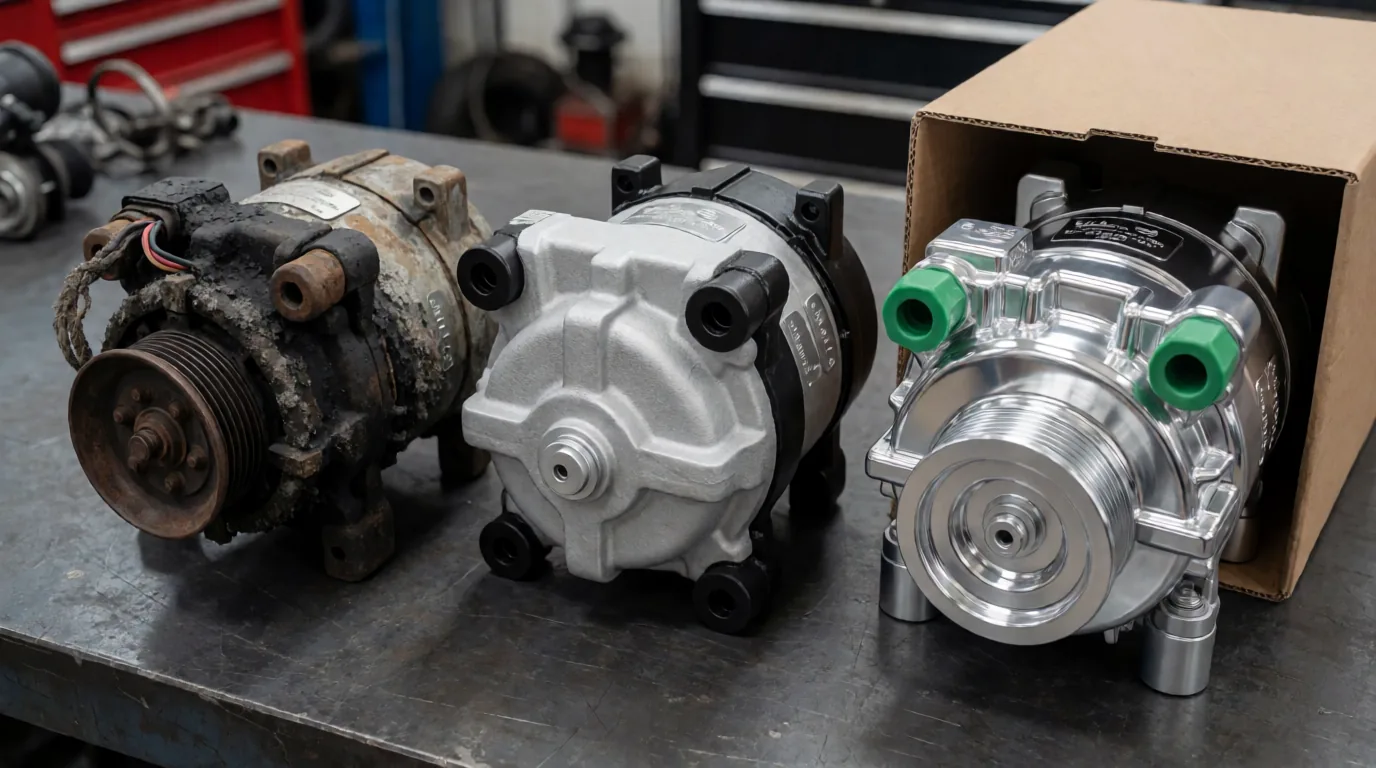
Compressor. The engine-driven pump that pressurizes refrigerant gas. It is the most expensive component to replace because it sits deep in the engine bay behind the serpentine belt, and a failed compressor often sends metal debris through the entire system. When a compressor fails, shops recommend replacing the receiver-drier and flushing the lines to prevent the debris from destroying the new compressor. A used compressor from a salvage yard runs $153 median versus $300–$700 for new aftermarket.
For a detailed breakdown, see our used AC compressor pricing guide.
Condenser. The radiator-like component mounted in front of the engine radiator. It dissipates heat from the high-pressure refrigerant. Condensers fail from road debris impact (rock chips puncture the thin aluminum tubes) or corrosion. Replacement is moderately expensive because the front bumper cover and sometimes the radiator must come out first. A used condenser runs $155 median across 36,771 listings.
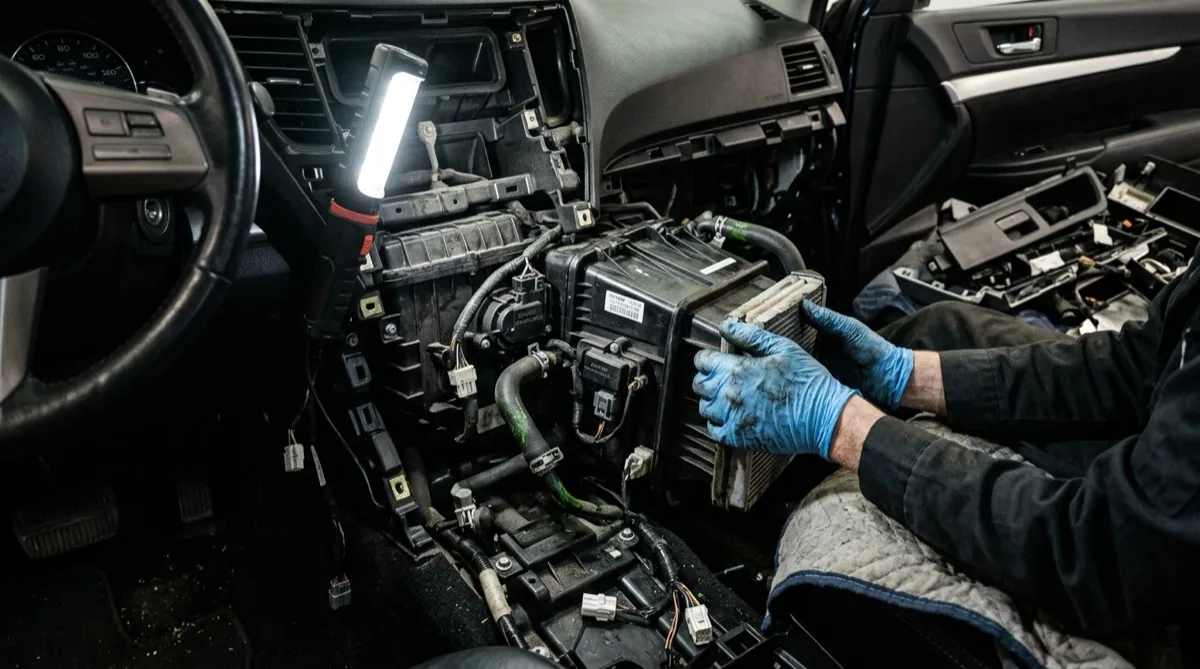
Evaporator. The component hidden inside the dashboard that absorbs heat from cabin air. Evaporators rarely fail outright, but they develop pinhole leaks from corrosion over time. The part itself is cheap ($100–$250), but accessing it requires partial or full dashboard removal on most vehicles, which is why labor dominates the $800–$1,200 total.
Expansion valve / orifice tube. The metering device that controls refrigerant flow into the evaporator. These are inexpensive parts ($30–$80) with moderate labor because they sit between the condenser and evaporator in the refrigerant lines. A clogged orifice tube restricts refrigerant flow and produces weak cooling even when the system is fully charged.
Refrigerant. R-134a has been the standard since 1994, but vehicles manufactured after 2017 increasingly use R-1234yf, a newer refrigerant with lower global warming potential. R-1234yf costs 3–5x more than R-134a per pound ($60–$120 per pound versus $15–$30), which significantly increases the recharge cost on newer vehicles.
How Much AC Diagnosis Costs
Professional AC system diagnosis runs $100 to $200, depending on the shop and how deep the investigation goes. The diagnosis involves connecting manifold gauges to the high and low service ports, reading system pressures, checking compressor clutch engagement, and often injecting UV dye to trace leaks.
| Diagnosis Level | Cost | What You Get |
|---|---|---|
| Visual inspection and pressure check | $50–$100 | High/low side pressure readings, compressor engagement check |
| Full diagnosis with UV dye | $100–$200 | Pressure test, UV dye injection, leak location, component identification |
| Electronic leak detection | $100–$200 | Sniffer tool traces refrigerant leaks at individual fittings and seals |
What the pressures tell you. A technician with ASE certification can diagnose most AC problems from the gauge readings alone:
- Both sides low: Low refrigerant, usually from a leak
- High side high, low side low: Restriction in the system (clogged orifice tube or expansion valve)
- Both sides high: Condenser not dissipating heat (blocked airflow, failed condenser fan, or overcharged system)
- Both sides equal: Compressor not pumping (failed clutch, internal failure, or electrical issue)
These pressure patterns narrow the diagnosis before any parts come off the vehicle, which is why the $100–$200 diagnostic fee is worth paying before authorizing expensive repairs.
Six Causes Ranked by Cost
1. Low Refrigerant / Slow Leak ($150–$300)
The most common cause of weak AC. Refrigerant does not get "used up" during normal operation. If the system is low, it has a leak somewhere. A recharge restores cold air immediately, but if the leak is not found and fixed, the system will lose charge again over weeks or months.
Most slow leaks occur at O-ring seals on hose fittings, the Schrader valve caps on the service ports, or the compressor shaft seal. A shop injects UV dye during the recharge, then inspects the system with a UV light at a follow-up visit to pinpoint where the dye has seeped out. Replacing a leaking O-ring or Schrader valve adds $20–$100 to the recharge cost.
DIY recharge kits ($30–$60 from any auto parts store) work as a temporary fix but skip the leak test, the vacuum pull, and the precise charge measurement that a professional recharge includes. If the system has a larger leak, a DIY top-off may last only days.
2. Expansion Valve or Orifice Tube ($200–$400)
A clogged or stuck expansion valve restricts refrigerant flow to the evaporator. The symptom is inconsistent cooling: the AC blows cold briefly after startup, then gradually warms up, or cools well at idle but poorly at highway speed. The part costs $30–$80 and labor runs $100–$200, plus the mandatory system recharge.
Vehicles use either an expansion valve (adjustable, usually on imports and newer domestics) or an orifice tube (fixed restriction, common on older GM and Ford vehicles). An orifice tube is cheaper to replace because it simply slides out of the liquid line, while an expansion valve requires more disassembly.
3. Condenser Replacement ($400–$900)
The condenser sits at the front of the vehicle, directly behind the bumper cover and in front of the radiator. Its position makes it vulnerable to rock impacts, salt corrosion, and minor collision damage. A punctured condenser leaks refrigerant rapidly, often emptying the system in a day or two.
Replacement involves removing the front bumper cover, disconnecting refrigerant lines, unbolting the condenser from its mounting brackets, and often temporarily repositioning the radiator. A used condenser runs $155 median from a salvage yard. New aftermarket condensers cost $200–$450 depending on the vehicle. Labor runs $150–$250, and the system recharge adds $150–$300 on top.
For broader pricing context, see our used auto parts price guide.
4. Compressor Replacement ($600–$1,500)
The compressor is the most common major AC repair. It fails from internal wear (piston rings, reed valves, bearings), clutch failure (the electromagnetic clutch that engages the compressor), or catastrophic seizure from running the system without enough refrigerant or oil.
A failed compressor often contaminates the entire system. When internal components break apart, metal shavings circulate through the lines, condenser, and evaporator. A responsible shop will flush all lines, replace the receiver-drier (or accumulator), and install a new orifice tube or expansion valve along with the compressor. This "compressor kit" approach adds $50–$150 in extra parts but prevents the new compressor from being destroyed by debris from the old one.
A used compressor from a salvage yard costs $153 median across 48,671 listings. New aftermarket compressors run $300–$700 depending on the vehicle.
For a detailed breakdown, see our guide on whether a used AC compressor is worth it.
5. Evaporator Replacement ($800–$1,200)
The evaporator is the rarest failure and the most expensive to fix, not because the part is costly but because accessing it requires removing a substantial portion of the dashboard and HVAC housing on most vehicles. The evaporator itself costs $100–$250, but labor runs $500–$800 for the 5–8 hours of dashboard teardown and reassembly.
Evaporator leaks develop from internal corrosion caused by moisture and organic acids that accumulate on the evaporator surface over years. The symptom is a gradual loss of refrigerant with no visible external leak, because the refrigerant escapes into the HVAC housing and vents into the cabin.
For a related repair with similar dashboard-removal labor, see our heater core replacement cost guide.
6. Blend Door Actuator or Blower Motor ($150–$500)
These components are not part of the refrigerant system, but they produce the same symptom: warm air from the vents.
A blend door actuator ($50–$150 part, $100–$300 labor) is a small electric motor that controls the door mixing hot and cold air in the HVAC box. When it fails, the door sticks in the "heat" position and warm air comes out even though the AC system is producing cold refrigerant. The telltale sign is a clicking or tapping noise behind the dashboard when you change the temperature setting.
A blower motor failure produces no airflow at all, not warm air. If the vents blow nothing on any speed, the blower motor ($50–$150) or blower motor resistor ($20–$50) is the cause, not the AC system. This is often the cheapest fix in the list and one of the easier DIY jobs since the blower motor is usually accessible under the passenger-side dashboard without major teardown.
Can You Fix Car AC Yourself?
Most AC repairs require professional equipment that costs more than the repair itself. The recovery machine alone runs $2,000–$5,000, and federal law (EPA Section 608) requires EPA-certified technicians to handle refrigerant. That said, two AC-related repairs are realistic DIY jobs.
DIY refrigerant top-off ($30–$60). Recharge kits from auto parts stores include a can of R-134a with a hose and pressure gauge. You connect to the low-side service port and add refrigerant while the engine runs and AC is set to max. This is a temporary fix if the system has a leak, but it restores cold air immediately and buys time to schedule a proper repair. It does not work on R-1234yf systems (2017+ vehicles), which require professional equipment.
Blend door actuator replacement ($50–$150 parts only). The actuator is a small module behind the dashboard, usually accessible by removing the glove box or a lower dash panel. It is held by 2–3 screws and a single electrical connector. The hardest part is identifying which actuator has failed (most vehicles have 2–4 of them). Budget 1–2 hours for a first attempt. Multiple YouTube tutorials exist for most common vehicles.
Skip the DIY if the repair involves opening refrigerant lines. Any repair that disconnects a hose, removes the compressor, or replaces the condenser requires proper refrigerant recovery, a vacuum pull to remove moisture, and a precise recharge by weight. Releasing refrigerant into the atmosphere is illegal and results in fines up to $44,539 per day per violation under the Clean Air Act.
For used AC compressor pricing, see our comparison of used vs new options.