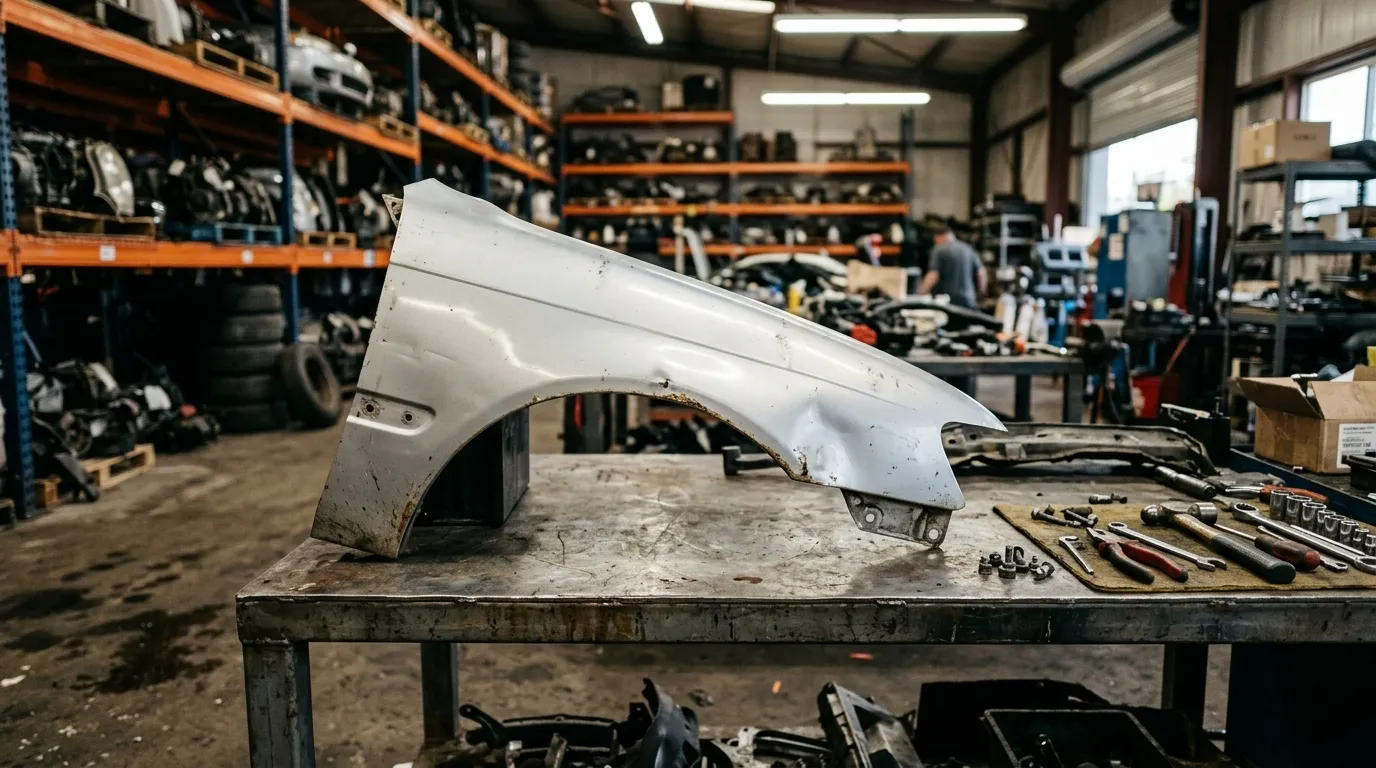
Vehicle price comparison
Ford F150 vs BMW X5 Fender prices
Price face-off
Median price comparison
Market analysis
Why does the BMW X5 fender cost more?
A used BMW X5 fender carries a median asking price of $487, which is 39% higher than the Ford F150 at $299. Supply also plays a role: Ford F150 has 1,704 priced listings versus 1,145 for BMW X5, and more listings generally mean more choices and more competitive pricing.
The Ford F150 average ($429) runs 43% above its median ($299), indicating a tail of high-priced listings — likely low-mileage or remanufactured units pulling the average up.
Buyer's checklist
What to check before buying a used fender
- Check bolt holes for elongation — this means the panel was adjusted after impact and may not line up cleanly.
- Run your hand along the inside surface to feel for body filler. Filler means the fender was repaired, not original.
- Confirm whether the fender liner and side marker light are included.
- Match the paint code stamped on the driver's door jamb — even the right color name can vary by production code.
Full price guide
Ford F150 Fender
$50 – $1,818 · 1,704 listings
Full price guide
BMW X5 Fender
$45 – $1,394 · 1,145 listings
Common questions
Ford F150 vs BMW X5 fender FAQ
Is a used Ford F150 fender cheaper than a BMW X5?
Ford F150 has the lower median by $188 (39%). The Ford F150 fender ranges from $50 to $1,818 across 1,704 listings, while the BMW X5 ranges from $45 to $1,394 across 1,145 listings.
Can I use a Ford F150 fender in a BMW X5?
This comparison describes pricing, not interchangeability. Even when two parts share similar prices, they may require different engines, trims, electronics, or mounting points. Always match the seller's part number against your VIN before purchasing.
How many listings does this comparison cover?
This comparison draws from 1,704 priced Ford F150 listings and 1,145 priced BMW X5 listings — 2,849 in total.
Are there different trim variants to choose from?
Yes. The Ford F150 fender has 2 trim variants and the BMW X5 has 4. Variants differ by engine size, drivetrain, or part number — matching the right variant is critical for proper fitment.
More comparisons