Fender price snapshot
- Low
- $125
- Average
- $309
- High
- $749
Part price guide
Saurabh Kumar
Co-Founder & CTO, Part Price Guide
Built the pricing pipeline that collects and normalizes used OEM part listings from salvage yards and online marketplaces across the US.
Ambika Sharma
Co-Founder & COO, Part Price Guide
12 years of project management and technical operations experience. Reviews price guides for sample size, fitment accuracy, and data freshness.
Part overview
Across 179 vehicle models, the typical used fender lists for $294, with model-level medians ranging from $125 to $749. Based on 179,017 priced salvage yard listings tracked by PartPriceGuide.
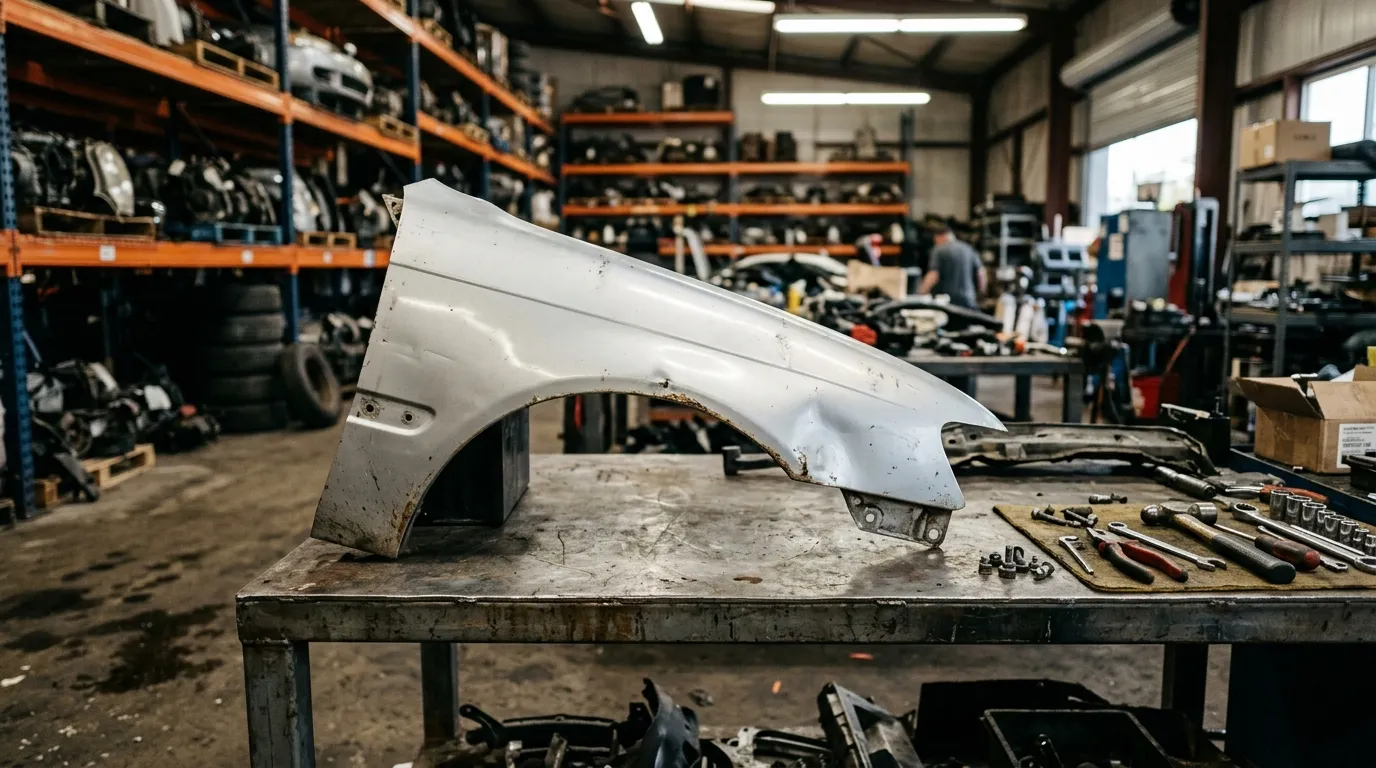
The fender is the front side body panel framing the wheel well that shields the chassis and passenger doors from road debris and spray.
Usually replaced following low-speed side impacts, rust perforation around the wheel arch, or deep denting along the body line.
A used fender costs $125 to $749, with a median asking price of $294. Based on price data across 179 vehicle-specific guides. Prices exclude shipping, core charges, and installation.
Vehicle-specific reference
179 of 184 guides currently priced
Price data updating
Price data updating
Price data updating
Price data updating
Price data updating
Compare by vehicle
Keep comparing
Common questions
Across 179 vehicle-specific guides with current pricing, used fender guide medians run from $125 to $749, with a typical median of $294. Condition grade, mileage, and fitment move the price within that range.
Usually, yes. Buying a used fender from a salvage yard or auto recycler typically costs a fraction of the new fender replacement cost at a dealership. Compare the grade-level medians above against any replacement quote you've received, and remember our figures exclude shipping and installation labor.
Salvage yards, junkyards, pick-and-pull lots, and online used parts marketplaces all sell used fenders. Our index tracks asking prices nationally, so you can benchmark a local quote against the market range before you buy.
Expect to pay toward the upper half of the $125–$749 range for a grade-A fender with low mileage. Check the grade table above for the current grade-level medians, and confirm whether shipping and any core charge are included in the quote.
They can be — condition grade is the key. Grade A parts come off low-mileage vehicles with little to no damage, grade B is average, and grade C or ungraded parts are the gamble. Buy grade A or B from a yard that offers a return window or warranty, and confirm the mileage of the donor vehicle before paying. The grade-level medians above show what each tier should cost.
Yes. A front fender is another name for a fender. Other common names include fender panel. The prices on this page apply regardless of what it's called in your region or by your mechanic.
A fender is the bolt-on front body panel covering the front wheel well — on nearly every unibody or body-on-frame vehicle it can be unbolted and swapped in minutes. A quarter panel is the rear equivalent, but on most unibody cars it's welded into the body structure rather than bolted, so replacing one is a more involved bodywork job, not a simple bolt-on swap. Never assume front and rear parts interchange — a fender and a quarter panel serve similar positions on opposite ends of the car but are different parts.
A front fender is a bolt-on body panel that can be easily removed and replaced using standard mechanical hand tools. In contrast, a rear quarter panel is welded directly to the vehicle's unibody structure, requiring specialized cutting and welding to replace. Understanding this distinction helps you evaluate repair labor and choose appropriate used components.
Inspect the inner mounting lip and wheel arch fold for hidden rust, paint bubbling, or repair filler work. Verify that all bolt holes along the engine bay, door pillar, and rocker panel are undeformed and free of tear-out damage. Ensure that turn signal indicator cutouts or trim molding holes match your specific sub-model design.
Replacing a front fender is a manageable DIY job that takes roughly one to two hours per side. You will need to detach headlight mounting hardware, front bumper cover edges, and plastic inner fender liner fasteners to access hidden mounting bolts. Aligning panel gaps with the hood and front door before final tightening ensures a clean finish.
No, driver side (left) and passenger side (right) fenders are mirror images of each other and cannot be interchanged. Each side features specific mounting bracket orientations, antenna cutouts, or emblem recessed areas tailored to that side of the body. Always confirm which side you need before ordering from an auto salvage inventory.
Used OEM fenders are manufactured from factory-gauge steel or aluminum, offering superior rust protection and exact fitment along door seams. Cheap aftermarket fenders often use thinner gauge metal that easily dents and may require extensive bending to fit correctly. Sourcing a clean used original fender preserves original structural integrity and vehicle value.
Auto recyclers categorize body parts by factory paint codes, making it common to find a matching used fender for popular vehicle colors. Installing a color-matched salvage fender eliminates body shop painting costs and allows for immediate installation. Always check the paint code on your vehicle's door jamb sticker before searching salvage listings.