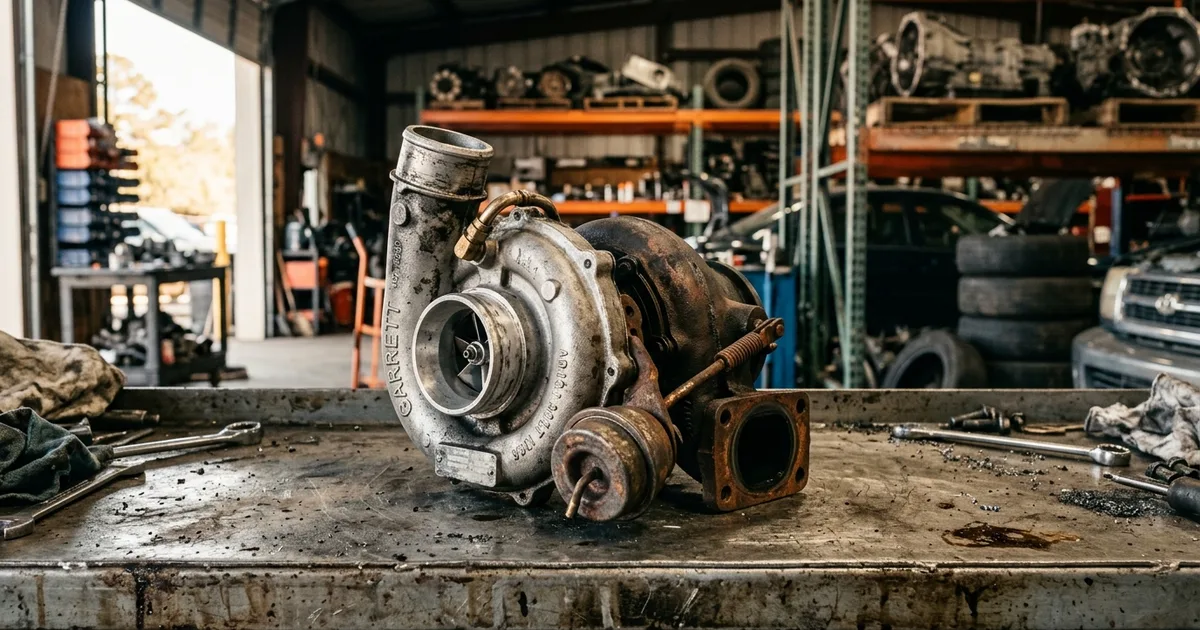
Vehicle price comparison
Mercedes C Class vs Subaru Ascent Turbocharger prices
Price face-off
Median price comparison
Condition comparison
How does the price differ by part grade?
Market analysis
Why does the Mercedes C Class turbocharger cost more?
A used Mercedes C Class turbocharger carries a median asking price of $571, which is 183% higher than the Subaru Ascent at $202. Supply also plays a role: Mercedes C Class has 1,496 priced listings versus 94 for Subaru Ascent, and more listings generally mean more choices and more competitive pricing.
Grade A (excellent condition) parts make up 74% of Mercedes C Class listings compared to 50% for the Subaru Ascent, so buyers looking for top-condition units will find more options on the Mercedes C Class side.
The Mercedes C Class average ($657) runs 15% above its median ($571), indicating a tail of high-priced listings — likely low-mileage or remanufactured units pulling the average up.
Our guide covers 9 model years for the Mercedes C Class (2015–2024) but only 2 for the Subaru Ascent (2019–2021), so the Mercedes C Class data reflects a broader range of generations.
The Mercedes C Class turbocharger is interchangeable across 14 model years versus just 7 for the Subaru Ascent — that wider compatibility window means more donor vehicles in salvage yards and tends to push prices lower.
At Grade A (excellent) condition, the Subaru Ascent is 56% cheaper ($256 vs $576) — the gap widens compared to the overall median difference.
Buyer's checklist
What to check before buying a used turbo
- Spin the turbine by hand — it should rotate freely with zero play. Any shaft wobble means worn bearings.
- Check the compressor wheel blades for impact marks from debris ingestion.
- Inspect the oil feed and return ports for coking (hardened oil deposits that block lubrication).
- Confirm the turbo model matches your ECU tune — different output turbos may bolt on but throw fault codes.
Full price guide
Mercedes C Class Turbocharger
$100 – $2,727 · 1,496 listings
Full price guide
Subaru Ascent Turbocharger
$85 – $819 · 94 listings
Common questions
Mercedes C Class vs Subaru Ascent turbocharger FAQ
Is a used Mercedes C Class turbocharger cheaper than a Subaru Ascent?
Subaru Ascent has the lower median by $369 (183%). The Subaru Ascent turbocharger ranges from $85 to $819 across 94 listings, while the Mercedes C Class ranges from $100 to $2,727 across 1,496 listings.
Can I use a Mercedes C Class turbocharger in a Subaru Ascent?
This comparison describes pricing, not interchangeability. Even when two parts share similar prices, they may require different engines, trims, electronics, or mounting points. Always match the seller's part number against your VIN before purchasing.
How many listings does this comparison cover?
This comparison draws from 1,496 priced Mercedes C Class listings and 94 priced Subaru Ascent listings — 1,590 in total.
How does condition grade affect the price?
Part condition significantly impacts price. Grade A (Excellent): Mercedes C Class $576 vs Subaru Ascent $256. Grade B (Good): Mercedes C Class $531 vs Subaru Ascent $200. Grade A parts are in excellent condition, B is good, and C is fair — always confirm grading criteria with the seller.
Are there different trim variants to choose from?
Yes. The Mercedes C Class turbocharger has 2 trim variants and the Subaru Ascent has 0. Variants differ by engine size, drivetrain, or part number — matching the right variant is critical for proper fitment.
More comparisons