Turbocharger price snapshot
- Low
- $50
- Average
- $491
- High
- $3,000
Part price guide
Saurabh Kumar
Co-Founder & CTO, Part Price Guide
Built the pricing pipeline that collects and normalizes used OEM part listings from salvage yards and online marketplaces across the US.
Ambika Sharma
Co-Founder & COO, Part Price Guide
12 years of project management and technical operations experience. Reviews price guides for sample size, fitment accuracy, and data freshness.
Part overview
Across 145 vehicle models, the typical used turbocharger lists for $400, with model-level medians ranging from $50 to $3,000. Based on 74,211 priced salvage yard listings tracked by PartPriceGuide.
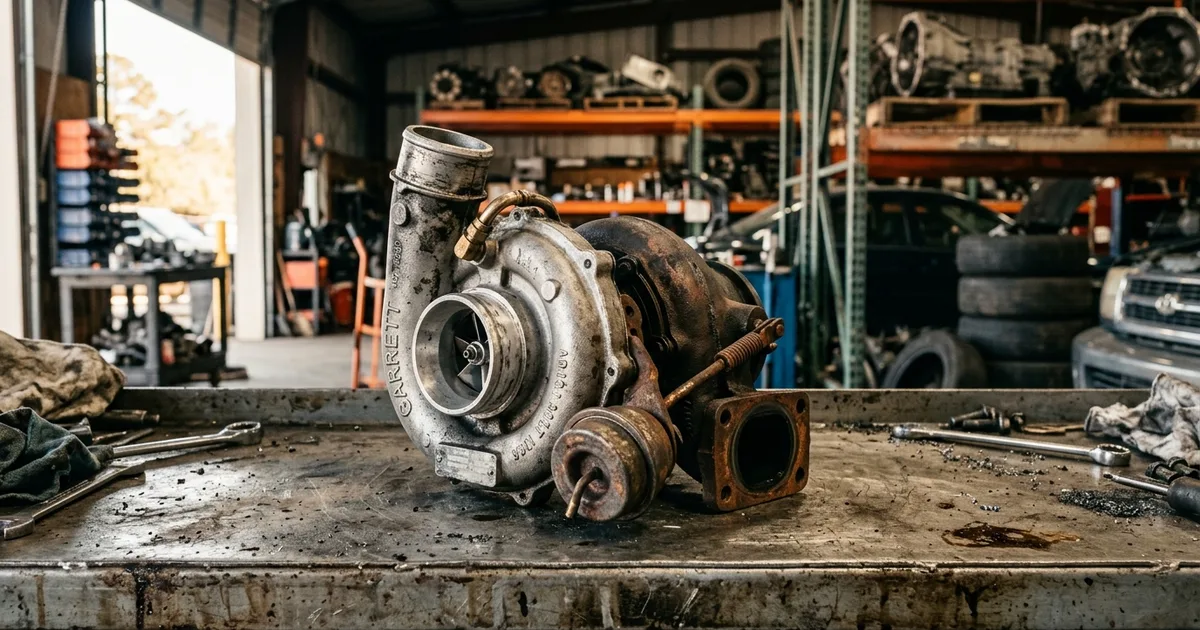
The turbocharger forces compressed air into the engine cylinders to significantly increase horsepower and efficiency.
Replaced when excessive turbine shaft play causes blue exhaust smoke, high-pitched whining noises, or loss of engine acceleration.
A used turbocharger costs $50 to $3,000, with a median asking price of $400. Based on price data across 145 vehicle-specific guides. Prices exclude shipping, core charges, and installation.
Condition comparison
| Grade | Price range | Relative range | Listings |
|---|---|---|---|
| Grade AClean / low wear | $50–$3,496 | 148 | |
| Grade BStandard used | $100–$1,499 | 134 | |
| Grade CVisible wear | $119–$1,600 | 61 | |
| Grade XUngraded | $100–$3,000 | 147 |
Median by grade
Median asking price by seller-reported condition grade · $50–$3,000 overall range
Vehicle-specific reference
145 of 184 guides currently priced
Price data updating
Price data updating
Price data updating
Price data updating
Price data updating
Price data updating
Price data updating
Price data updating
Price data updating
Price data updating
Price data updating
Price data updating
Price data updating
Price data updating
Price data updating
Price data updating
Price data updating
Price data updating
Price data updating
Price data updating
Price data updating
Price data updating
Price data updating
Price data updating
Price data updating
Price data updating
Price data updating
Price data updating
Price data updating
Price data updating
Price data updating
Price data updating
Price data updating
Price data updating
Price data updating
Price data updating
Price data updating
Price data updating
Price data updating
Compare by vehicle
Keep comparing
Common questions
Across 145 vehicle-specific guides with current pricing, used turbocharger guide medians run from $50 to $3,000, with a typical median of $400. Condition grade, mileage, and fitment move the price within that range.
Usually, yes. Buying a used turbocharger from a salvage yard or auto recycler typically costs a fraction of the new turbocharger replacement cost at a dealership. Compare the grade-level medians above against any replacement quote you've received, and remember our figures exclude shipping and installation labor.
Salvage yards, junkyards, pick-and-pull lots, and online used parts marketplaces all sell used turbochargers. Our index tracks asking prices nationally, so you can benchmark a local quote against the market range before you buy.
Expect to pay toward the upper half of the $50–$3,000 range for a grade-A turbocharger with low mileage. Check the grade table above for the current grade-level medians, and confirm whether shipping and any core charge are included in the quote.
They can be — condition grade is the key. Grade A parts come off low-mileage vehicles with little to no damage, grade B is average, and grade C or ungraded parts are the gamble. Buy grade A or B from a yard that offers a return window or warranty, and confirm the mileage of the donor vehicle before paying. The grade-level medians above show what each tier should cost.
Yes. A turbo is another name for a turbocharger. Other common names include turbo charger. The prices on this page apply regardless of what it's called in your region or by your mechanic.
A turbocharger is spun by exhaust gas flowing through a turbine, so its boost builds as engine RPM and exhaust flow increase — the source of "turbo lag" at low RPM. A supercharger is mechanically belt-driven directly off the engine's crankshaft, so it delivers boost instantly at any RPM but constantly draws a small amount of engine power to spin. They bolt on differently and aren't interchangeable — confirm which one your specific engine came with before shopping for a used replacement.
A used turbocharger is just the turbo unit itself — the turbine/compressor assembly that bolts to your engine's existing OEM mounting, plumbing, and tuning. A turbo kit is a full aftermarket package for adding forced induction to an engine that wasn't turbocharged from the factory, including manifolds, piping, an intercooler, and often a new tune. If your vehicle already came turbocharged, you need a replacement turbo, not a turbo kit.
Inspect the compressor and turbine wheel blades for bent, chipped, or scraped edges caused by foreign debris or housing contact. Check the center shaft for excessive radial and axial play, and ensure there is no heavy oil residue inside the housing ports.
Key symptoms include loss of engine boost pressure, blue exhaust smoke under acceleration from oil seal failure, and high-pitched whining sounds from worn bearings. Oil leaking into the intercooler piping is another sign of blown internal shaft seals.
Sourcing a used forced induction unit from a low-mileage donor vehicle is a great way to save money, provided shaft play is within factory tolerances. Ensure the salvage yard capped all oil feed and drain ports to keep dirt out of the precision shaft bearings.
Most auto recyclers sell used turbos complete with the turbine housing, compressor housing, and vacuum or electronic wastegate actuator attached. Confirm whether oil lines, coolant fittings, and bypass valves are included or need to be transferred from your original unit.
Prime the used turbocharger oil supply hole with clean engine oil before starting the engine to prevent dry bearing rotation. You should also replace the oil feed and return lines, install new gaskets, and change the engine oil and filter.
Starving the unit of clean oil during initial startup or oil line blockages from carbon buildup will instantly ruin turbo shaft bearings. Ingesting loose particles from dirty intake pipes or damaged air filters will also destroy the delicate compressor blades.