A junkyard engine costs $600 to $7,958, with a national median of $2,400 across 29,646 salvage yard listings. Self-service yards price well below that median on common models, while full-service yards charge more and include grading, a pulled and palletized engine, and usually a 30 to 90 day warranty.
Engine type moves the number more than the yard you walk into. A Honda Civic 2.0L four cylinder has a $700 median while a Chevy Silverado 6.2L V8 runs $7,850. Know your engine code before you call, because a yard quoting "a Silverado motor" could mean either end of that range.
- Median junkyard engine price: $2,400 across 29,646 listings and 48 vehicle models
- Self-pull is cheapest, but most chains ban customer engine hoists, so confirm policy first
- Engine type is the real price lever: a 6.2L V8 runs $7,850 against $3,606 for the 2.7L four in the same truck
- Grade C engines cost 28% less than Grade A ($1,700 vs $2,358 median)
- Budget $200 to $500 for a refundable core charge at most full-service yards
What Junkyards Charge for Engines
The $2,400 median is the number to anchor on, but the distribution is lopsided. Here's the full shape of junkyard engine pricing:
| Metric | Price |
|---|---|
| Lowest model median | $600 |
| Median | $2,400 |
| Average | $2,726 |
| Highest model median | $7,958 |
Before you call anywhere, look up your vehicle on the engine price index. Walking into a negotiation knowing your model's median is the single highest-leverage thing you can do, and it takes thirty seconds.
*Source: PartPriceGuide.com analysis of 29,646 salvage yard listings, August 2026.*
Self-Pull vs Full-Service vs Online
The three sourcing channels price engines differently because they're selling different amounts of labor and risk.
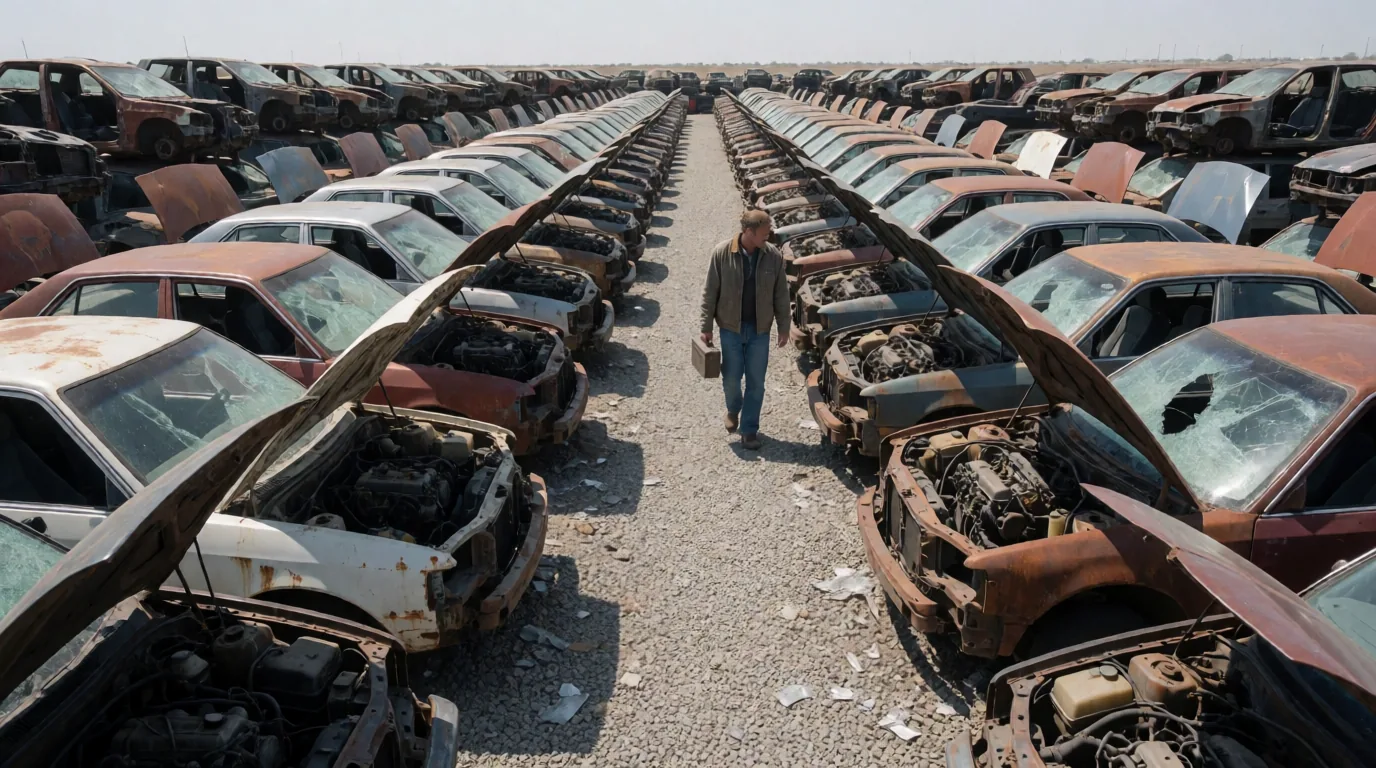
Self-service yards (Pull-A-Part, LKQ Pick Your Part, U-Pull-It) post flat prices on a board: one price for any four cylinder, another for any V6, another for any V8, regardless of donor vehicle. That flat pricing is why a self-pull yard can be an outstanding deal on an expensive engine and a mediocre one on a cheap engine. A BMW inline six at the four-figure board price beats the $7,958 X5 median badly. A Nissan Sentra engine at the same board price is worse than the $611 median at a full-service yard.
The catch is bigger on engines than on any other part. Most self-service chains prohibit customer-brought engine hoists and cherry pickers. Pulling an engine with hand tools and a floor jack is a full day of work, if the yard allows it at all. Call the location, not the corporate line, and ask directly.
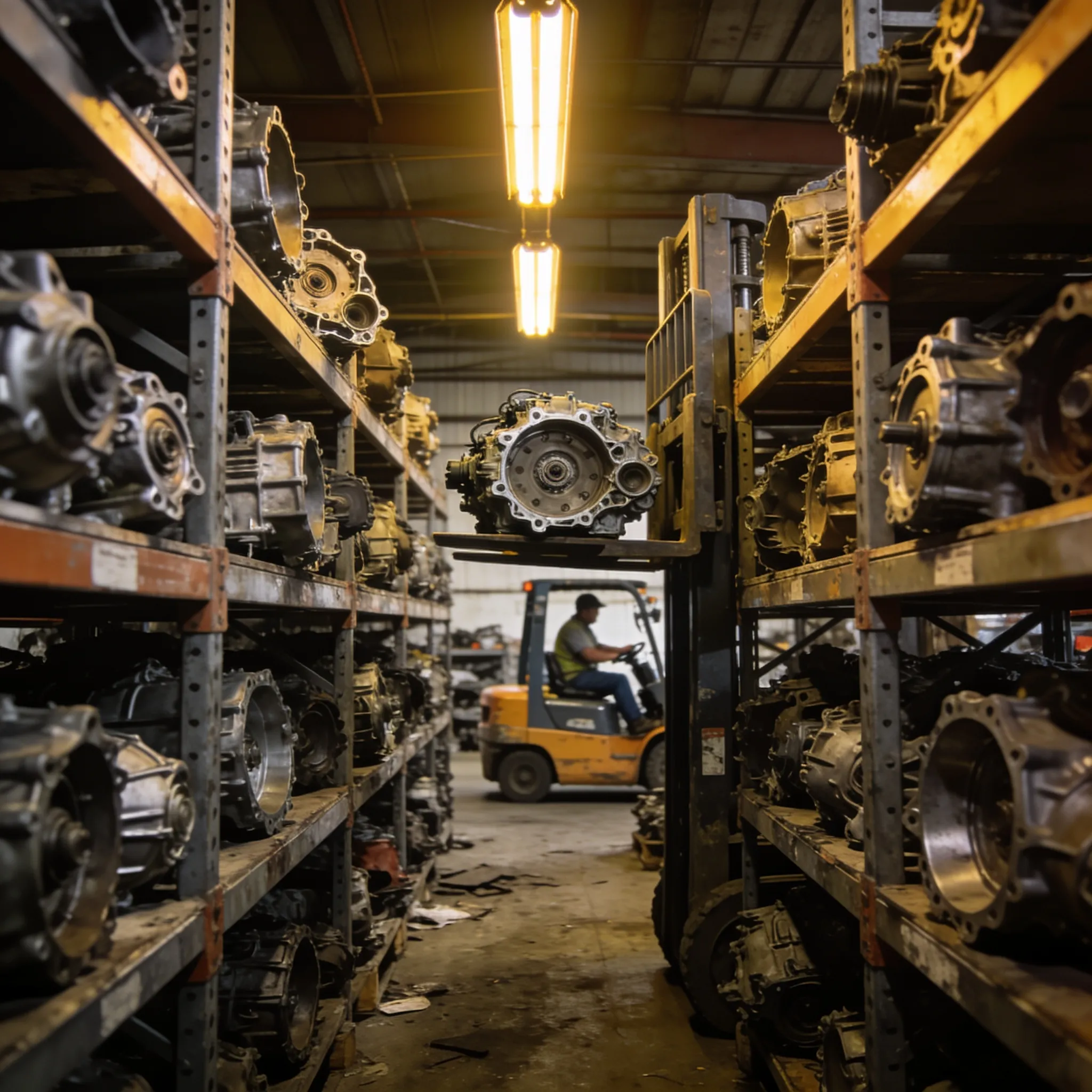
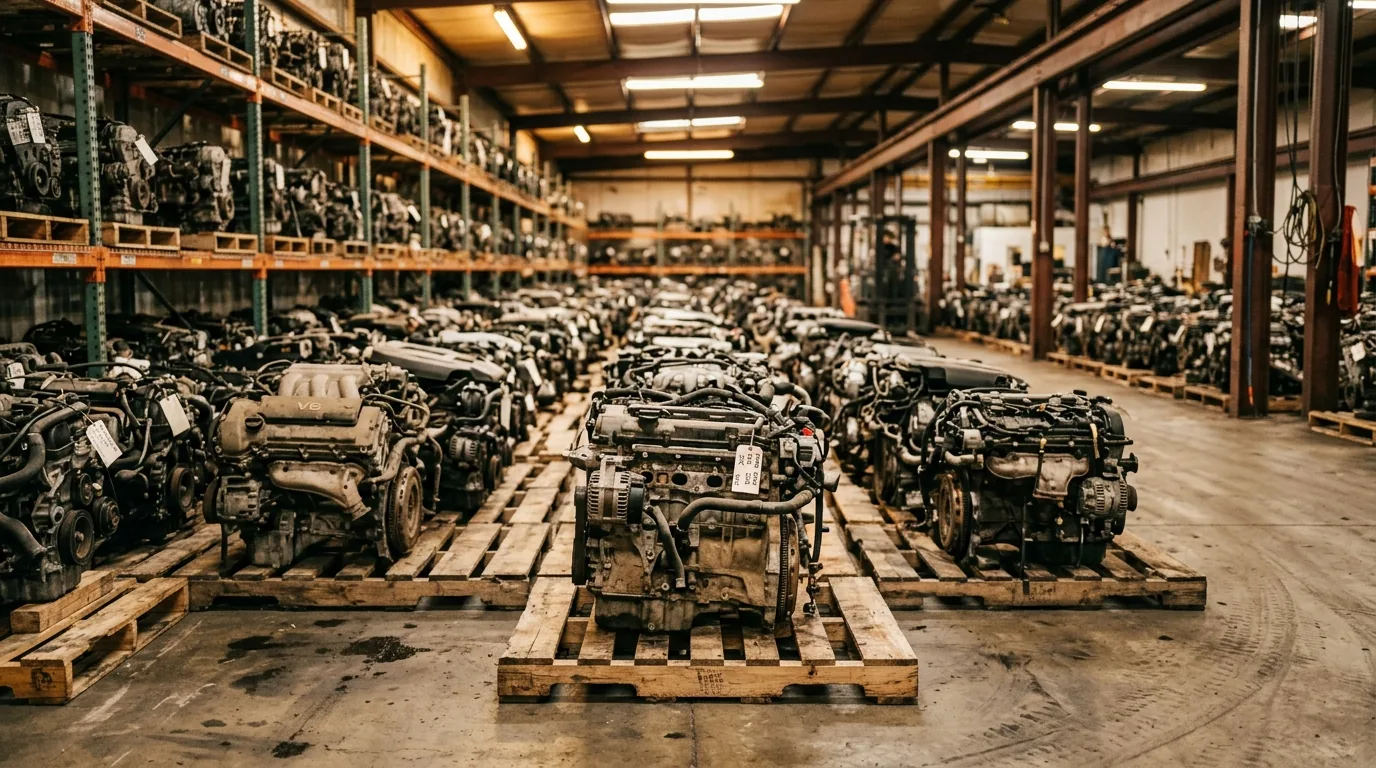
Full-service salvage yards pull, inspect, grade, and palletize the engine for you. They supply the bulk of the 29,646 listings behind this analysis, which is why our medians reflect full-service pricing. You're paying for the pull labor, the grading, and typically a 30 to 90 day warranty. For most buyers on most engines, this is the right channel.
Online recyclers (Car-Part.com, eBay Motors) give you national inventory, which matters enormously for engines because of variant matching. If your car has an uncommon displacement or an emissions-specific block, your local yards may never stock it. Freight on a palletized engine is substantial, often several hundred dollars, so build it into every quote you compare.
The same channel logic applies to other drivetrain parts. Our junkyard transmission pricing guide breaks down how the three channels compare when you're sourcing a gearbox.
Prices by Engine Type
Displacement and cylinder count predict junkyard engine price better than vehicle model does. These are real variant-level medians from our index:
| Engine Variant | Vehicle | Median | Listings |
|---|---|---|---|
| 2.0L four cylinder | Honda Civic | $700 | 39 |
| 2.5L four cylinder | Toyota Camry | $800 | 20 |
| 1.5L turbo four | Honda Civic | $1,000 | 47 |
| 3.5L V6 | Toyota Camry | $3,100 | 48 |
| 2.7L turbo V6 | Ford F150 | $3,500 | 47 |
| 5.0L V8 | Ford F150 | $3,543 | 40 |
| 2.7L turbo four | Chevy Silverado 1500 | $3,606 | 32 |
| 5.3L V8 | Chevy Silverado 1500 | $3,800 | 45 |
| 3.5L turbo V6 | Ford F150 | $4,358 | 28 |
| 3.0L turbodiesel inline six | Chevy Silverado 1500 | $6,500 | 43 |
| 6.2L V8 | Chevy Silverado 1500 | $7,850 | 45 |
Three things worth pulling out of that table:
Truck four cylinders aren't cheap. The Silverado 2.7L turbo four costs $3,606, more than the Camry V6. Small displacement in a heavy vehicle means a high-output turbo engine, and yards price it accordingly. Don't assume cylinder count alone means savings.
Turbocharging adds a real premium. The Civic 1.5L turbo runs $1,000 against $700 for the naturally aspirated 2.0L, a 43% jump within the same model line. On the F150, the 3.5L turbo V6 at $4,358 outprices the 5.0L V8 at $3,543.
Diesels sit in luxury territory. The Silverado 3.0L diesel at $6,500 costs 71% more than the 5.3L gas V8 in the same truck. Diesel blocks last longer, so fewer reach yards, and the buyer pool actively hunts them.
*Source: PartPriceGuide.com variant-level analysis, August 2026.*
How Yards Price Grade and Mileage
Full-service yards assign a letter grade based mostly on donor vehicle mileage. Here's what each grade costs:
| Grade | Median | Average |
|---|---|---|
| A (Best) | $2,358 | $2,896 |
| X (Ungraded) | $2,400 | $2,703 |
| B (Mid) | $2,100 | $2,428 |
| C (Lower) | $1,700 | $1,920 |
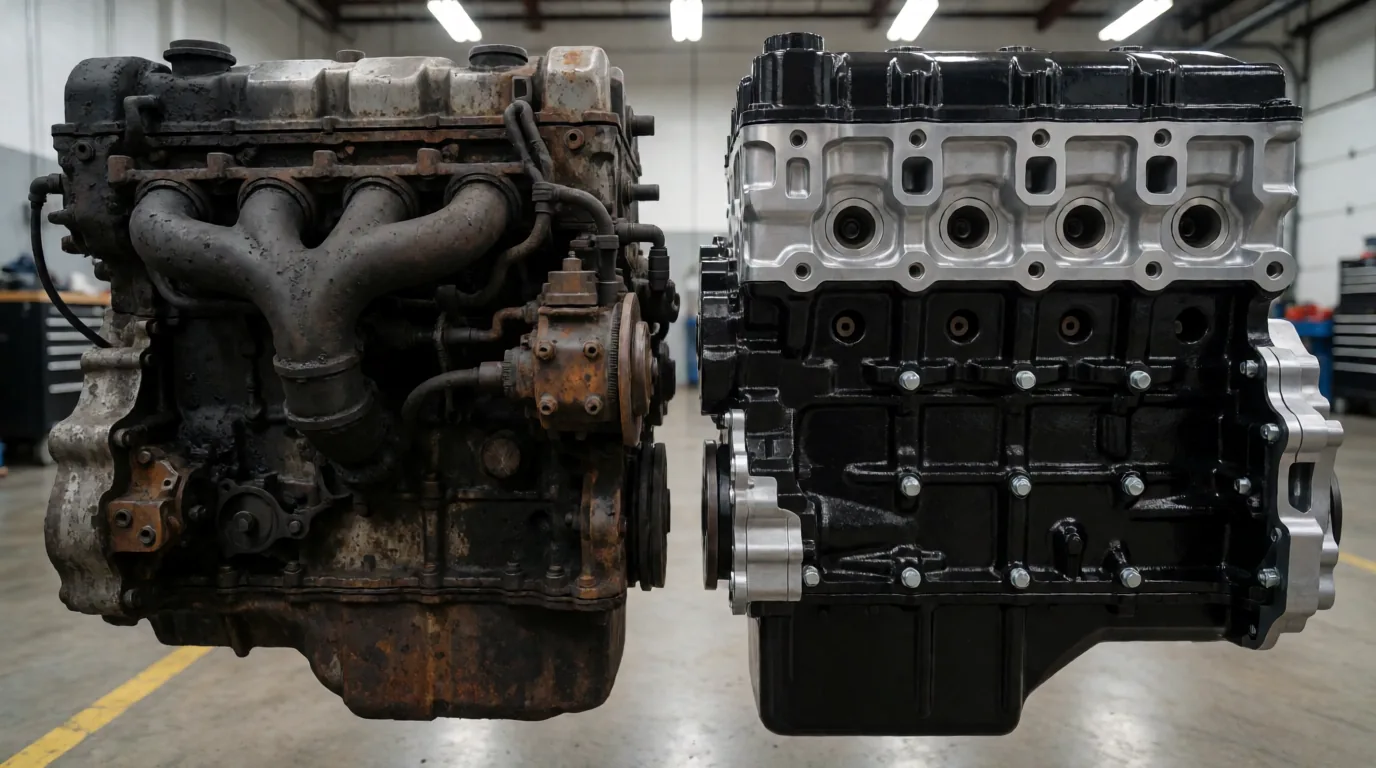
Grade X, meaning ungraded, sits at $2,400. Ungraded isn't a warning label. It usually means nobody recorded the odometer. Some of the best buys in a yard are Grade X engines out of low-mileage collision vehicles, so always ask what the donor's mileage was and whether they'll write it on the invoice. If they won't put it in writing, treat the unit as Grade C and negotiate to Grade C pricing.
Core Charges and Hidden Costs
The number on the tag isn't the number on your card. Budget for:
Core charge. Typically $200 to $500 at full-service yards, refunded when you return your old engine. Confirm the return window, since some yards cap it at 30 days.
Freight or delivery. Engines ship on pallets by LTL freight. Local delivery is often $75 to $150. Cross-country freight runs several hundred.
Accessories not included. Ask specifically whether the quote covers the intake manifold, alternator, starter, AC compressor, and flywheel or flexplate. "Long block" and "complete engine" mean different things at different yards, and this is the single most common surprise on a salvage engine invoice.
Wear parts you should replace anyway. Timing components, water pump, thermostat, and rear main seal are all cheap to do while the engine is out and expensive to do after.
How to Negotiate at a Salvage Yard
Full-service yards negotiate. Self-service yards almost never do, because their pricing is a board, not a quote.
Lead with the median. Say what your model's median is and where you got it. Yards deal with informed buyers all day, and a specific number moves a conversation faster than "can you do better."
Ask how long the unit has been in inventory. Engines take up floor space. A unit that's been sitting six months is far more negotiable than one pulled last week.
Buy the accessories in the same conversation. Bundling the alternator, starter, and AC compressor with the engine usually gets you better pricing than buying them separately, and it saves a second trip.
Ask what the warranty upgrade costs. Many yards sell 6 or 12 month coverage for a modest add-on. On an engine, that's often better value than talking $100 off the part.
Get the donor mileage and VIN in writing. This costs the yard nothing and protects you completely. A yard that refuses is telling you something.
Once you have a quote in hand, compare it against a rebuilt unit before committing. Our used vs remanufactured engine comparison runs the warranty and cost math, and the full used engine cost analysis covers pricing across all 48 models we track.
Look up your vehicle's real numbers on the engine price index before you call a single yard.