A used engine costs between $600 and $7,958, with a national median of $2,400. That range comes from 29,646 priced salvage yard listings across 48 vehicle models, not shop estimates or dealer quotes, but real asking prices from yards around the country.
Two things decide where you land in that range: engine displacement and how much the donor vehicle was worth. A Nissan Rogue engine has a $600 median. A BMW X5 engine has a $7,958 median. That's a 13x spread, and it exists between two crossovers that look similar in a parking lot.
- Median used engine price: $2,400 across 29,646 priced listings from salvage yards nationwide
- Range: $600 to $7,958 by vehicle model, with an overall average of $2,726
- Cheapest models: Nissan Rogue ($600), Nissan Sentra ($611), Honda Civic ($700)
- Most expensive: BMW X5 ($7,958), Mercedes E Class ($6,810), Mercedes C Class ($6,647)
- Grade C engines run 28% below Grade A ($1,700 vs $2,358 median), the widest grade gap of any major part we track
Overall Used Engine Pricing
Here's what used engines actually sell for across every model in the PartPriceGuide index:
| Metric | Price |
|---|---|
| Lowest model median | $600 |
| Median | $2,400 |
| Average | $2,726 |
| Highest model median | $7,958 |
That gap between median and average matters when you're budgeting. If someone quotes you "about $2,500 for a used motor," that's a fair mid-market number, but it tells you nothing about your specific car. A Chevy Traverse owner is being overcharged at that price. A Jeep Wrangler owner is getting a deal.
*Source: PartPriceGuide.com analysis of 29,646 salvage yard listings, August 2026.*
Used Engine Prices by Vehicle Model
This is where generic price guides fall apart. Below are the 15 most-listed engine models in our index, ranked by how many priced listings we found:
| Vehicle Model | Median Price | Avg Price | Listings |
|---|---|---|---|
| Mercedes C Class | $6,647 | $8,269 | 1,649 |
| Jeep Grand Cherokee | $3,729 | $4,372 | 1,443 |
| Ram 1500 | $3,600 | $5,025 | 1,336 |
| Hyundai Elantra | $2,400 | $2,556 | 1,197 |
| Honda Civic | $700 | $1,334 | 1,161 |
| Jeep Wrangler | $4,914 | $5,038 | 1,068 |
| Dodge Challenger | $2,950 | $4,609 | 1,067 |
| Kia Forte | $2,181 | $2,449 | 1,022 |
| Mercedes E Class | $6,810 | $7,570 | 978 |
| Ford F150 | $3,900 | $4,054 | 875 |
| Toyota RAV4 | $1,750 | $2,014 | 843 |
| GMC Sierra 1500 | $4,600 | $5,067 | 802 |
| Dodge Durango | $3,775 | $5,027 | 796 |
| Kia Optima | $2,788 | $2,479 | 752 |
| Hyundai Sonata | $1,925 | $2,032 | 743 |
Three patterns show up clearly:
Supply volume does not predict price for engines. This is the opposite of what happens with smaller parts. The Mercedes C Class has more listings than any other model in the index at 1,649, and it still carries a $6,647 median. Plenty of supply, plenty of price. Availability tells you whether you can find the part this week, not whether it'll be cheap.
Averages run far above medians on performance models. The Dodge Challenger shows a $2,950 median against a $4,609 average. That gap is Hellcat and Scat Pack engines sitting in the same listing pool as base V6s. If you drive a base model, ignore the average entirely and negotiate from the median.
Volume Japanese commuters are the bargain tier. Honda Civic engines have a $700 median across 1,161 listings. Toyota RAV4 sits at $1,750 across 843. These are the cars where a used engine swap makes obvious financial sense.
Jump straight to your vehicle: Ford F150, Ram 1500, Jeep Grand Cherokee, BMW X5, or check the full engine price index.
Cheapest and Most Expensive Engines
The two ends of the distribution are worth looking at separately, because they call for completely different buying strategies.
Lowest median prices:
| Vehicle Model | Median Price | Listings |
|---|---|---|
| Nissan Rogue | $600 | 608 |
| Nissan Sentra | $611 | 169 |
| Honda Civic | $700 | 1,161 |
| Chevy Traverse | $847 | 528 |
| Ford Edge | $880 | 225 |
| Mazda CX5 | $958 | 136 |
| Nissan Altima | $1,015 | 252 |
| Vehicle Model | Median Price | Listings |
|---|---|---|
| BMW X5 | $7,958 | 556 |
| Mercedes E Class | $6,810 | 978 |
| Mercedes C Class | $6,647 | 1,649 |
| Chevy Tahoe | $5,520 | 538 |
| Toyota Tacoma | $5,000 | 706 |
| Jeep Wrangler | $4,914 | 1,068 |
| GMC Yukon | $4,735 | 409 |
At the top, the opposite applies. On a $7,958 BMW X5 engine, saving 10% on the part beats saving 30% on labor. That's where it pays to call five yards, compare mileage on each donor unit, and negotiate.
*Source: PartPriceGuide.com analysis of 29,646 salvage yard listings, August 2026.*
How Condition Grade Affects Price
Salvage yards grade parts by condition, usually based on donor vehicle mileage and visual inspection. Here's how grading moves engine pricing:
| Grade | Median | Average | Min | Max |
|---|---|---|---|---|
| A (Best) | $2,358 | $2,896 | $626 | $7,958 |
| X (Ungraded) | $2,400 | $2,703 | $450 | $6,500 |
| B (Mid) | $2,100 | $2,428 | $333 | $8,568 |
| C (Lower) | $1,700 | $1,920 | $405 | $7,000 |
The odd one here is Grade X, ungraded stock, sitting slightly above Grade A at $2,400. Ungraded doesn't mean bad. It usually means the yard never recorded donor mileage, and plenty of those units come out of low-mileage collision vehicles. If a yard has a Grade X engine at a Grade B price, ask what the donor's odometer read and whether they'll put it on the invoice.
The practical rule: pay the Grade A premium when you're keeping the car past 100,000 more miles. Take Grade B or C when the car is worth under $5,000 and you need it running this month.
*Source: PartPriceGuide.com grade-level analysis across 29,646 listings, August 2026.*
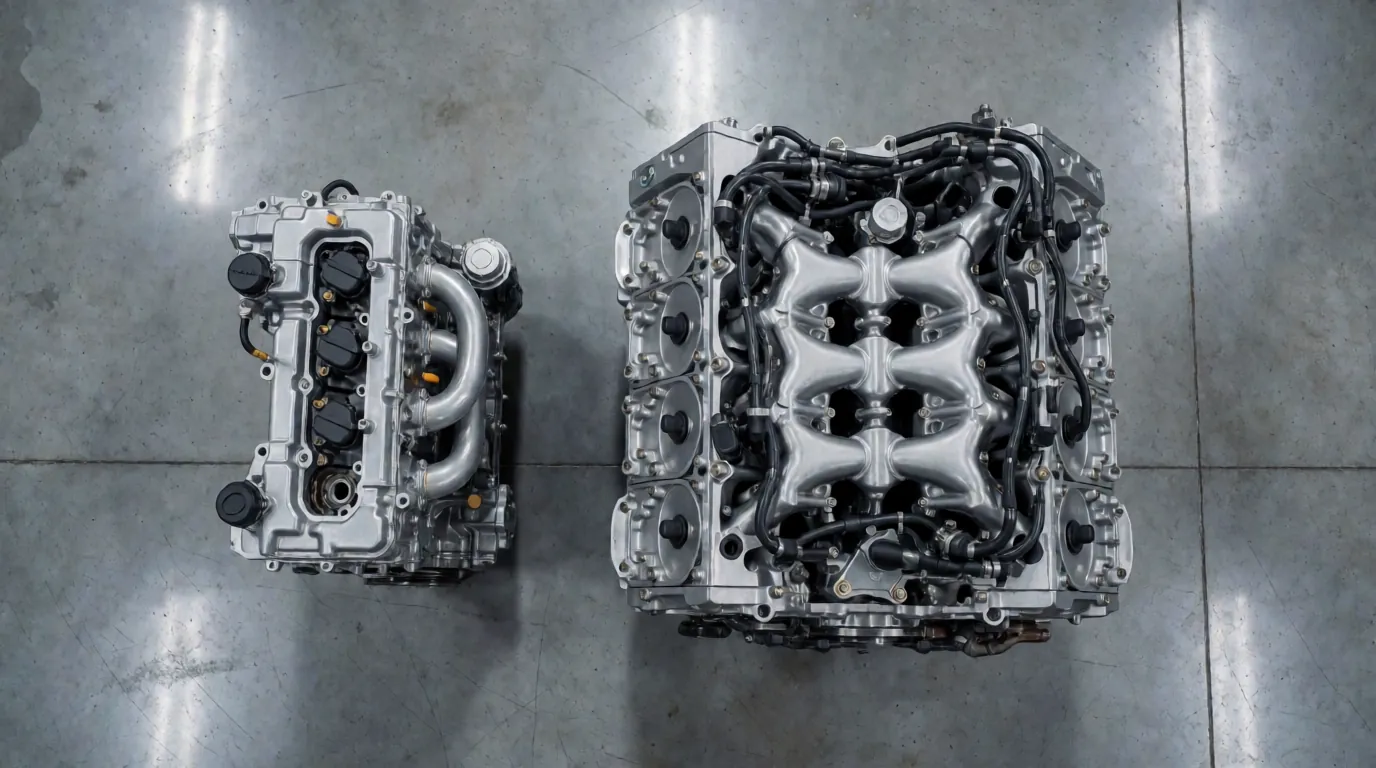
Why Engine Size Moves Price More Than Model
Within a single vehicle model, displacement changes the price more than anything else. The Toyota Camry makes this obvious:
| Camry Engine Variant | Median Price | Listings |
|---|---|---|
| 2.5L four cylinder (non-hybrid) | $800 | 20 |
| 2.5L four cylinder (hybrid) | $1,872 | 35 |
| 3.5L V6 | $3,100 | 48 |
| Silverado 1500 Engine Variant | Median Price | Listings |
|---|---|---|
| 2.7L turbo four cylinder | $3,606 | 32 |
| 5.3L V8 | $3,800 | 45 |
| 3.0L diesel inline six | $6,500 | 43 |
| 6.2L V8 | $7,850 | 45 |
Before you shop, find your engine code. It's in the eighth digit of your VIN on most domestic vehicles and the fifth digit on many Toyotas. Yards match on that code, and quoting the wrong one wastes everybody's time.
*Source: PartPriceGuide.com variant-level analysis, August 2026.*
What You Actually Pay Once It's Installed
The part price is roughly half the story. Budget for these on top of the engine itself:
Labor. Engine swaps are usually quoted between 8 and 20 hours depending on layout. Transverse front-wheel-drive engines in tight bays run longer than a body-on-frame truck V8. Multiply your local shop rate accordingly.
Wear parts you replace while it's out. Timing belt or chain service, water pump, thermostat, motor mounts, and the rear main seal are all far cheaper to do with the engine on a stand. Skipping them is the most common regret in a budget swap.
Fluids and consumables. Oil, coolant, gaskets, and often a new clutch on manual cars.
Core charge. Many yards hold $200 to $500 until you return your old engine. It's refundable, but it hits your card up front.
A $700 Honda Civic engine can become a $3,000 job. A $7,958 BMW X5 engine can become $12,000. Get the full quote before you buy the part, not after.
Where to Buy a Used Engine
Three sources dominate, and they price very differently:
Self-service junkyards (Pull-A-Part, LKQ Pick Your Part) post the lowest prices, but pulling an engine yourself needs a hoist, a helper, and most of a day. Some yards won't let you use a hoist at all. Our junkyard engine pricing guide breaks down what each chain charges and which ones allow engine pulls.
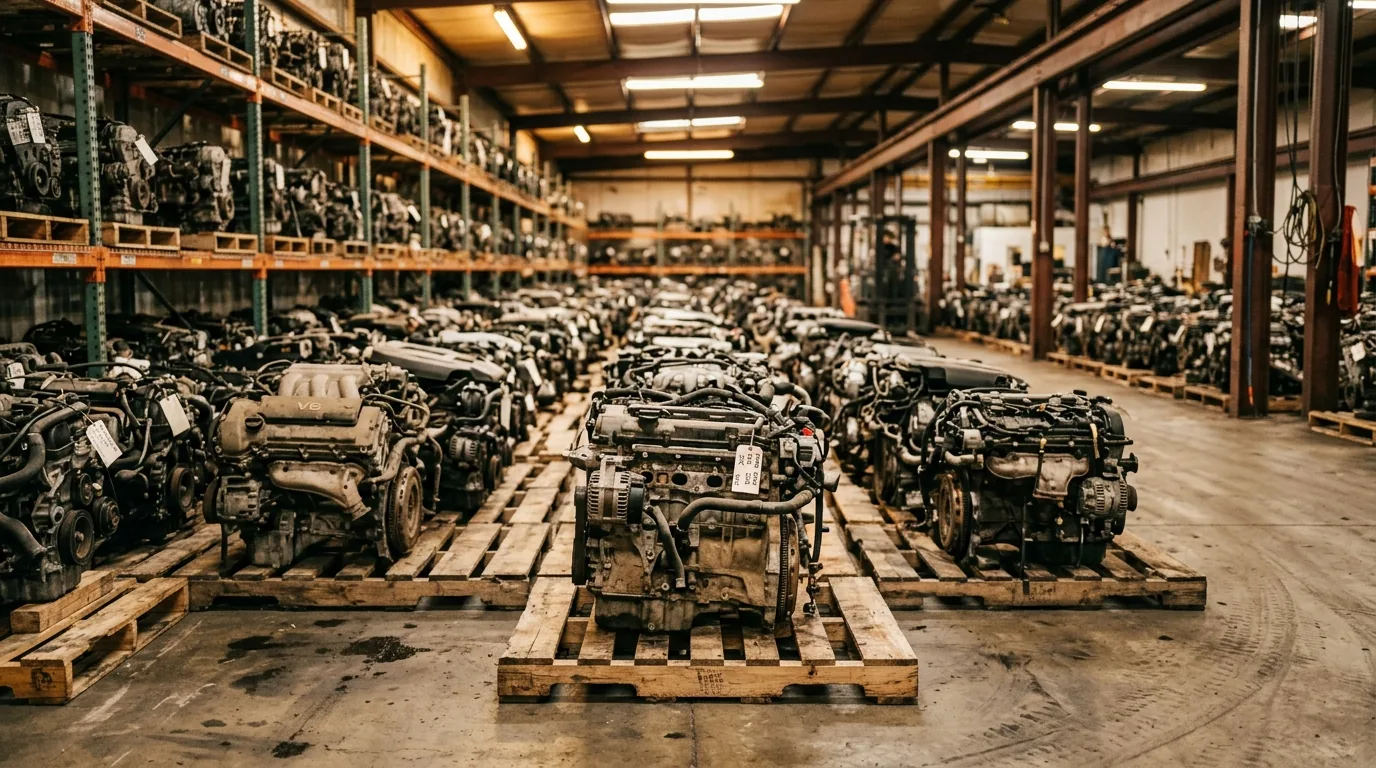
Full-service salvage yards supply most of the 29,646 listings behind this analysis. They pull, inspect, grade, and usually warranty the engine for 30 to 90 days. You pay more for that, and for most buyers it's the right trade.
Online recyclers (Car-Part.com, eBay Motors) open up national inventory, which matters a lot for the variant problem above. Freight on an engine runs meaningfully more than a small part, so factor shipping into every quote.
If you're weighing a salvage engine against a rebuilt unit, our used vs remanufactured engine comparison puts the warranty and cost math side by side.
When a Used Engine Makes Financial Sense
Run the number before you commit: add the engine price to your installed labor estimate, then compare that total to your car's current market value.
A used engine makes sense when the total installed cost stays under roughly half the car's value, the model has healthy salvage supply, and the rest of the vehicle is in good shape. A Honda Civic at $700 for the engine clears this easily. So does a Toyota RAV4 at $1,750.
Think harder when the engine alone approaches your car's value. On a 12-year-old BMW X5 worth $6,000, a $7,958 engine plus labor is not a repair, it's a decision to keep a car for sentimental reasons.
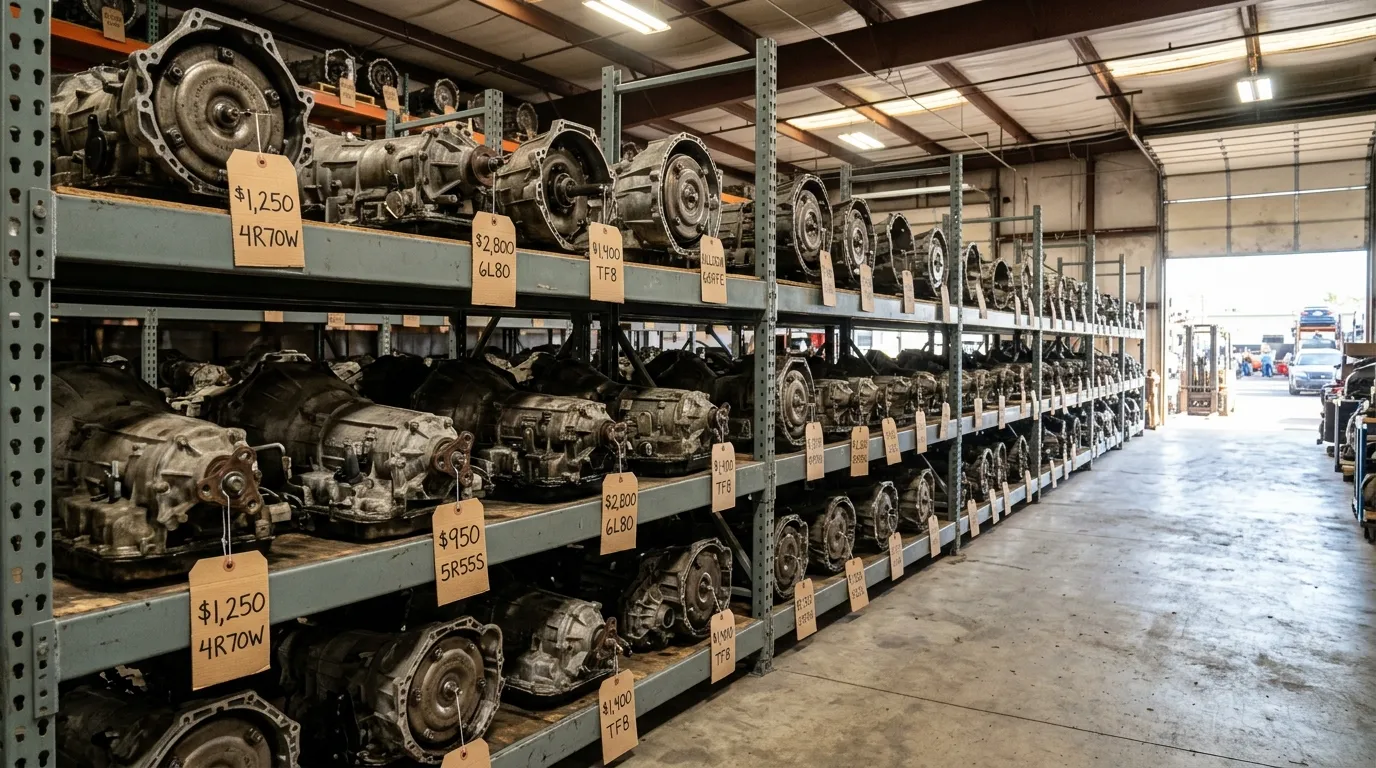
Check the other big-ticket part too. If the transmission is on its way out, you're looking at two jobs, not one. Our used transmission price analysis covers what that second repair adds.
Browse real pricing for every model we track on the engine price index, or jump straight to your vehicle's page for grade and variant level detail.