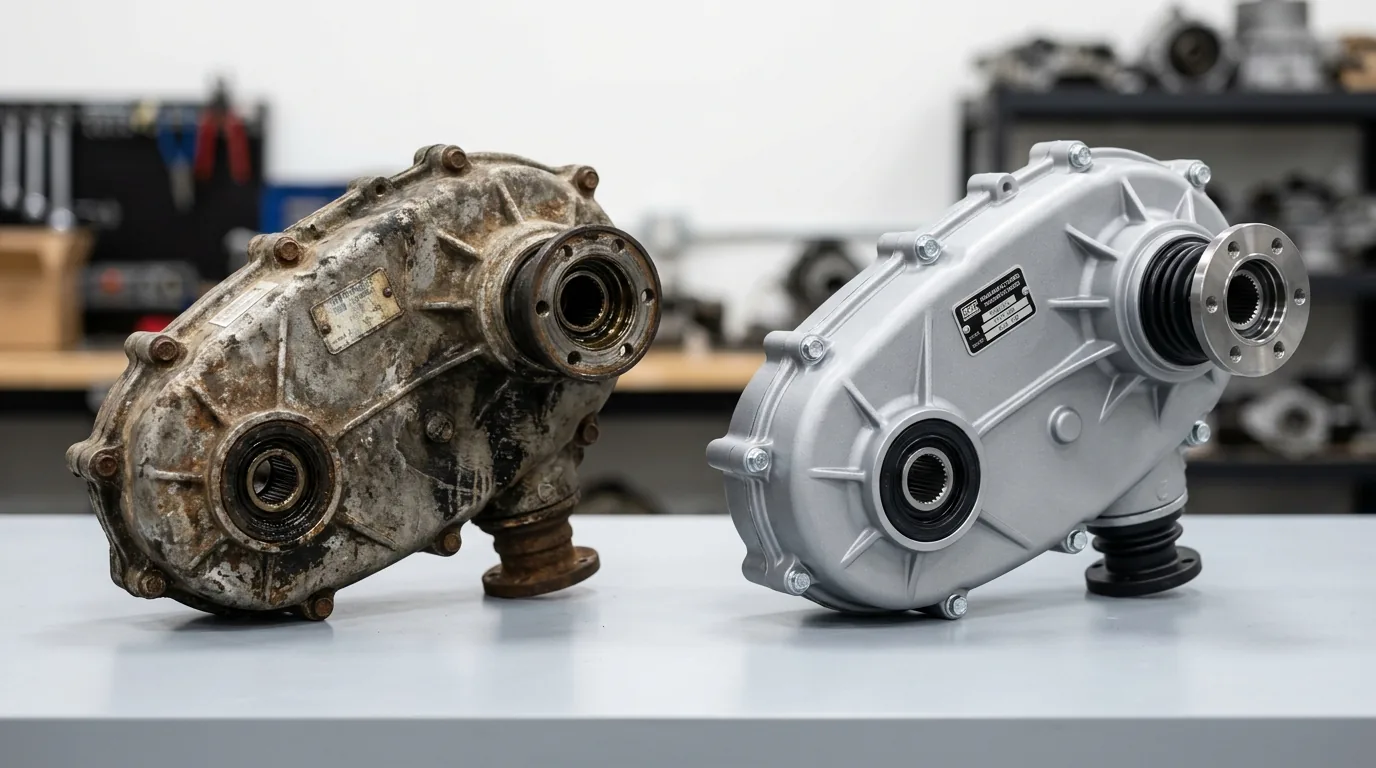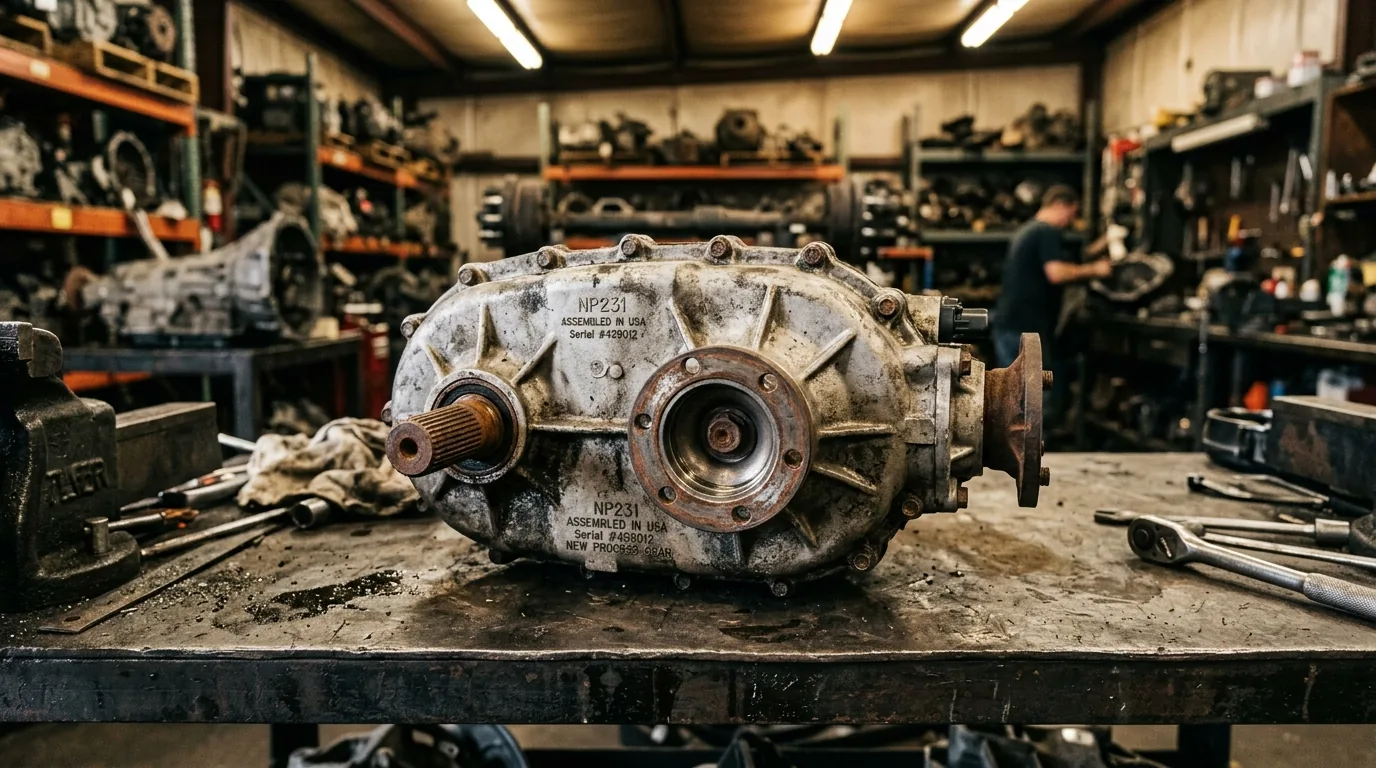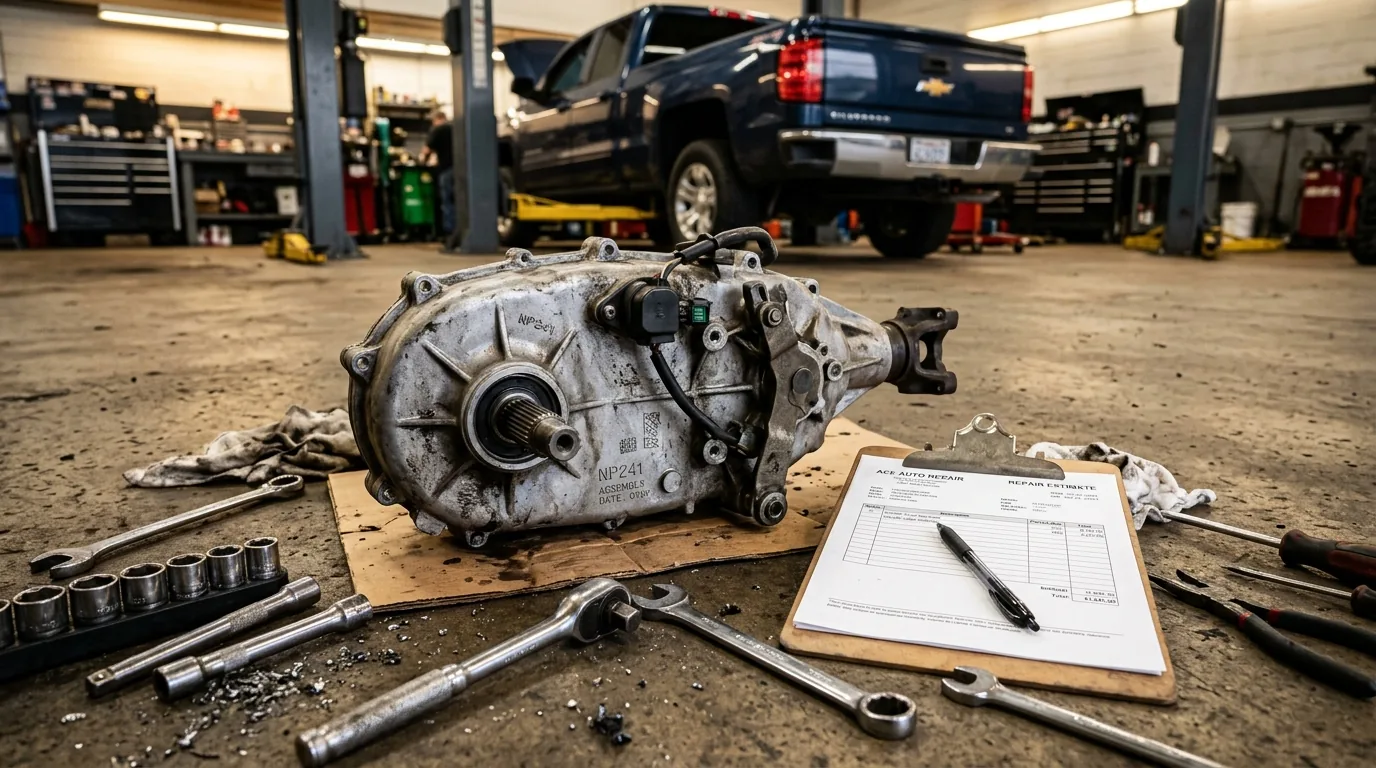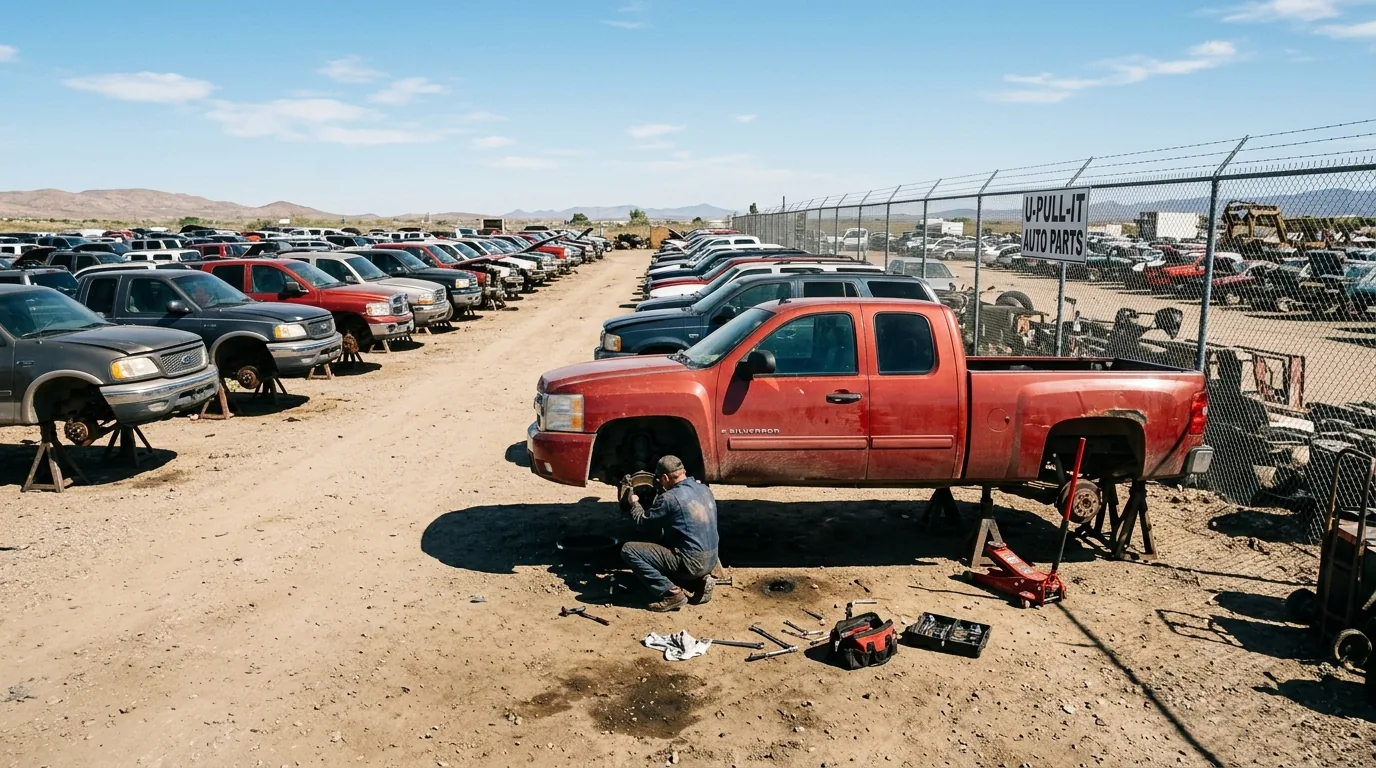
Junkyard transfer cases cost between $138 and $1,720, with a national median of $325 across 23,929 priced salvage yard listings. Self-pull yards charge 30 to 50% less than counter-service operations, making them the cheapest source for this part, if you have the tools and time to extract it.
How much you pay depends almost entirely on two things: the yard type and your vehicle model. A Honda CR-V transfer case at a self-pull yard might run $100 to $150, while a Jeep Wrangler unit at a full-service yard can hit $800 or more.
- Self-pull yards charge 30-50% below counter-service pricing, expect $100-$400 for most models
- Counter-service yards run $200-$1,000+ with inspection and 30-90 day warranty
- Weight matters: transfer cases weigh 60-100 lbs, adding $50-$150 in shipping for online orders
- Removal takes 2-4 hours at a self-pull yard, you need a floor jack and transmission support
- Always check fluid condition before buying, dark, burnt-smelling fluid signals internal wear
What Junkyards Charge for Transfer Cases
Transfer case pricing at salvage yards falls into a wide band because the part varies enormously between a basic AWD coupling and a two-speed 4WD unit with low-range gearing. Across our full dataset of 23,929 priced listings:
| Metric | Price |
|---|---|
| Minimum | $138 |
| Median | $325 |
| Average | $461 |
| Maximum | $1,720 |
*Source: PartPriceGuide.com analysis of 23,929 salvage yard listings, August 2026.*
Self-Pull vs Counter-Service Pricing
The yard type you visit determines the base price more than almost anything else:
Self-pull yards (Pull-A-Part, LKQ Pick Your Part, Wrench-A-Part) price transfer cases as a flat category or by vehicle tier. Expect $100 to $400 for most models. You pull the part yourself, which means you can inspect fluid condition and shift mechanism before committing. The trade-off: removal takes 2 to 4 hours under the vehicle, and there's no warranty beyond a 24 to 48 hour exchange window.
Counter-service yards test and inventory their stock. Prices run $200 to $1,000+ with 30 to 90 day warranties. They confirm the unit matches your vehicle by VIN and check for obvious problems (leaks, noise, shift engagement). This is where the bulk of the 23,929 listings in our index originate. If you're weighing a counter-service unit against a remanufactured one, our used vs remanufactured transfer case comparison breaks down the trade-offs.
Online recyclers (Car-Part.com, eBay) add $50 to $150 shipping because transfer cases weigh 60 to 100 lbs. Useful when local yards don't stock your model, but factor freight into the total cost.
For a broader look at transfer case pricing across all sources, see our used transfer case cost guide.
Junkyard Prices by Vehicle Model
The table below shows what salvage yards charge for the 15 most common transfer case models:
| Vehicle Model | Median Price | Listings |
|---|---|---|
| Jeep Wrangler | $872 | 2,867 |
| Chevy Silverado 1500 | $350 | 2,541 |
| Ford F-150 | $325 | 2,417 |
| GMC Sierra 1500 | $375 | 1,742 |
| Chevy Tahoe | $342 | 1,641 |
| Ram 1500 | $316 | 958 |
| GMC Yukon | $308 | 899 |
| Ford Escape | $203 | 775 |
| Honda CR-V | $200 | 754 |
| Toyota Tacoma | $450 | 592 |
| Ford Explorer | $270 | 563 |
| Ford Edge | $250 | 525 |
| BMW X5 | $1,049 | 523 |
| Jeep Grand Cherokee | $581 | 506 |
| Kia Sorento | $245 | 485 |
Expect to pay more for: anything with part-time 4WD, low-range gearing, or electronic torque management. The Jeep Wrangler leads the pack at $872 despite having the most listings (2,867); demand from off-road enthusiasts keeps prices elevated.
Look up the exact price for your vehicle on our transfer case price index.
What to Check Before You Pull
A bad transfer case can cost more in labor to swap again than the part itself. Before committing, make sure replacement even makes financial sense by reading our guide on whether transfer case replacement is worth it. Then inspect these five things:
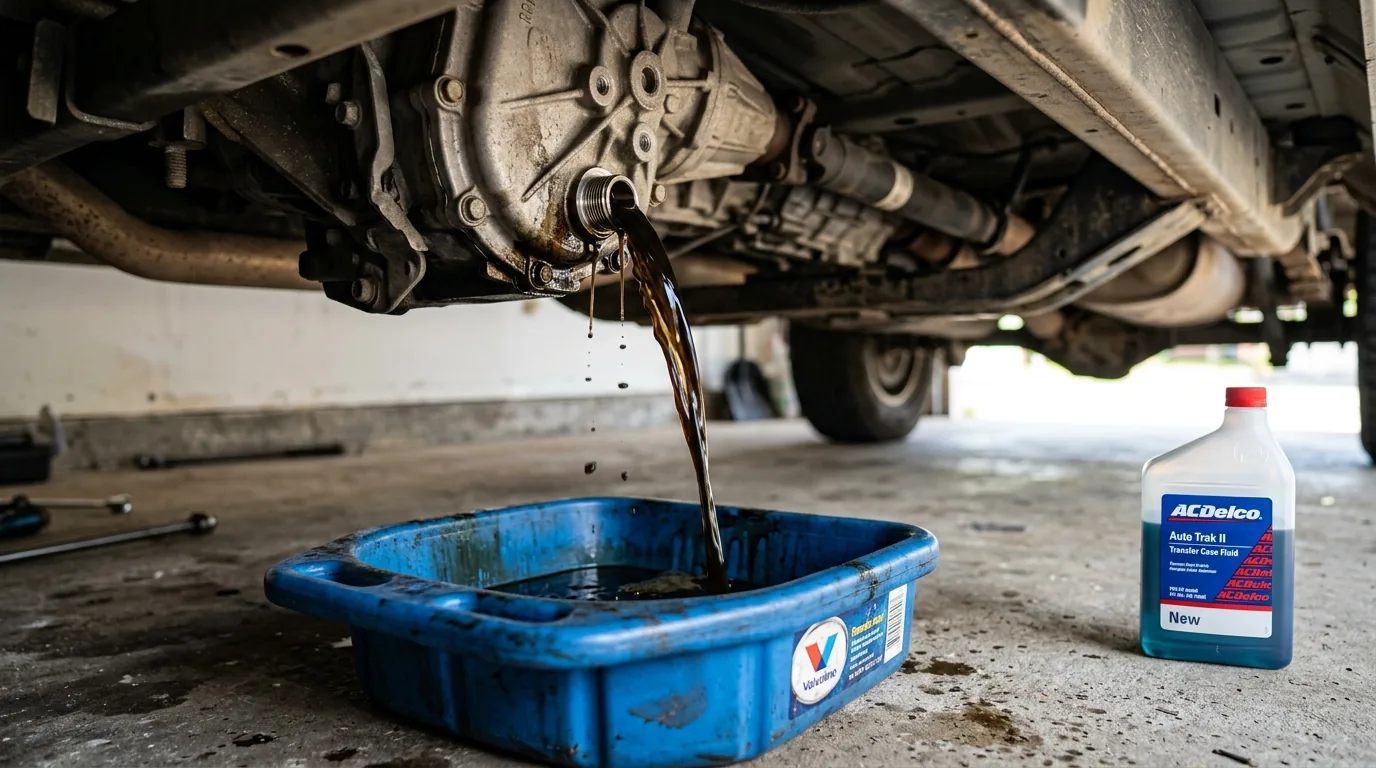
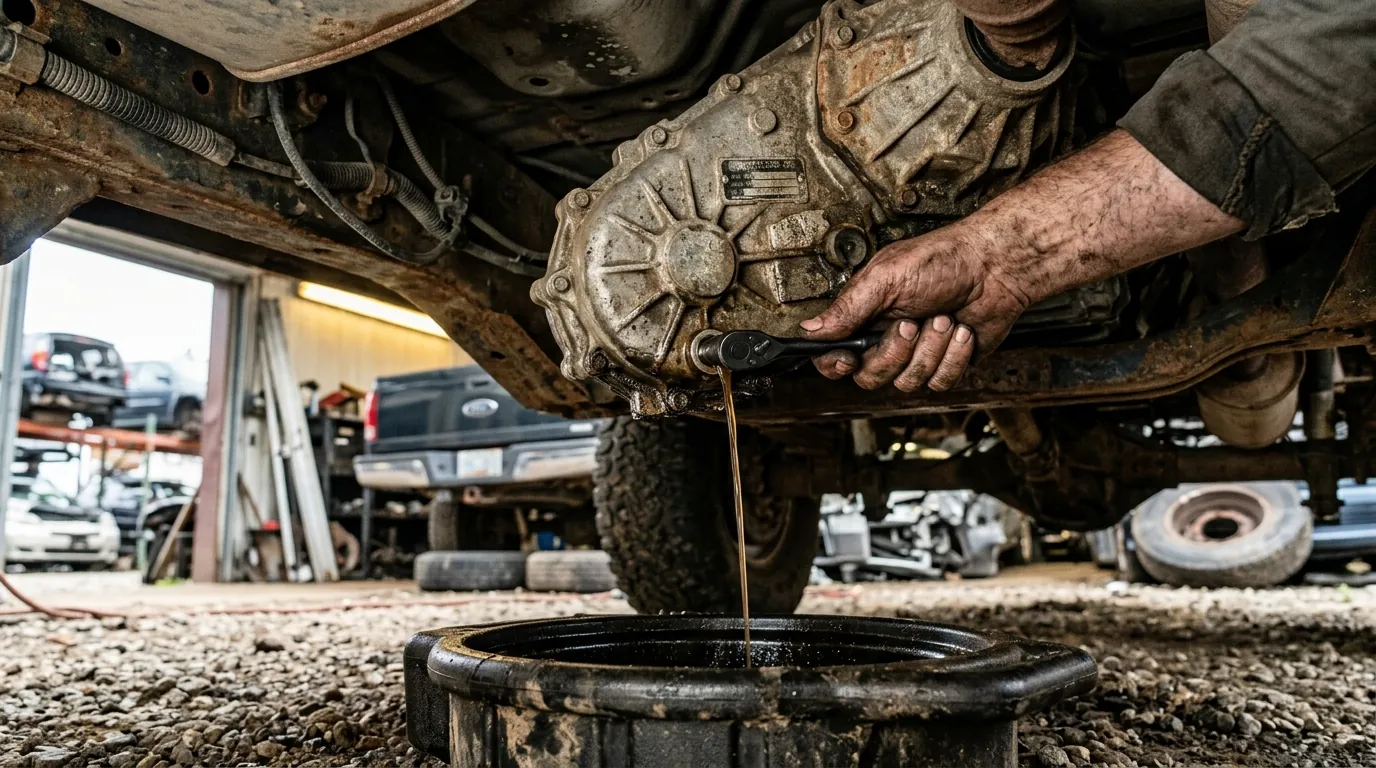
- Check the fluid. Pull the fill plug or dipstick if accessible. Fluid should be reddish or amber and shouldn't smell burnt. Dark brown or black fluid with metallic flakes signals internal wear. Walk away. Our transfer case fluid change cost guide explains what fluid condition tells you about internal health.
- Look for external leaks. Check the input seal (where the transfer case meets the transmission), the output seals (front and rear driveshaft flanges), and the case halves. Seepage is normal on high-mileage units. Active dripping is not.
- Spin the output shafts. Rotate the front and rear output flanges by hand. They should turn smoothly with consistent resistance. Grinding, clicking, or a notchy feel indicates worn chain or damaged gears.
- Check the shift mechanism. For electronic shift units, confirm the motor and wiring harness are intact and undamaged. For manual shift units, move the shift lever through all positions; it should click firmly into each detent.
- Match the part number. Some models used different transfer case units depending on the drivetrain option. A Jeep Grand Cherokee with Quadra-Trac II uses a different case than one with Quadra-Drive II. Your VIN identifies the exact unit you need.
Transfer Case Removal Tips
Pulling a transfer case at a self-pull yard is doable but labor-intensive. Here's the efficient sequence:
Tools you'll need: floor jack, transmission jack or ratchet straps for support, 12-18mm socket set, breaker bar, pry bar, drain pan, and penetrating oil.
Step sequence:
- Drain the fluid first; most transfer cases have a drain plug on the bottom. This drops 2-3 quarts and reduces weight.
- Remove the rear driveshaft at the transfer case flange (typically 4 bolts). Mark its orientation.
- Remove the front driveshaft at the transfer case flange.
- Disconnect the shift linkage or electrical connector.
- Disconnect the speedometer sensor if present.
- Support the transfer case with a transmission jack or ratchet strap.
- Remove the bolts securing the transfer case to the transmission adapter.
- Slide the transfer case rearward off the transmission output shaft.
Expect 2 to 4 hours depending on corrosion and accessibility. Budget another $50 to $150 for a core charge if the yard requires one.