A power steering fluid leak costs $150 to $1,500 to repair, depending on where the fluid is escaping. A deteriorated hose or loose fitting sits at the low end at $150 to $350, while a full steering rack replacement lands at the top at $700 to $1,500. The leak source determines the bill far more than the vehicle does, because the same three components fail across virtually every hydraulic power steering system: hoses, pump seals, and rack seals.
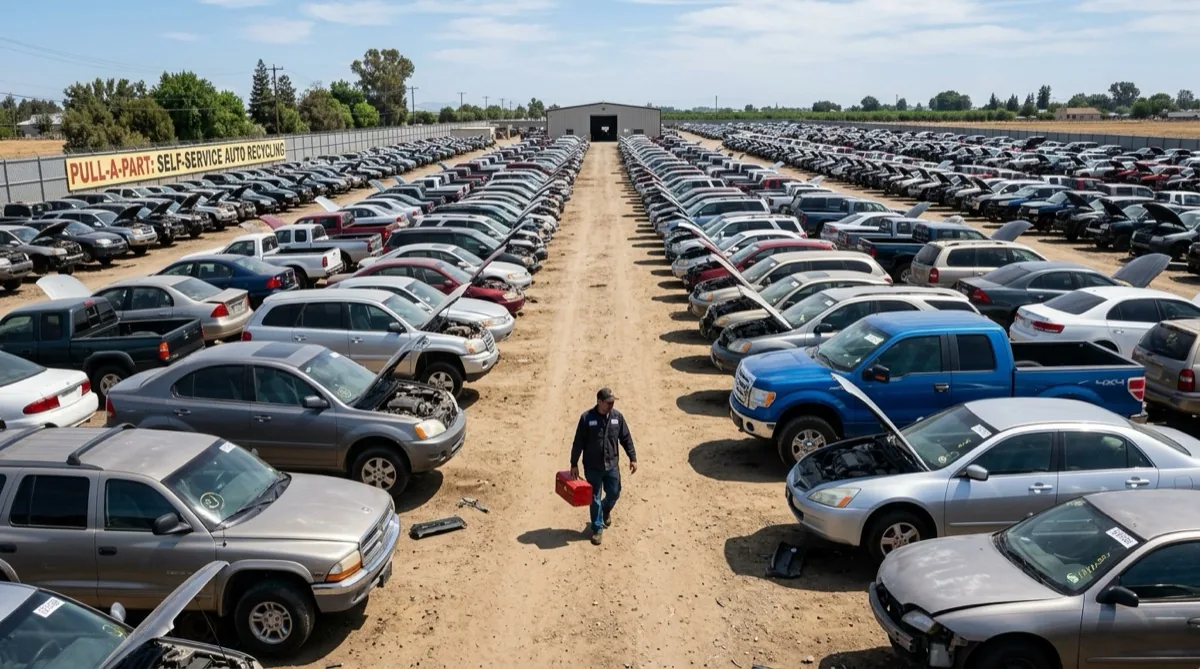
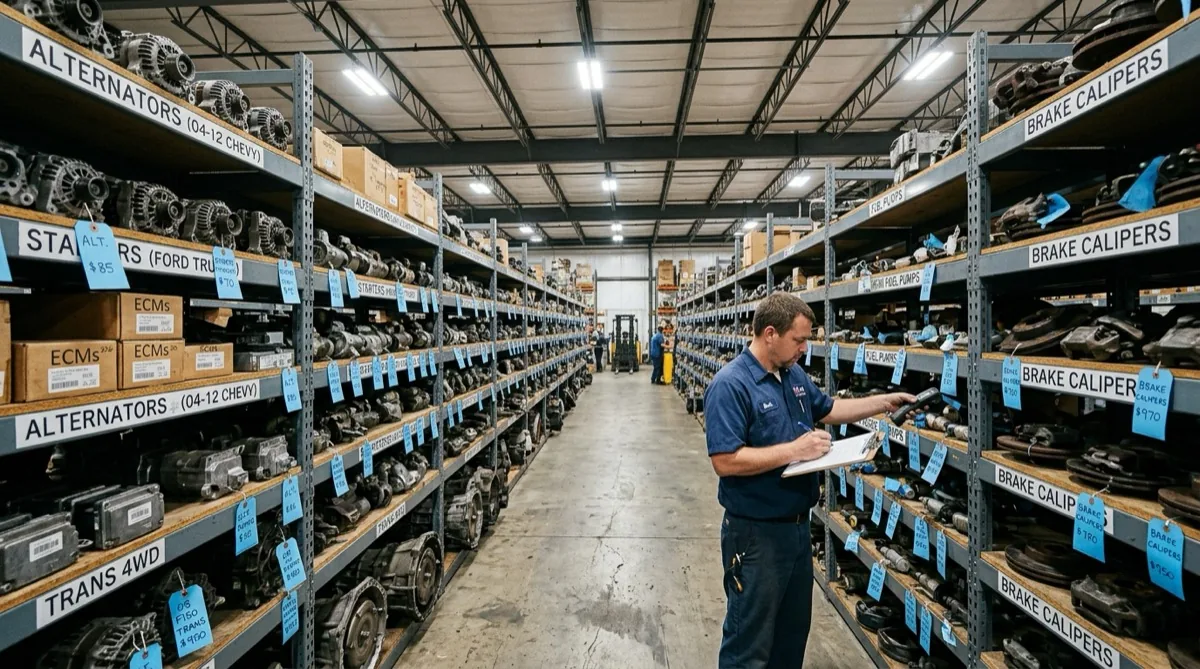
See also: how much do junkyards charge for parts.
If the leak is coming from the power steering pump itself, a used pump from a salvage yard runs $160 median across 10,656 priced listings in our index. If the steering rack is the source, a used rack carries a $340 median across 61,700 listings. In both cases, sourcing a used part cuts the component cost by 40 to 60 percent versus new.
- Hose or fitting leak: $150–$350 total — the cheapest and most common repair
- Pump seal repair or pump replacement: $200–$700 total (used pump median $160, labor $150–$300)
- Rack seal repair: $400–$900 total — requires removing the rack or using a seal kit in-place
- Full rack replacement: $700–$1,500 total (used rack median $340, labor $250–$500 plus alignment)
- Power steering fluid is red, pink, or amber — a colored puddle under the front of the vehicle is the first sign
- Dataset: 10,656 power steering pump and 61,700 steering rack priced listings, August 2026
Repair Cost by Leak Source
Power steering leaks come from five possible sources, each with a different repair cost. The table below covers parts, labor, and any required follow-up work like a wheel alignment or fluid flush.
| Leak Source | Part Cost | Labor | Additional | Total |
|---|---|---|---|---|
| Hose or O-ring | $30–$80 | $95–$200 | Fluid top-off ($10–$20) | $150–$350 |
| Pump seal (reseal only) | $20–$50 (seal kit) | $150–$250 | Fluid flush ($80–$120) | $200–$500 |
| Pump replacement | $100–$300 (used $160 median) | $150–$300 | Fluid flush ($80–$120) | $350–$700 |
| Rack seal (in-place reseal) | $40–$80 (seal kit) | $250–$450 | Alignment ($80–$120) | $400–$900 |
| Rack replacement | $200–$600 (used $340 median) | $250–$500 | Alignment ($80–$120) | $700–$1,500 |
A fluid flush is recommended with any pump or rack repair because metal shavings from a failing component circulate through the entire system. Installing a new pump without flushing the contaminated fluid shortens the replacement's lifespan.
How to Identify the Leak Source
Finding where the fluid is escaping narrows the repair estimate from a $1,350 range down to one line item. Power steering fluid has distinct characteristics that separate it from other automotive fluids.
Color. Fresh power steering fluid is red, pink, or light amber, depending on the brand and type. As it degrades, it darkens to reddish-brown or dark brown. If you find a bright red puddle, it could be power steering fluid or automatic transmission fluid; both use similar dye. Location on the ground is the tiebreaker.
Location on the ground. Power steering components sit at the front of the engine bay. A puddle near the front-center of the vehicle, roughly between the front wheels, points to a rack leak. A puddle slightly off-center toward the driver's side (on most vehicles) points to the pump. Transmission fluid drips from farther back, under the transmission case.
Where to look under the hood. Trace the leak from the bottom up:
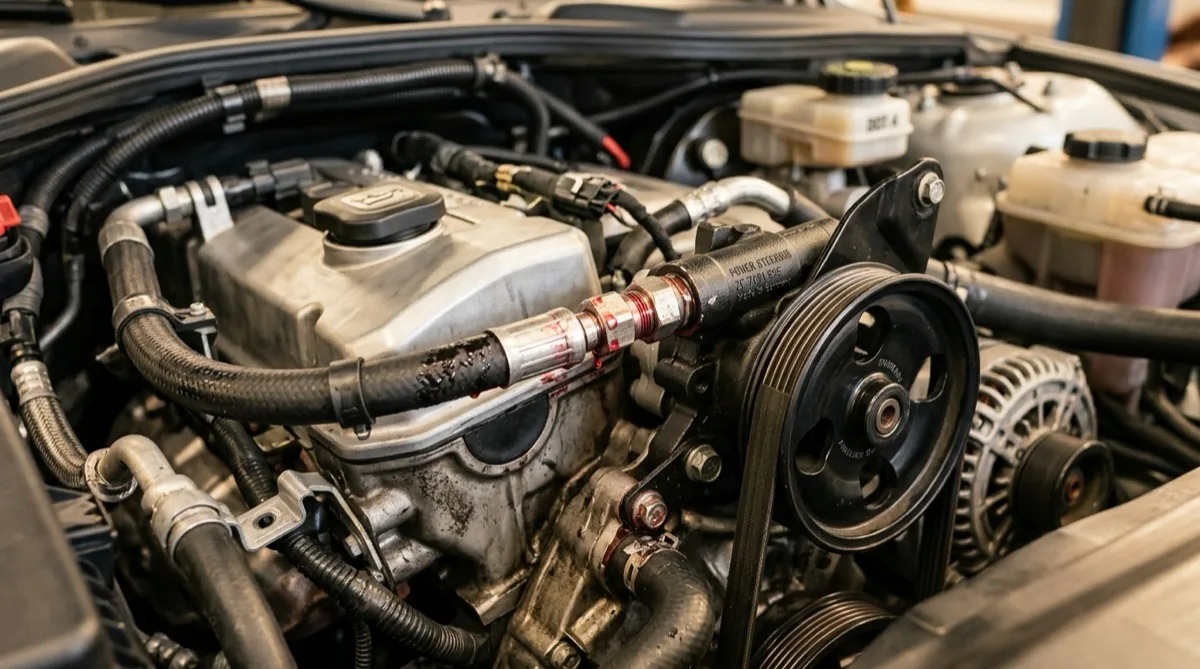
- Hose connections. Check both the high-pressure hose (from pump to rack) and the low-pressure return hose (from rack back to the reservoir). Leaks concentrate at the crimped fittings and the O-ring seats where hoses connect to the pump and rack.
- Pump body. Look for wetness around the pump shaft seal (where the pulley attaches) and the pump housing seams. A pump shaft seal leak appears as a wet ring around the front of the pump behind the pulley.
- Rack boots. The rubber accordion boots on each end of the steering rack protect the inner tie rod joints. If a boot is swollen, torn, or dripping fluid, the rack's internal seals have failed. Fluid fills the boot before it leaks out, so a swollen boot means the rack has been leaking for a while.
- Reservoir. Check the reservoir cap seal and the reservoir body for cracks. On vehicles with a remote reservoir (separate from the pump), the connecting hose can also leak.
Common Causes Ranked by Frequency
These five causes account for nearly all power steering leaks on vehicles with hydraulic power steering systems. They are listed from most to least common.
1. Deteriorated Hoses and O-Rings ($150–$350)
The high-pressure hose carries fluid at 1,200 to 1,500 PSI from the pump to the rack. The rubber degrades from heat cycling and oil contamination over 80,000 to 120,000 miles. The hose develops cracks at stress points near the crimped fittings, or the O-rings at connection points harden and shrink, breaking the seal.
This is the best-case scenario for your wallet. A replacement high-pressure hose costs $40 to $80 from a parts store, and a mechanic can swap it in under an hour. The low-pressure return hose is even cheaper ($20 to $40) because it does not need to withstand high pressure.
2. Pump Shaft Seal Failure ($200–$700)
The power steering pump has a shaft that passes through the pump housing to accept the drive pulley. The seal around that shaft wears over time, especially if the fluid has not been changed and abrasive particles circulate through the system. A failed shaft seal produces a slow weep that coats the front of the pump in fluid and eventually drips down.
Some pumps can be resealed with a shaft seal kit ($20 to $50 for the seal), but many shops recommend replacing the entire pump because the labor to reseal is nearly identical to the labor to swap the unit, and a new or remanufactured pump comes with all fresh seals. A used power steering pump runs $160 median from a salvage yard.
3. Rack Input Shaft Seal ($400–$900)
The steering rack has a seal where the input shaft enters the rack housing (the pinion seal). This seal sees constant rotational wear every time you turn the wheel. When it fails, fluid leaks from the top of the rack, usually dripping down the firewall.
Replacing the pinion seal requires removing enough of the rack assembly to access the input shaft, which is labor-intensive. Some technicians can replace the seal with the rack partially in place. Others pull the entire rack, which adds labor but guarantees a clean job. Either way, a wheel alignment is required afterward because the tie rods are disconnected during the repair.
For a detailed breakdown of rack replacement economics, see our rack and pinion replacement cost guide.
4. Rack Piston Seal Failure ($700–$1,500)
The internal piston seals inside the steering rack create the hydraulic pressure differential that provides power assist. When these seals fail, fluid bypasses the piston and fills the rack boots. The steering feels mushy, and the vehicle may drift or require more effort to turn at one extreme than the other.
Internal rack seal kits exist ($40 to $80), but resealing a rack in-place requires specialized tools and experience that most general repair shops do not have. The standard repair is a full rack replacement. A used steering rack runs $340 median across 61,700 salvage listings, while remanufactured racks cost $250 to $500 and new OEM racks run $400 to $900.
For a detailed breakdown, see our used steering rack pricing guide.
5. Reservoir Crack or Cap Seal ($50–$150)
The power steering fluid reservoir can develop hairline cracks from heat and age, especially on vehicles where the reservoir is integrated into the pump body rather than being a separate remote unit. The reservoir cap gasket can also dry out and leak, particularly after the cap has been removed and reinstalled multiple times for fluid top-offs.
This is the cheapest fix besides a hose clamp. A standalone reservoir costs $20 to $60. If the reservoir is built into the pump, the pump assembly must be replaced, which moves the cost into the $350 to $700 range.
When Is a Power Steering Leak an Emergency?
Not every power steering leak requires an immediate shop visit. The severity depends on the leak rate and how much fluid remains in the system.
Stop Driving
- The steering wheel is hard to turn. The reservoir is empty or nearly empty. The pump is running dry and overheating. Continued driving can seize the pump (adding $350 to $700 to the repair) or cause sudden loss of steering assist at highway speed, which is a safety hazard.
- You hear a loud whining or groaning noise when turning. This is the pump cavitating because it is drawing air instead of fluid. The pump is being damaged in real time.
- Fluid is spraying or dripping rapidly. A blown high-pressure hose or a catastrophically failed seal can drain the system in minutes. Pull over, shut off the engine, and have the vehicle towed.
Repair This Week
- Steady drip that leaves a puddle after parking. The system is losing fluid fast enough that you will need to top off the reservoir every few days. The leak will not improve on its own, and driving with low fluid accelerates wear on the pump and rack.
- Fluid level drops noticeably between weekly checks. Even if you don't see a puddle, a declining reservoir level confirms an active leak.
Monitor It
- A faint sheen or slow seep at a hose fitting. If the reservoir level stays stable for weeks and the leak is only a slight dampness at a connection point, you can monitor it and plan the repair at your convenience. Check the fluid level weekly and top off if needed.
Hydraulic vs Electric Power Steering
If your vehicle was built after 2012, there is a reasonable chance it uses electric power steering (EPS) instead of hydraulic. EPS vehicles have no power steering fluid, no pump, no hoses, and no rack seals to leak. The power assist comes from an electric motor mounted on the steering column or the rack itself.
How to tell which system you have: Open the hood and look for a power steering fluid reservoir. If you see a small translucent plastic reservoir with a cap marked "Power Steering" or showing a steering wheel icon, you have hydraulic power steering. If there is no reservoir and no belt-driven pump on the front of the engine, you have electric power steering.
EPS failures are different. Electric power steering problems involve a failed motor, a faulty torque sensor, or an ECU issue, not fluid leaks. EPS repair costs range from $500 to $1,500 depending on the component, but there is no fluid to leak and no routine maintenance to perform.
If you're searching for "power steering fluid leak" and your vehicle has EPS, the leak is coming from a different system. Red or pink fluid under an EPS vehicle is most likely automatic transmission fluid.
How to Save Money on Power Steering Leak Repairs
Diagnose the source before authorizing work. A shop that says "your power steering is leaking, we need to replace the rack for $1,400" without showing you where the fluid is coming from may be recommending the most expensive repair when a $200 hose swap would solve the problem. Ask the technician to show you the leak point.
Source used parts for major components. A used power steering pump at $160 median versus $200 to $400 new saves $40 to $240 on the part alone. A used steering rack at $340 median versus $400 to $900 new saves $60 to $560. Both are mechanical components with no electronics, so a used unit from a lower-mileage donor vehicle performs identically to new.
For current junkyard pricing across all parts, see our used auto parts price guide.
Consider a remanufactured rack over new OEM. Remanufactured steering racks from established rebuilders replace all seals, the pinion bearing, and the inner tie rods. They cost $250 to $500 versus $400 to $900 for new OEM and carry 1 to 3 year warranties. For vehicles you plan to keep, a reman rack is the best value-to-longevity ratio.
DIY the hose replacement. If the leak is a hose, this is one of the more accessible DIY repairs. The high-pressure hose unbolts at each end (two fittings), and the main challenge is catching the fluid that drains when you disconnect. Budget 1 to 2 hours, a new hose ($40 to $80), two quarts of power steering fluid ($10 to $20), and a drain pan. The labor savings of $95 to $200 make this worthwhile for anyone comfortable under the hood.
Do not ignore the leak. A $200 hose repair today prevents a $700 pump replacement next month. When the pump runs low on fluid, it overheats and the internal vanes score the housing. Once the pump is damaged, topping off the fluid does not restore it. The same principle applies to the rack: low fluid causes the internal seals to run dry and wear faster, accelerating a rack failure that might have been years away.