AC Condenser price snapshot
- Low
- $70
- Average
- $150
- High
- $349
Part price guide
Saurabh Kumar
Co-Founder & CTO, Part Price Guide
Built the pricing pipeline that collects and normalizes used OEM part listings from salvage yards and online marketplaces across the US.
Ambika Sharma
Co-Founder & COO, Part Price Guide
12 years of project management and technical operations experience. Reviews price guides for sample size, fitment accuracy, and data freshness.
Part overview
Across 179 vehicle models, the typical used AC condenser lists for $150, with model-level medians ranging from $70 to $349. Based on 105,863 priced salvage yard listings tracked by PartPriceGuide.
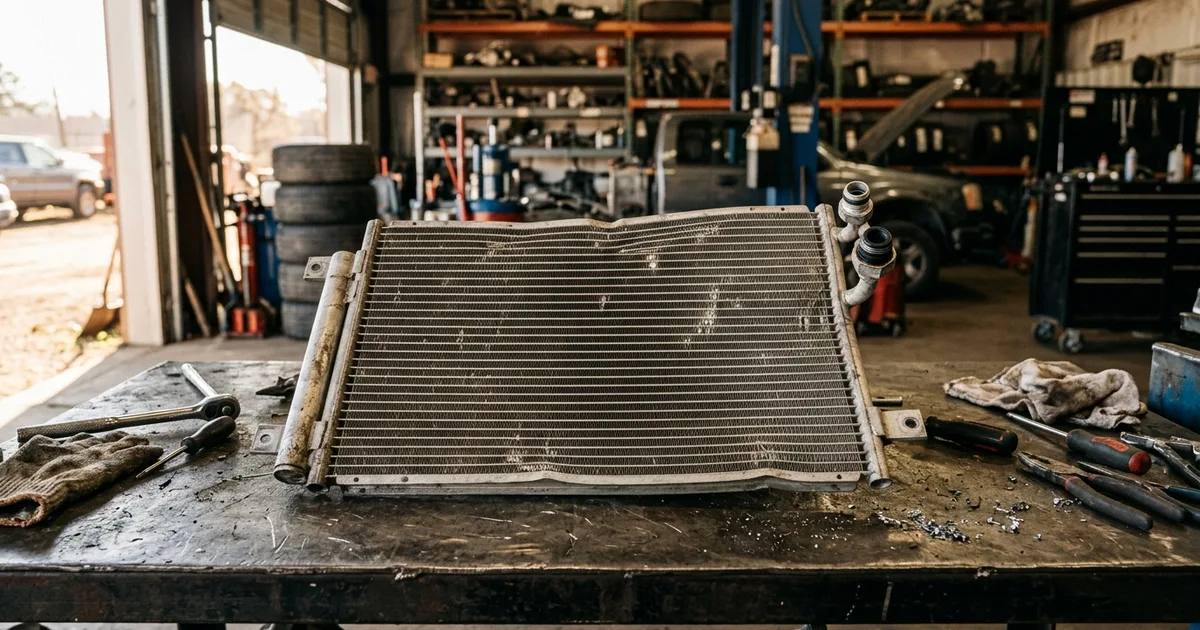
The AC condenser is a radiator-like heat exchanger mounted at the front of the car that cools hot AC refrigerant from gas back into liquid.
Replaced when flying road debris punctures the aluminum fins, leaking refrigerant and causing the air conditioning to blow warm air.
A used AC condenser costs $70 to $349, with a median asking price of $150. Based on price data across 179 vehicle-specific guides. Prices exclude shipping, core charges, and installation.
Condition comparison
| Grade | Price range | Relative range | Listings |
|---|---|---|---|
| Grade AClean / low wear | $70–$901 | 179 | |
| Grade BStandard used | $75–$949 | 178 | |
| Grade CVisible wear | $40–$150 | 104 | |
| Grade XUngraded | $54–$250 | 179 |
Median by grade
Median asking price by seller-reported condition grade · $70–$349 overall range
Vehicle-specific reference
179 of 184 guides currently priced
Price data updating
Price data updating
Price data updating
Price data updating
Price data updating
Compare by vehicle
Keep comparing
Common questions
Across 179 vehicle-specific guides with current pricing, used AC condenser guide medians run from $70 to $349, with a typical median of $150. Condition grade, mileage, and fitment move the price within that range.
Usually, yes. Buying a used AC condenser from a salvage yard or auto recycler typically costs a fraction of the new AC condenser replacement cost at a dealership. Compare the grade-level medians above against any replacement quote you've received, and remember our figures exclude shipping and installation labor.
Salvage yards, junkyards, pick-and-pull lots, and online used parts marketplaces all sell used AC condensers. Our index tracks asking prices nationally, so you can benchmark a local quote against the market range before you buy.
Expect to pay toward the upper half of the $70–$349 range for a grade-A AC condenser with low mileage. Check the grade table above for the current grade-level medians, and confirm whether shipping and any core charge are included in the quote.
They can be — condition grade is the key. Grade A parts come off low-mileage vehicles with little to no damage, grade B is average, and grade C or ungraded parts are the gamble. Buy grade A or B from a yard that offers a return window or warranty, and confirm the mileage of the donor vehicle before paying. The grade-level medians above show what each tier should cost.
Yes. A a/c condenser is another name for a AC condenser. The prices on this page apply regardless of what it's called in your region or by your mechanic.
No — they look similar (both are thin metal cores mounted at the front of the car) but serve different systems. The radiator cools engine coolant using outside airflow; the AC condenser, usually mounted directly in front of or behind the radiator, cools and condenses refrigerant from the air conditioning compressor back into a liquid. A leaking AC condenser won't cause engine overheating, and a leaking radiator won't affect your AC — diagnose which system is actually low before buying a replacement.
Inspect the aluminum cooling fins for widespread damage or blockage, and carefully check the tube welds and line connection ports for oily residue, which indicates refrigerant leaks. Verify that the line connection threads and quick-connect fittings are clean, unbent, and capped to prevent moisture contamination.
You can reuse a salvage condenser if the vehicle suffered rear or side damage, but avoid units from front-end collision vehicles that may have twisted or micro-cracked core passages. Always flush the internal refrigerant lines thoroughly with AC solvent before mounting it to eliminate metal shavings or debris.
Major indicators of a failing condenser include poor cooling performance while idling, visible refrigerant oil leaks on the front grille area, and physical damage from road debris like stones. A leak or severe clog prevents the AC system from cooling compressed gas back into a liquid state.
Used OEM condensers feature superior aluminum grade, original mounting hole alignment, and exact tube-and-fin density designed for optimal cooling efficiency. Cheap aftermarket condensers often have thinner walls, fewer cooling passages, and misaligned mounting brackets that cause fitment issues.
Yes, you should always replace the receiver-drier or desiccant element with a new unit whenever opening the AC system and installing a used condenser. The desiccant absorbs ambient moisture, which degrades AC cooling performance and creates corrosive acid inside the AC lines.
Keep the refrigerant inlet and outlet ports tightly capped until the exact moment you attach the AC lines to keep air and debris out. Handle the condenser carefully by its outer frame to avoid bending the delicate aluminum cooling fins during installation.