AC Compressor price snapshot
- Low
- $80
- Average
- $151
- High
- $334
Part price guide
Saurabh Kumar
Co-Founder & CTO, Part Price Guide
Built the pricing pipeline that collects and normalizes used OEM part listings from salvage yards and online marketplaces across the US.
Ambika Sharma
Co-Founder & COO, Part Price Guide
12 years of project management and technical operations experience. Reviews price guides for sample size, fitment accuracy, and data freshness.
Part overview
Across 179 vehicle models, the typical used AC compressor lists for $150, with model-level medians ranging from $80 to $334. Based on 133,032 priced salvage yard listings tracked by PartPriceGuide.
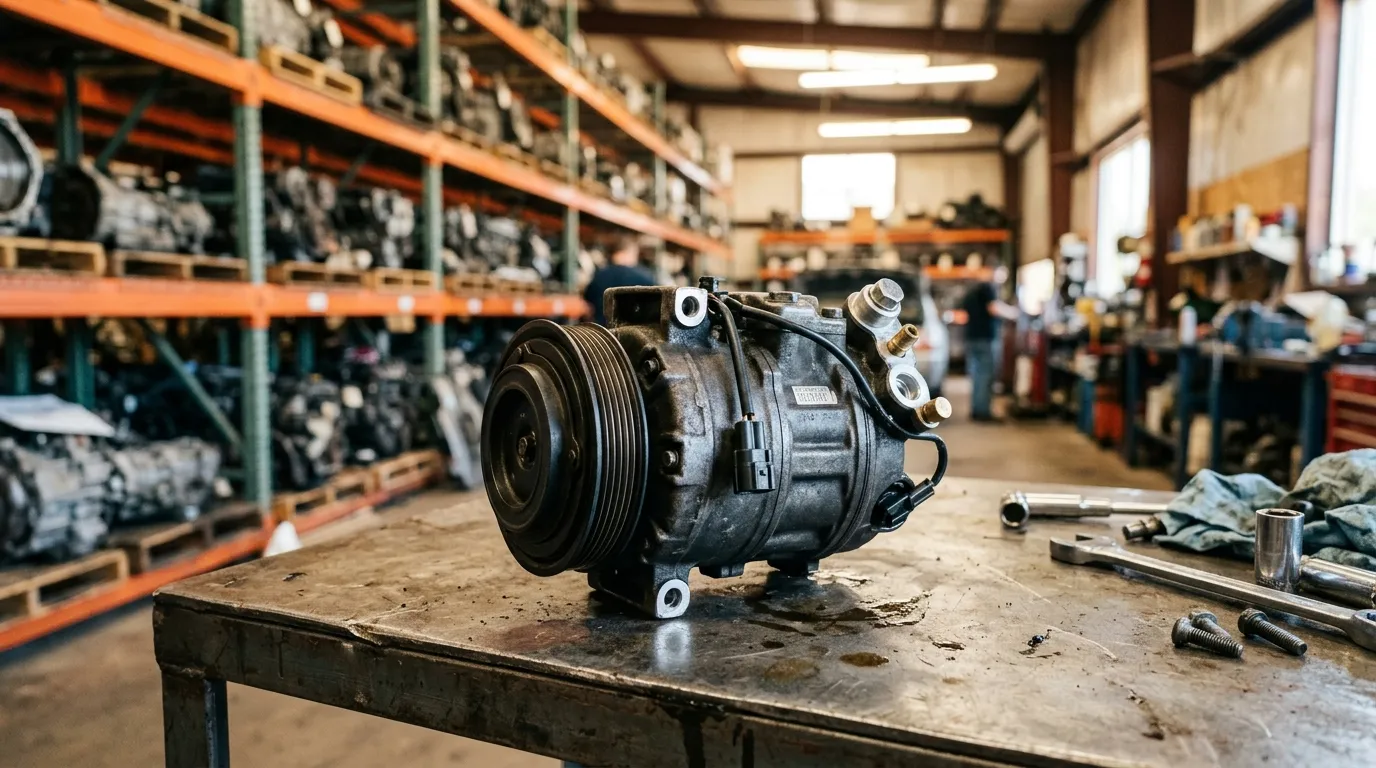
The AC compressor pressurizes and pumps refrigerant through the air conditioning system to cool and dehumidify cabin air.
Replaced when the compressor clutch fails to engage, the pulley squeals loudly, or internal mechanical failure locks up the pump.
A used AC compressor costs $80 to $334, with a median asking price of $150. Based on price data across 179 vehicle-specific guides. Prices exclude shipping, core charges, and installation.
Condition comparison
| Grade | Price range | Relative range | Listings |
|---|---|---|---|
| Grade AClean / low wear | $83–$334 | 179 | |
| Grade BStandard used | $75–$528 | 177 | |
| Grade CVisible wear | $40–$325 | 114 | |
| Grade XUngraded | $50–$400 | 179 |
Median by grade
Median asking price by seller-reported condition grade · $80–$334 overall range
Vehicle-specific reference
179 of 184 guides currently priced
Price data updating
Price data updating
Price data updating
Price data updating
Price data updating
Compare by vehicle
Keep comparing
Common questions
Across 179 vehicle-specific guides with current pricing, used AC compressor guide medians run from $80 to $334, with a typical median of $150. Condition grade, mileage, and fitment move the price within that range.
Usually, yes. Buying a used AC compressor from a salvage yard or auto recycler typically costs a fraction of the new AC compressor replacement cost at a dealership. Compare the grade-level medians above against any replacement quote you've received, and remember our figures exclude shipping and installation labor.
Salvage yards, junkyards, pick-and-pull lots, and online used parts marketplaces all sell used AC compressors. Our index tracks asking prices nationally, so you can benchmark a local quote against the market range before you buy.
Expect to pay toward the upper half of the $80–$334 range for a grade-A AC compressor with low mileage. Check the grade table above for the current grade-level medians, and confirm whether shipping and any core charge are included in the quote.
They can be — condition grade is the key. Grade A parts come off low-mileage vehicles with little to no damage, grade B is average, and grade C or ungraded parts are the gamble. Buy grade A or B from a yard that offers a return window or warranty, and confirm the mileage of the donor vehicle before paying. The grade-level medians above show what each tier should cost.
Yes. A a/c compressor is another name for a AC compressor. Other common names include air conditioning compressor. The prices on this page apply regardless of what it's called in your region or by your mechanic.
Buying a used OEM AC compressor is a cost-effective way to restore air conditioning, provided the system on the donor vehicle was sealed prior to removal. Tested salvage compressors retain factory internal tolerances that often exceed cheap aftermarket rebuilds. Ensuring the oil port was capped prevents moisture contamination and internal corrosion.
Rotate the front clutch hub manually to confirm that the internal pistons stroke smoothly without binding or scraping sounds. Check the electrical clutch connector pins for corrosion and ensure the pulley bearing turns silently without wobble. Verify that the suction and discharge ports show clean oil without black metallic debris, which indicates internal pump burnout.
Yes, whenever replacing an AC compressor, you should also replace the receiver-drier (or accumulator) and the expansion valve to prevent system contamination. If your old compressor suffered catastrophic failure, flushing the condenser and lines is mandatory to remove metallic debris. Installing fresh O-rings on line fittings prevents frustrating refrigerant leaks.
AC compressors vary in mounting bolt patterns, clutch pulley diameter, belt groove count, and manifold hose attachment styles across engine variations. Compare the manufacturer tag on the compressor body to verify oil type and displacement specifications match your car. Sourcing the part using your VIN ensures total compatibility with your climate control system.
Failure symptoms include warm air blowing from vents, loud squealing or metallic grinding noises when turning on the AC, and visible oil leaks around the shaft seal. A failing clutch assembly may fail to engage when power is applied, leaving the pulley spinning free. Swapping in a functional used compressor restores cold cabin air flow.
Mechanical installation of an AC compressor is manageable, but handling refrigerant legally requires professional recovery and evacuation equipment. You must have a certified shop discharge remaining refrigerant before removal and pull a deep vacuum after installation to eliminate air and moisture. Adding the exact recommended type and amount of peg oil ensures long compressor life.