Tail Light price snapshot
- Low
- $65
- Average
- $217
- High
- $795
Part price guide
Saurabh Kumar
Co-Founder & CTO, Part Price Guide
Built the pricing pipeline that collects and normalizes used OEM part listings from salvage yards and online marketplaces across the US.
Ambika Sharma
Co-Founder & COO, Part Price Guide
12 years of project management and technical operations experience. Reviews price guides for sample size, fitment accuracy, and data freshness.
Part overview
Across 179 vehicle models, the typical used tail light lists for $193, with model-level medians ranging from $65 to $795. Based on 367,985 priced salvage yard listings tracked by PartPriceGuide.
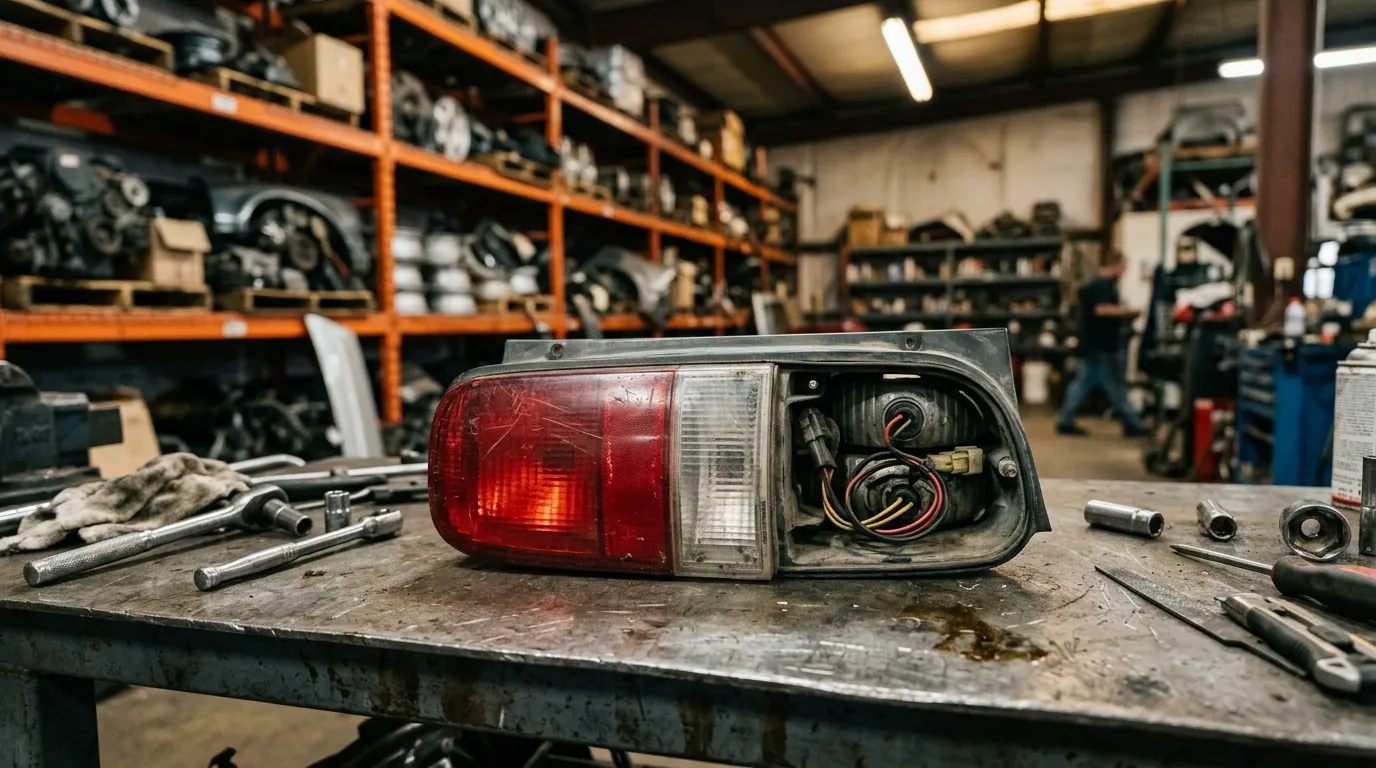
The tail light assembly houses the rear brake lights, running lights, and turn signals to indicate stopping and turning maneuvers to following drivers.
Replaced primarily because of cracked lenses from parking collisions, internal moisture condensation, or failed integrated LED circuit boards.
A used tail light costs $65 to $795, with a median asking price of $193. Based on price data across 179 vehicle-specific guides. Prices exclude shipping, core charges, and installation.
Vehicle-specific reference
179 of 184 guides currently priced
Price data updating
Price data updating
Price data updating
Price data updating
Price data updating
Compare by vehicle
Keep comparing
Common questions
Across 179 vehicle-specific guides with current pricing, used tail light guide medians run from $65 to $795, with a typical median of $193. Condition grade, mileage, and fitment move the price within that range.
Usually, yes. Buying a used tail light from a salvage yard or auto recycler typically costs a fraction of the new tail light replacement cost at a dealership. Compare the grade-level medians above against any replacement quote you've received, and remember our figures exclude shipping and installation labor.
Salvage yards, junkyards, pick-and-pull lots, and online used parts marketplaces all sell used tail lights. Our index tracks asking prices nationally, so you can benchmark a local quote against the market range before you buy.
Expect to pay toward the upper half of the $65–$795 range for a grade-A tail light with low mileage. Check the grade table above for the current grade-level medians, and confirm whether shipping and any core charge are included in the quote.
They can be — condition grade is the key. Grade A parts come off low-mileage vehicles with little to no damage, grade B is average, and grade C or ungraded parts are the gamble. Buy grade A or B from a yard that offers a return window or warranty, and confirm the mileage of the donor vehicle before paying. The grade-level medians above show what each tier should cost.
Yes. A taillight is another name for a tail light. Other common names include tail light assembly, taillight assembly, tail lamp, rear light. The prices on this page apply regardless of what it's called in your region or by your mechanic.
No — on most vehicles the brake (stop) light is one function built into the tail light assembly, not a separate part; the same bulb or LED segment glows dim for running/tail-light duty and bright for braking. "Tail light" usually refers to the whole rear lighting housing you'd buy used, while "brake light" describes just the stop-lamp function inside it, or, on many vehicles, a separate high-mounted center brake light on the trunk or rear window/spoiler. If that separate center brake light failed, you need that specific part, not the full tail light assembly.
Examine the lens for hairline cracks, chips, or faded red color tinting caused by sun exposure. Check the rear foam sealing gasket for drying or tearing, as a bad seal allows water leakages into the trunk cavity. Ensure all rear mounting studs and bulb socket locking tabs are completely intact and unstripped.
Used LED tail lights are generally very reliable because solid-state LEDs have extremely long operating lifespans compared to standard incandescent bulbs. However, you should ask the seller to verify that all individual LED diode rows illuminate evenly without dead spots. Testing the circuit connector for pin corrosion ensures electrical reliability once installed.
While outer body sheet metal openings remain identical across trim levels, lens tinting, chrome trim accents, and internal LED setups often differ. Higher trim levels may feature smoked lenses or dynamic turn signal sequences that require different wiring pinouts. Verifying component compatibility using your vehicle's VIN prevents unexpected wiring mismatch issues.
To prevent water intrusion into your trunk, inspect and replace the foam rubber backing gasket when installing a used tail light. Clean all mating surfaces on the vehicle body thoroughly to remove dirt and old adhesive residue before tightening the mounting nuts. Torquing fasteners evenly creates a watertight seal that protects interior electronics.
Installing a used tail light assembly is one of the easiest DIY auto repairs, usually requiring only a socket wrench or screwdriver. Most units are accessed by pulling back the trunk side carpet liner and unscrewing two to four retention nuts. Unplugging the main harness connector and swapping the assembly can be completed in 15 minutes.
Tail light assemblies fail primarily due to parking lot impacts, plastic embrittlement from ultraviolet sun exposure, or seal degradation that leads to internal condensation. Water accumulation can short-circuit socket contacts and cause recurring bulb burnouts or blown fuses. Replacing a damaged housing with a quality used assembly restores safety lighting and moisture protection.