Differential price snapshot
- Low
- $35
- Average
- $544
- High
- $3,495
Part price guide
Saurabh Kumar
Co-Founder & CTO, Part Price Guide
Built the pricing pipeline that collects and normalizes used OEM part listings from salvage yards and online marketplaces across the US.
Ambika Sharma
Co-Founder & COO, Part Price Guide
12 years of project management and technical operations experience. Reviews price guides for sample size, fitment accuracy, and data freshness.
Part overview
Across 17 vehicle models, the typical used differential lists for $380, with model-level medians ranging from $35 to $3,495. Based on 126 priced salvage yard listings tracked by PartPriceGuide.
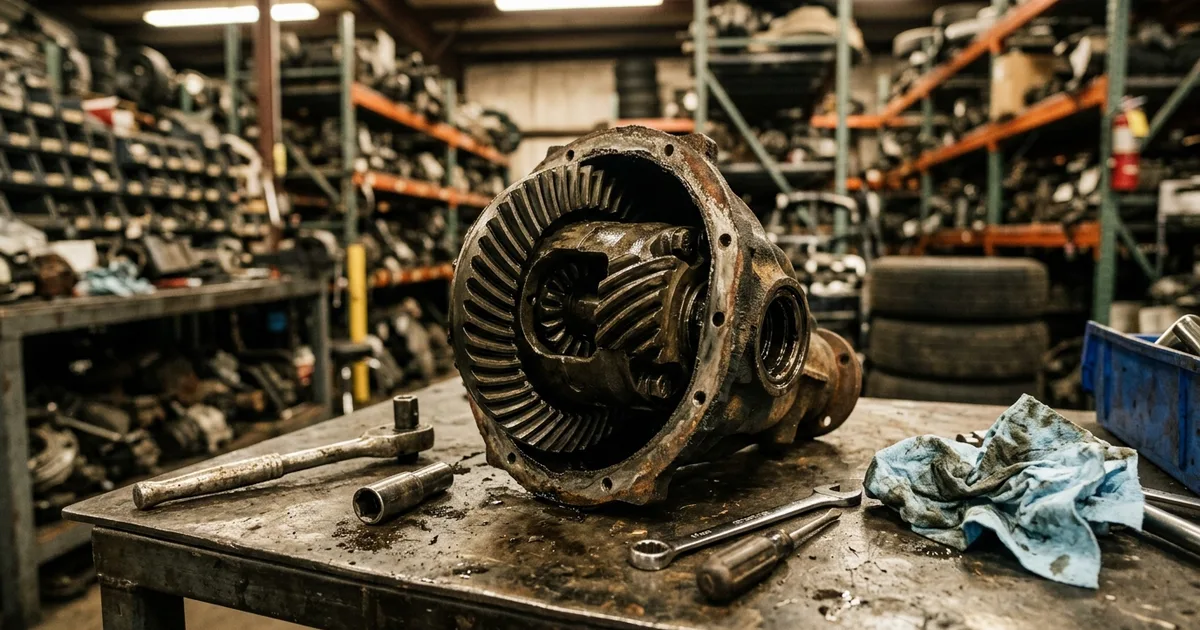
The differential distributes engine torque to the drive wheels while allowing them to rotate at different speeds when cornering.
Most often replaced due to loud whining or howling noises at speed, clunking during acceleration, or metal shavings found in fluid.
A used differential costs $35 to $3,495, with a median asking price of $380. Based on price data across 17 vehicle-specific guides. Prices exclude shipping, core charges, and installation.
Condition comparison
| Grade | Price range | Relative range | Listings |
|---|---|---|---|
| Grade AClean / low wear | $50–$3,495 | 55 | |
| Grade BStandard used | $56–$1,700 | 16 | |
| Grade CVisible wear | $165–$345 | 3 | |
| Grade XUngraded | $35–$2,000 | 24 |
Median by grade
Median asking price by seller-reported condition grade · $35–$3,495 overall range
Vehicle-specific reference
17 of 184 guides currently priced
Price data updating
Price data updating
Price data updating
Price data updating
Price data updating
Price data updating
Price data updating
Price data updating
Price data updating
Price data updating
Price data updating
Price data updating
Price data updating
Price data updating
Price data updating
Price data updating
Price data updating
Price data updating
Price data updating
Price data updating
Price data updating
Price data updating
Price data updating
Price data updating
Price data updating
Price data updating
Price data updating
Price data updating
Price data updating
Price data updating
Price data updating
Price data updating
Price data updating
Price data updating
Price data updating
Price data updating
Price data updating
Price data updating
Price data updating
Price data updating
Price data updating
Price data updating
Price data updating
Price data updating
Price data updating
Price data updating
Price data updating
Price data updating
Price data updating
Price data updating
Price data updating
Price data updating
Price data updating
Price data updating
Price data updating
Price data updating
Price data updating
Price data updating
Price data updating
Price data updating
Price data updating
Price data updating
Price data updating
Price data updating
Price data updating
Price data updating
Price data updating
Price data updating
Price data updating
Price data updating
Price data updating
Price data updating
Price data updating
Price data updating
Price data updating
Price data updating
Price data updating
Price data updating
Price data updating
Price data updating
Price data updating
Price data updating
Price data updating
Price data updating
Price data updating
Price data updating
Price data updating
Price data updating
Price data updating
Price data updating
Price data updating
Price data updating
Price data updating
Price data updating
Price data updating
Price data updating
Price data updating
Price data updating
Price data updating
Price data updating
Price data updating
Price data updating
Price data updating
Price data updating
Price data updating
Price data updating
Price data updating
Price data updating
Price data updating
Price data updating
Price data updating
Price data updating
Price data updating
Price data updating
Price data updating
Price data updating
Price data updating
Price data updating
Price data updating
Price data updating
Price data updating
Price data updating
Price data updating
Price data updating
Price data updating
Price data updating
Price data updating
Price data updating
Price data updating
Price data updating
Price data updating
Price data updating
Price data updating
Price data updating
Price data updating
Price data updating
Price data updating
Price data updating
Price data updating
Price data updating
Price data updating
Price data updating
Price data updating
Price data updating
Price data updating
Price data updating
Price data updating
Price data updating
Price data updating
Price data updating
Price data updating
Price data updating
Price data updating
Price data updating
Price data updating
Price data updating
Price data updating
Price data updating
Price data updating
Price data updating
Price data updating
Price data updating
Price data updating
Price data updating
Price data updating
Price data updating
Price data updating
Compare by vehicle
Keep comparing
Common questions
Across 17 vehicle-specific guides with current pricing, used differential guide medians run from $35 to $3,495, with a typical median of $380. Condition grade, mileage, and fitment move the price within that range.
Usually, yes. Buying a used differential from a salvage yard or auto recycler typically costs a fraction of the new differential replacement cost at a dealership. Compare the grade-level medians above against any replacement quote you've received, and remember our figures exclude shipping and installation labor.
Salvage yards, junkyards, pick-and-pull lots, and online used parts marketplaces all sell used differentials. Our index tracks asking prices nationally, so you can benchmark a local quote against the market range before you buy.
Expect to pay toward the upper half of the $35–$3,495 range for a grade-A differential with low mileage. Check the grade table above for the current grade-level medians, and confirm whether shipping and any core charge are included in the quote.
They can be — condition grade is the key. Grade A parts come off low-mileage vehicles with little to no damage, grade B is average, and grade C or ungraded parts are the gamble. Buy grade A or B from a yard that offers a return window or warranty, and confirm the mileage of the donor vehicle before paying. The grade-level medians above show what each tier should cost.
Yes. A diff is another name for a differential. Other common names include rear diff, rear differential, front differential, rear end. The prices on this page apply regardless of what it's called in your region or by your mechanic.
The differential carrier is the housing that holds the ring and pinion gears, spider gears, and bearings — it's the internal "guts" of the differential. What's sold as a complete used "differential" or "rear end" is usually this carrier already mounted in its housing, sometimes with the axle tubes attached. If only the internal gears are worn (from towing or high mileage), a rebuilt carrier alone can sometimes be swapped into your existing housing, but most buyers find it simpler to source a complete used differential assembly matched to their axle ratio.
Rotate the input flange by hand to verify smooth gear movement without binding, catching, or excessive rotational backlash. Inspect the outer case for cracks, check the drain plug for large metal fragments, and check the axle shaft seals for signs of heavy gear oil leaks.
A failing differential typically produces a high-pitched whining, humming, or howling noise that changes volume when accelerating, decelerating, or turning. Other symptoms include clunking sounds when shifting into gear, heavy gear oil leaks, and excessive play in the driveshaft connection.
You must match the exact gear ratio stamped on the differential tag or axle housing, as well as the axle splines, housing type, and ABS sensor provisions. Installing a differential with an incorrect gear ratio on a four-wheel-drive vehicle will cause severe drivetrain binding and transfer case failure.
Replacing your worn differential with a complete used assembly is significantly faster and less expensive than paying for labor-intensive ring and pinion bearing rebuilds. Salvage differentials are complete drop-in units, saving hours of precision shimming and gear pattern setup time.
Drain the leftover fluid, flush out any debris, and refill the housing with fresh, vehicle-specific gear oil and limited-slip friction modifier if required. Replacing the pinion seal and axle shaft oil seals while the unit is out of the vehicle prevents future fluid leaks.
Upgrading to a used factory limited-slip differential from the same model line is often possible if axle spline counts, housing dimensions, and gear ratios match. Verify whether the donor vehicle had traction control features or different axle lengths before attempting the swap.