Hood price snapshot
- Low
- $182
- Average
- $639
- High
- $1,420
Part price guide
Saurabh Kumar
Co-Founder & CTO, Part Price Guide
Built the pricing pipeline that collects and normalizes used OEM part listings from salvage yards and online marketplaces across the US.
Ambika Sharma
Co-Founder & COO, Part Price Guide
12 years of project management and technical operations experience. Reviews price guides for sample size, fitment accuracy, and data freshness.
Part overview
Across 179 vehicle models, the typical used hood lists for $617, with model-level medians ranging from $182 to $1,420. Based on 85,000 priced salvage yard listings tracked by PartPriceGuide.
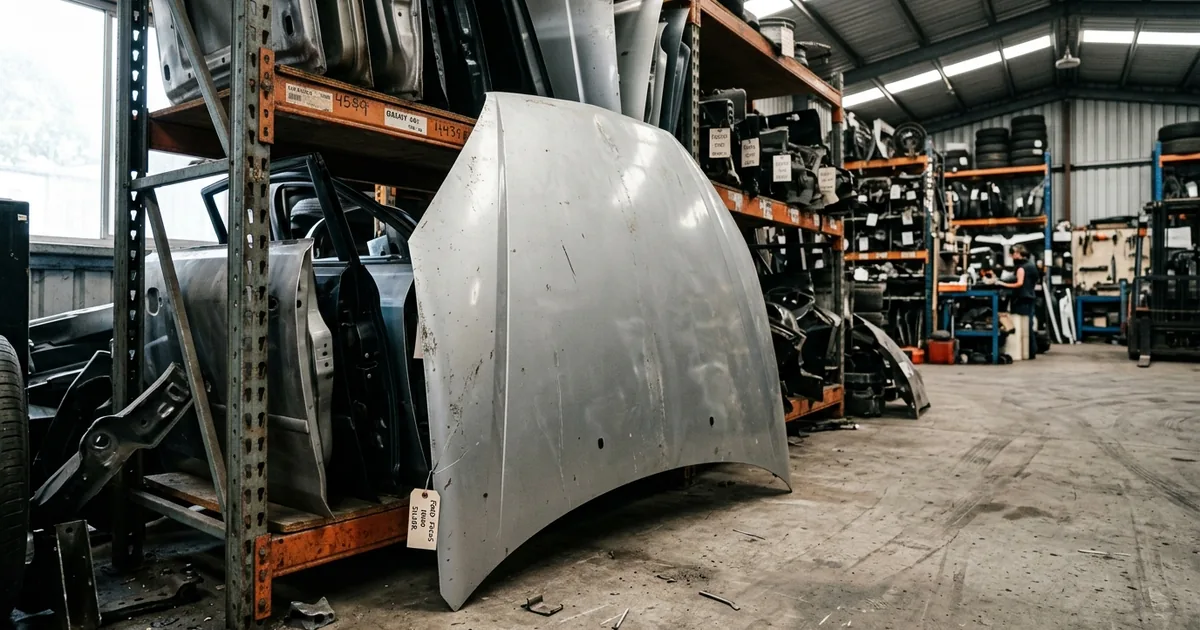
The hood is the hinged metal or composite panel covering the engine compartment to protect internal components and allow service access.
Commonly replaced due to front-end collision crumpling, deep denting from hail or falling objects, or severe rust along the leading edge.
A used hood costs $182 to $1,420, with a median asking price of $617. Based on price data across 179 vehicle-specific guides. Prices exclude shipping, core charges, and installation.
Vehicle-specific reference
179 of 184 guides currently priced
Price data updating
Price data updating
Price data updating
Price data updating
Price data updating
Compare by vehicle
Keep comparing
Common questions
Across 179 vehicle-specific guides with current pricing, used hood guide medians run from $182 to $1,420, with a typical median of $617. Condition grade, mileage, and fitment move the price within that range.
Usually, yes. Buying a used hood from a salvage yard or auto recycler typically costs a fraction of the new hood replacement cost at a dealership. Compare the grade-level medians above against any replacement quote you've received, and remember our figures exclude shipping and installation labor.
Salvage yards, junkyards, pick-and-pull lots, and online used parts marketplaces all sell used hoods. Our index tracks asking prices nationally, so you can benchmark a local quote against the market range before you buy.
Expect to pay toward the upper half of the $182–$1,420 range for a grade-A hood with low mileage. Check the grade table above for the current grade-level medians, and confirm whether shipping and any core charge are included in the quote.
They can be — condition grade is the key. Grade A parts come off low-mileage vehicles with little to no damage, grade B is average, and grade C or ungraded parts are the gamble. Buy grade A or B from a yard that offers a return window or warranty, and confirm the mileage of the donor vehicle before paying. The grade-level medians above show what each tier should cost.
Yes. A bonnet is another name for a hood. Other common names include hood panel. The prices on this page apply regardless of what it's called in your region or by your mechanic.
Ensure fitment by confirming that the donor vehicle shares your exact model year range, trim package, and body style. Check whether your car has specific cowl shapes, integrated scoop vents, or washer nozzle placements that vary across model options. Comparing VIN data with the salvage yard prevents receiving a hood designed for a different body configuration.
Inspect the front leading edge for hidden rust, rock chips, or dent repairs, and check the underside structural ribbing for buckling caused by past accidents. Ensure that the hinge mounting points and safety latch striker are undamaged and free of twisting. Checking for straight seam lines along the sides guarantees that the hood will lie flush with your fenders.
Installing a used hood requires at least two people due to its size and awkward weight distribution. The process involves bolting the hood to the hinge arms, adjusting alignment gaps along the fenders, and connecting washer fluid lines and prop rods. Careful adjustment of the hood latch and safety catch is essential to prevent accidental opening while driving.
A used OEM metal hood offers superior crash safety, precise weight calibration for hood struts, and factory corrosion resistance compared to thin aftermarket sheet metal. Aftermarket hoods frequently suffer from flimsiness, improper latch alignment, and poor paint prep quality. Sourcing a used original hood guarantees ideal panel gaps and long-lasting durability.
Hood alignment is adjusted by slightly loosening the hinge bolts and shifting the panel until side gaps relative to the fenders are even. The front height can be fine-tuned by screwing the rubber stop bumpers in or out and adjusting the lower latch assembly position. Taking time to align the latch ensures smooth opening and secure closure.
Purchasing a used hood matching your vehicle's factory paint code eliminates the need for expensive surface preparation, primer, and topcoat painting. Even if minor polishing is required, an original paint finish matches surrounding body panels far better than cheap resprays. This approach saves substantial labor time and significantly reduces overall repair costs.