ABS Module price snapshot
- Low
- $90
- Average
- $191
- High
- $900
Part price guide
Saurabh Kumar
Co-Founder & CTO, Part Price Guide
Built the pricing pipeline that collects and normalizes used OEM part listings from salvage yards and online marketplaces across the US.
Ambika Sharma
Co-Founder & COO, Part Price Guide
12 years of project management and technical operations experience. Reviews price guides for sample size, fitment accuracy, and data freshness.
Part overview
Across 179 vehicle models, the typical used ABS module lists for $176, with model-level medians ranging from $90 to $900. Based on 181,758 priced salvage yard listings tracked by PartPriceGuide.
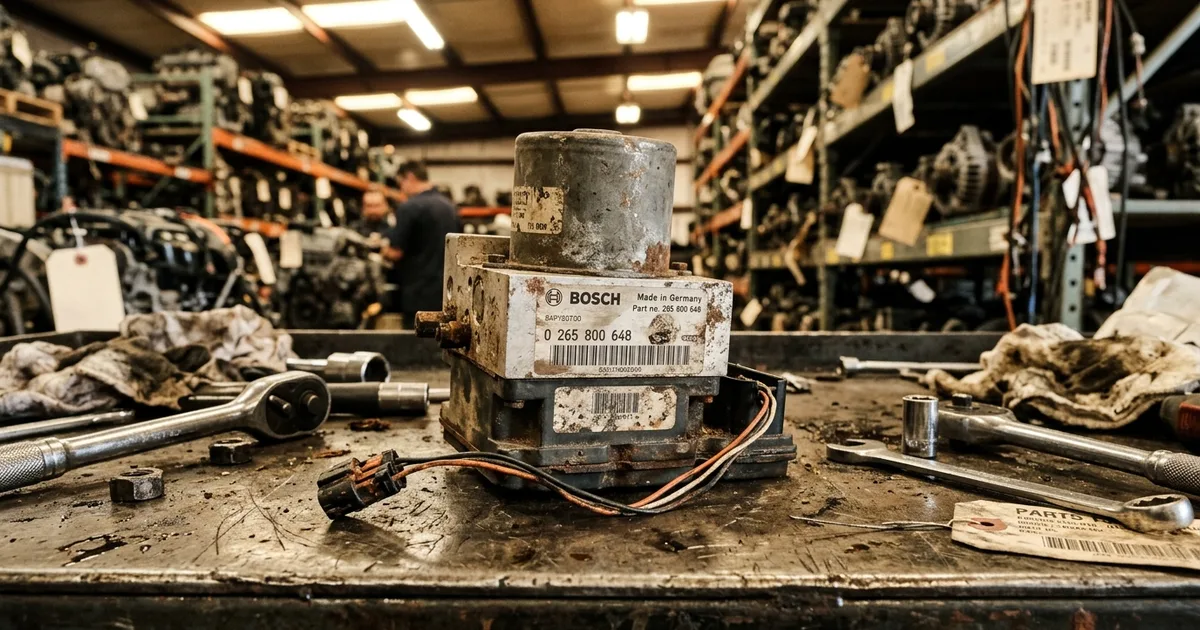
The ABS module is an electronic control unit and hydraulic valve block that prevents wheel lockup during hard braking.
Replaced when ABS warning lights illuminate, brake pedal pulsation occurs under light pressure, or individual wheel brakes lock unexpectedly.
A used ABS module costs $90 to $900, with a median asking price of $176. Based on price data across 179 vehicle-specific guides. Prices exclude shipping, core charges, and installation.
Condition comparison
| Grade | Price range | Relative range | Listings |
|---|---|---|---|
| Grade AClean / low wear | $90–$918 | 179 | |
| Grade BStandard used | $90–$789 | 177 | |
| Grade CVisible wear | $50–$850 | 106 | |
| Grade XUngraded | $50–$950 | 178 |
Median by grade
Median asking price by seller-reported condition grade · $90–$900 overall range
Vehicle-specific reference
179 of 184 guides currently priced
Price data updating
Price data updating
Price data updating
Price data updating
Price data updating
Compare by vehicle
Keep comparing
Common questions
Across 179 vehicle-specific guides with current pricing, used ABS module guide medians run from $90 to $900, with a typical median of $176. Condition grade, mileage, and fitment move the price within that range.
Usually, yes. Buying a used ABS module from a salvage yard or auto recycler typically costs a fraction of the new ABS module replacement cost at a dealership. Compare the grade-level medians above against any replacement quote you've received, and remember our figures exclude shipping and installation labor.
Salvage yards, junkyards, pick-and-pull lots, and online used parts marketplaces all sell used ABS modules. Our index tracks asking prices nationally, so you can benchmark a local quote against the market range before you buy.
Expect to pay toward the upper half of the $90–$900 range for a grade-A ABS module with low mileage. Check the grade table above for the current grade-level medians, and confirm whether shipping and any core charge are included in the quote.
They can be — condition grade is the key. Grade A parts come off low-mileage vehicles with little to no damage, grade B is average, and grade C or ungraded parts are the gamble. Buy grade A or B from a yard that offers a return window or warranty, and confirm the mileage of the donor vehicle before paying. The grade-level medians above show what each tier should cost.
Yes. A abs pump is another name for a ABS module. Other common names include abs control module, ebcm, abs unit. The prices on this page apply regardless of what it's called in your region or by your mechanic.
The ABS module (also called the ABS pump or hydraulic control unit) is the pump-and-valve assembly, often with its own control computer, that modulates brake pressure at each wheel during anti-lock braking. A wheel speed sensor is a small, inexpensive sensor mounted at each wheel hub that reports that wheel's rotational speed to the ABS module. A single wheel speed sensor fault (commonly an ABS light plus one wheel's data missing) is far more common — and far cheaper to fix — than an actual ABS module failure, so get the specific fault code read before assuming you need the whole module.
Common symptoms of a failing ABS module include an illuminated ABS or brake warning light, a spongy brake pedal, and loss of anti-lock braking function during sudden stops. If diagnostic scans confirm internal hydraulic valve failure or electronic board breakdown, replacing it with a tested used unit is a cost-effective option.
Yes, on most modern vehicles, a used ABS module must be reprogrammed or coded to your car's specific VIN and traction control configuration using a professional diagnostic scan tool. Installing a salvage unit without programming often results in persistent dashboard error lights and disabled stability control features.
Inspect the electrical connector for bent pins, corrosion, or melted casing, and check the hydraulic block for fluid leaks around the bleeder ports and brake line threads. Avoid salvage modules from vehicles involved in heavy front-end collisions, as impact force can crack internal solenoid wiring or housing.
You can often buy just the electronic control unit if your hydraulic pump block is in good working order, which saves on shipping and avoids bleeding the brake lines. However, purchasing the complete module and pump assembly from a salvage yard ensures full component compatibility and prevents leaks between aged seals.
Buying a used ABS module is safe provided it comes from a low-mileage donor vehicle and carries a yard warranty guaranteeing functionality. Ensure the salvage yard has tested or verified the electrical contacts and stored the unit in a dry environment to prevent internal rust.
You must match the exact OEM part number stamped on the module's sticker or housing, not just your vehicle's year, make, and model. Variations in trim levels, engine sizes, and option packages like traction control often require different module hardware and internal firmware.