A junkyard alternator costs $25 to $200, with the price depending almost entirely on whether you pull it yourself or buy it over the counter. Self-pull yards like Pull-A-Part charge $25 to $80 for most models, while full-service salvage yards with tested and graded inventory run $75 to $200.
Those numbers come from our analysis of 12,236 salvage yard alternator listings across 45 vehicle models. The national median is $96 across all sources, but junkyards, especially self-service ones, consistently price below that mark.
- Self-pull yards: $25–$80 for most models, flat-rate pricing common
- Counter-service yards: $75–$200 with testing and 30–90 day warranties
- National median across all sources: $96 (PartPriceGuide, 12,236 listings)
- Best deal: common models (Grand Cherokee, Explorer, Challenger) at self-pull yards
- Always test: spin the pulley, check the connector, ask for a bench test
Self-Pull Yard Pricing
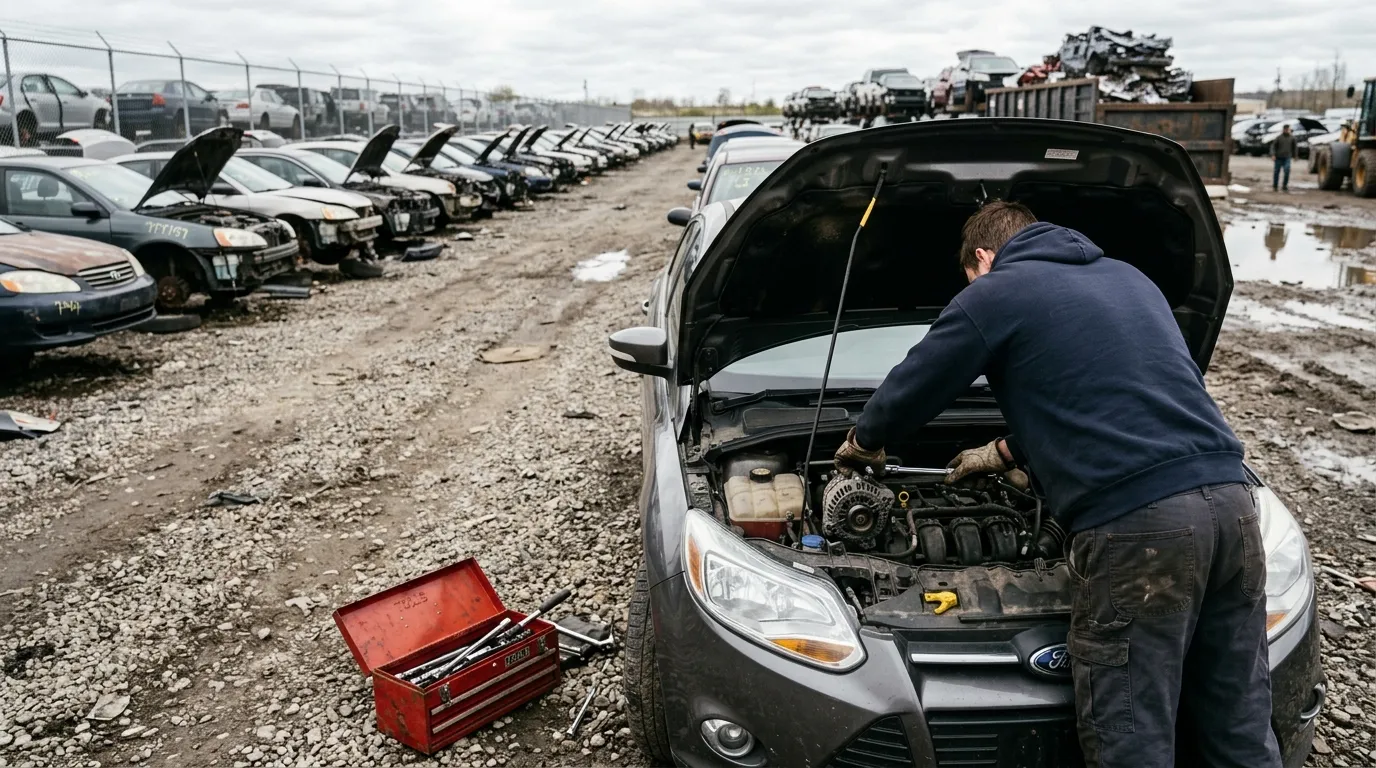
Self-service yards (Pull-A-Part, LKQ Pick Your Part, and regional chains) are the cheapest source for used alternators. The business model is simple: you walk the lot, find the car, remove the part, and pay a set price at the register.
Typical self-pull alternator pricing:
| Yard Type | Price Range | Warranty |
|---|---|---|
| Pull-A-Part | $25–$60 | None to 30 days |
| LKQ Pick Your Part | $30–$70 | Usually 30 days |
| Independent self-pull | $25–$80 | Varies |
The catch: you take on all the risk. There's no bench test, no grade letter, and often no return policy. You need to know what you're looking at before you pull.
Counter-Service Yard Pricing
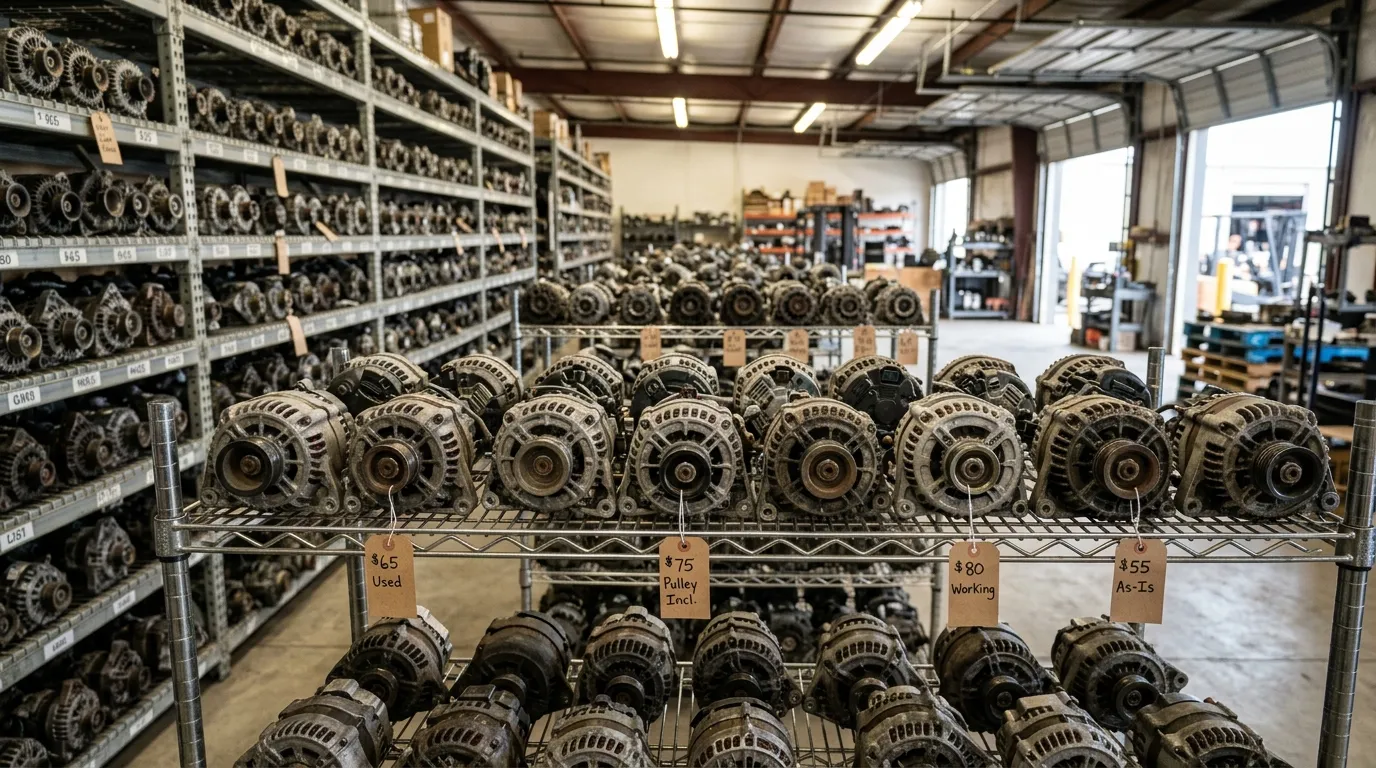
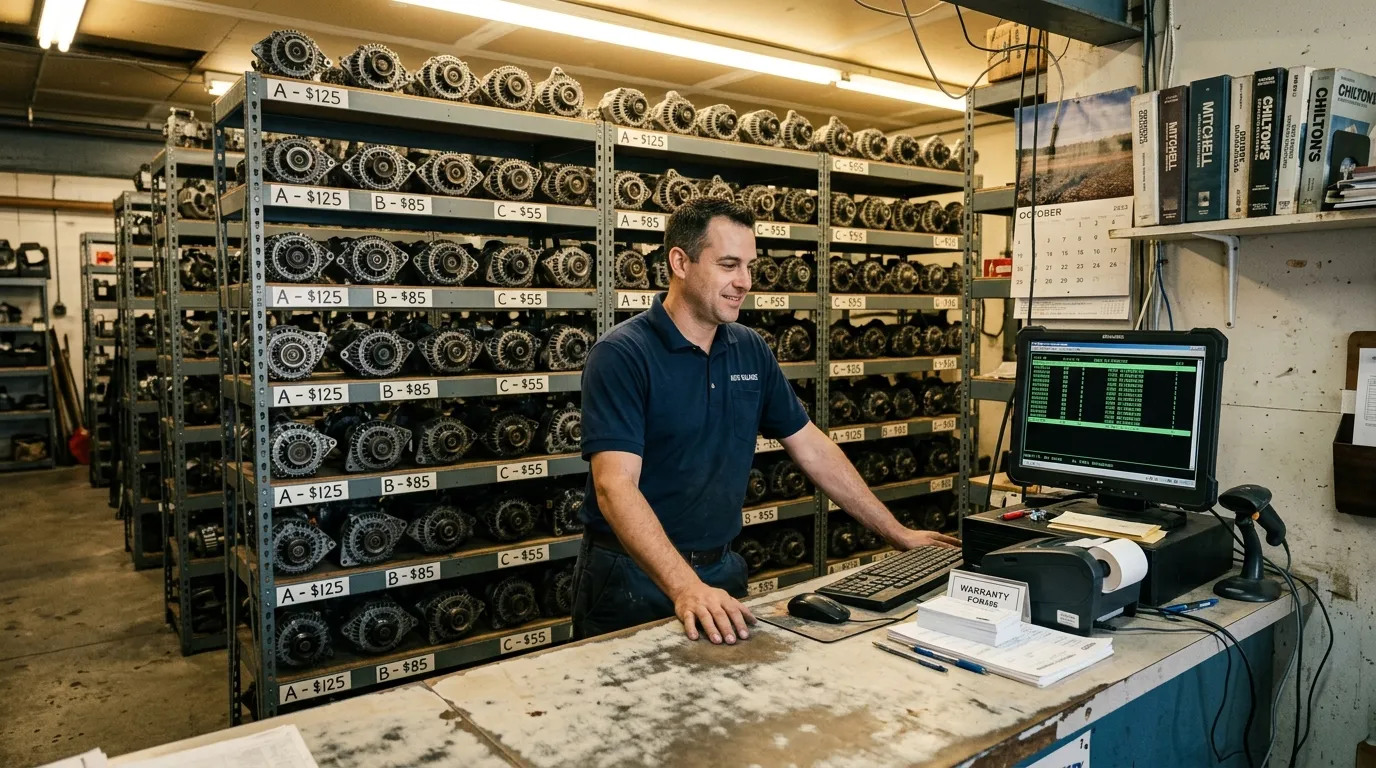
Full-service salvage yards pull, test, and grade their parts before listing them. This is where the bulk of our 12,236 indexed listings come from.
Counter-service pricing by condition grade:
| Grade | Median Price | What It Means |
|---|---|---|
| Grade A | $96 | Highest condition, tested and verified |
| Grade B | $110 | Mid-tier, often from newer vehicles |
| Grade X | $65 | Ungraded, sold as-is |
| Grade C | $75 | Lower condition, may need cleaning |
Counter-service yards charge more because they absorb the testing and warranty risk. A 30 to 90 day warranty is standard for Grade A and B units. If the alternator fails within the window, you get a replacement or refund.
When counter-service is worth the premium: you can't test the part yourself, you need a specific hard-to-find model, or the vehicle is your daily driver and downtime costs money.
Junkyard Prices by Vehicle Model
Even at junkyards, model matters. These are median prices from our index for the most commonly listed alternators:
| Vehicle | Median | Listings | Best Source |
|---|---|---|---|
| Chevy Equinox | $65 | 36 | Either, cheap everywhere |
| Chevy Malibu | $75 | 171 | Self-pull for $30–$45 |
| Dodge Challenger | $80 | 612 | Self-pull or counter |
| Kia Forte | $81 | 587 | Self-pull for best deal |
| Hyundai Elantra | $85 | 658 | High supply, negotiate |
| Jeep Grand Cherokee | $95 | 1,156 | Highest supply, easy to find |
| Toyota Corolla | $96 | 752 | Common at any yard |
| Ford Explorer | $113 | 1,061 | Counter for warranty |
| Toyota 4Runner | $193 | 410 | Counter, worth testing |
| Jeep Wrangler | $200 | 388 | Self-pull saves the most |
| Mercedes E-Class | $400 | 160 | Self-pull if available |
Look up your specific model on our alternator price index before calling any yard so you know what fair looks like.
How to Test Before You Pull
At a self-pull yard, you can't bench-test the alternator while it sits in the car (the car has no battery). But you can catch the most common failures:
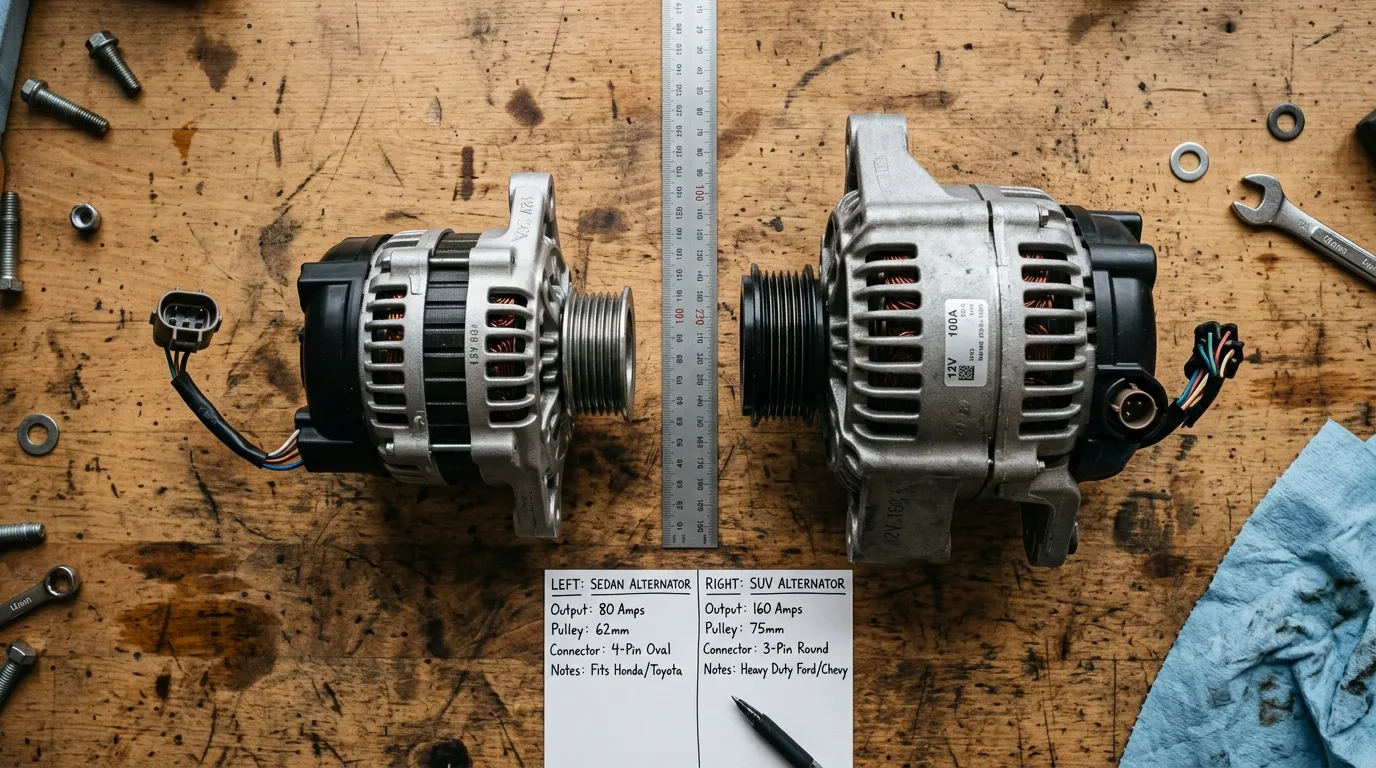
1. Spin the pulley by hand. Grip the pulley and rotate it. It should spin smoothly with slight magnetic resistance. Any grinding, scraping, or rough spots means worn bearings, the most common failure point.
2. Check the electrical connector. Look at the plug that connects to the wiring harness. Pins should be clean, straight, and free of corrosion. Green or white buildup means moisture damage.
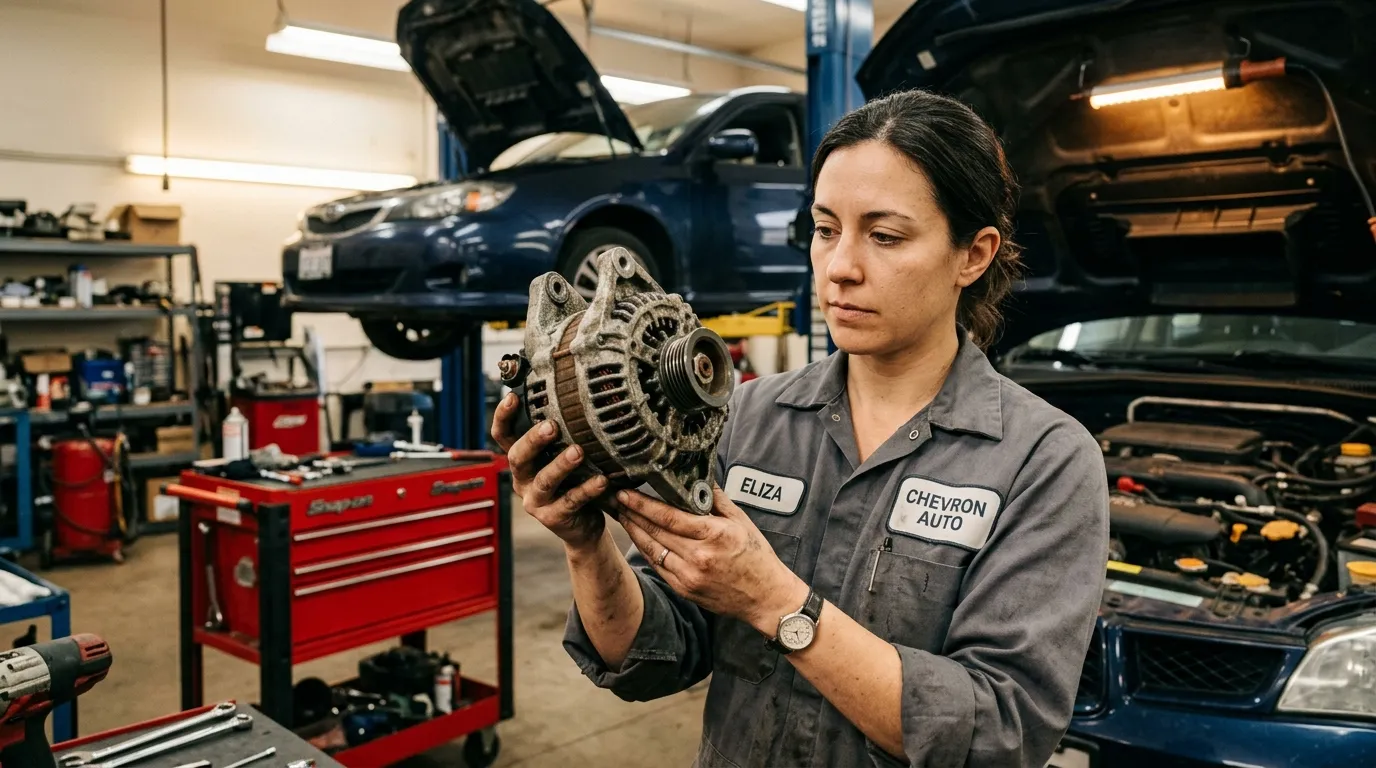
3. Inspect the housing. Cracks in the aluminum case, oil contamination from a leaking valve cover gasket, or heat discoloration are all warning signs.
4. Shake it. Hold the alternator and shake it side to side. Rattling inside suggests loose components or a failed bearing.
5. Check the brush access port. Some alternators have a small cover on the back that lets you see the brushes. If they are worn down to less than 5mm, the alternator has limited life left.
If you want a more thorough inspection process, read our guide on what to check before buying a used alternator.
Core Charges and Returns
Some yards charge a core deposit of $10 to $30 when you buy a used alternator. You get it back when you return your old alternator. Not every yard does this, so ask before you pay.
Return policies by yard type:
- Self-pull chains: 30-day exchange at most locations. No refunds, exchange only, same part type.
- Counter-service yards: 30 to 90 day warranty for Grade A/B parts. Refund or replacement depending on the yard.
- Online recyclers: Varies widely. Check the specific seller's terms. Shipping costs on returns eat into savings.