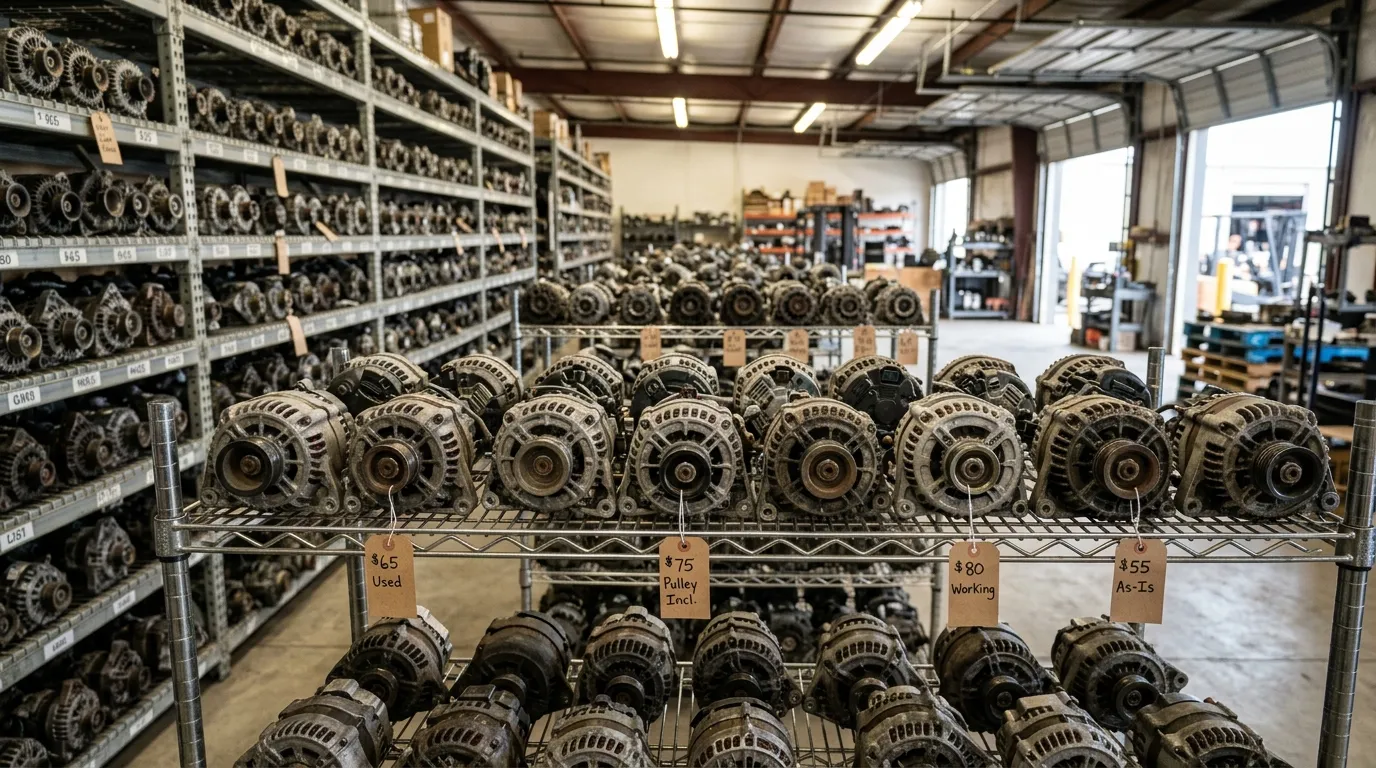
A used alternator costs between $65 and $400, with a national median of $96. That range comes from 12,236 priced salvage yard listings across 45 vehicle models, not estimates, not dealer quotes, but actual asking prices from yards across the country.
The price you pay depends almost entirely on two factors: your vehicle model and the part's condition grade. A Chevy Equinox alternator runs a $65 median while a Mercedes E-Class commands $400, a 6x spread that generic pricing guides completely miss.
- Median used alternator price: $96 across 12,236 priced listings from salvage yards nationwide
- Range: $65 to $400 depending on vehicle model and condition grade
- Cheapest models: Chevy Equinox ($65), Chevy Malibu ($75), Subaru Forester ($75)
- Most expensive: Mercedes E-Class ($400), Mercedes C-Class ($212), Jeep Wrangler ($200)
- Grade A vs Grade B spreads only $14 at the median — model matters more than grade
Overall Used Alternator Pricing
Across all 12,236 priced listings in the PartPriceGuide index, here is what used alternators actually sell for:
| Metric | Price |
|---|---|
| Minimum | $65 |
| Median | $96 |
| Average | $111 |
| Maximum | $400 |
*Source: PartPriceGuide.com analysis of 12,236 salvage yard listings, August 2026.*
Prices by Vehicle Model
This is where generic guides fall apart. The table below shows actual median prices for the 15 most-listed alternator models in our index:
| Vehicle Model | Median Price | Avg Price | Listings |
|---|---|---|---|
| Jeep Grand Cherokee | $95 | $122 | 1,156 |
| Ford Explorer | $113 | $135 | 1,061 |
| Toyota Corolla | $96 | $128 | 752 |
| Hyundai Elantra | $85 | $115 | 658 |
| Jeep Cherokee | $93 | $117 | 658 |
| Dodge Challenger | $80 | $118 | 612 |
| GMC Sierra 1500 | $126 | $136 | 600 |
| Kia Forte | $81 | $129 | 587 |
| Dodge Durango | $96 | $123 | 499 |
| Dodge Charger | $86 | $119 | 486 |
| Toyota 4Runner | $193 | $180 | 410 |
| Jeep Wrangler | $200 | $242 | 388 |
| Ram 1500 | $95 | $415 | 374 |
| Ford F150 | $100 | $125 | 362 |
| Chevy Silverado 1500 | $120 | $133 | 350 |
High supply drives prices down. The Jeep Grand Cherokee has the most listings (1,156) and sits right at the median. When junkyards have a surplus, you have negotiating power.
SUVs and trucks cost more. Full-size trucks (GMC Sierra at $126, Silverado at $120) and off-road SUVs (4Runner at $193, Wrangler at $200) run higher because their alternators handle heavier electrical loads and are less interchangeable.
Luxury models are outliers. The Mercedes E-Class commands a $400 median, more than 4x what a Hyundai Elantra costs. Fewer units reach salvage yards, and dealer replacement is expensive enough that used pricing stays elevated.
Check the exact price for your vehicle on our alternator price lookup, which covers all 45 models in real time.
How Condition Grade Affects Price
Salvage yards assign letter grades to indicate part condition. Here is how grading affects used alternator pricing:
| Grade | Median | Average | Min | Max | Models Graded |
|---|---|---|---|---|---|
| A (Best) | $96 | $114 | $65 | $352 | 45 |
| B (Mid) | $110 | $139 | $80 | $723 | 46 |
| X (Ungraded) | $65 | $74 | $40 | $150 | 46 |
| C (Lower) | $75 | $79 | $30 | $125 | 21 |
Grade X (ungraded) units at $65 are the budget option. The yard didn't test or inspect them closely, so they pass the savings and the risk to you.
The takeaway: don't pay a premium for Grade B over Grade A unless the yard can show specific mileage or testing data. The A-to-B gap is only $14, which barely covers the risk difference.
*Source: PartPriceGuide.com grade-level analysis across 12,236 listings, August 2026.*
Where to Buy and What to Expect
Used alternators come from three main sources, each with different pricing and warranty structures:
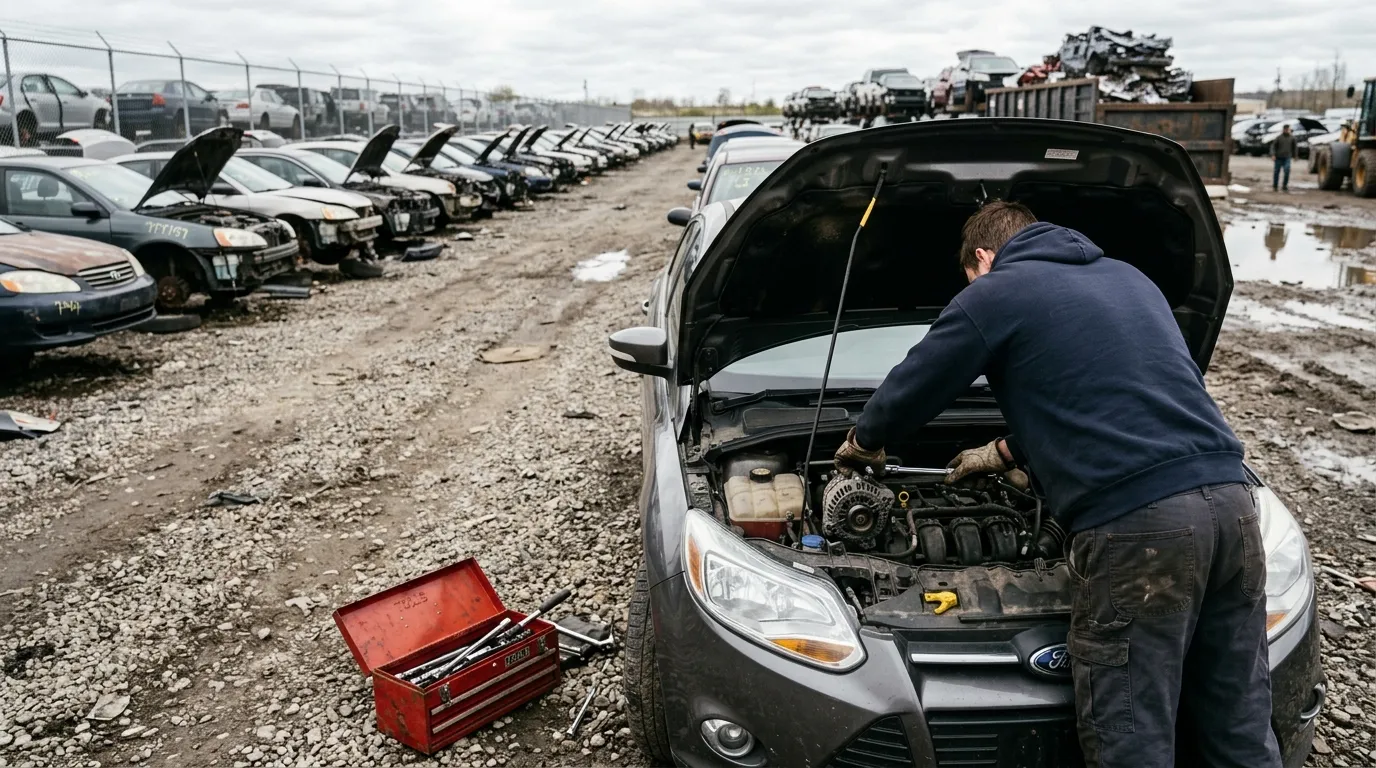
Self-service junkyards (Pull-A-Part, LKQ Pick Your Part) offer the lowest prices, often 20 to 40 percent below counter-service yards. You pull the part yourself, which means you can inspect it before committing. Expect prices in the $30 to $80 range for common models. Read our junkyard alternator pricing guide for specific chain pricing.
Full-service salvage yards test and grade their inventory. Prices run $75 to $200 for most models, and you get a 30 to 90 day warranty. This is where the bulk of our 12,236 listings come from.
Online recyclers (Car-Part.com, eBay) offer the widest selection but add shipping costs ($15 to $40). Useful when your local yards don't have your specific model in stock.
Before buying from any source, check whether an alternator from a different car fits yours. Compatible models can expand your options and lower your cost.
Used vs Remanufactured vs New
| Factor | Used | Remanufactured | New OEM |
|---|---|---|---|
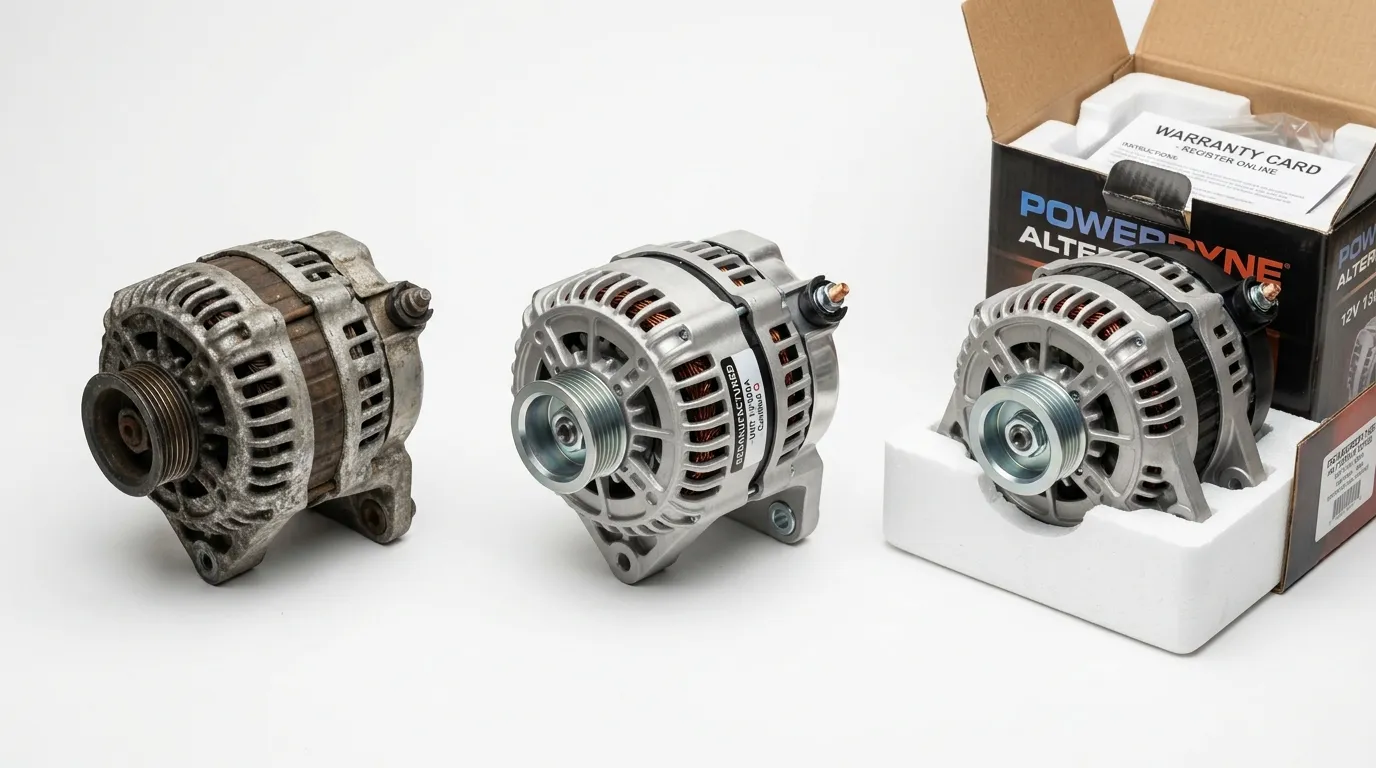
| Price range | $65–$400 | $100–$250 | $200–$500 |
| Median price | $96 | ~$150 | ~$350 |
| Warranty | 30–90 days | 1–3 years | 1–3 years |
| Expected life | 80k–150k mi | 100k–200k mi | 150k–250k mi |
| Availability | Same-day at yards | 1–3 day shipping | 1–5 day shipping |
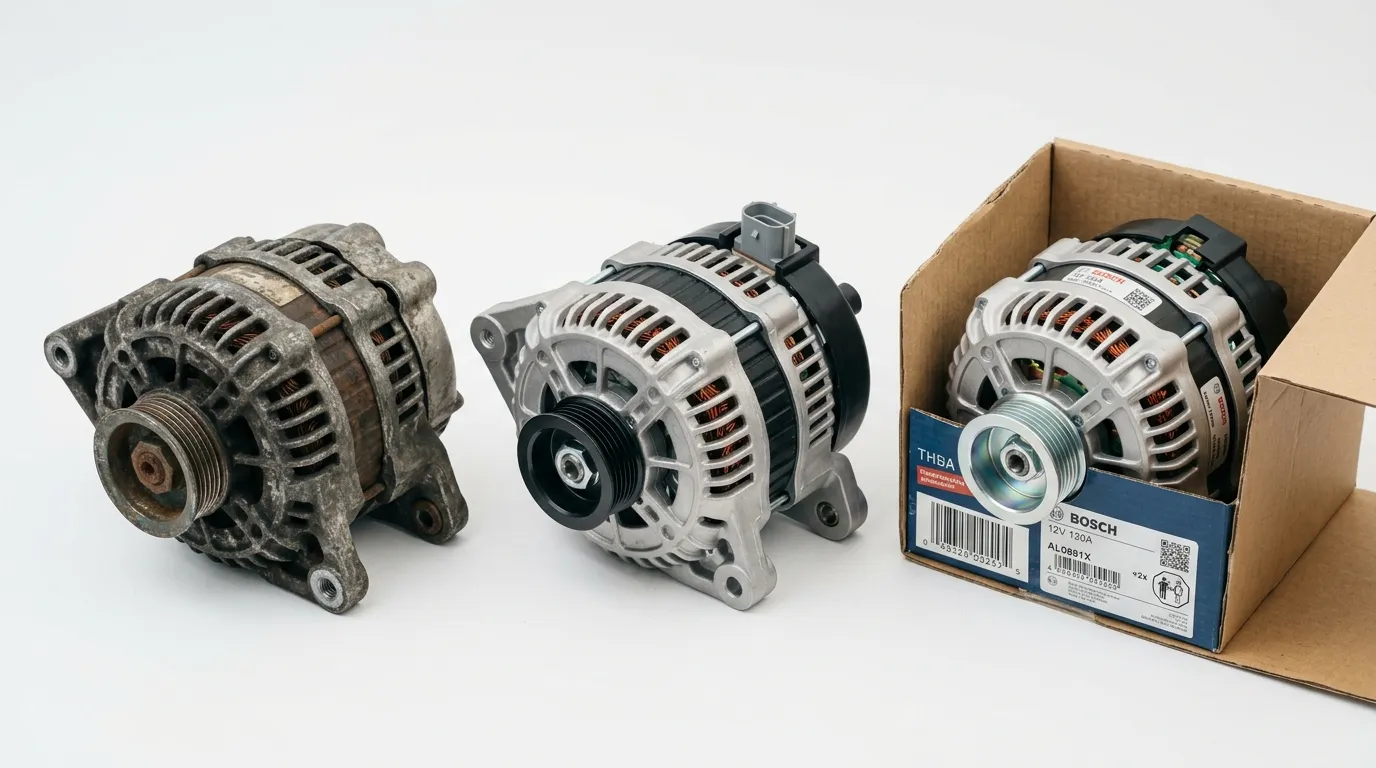
When used makes sense: your vehicle is worth under $8,000, you need the part today, or the model is common enough that replacements are easy to find.
When reman or new makes sense: the vehicle is newer than 5 years, you plan to keep it for 100,000+ more miles, or the used alternator reliability data for your specific model shows shorter-than-average lifespans.
How to Check a Used Alternator Before Buying
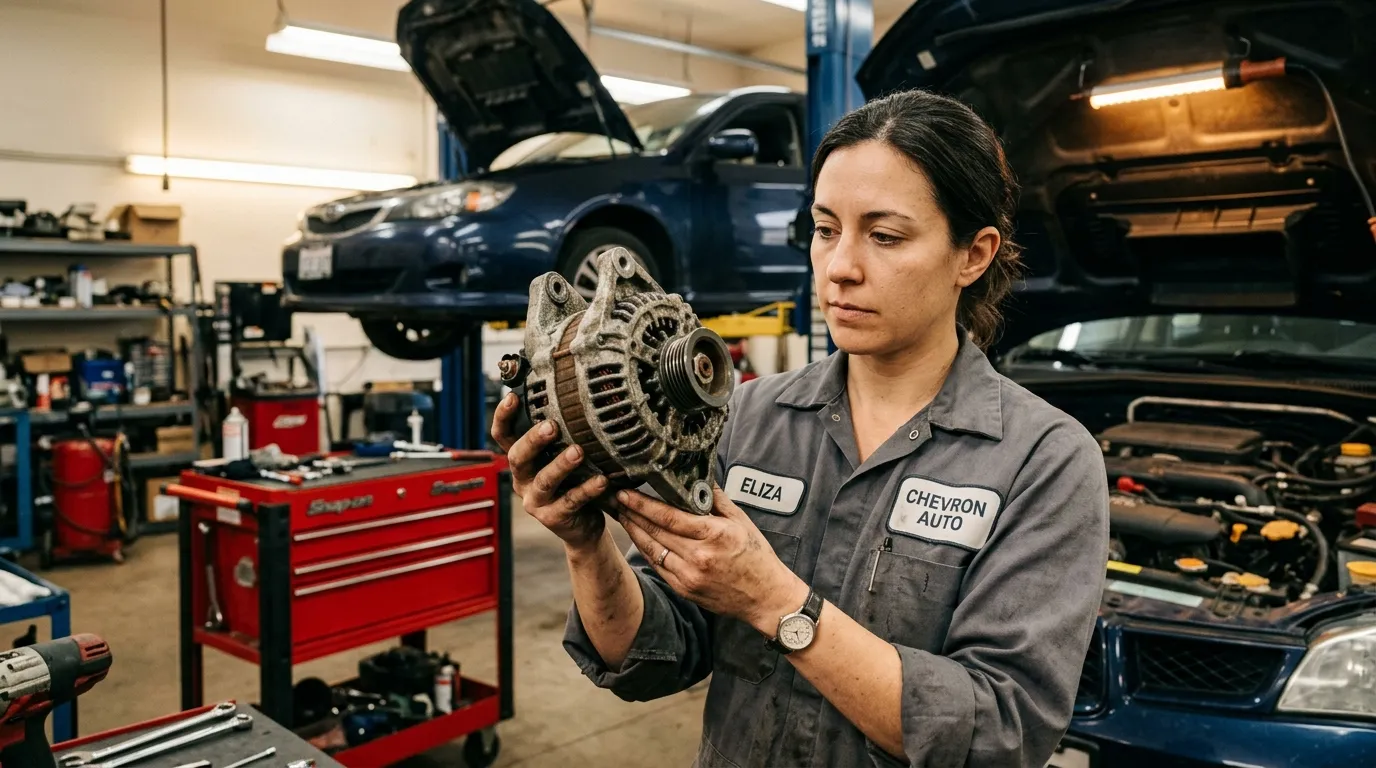
Testing takes five minutes and prevents most bad purchases:
- Spin the pulley by hand. It should rotate smoothly with slight magnetic resistance. Grinding or roughness means worn bearings; walk away.
- Check the voltage regulator connector. Pins should be clean and straight. Corroded or bent pins cause charging failures that look like a bad alternator.
- Look at the brush housing. If accessible, brushes should have at least 5mm of material remaining.
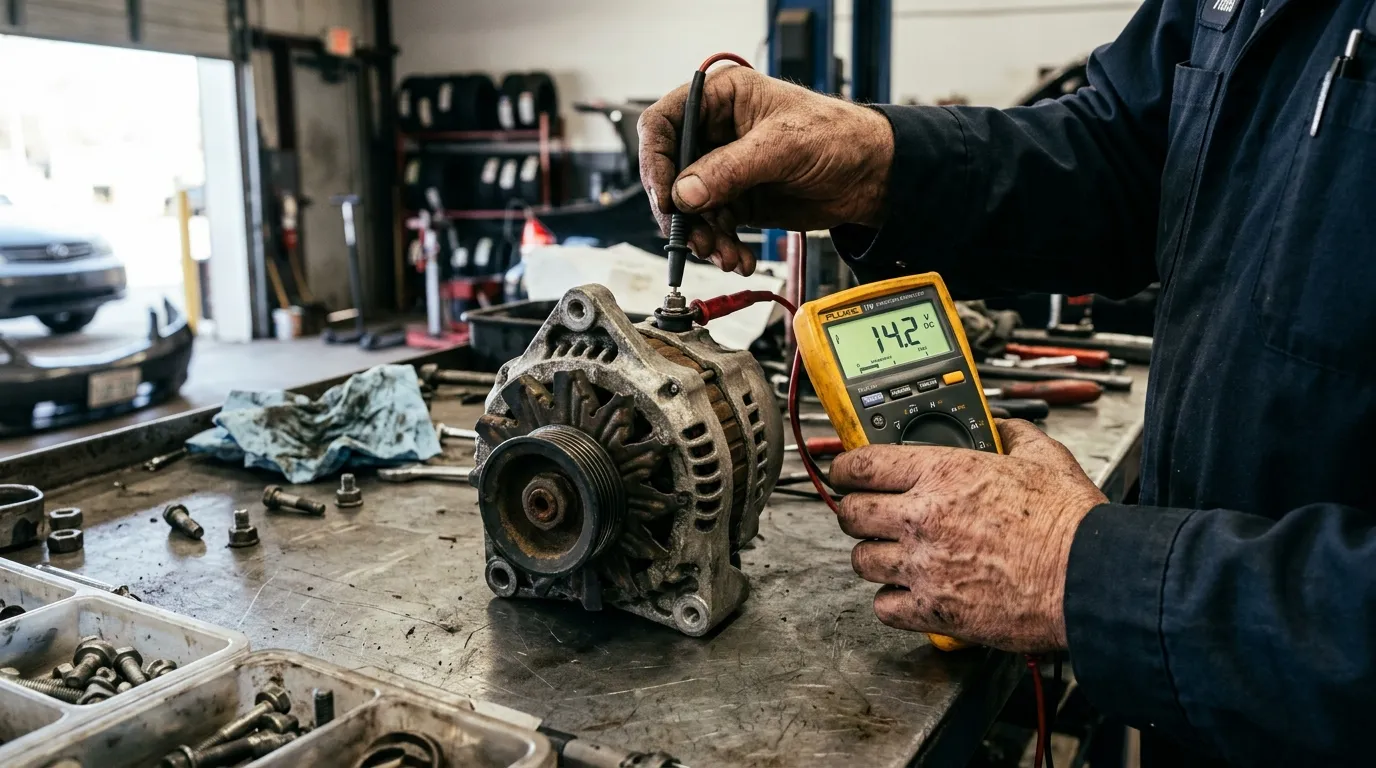
- Ask for an output test. Reputable yards will bench-test the alternator. Healthy output is 13.5 to 14.5 volts at the battery posts with the engine running.
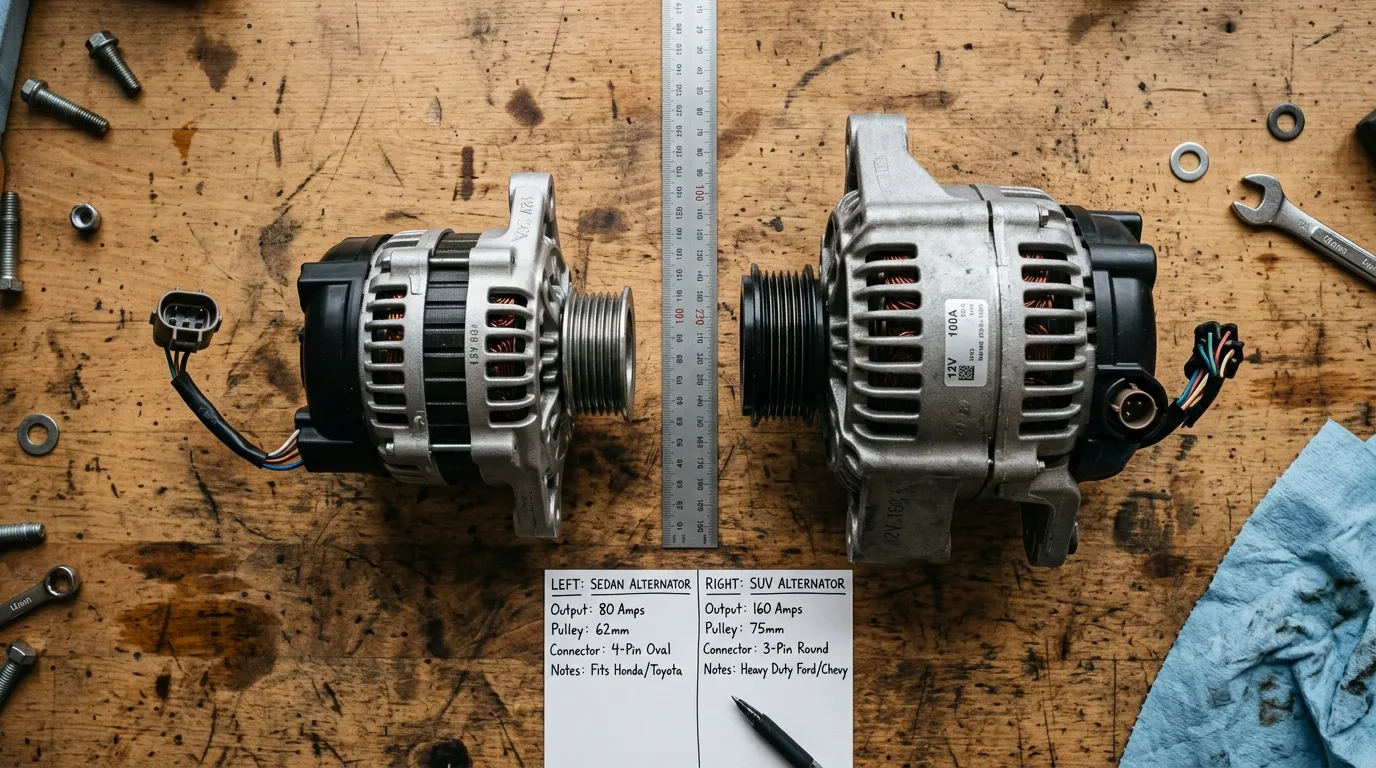
- Confirm the amperage rating. Match or exceed your vehicle's original spec. A 120-amp alternator cannot reliably replace a 160-amp unit.
What Drives the Price Difference Between Models
Three factors explain nearly all the variance:
Supply volume. Models with 500+ listings (Grand Cherokee, Explorer, Corolla) sit near or below the median. Rare models command premiums simply because fewer units exist.
Electrical load requirements. Trucks and SUVs with towing packages, heated seats, and large audio systems use higher-output alternators that cost more to manufacture and replace.
Interchange compatibility. Some alternators fit multiple vehicle models, expanding the buyer pool. Others are model-specific, limiting your sourcing options. Our alternator interchange guide covers which models share parts.
Browse all 45 models with real pricing data on our alternator price index.