The most effective way to prevent catalytic converter theft is to install a physical barrier, such as a steel shield plate or cable cage, that forces a thief to spend several minutes cutting instead of the usual 60 seconds. Combining a physical device with smart parking habits and a visible deterrent like converter etching covers most of the risk.
Catalytic converter theft has surged because the precious metals inside converters (platinum, palladium, and rhodium) can net a thief $50 to $800 per converter on the black market. The replacement cost falls on you, running $1,000 to $3,000 or more. Prevention devices cost a fraction of that.
- Steel shield plates ($100–$400 installed) offer the strongest deterrent by covering the converter in hardened steel that resists saw blades
- Toyota Prius, Honda Element, and Ford F-series trucks are the most targeted due to high precious metal content or easy undercarriage access
- Thieves work fast, cutting converters free in 30–60 seconds with a battery-powered reciprocating saw
- Comprehensive insurance covers theft, but deductibles of $250–$1,000 and potential surcharges reduce the net benefit
- Replacement costs $1,000–$3,000+, making a $100–$500 prevention device a straightforward investment
Most Targeted Vehicles
Not every vehicle faces equal theft risk. Thieves target specific models based on precious metal content, ground clearance, and how quickly they can access the converter. Understanding why certain vehicles appear on every stolen-converter report helps you assess your own risk level.
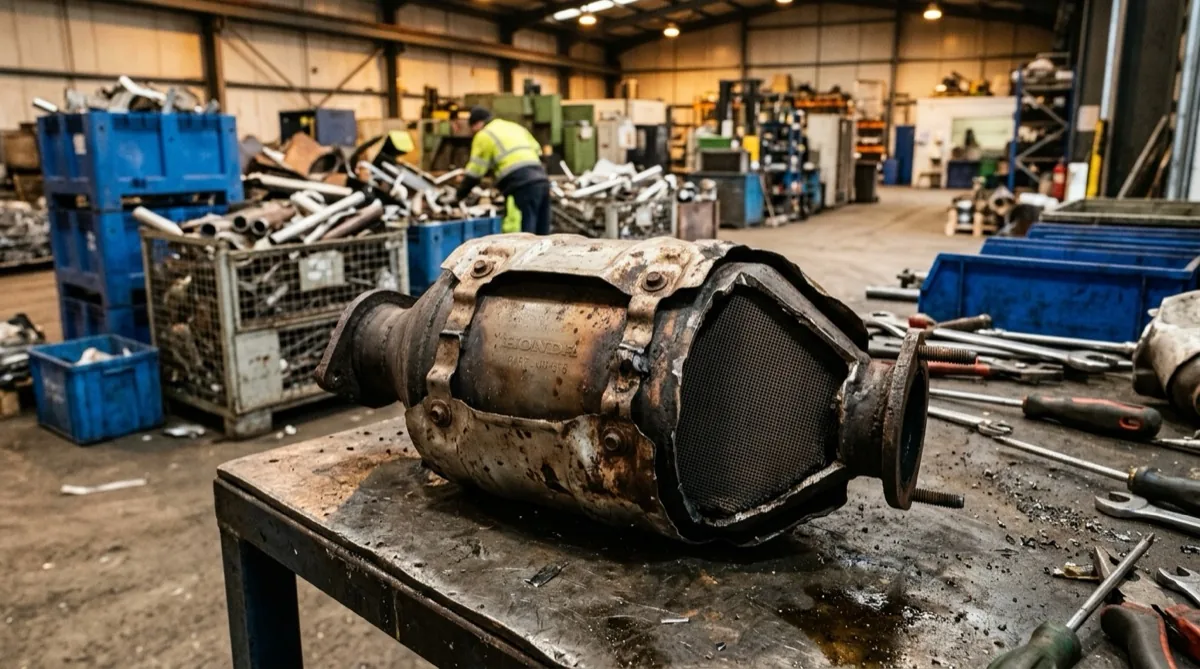
Toyota Prius (2004–2022) The Prius tops every catalytic converter theft list by a wide margin. Its hybrid drivetrain means the gasoline engine runs less frequently, so the converter's precious metals degrade more slowly over the vehicle's life. A used Prius converter contains more platinum, palladium, and rhodium than a comparable non-hybrid, and its scrap value can reach $300 to $800. Thieves know this.
Honda Element and Honda Accord The Honda Element's high ground clearance lets a thief slide underneath without a jack. The Accord is targeted for volume: it is one of the best-selling sedans in the U.S., so converters for these models are easy to fence. Both contain moderate precious metal loading from Honda's OEM catalytic converters.
Ford F-Series Trucks Full-size trucks sit high off the ground and often have two or more catalytic converters. A single Ford F-250 can yield $400 to $1,200 in combined converter scrap value. The high clearance means no jacking required, cutting the theft time to well under a minute.
Hyundai Tucson and Other Mid-Size SUVs The Tucson and similar SUVs (Toyota RAV4, Chevrolet Equinox) combine moderate ground clearance with valuable OEM converters. They are common fleet and rental vehicles, which means they often sit in large, poorly monitored parking lots overnight.
High-Clearance Trucks and SUVs (General) Any vehicle with enough ground clearance for a person to slide under without lifting it is at elevated risk. Lifted trucks, Jeep Wranglers, and full-size SUVs all fit this category regardless of their specific converter value.
Anti-Theft Devices
Physical barriers are the most proven deterrent. They do not make theft impossible, but they increase the time and noise required, which is usually enough to send a thief to an easier target. Here is how the main options compare.
Shield Plates
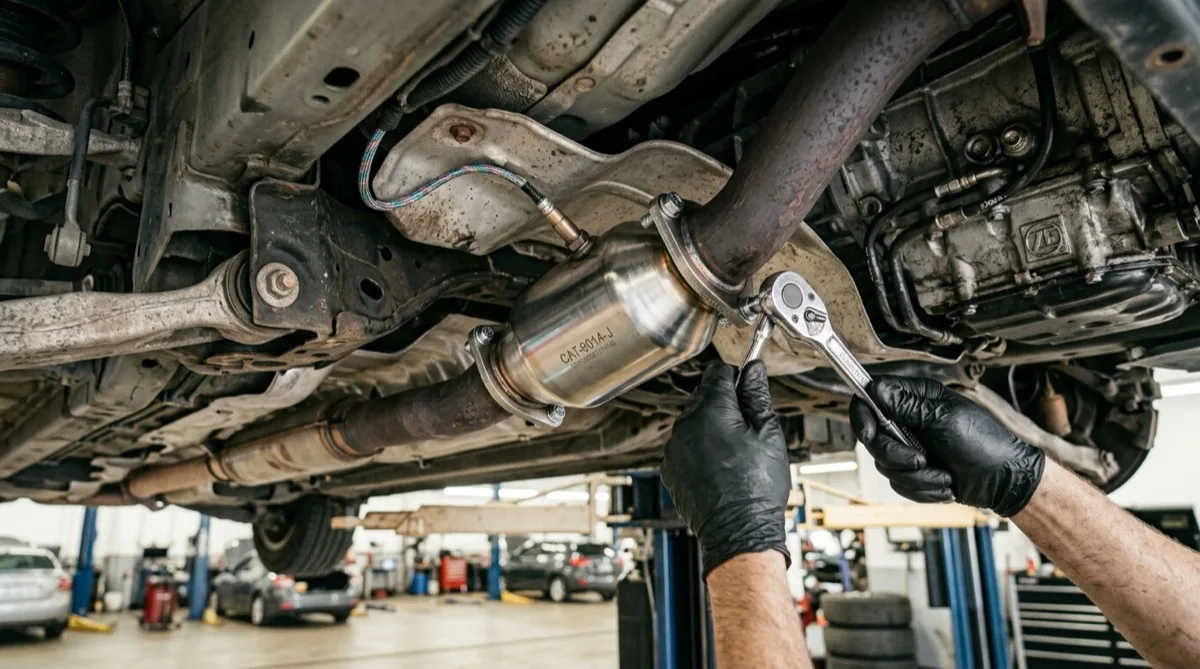
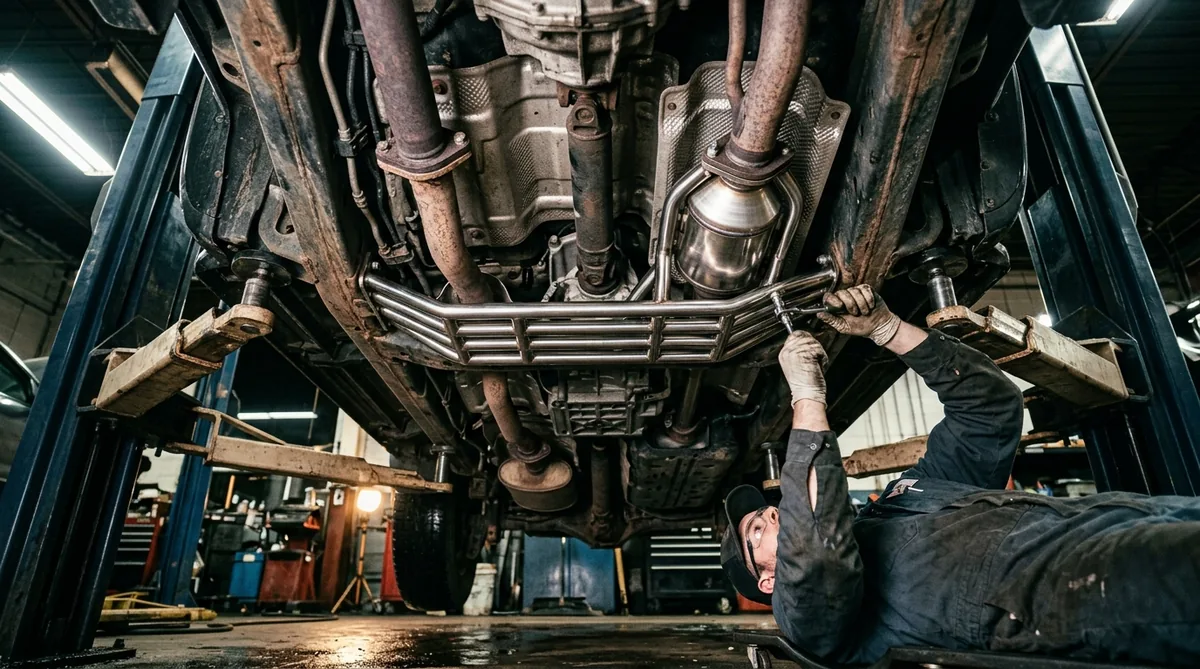
Steel shield plates bolt over the catalytic converter and its surrounding exhaust pipes, covering them with hardened or stainless steel that resists reciprocating saw blades. Installation requires a lift and takes 30 to 90 minutes. Model-specific plates from manufacturers like MillerCAT and CatShield fit precisely and leave no gaps for a blade to enter.
Cost: $100–$400 installed Effectiveness: High. A quality plate adds 5 to 10 minutes of loud cutting to any theft attempt, which is longer than most thieves are willing to spend.
Cable Cages (CatClamp and Similar)
The CatClamp system wraps aircraft-grade steel cables around the converter and exhaust pipes. Cutting through the cables requires more time and different tools than a simple saw cut on an exhaust pipe. The cable design works on vehicles where a flat shield plate does not fit well due to exhaust routing.
Cost: $150–$250 for the kit, plus $75–$150 for professional installation Effectiveness: Moderate to high. Cables are harder to cut than exhaust pipe but not as resistant as a solid plate.
Rebar Cages (Welded)
A custom welded cage made from rebar or steel tubing surrounds the converter. This is the heaviest and most permanent option, typically done by an exhaust or muffler shop. It offers strong protection but complicates legitimate converter service or replacement.
Cost: $200–$500 depending on the shop and complexity Effectiveness: High. The trade-off is that your mechanic will need extra time (and cost) to remove the cage for any exhaust work.
Converter Etching and High-Temperature Paint
Etching the vehicle's VIN into the converter heat shield or spraying it with bright high-temperature paint (orange or yellow) serves as a visual deterrent and makes the converter traceable. Etching kits are available at police department community events in many cities.
Cost: $20–$50 DIY, free at many police-organized events Effectiveness: Low to moderate as a standalone measure. Paint and etching do not physically prevent cutting, but they make the converter harder to sell to legitimate recyclers who check for markings. Best used alongside a physical barrier.
Comparison Table
| Device | Cost (Installed) | Effectiveness | Best For |
|---|---|---|---|
| Shield plate | $100–$400 | High | Most vehicles, especially Prius and sedans |
| Cable cage (CatClamp) | $225–$400 | Moderate–High | Vehicles with complex exhaust routing |
| Rebar/welded cage | $200–$500 | High | Trucks and SUVs with accessible undercarriages |
| Etching/paint | $20–$50 | Low–Moderate | Budget add-on to any physical device |
Where and When Thefts Happen
Catalytic converter theft follows predictable patterns. Understanding them lets you adjust your parking and habits to reduce exposure.
Timing: Most thefts occur between midnight and 5 a.m. Residential driveways and apartment complex parking lots are the most common locations during these hours. A thief with a battery-powered reciprocating saw can sever a converter in 30 to 60 seconds, making the entire operation nearly silent and extremely fast.
Residential areas: Vehicles parked in driveways without exterior lighting or motion-activated cameras are frequent targets. Street-parked vehicles in neighborhoods with little foot traffic are similarly vulnerable, especially on quiet side streets.
Commercial parking lots: Large retail and office parking lots become targets after business hours when vehicles sit unattended and unmonitored. Hospital and airport long-term lots are frequent locations because vehicles are left for extended periods.
Catalytic converter theft rings often operate in teams of two or three. One person acts as a lookout while another slides under the vehicle. A third may drive the getaway vehicle. This coordination allows them to work through multiple vehicles in a single lot in minutes.
How to reduce your risk through parking:
- Park in well-lit areas close to building entrances or security cameras
- Use a garage whenever possible, even if it means a less convenient location
- Back into parking spaces against walls or curbs so the exhaust side is harder to access
- If you park on the street, choose a busy, well-lit block
- Motion-activated lights and camera systems for home driveways cost $50 to $200 and serve as meaningful deterrents
Insurance Coverage
Comprehensive auto insurance (not collision, not liability) covers catalytic converter theft as part of its theft and vandalism provisions. If you carry comprehensive coverage, a stolen converter is a covered loss minus your deductible.
Deductibles for comprehensive coverage typically range from $250 to $1,000. Since aftermarket converter replacement runs $300 to $1,100 total for many vehicles, a high deductible can eat most or all of the benefit. Before filing a claim, compare the replacement cost to your deductible and consider the potential impact on future premiums.
Surcharges and exclusions: Some insurers in high-theft metro areas have responded to the surge in converter claims by adding surcharges for vehicles on the most-targeted list or increasing comprehensive deductibles for converter-related claims specifically. Review your policy or call your agent to understand your current coverage.
Filing a claim:
- File a police report first. Your insurer will require a case number.
- Contact your insurance company and open a comprehensive claim.
- Get a written repair estimate from a shop. Some insurers have preferred repair networks.
- Keep receipts for towing, rental car, and repair costs.
- Expect the claim to pay out the repair cost minus your deductible.
If your vehicle is on the high-target list and you live in an area with frequent thefts, consider lowering your comprehensive deductible. The increase in premium is often modest relative to the cost of a converter replacement.
What to Do If Your Converter Is Stolen
You will know immediately. Starting your car without a catalytic converter produces a loud, roaring exhaust noise that is unmistakable. The check engine light will illuminate, and the vehicle may run roughly. Here is what to do next.
Step 1: Do not drive the vehicle. Driving without a converter is not mechanically harmful in the short term, but it violates emissions laws in every state. In California, you cannot legally operate a vehicle without a functioning catalytic converter even briefly.
Step 2: File a police report. Call the non-emergency police line or file online. You need the case number for your insurance claim. Provide your vehicle's make, model, year, VIN, and the approximate time you discovered the theft.
Step 3: Contact your insurance company. If you have comprehensive coverage, open a claim and provide the police report number. Ask about rental car coverage while your vehicle is in the shop.
Step 4: Get a repair estimate. A catalytic converter replacement has three tiers:
| Converter Type | Part Cost | Labor | Total |
|---|---|---|---|
| Aftermarket EPA-compliant | $200–$800 | $100–$300 | $300–$1,100 |
| OEM from dealer | $500–$2,500 | $100–$300 | $600–$2,800 |
| CARB-compliant (CA/NY required) | $400–$1,200 | $100–$300 | $500–$1,500 |
Step 6: Consider adding an anti-theft device during the repair. If the exhaust system is already off the vehicle for converter replacement, having a shield plate or cage installed at the same time saves on labor. Many shops offer bundled pricing for converter replacement plus anti-theft device installation.
For a broader look at used parts pricing that may help you evaluate replacement options, see our used auto parts price guide.