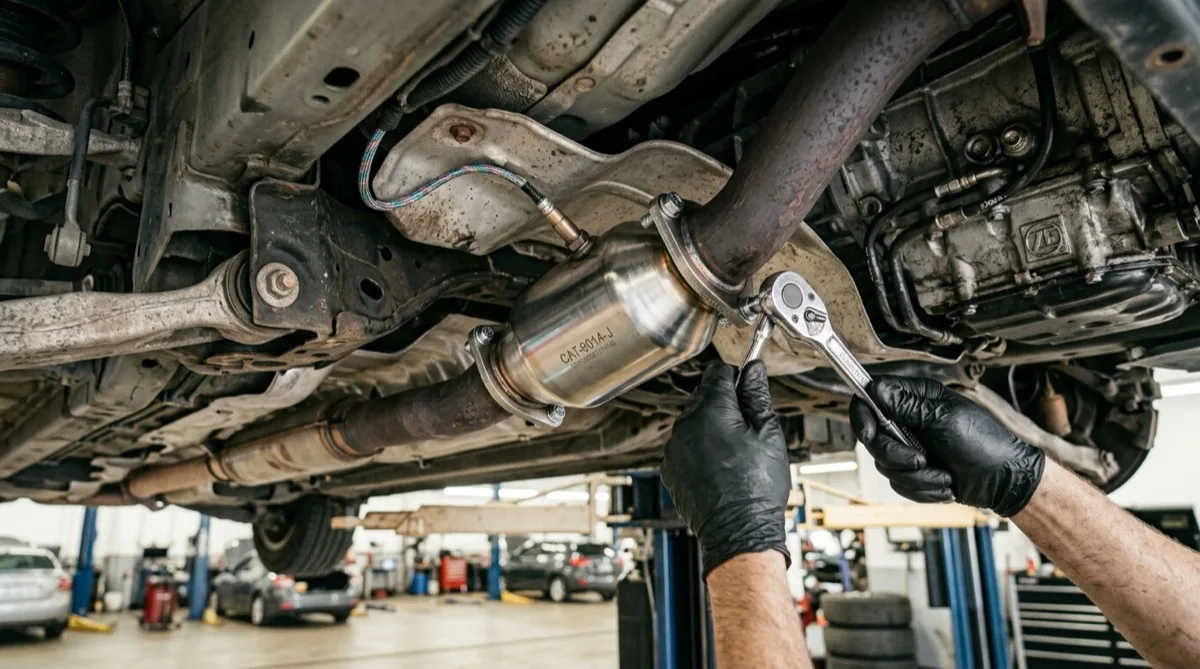
Replacing a catalytic converter costs $450 to $1,850 total with an aftermarket EPA-compliant part, or $1,650 to $4,450 with an OEM converter from the dealer. Most vehicles land somewhere in the $1,300 to $3,500 range all-in. Unlike most auto repairs, the part dominates the bill here, accounting for 70 to 85 percent of the total, while labor adds $150 to $450 for one to three hours of work.
For a detailed breakdown, see our junkyard parts pricing overview guide.
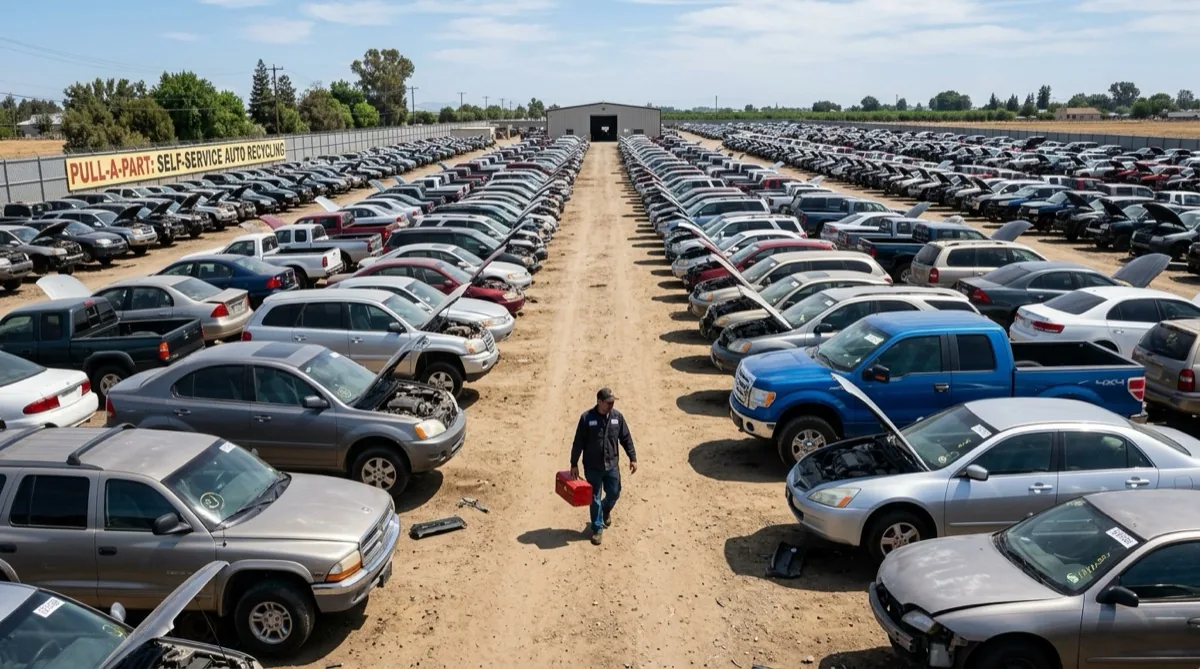
The high cost comes down to chemistry. Every catalytic converter contains platinum, palladium, and rhodium, three precious metals that are collectively more valuable than gold by weight. That same precious metal content is why catalytic converter theft has surged in recent years and why you cannot buy a used converter from a salvage yard. Yards send them to metal recyclers rather than reselling them as parts.
- Aftermarket replacement: $450-$1,850 total ($300-$1,400 part plus $150-$450 labor)
- OEM/dealer replacement: $1,650-$4,450 total ($1,500-$4,000 part plus $150-$450 labor)
- The part is 70-85% of the bill. Precious metals (platinum, palladium, rhodium) drive the cost
- Hybrids cost the most, especially the Toyota Prius, because their converters retain higher concentrations of precious metals
- Catalytic converters are not available at junkyards since the precious metals are recycled rather than resold
- California requires CARB-compliant converters, which cost more than standard EPA-compliant aftermarket units
What Catalytic Converter Replacement Costs
Catalytic converter replacement breaks into two line items: the converter itself and the labor to swap it. The converter is the expensive half by a wide margin. Labor runs a relatively consistent $150 to $450 regardless of which converter type you choose, so the part decision is what moves the total.
| Cost Component | Aftermarket (EPA) | OEM / Dealer | Universal Fit |
|---|---|---|---|
| Part cost | $300-$1,400 | $1,500-$4,000 | $100-$400 |
| Labor (1-3 hrs) | $150-$450 | $150-$450 | $150-$450 |
| Total | $450-$1,850 | $1,650-$4,450 | $250-$850 |
*Pricing reflects 2026 national averages from major parts retailers and repair shop estimates. Catalytic converters contain precious metals whose market prices fluctuate, so costs can shift with commodity markets.*
Why Catalytic Converters Are So Expensive
The cost of a catalytic converter is fundamentally a precious metals story. Inside every converter is a ceramic or metallic honeycomb substrate coated with a thin layer of platinum, palladium, and rhodium. These metals act as catalysts, triggering chemical reactions that convert harmful exhaust gases (carbon monoxide, hydrocarbons, and nitrogen oxides) into less harmful compounds (carbon dioxide, water vapor, and nitrogen).
A single catalytic converter contains roughly 3 to 7 grams of precious metals. That may sound trivial, but these metals trade at extreme prices:
| Metal | Approximate Price Per Ounce (2024-2026 Range) | Role in Converter |
|---|---|---|
| Rhodium | $4,500-$14,000 | Reduces nitrogen oxides |
| Palladium | $900-$2,400 | Oxidizes hydrocarbons and CO |
| Platinum | $900-$1,100 | Oxidizes hydrocarbons and CO |
Rhodium is the key cost driver. It is one of the rarest elements in the Earth's crust, roughly 100 times scarcer than gold, and nearly all of it comes from South African and Russian mines. When rhodium prices spiked above $25,000 per ounce in early 2021, catalytic converter costs and theft rates rose in tandem.
Beyond the raw metal cost, manufacturing adds expense. The washcoat application process, quality control testing, and emissions certification (EPA or CARB) all contribute. OEM converters cost more than aftermarket because automakers engineer them for specific emissions profiles and back them with longer warranties.
OEM vs Aftermarket vs Universal: Which to Choose
The three converter types represent different trade-offs between cost, compliance, and longevity.
OEM (Original Equipment Manufacturer)
OEM converters are made by or for the vehicle manufacturer. They match the original specifications exactly, including precious metal loading, substrate density, and mounting hardware.
Costs $1,500 to $4,000 for the part alone. Best for vehicles under warranty, those registered in California (CARB states), and owners who plan to keep the car long-term. OEM converters typically last 100,000 miles or more and carry the longest warranty coverage.
Aftermarket Direct-Fit (EPA-Compliant)
Aftermarket direct-fit converters bolt into the same location as the OEM unit without modifications. They meet federal EPA emissions standards and are legal in most states.
Costs $300 to $1,400 for the part. This is the most popular choice for out-of-warranty vehicles in the 46 states that follow federal emissions standards. Quality varies by manufacturer. Established brands like MagnaFlow, Walker CalCat, and Eastern Catalytic produce converters that perform reliably for 60,000 to 80,000 miles in most applications.
Universal Fit
Universal converters are generic units that a shop welds into the exhaust pipe. They are not designed for any specific vehicle.
Costs $100 to $400 for the part. The lowest upfront cost, but with significant drawbacks. They may not pass emissions testing in stricter states, they require professional welding ($50 to $150 extra), and they tend to fail sooner because the precious metal loading is lower. Suitable for older vehicles in states without emissions inspections, but a poor choice for newer cars or any vehicle in a CARB state.
California and CARB States
California, Colorado, Maine, and several other states follow CARB (California Air Resources Board) standards rather than federal EPA standards. CARB-compliant converters must meet stricter emissions criteria and carry specific exemption order numbers.
CARB converters cost 20 to 40 percent more than standard EPA-compliant aftermarket units. If your vehicle is registered in a CARB state, verify that any aftermarket converter carries a valid CARB Executive Order (EO) number before purchasing. Installing a non-CARB converter in these states will cause an automatic emissions inspection failure.
Cost by Vehicle Type
Converter costs vary significantly by vehicle category. The two factors that drive the difference are precious metal loading (hybrids use more) and the number of converters in the exhaust system (V8 trucks and luxury vehicles often have two or more).
| Vehicle Type | Aftermarket Total | OEM Total | Notes |
|---|---|---|---|
| Compact sedan (Civic, Corolla) | $450-$1,000 | $1,650-$2,500 | Single converter, straightforward replacement |
| Mid-size sedan (Camry, Accord) | $500-$1,200 | $1,800-$3,000 | May have two converters on V6 models |
| Full-size truck (F-150, Silverado) | $600-$1,500 | $2,000-$3,500 | Dual exhaust models need two converters |
| SUV (RAV4, Highlander) | $550-$1,400 | $1,800-$3,200 | Similar to sedans; V6 and AWD models cost more |
| Hybrid (Prius, Camry Hybrid) | $800-$1,850 | $2,500-$4,450 | Highest precious metal concentration |
| Luxury/European (BMW, Mercedes) | $700-$1,800 | $2,200-$4,000 | OEM parts often must be ordered; limited aftermarket options |
High-Theft Vehicles and Prevention
Catalytic converter theft costs vehicle owners an average of $1,000 to $3,000 per incident when you factor in the replacement part, labor, and any collateral damage to the exhaust system. The National Insurance Crime Bureau (NICB) reported that converter thefts surged more than 1,000 percent between 2018 and 2022, and while new laws and declining rhodium prices have slowed the trend, theft remains a persistent problem.
Most Targeted Vehicles
Thieves target vehicles based on three criteria: ground clearance (ease of access), precious metal content, and converter value on the scrap market.
| Vehicle | Why It's Targeted |
|---|---|
| Toyota Prius (2004-2022) | Highest precious metal concentration of any mainstream converter |
| Ford F-150 / F-250 | High ground clearance provides easy access with a battery-powered saw |
| Honda Accord (2008-2020) | High scrap value for the converter size |
| Toyota RAV4 | Popular model with accessible converter placement |
| Toyota Tacoma | Truck height plus reliable demand for replacement parts |
| Honda CR-V | Large install base, moderate ground clearance |
Prevention Measures
No prevention method is foolproof, but several reduce the risk meaningfully:
Catalytic converter shields and cages ($150-$500 installed). Metal plates or cages bolt over the converter, making it difficult to cut free with a reciprocating saw. Brands like CatClamp, MillerCAT, and CatShield are the most common. A shield adds 10 to 15 minutes to the theft attempt, which is often enough to deter an opportunistic thief.
Engraving or etching the VIN onto the converter ($25-$50). Some police departments offer free etching events. Engraving makes the converter traceable and harder for scrap yards to accept without questions.
Parking strategically. Park in well-lit areas, in garages when available, or backed against a wall so the exhaust system is harder to access. If you drive a high-clearance truck, park between lower vehicles.
Aftermarket exhaust alarms ($50-$200). Vibration-sensitive alarms that attach to the exhaust system and trigger when someone touches the pipe. They produce a loud alert, though false triggers from road vibration or cold starts are a known annoyance.
Signs Your Catalytic Converter Needs Replacement
A failing catalytic converter usually announces itself through several distinct symptoms. Catching it early can prevent secondary damage to the oxygen sensors and engine control module.
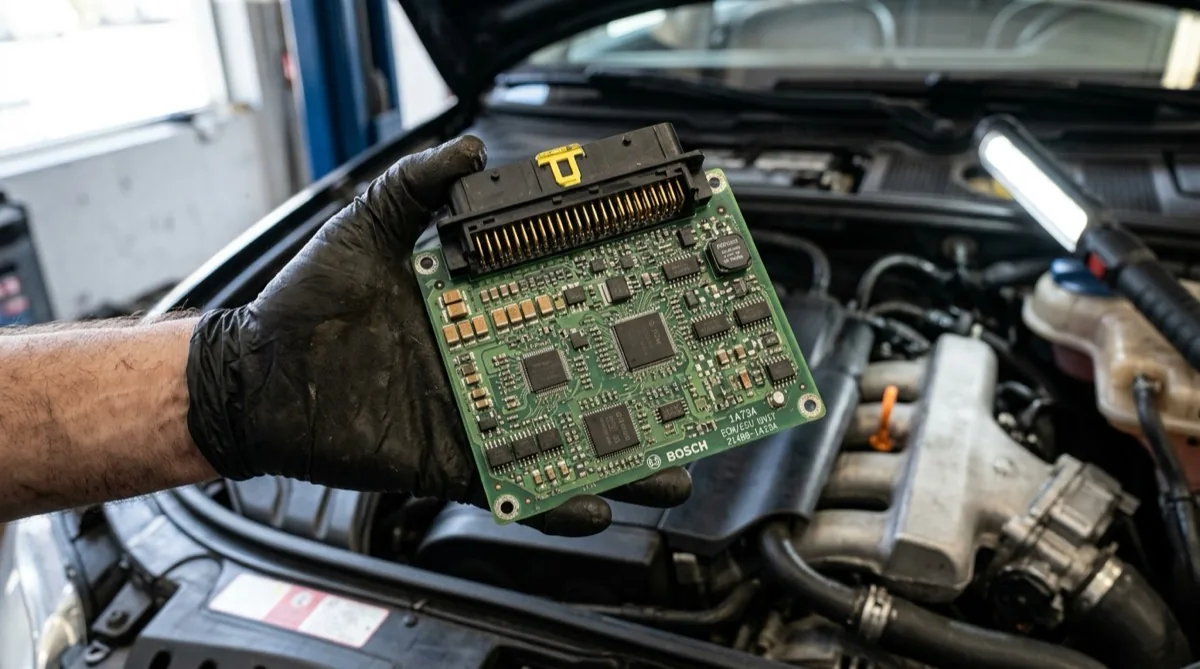
For a detailed breakdown, see our engine control module replacement costs guide.
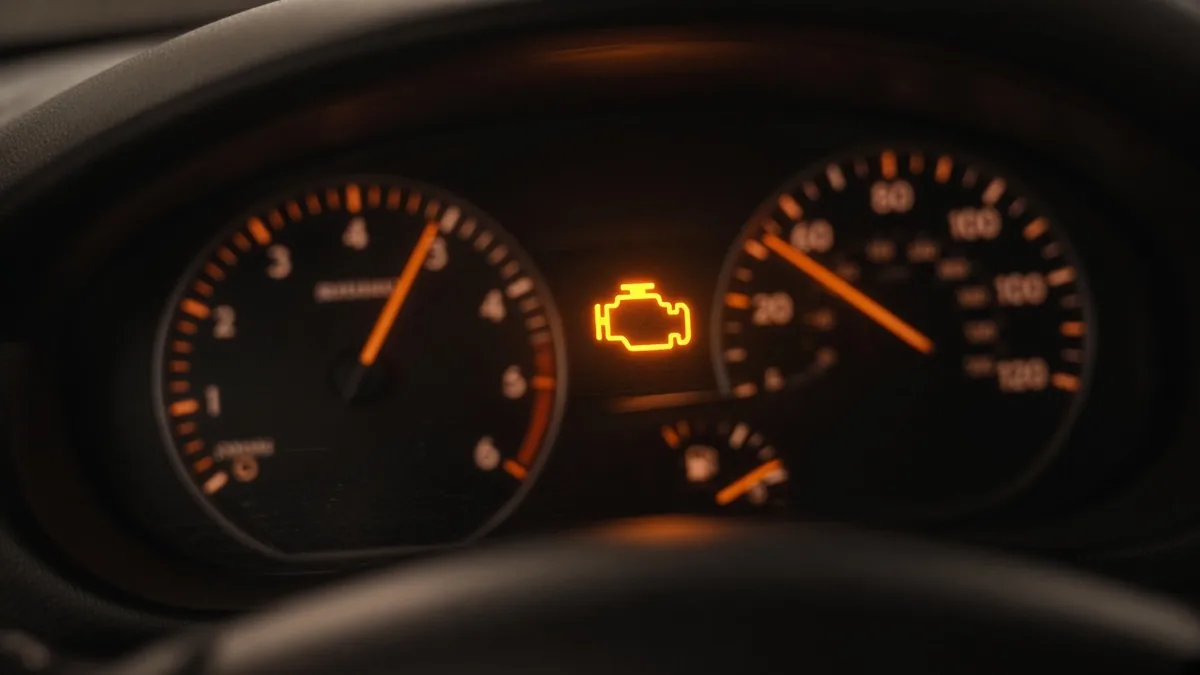
Check engine light with P0420 or P0430 codes. These are the most common diagnostic trouble codes associated with converter failure. P0420 indicates that the downstream oxygen sensor is reading catalyst efficiency below the threshold for bank 1, and P0430 covers bank 2. A shop scan will confirm whether the converter or an oxygen sensor is the root cause.
For a detailed breakdown, see our check engine light diagnostic costs guide.
Sulfur or rotten egg smell from the exhaust. A failing converter cannot fully process hydrogen sulfide in the exhaust, producing a strong sulfur odor. This is one of the earliest and most noticeable symptoms.
Reduced engine performance and poor acceleration. A converter that is breaking down internally can become physically clogged, restricting exhaust flow. The engine loses power, feels sluggish under acceleration, and may stumble at highway speeds.
Failed emissions inspection. In the 33 states that require emissions testing, a deteriorated converter is the most common reason for failure. The vehicle will not pass until the converter is replaced.
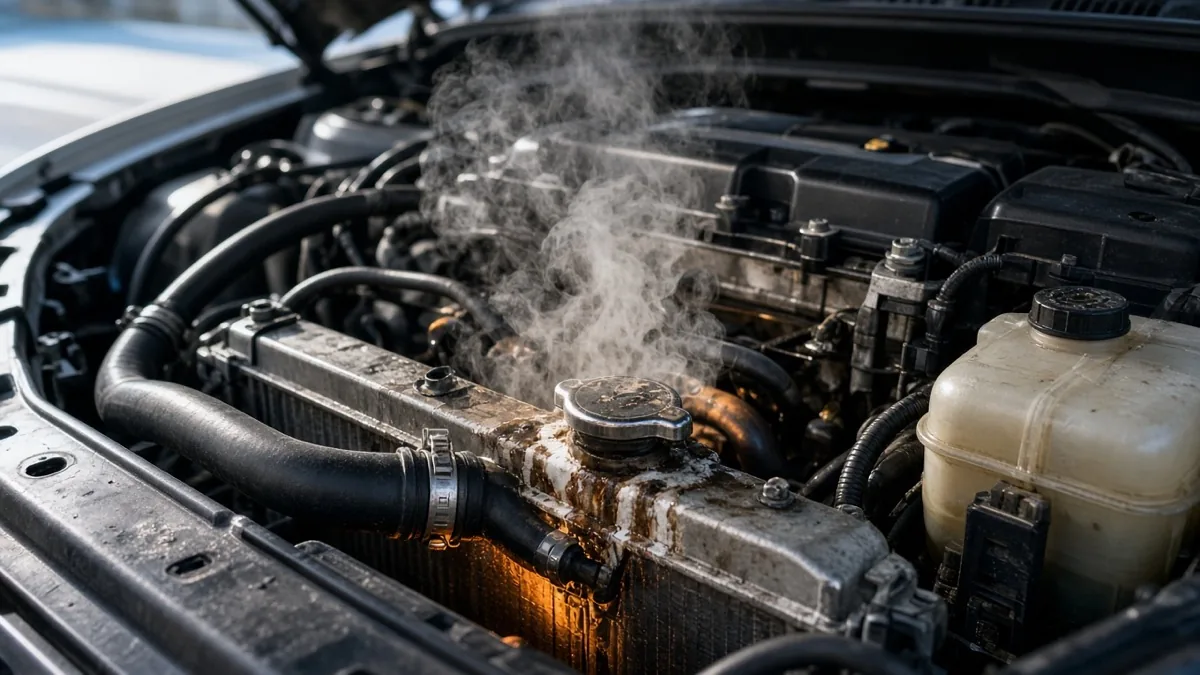
See also: overheating and exhaust restrictions.
Rattling noise from underneath the vehicle. The ceramic honeycomb substrate inside the converter can fracture and break apart over time. Loose fragments rattle inside the converter shell, producing a metallic shaking sound that is loudest at idle and during startup.