Engine knocking is caused by abnormal combustion, worn internal parts, or insufficient lubrication, and the repair cost ranges from $0 to $5,000+ depending on which problem is producing the noise. The cheapest cause, detonation from low-octane fuel, costs nothing to fix beyond switching to the correct grade at your next fill-up. The most expensive cause, rod knock from worn connecting rod bearings, requires an engine rebuild ($2,500 to $5,000) or a used engine replacement ($1,800 to $5,500 installed).
The critical question is not whether your engine knocks but what kind of knock it is. A light pinging on acceleration and a heavy metallic banging at idle are completely different problems with repair costs that differ by a factor of 50. This guide covers each cause, how to identify it by sound and behavior, and what you can expect to pay.
- Detonation knock (wrong octane fuel) costs $0 to fix by switching to the manufacturer-recommended fuel grade
- Carbon cleaning runs $100 to $300 and resolves knock caused by combustion chamber carbon buildup
- Knock sensor replacement costs $150 to $400 and fixes false knock detection or ignition timing issues
- Rod knock requires $2,500 to $5,000 for a rebuild, or $1,800 to $5,500 for a used engine replacement (median used engine: $2,400 across 29,646 listings)
- The sound pattern identifies the cause: light rattle on acceleration points to detonation, heavy rhythmic banging at idle points to rod knock
Common Causes of Engine Knocking
Engine knock falls into two broad categories: combustion-related knock (the fuel-air mixture igniting at the wrong time) and mechanical knock (metal components hitting each other due to wear or insufficient clearance). Here are the five most common causes, ordered from cheapest to most expensive to fix.
Detonation and Pre-Ignition (Wrong Fuel Octane)
Detonation occurs when the fuel-air mixture ignites spontaneously ahead of or after the spark plug fires, creating two flame fronts that collide. The result is a sharp, metallic rattling or pinging sound, most noticeable under load during acceleration or climbing hills.
The most frequent trigger is fuel octane that's too low for the engine's compression ratio. Engines with turbochargers, superchargers, or high compression ratios (above 10.5:1) need 91+ octane to prevent premature ignition. Running 87 octane in these engines produces detonation knock that you can hear immediately.
Pre-ignition is a related but more damaging condition where a hot spot in the combustion chamber, usually a carbon deposit or an overheated spark plug tip, ignites the mixture before the spark plug fires at all. Sustained pre-ignition can burn holes in pistons.
Cost to fix: $0 (switch to the correct octane) to $100 to $300 (if carbon buildup is the hot spot source and needs cleaning).
Carbon Buildup in the Combustion Chamber
Carbon deposits accumulate on piston tops, cylinder heads, and valve faces over tens of thousands of miles. These deposits raise the effective compression ratio and create hot spots that trigger detonation and pre-ignition. Gasoline direct injection (GDI) engines are especially prone because fuel doesn't wash over the intake valves to keep them clean.
Symptoms include knock or ping that worsens as the engine warms up, rough idle, and reduced fuel economy. Carbon buildup knock tends to appear gradually and worsen over months rather than starting suddenly.
Cost to fix: $100 to $300 for a professional fuel induction cleaning or walnut shell blasting on GDI engines. Over-the-counter fuel system cleaners ($8 to $15) work as a preventive measure but rarely resolve significant buildup.
Worn Connecting Rod Bearings (Rod Knock)
Rod knock is the cause that keeps mechanics and car owners up at night. Connecting rod bearings sit between the crankshaft journals and the connecting rods, riding on a thin film of pressurized oil. When these bearings wear out, the rod develops play against the crankshaft, producing a deep, rhythmic metallic banging.
Rod knock is not a problem you can drive through or delay. The bearing surface is gone, metal is contacting metal with every crankshaft revolution, and the clearance gets worse rapidly. Continued driving risks a spun bearing (the bearing material shifts and blocks oil flow) or a thrown rod (the connecting rod separates and punches through the engine block). Both outcomes turn a $2,500 to $5,000 rebuild into a scrapped engine.
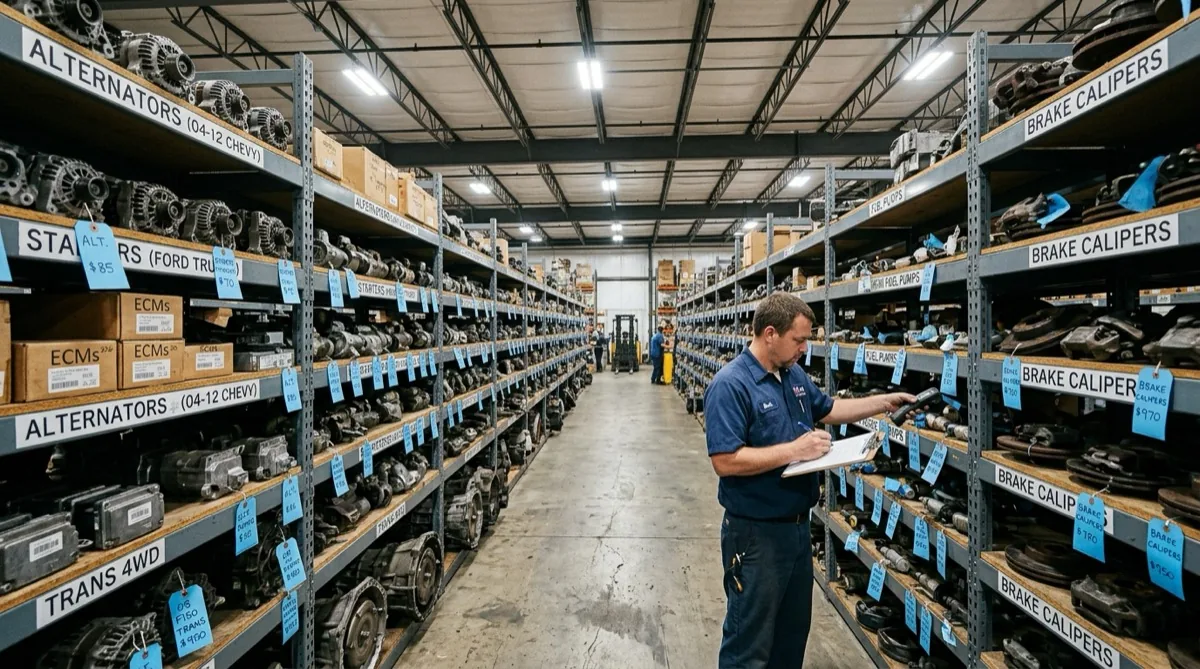
Cost to fix: $2,500 to $5,000+ for a complete engine rebuild. A used engine from a salvage yard costs $2,400 median across 29,646 listings (PartPriceGuide.com analysis of salvage yard listings across 63 vehicle models, August 2026), with installation adding $1,200 to $2,500 in labor.
Timing Chain or Belt Issues
The timing chain (or belt) synchronizes the crankshaft and camshaft rotation so the valves open and close at precisely the right moment. A stretched chain, worn tensioner, or slipped timing throws off this synchronization and can produce a rattling or slapping noise from the front of the engine. On some vehicles, incorrect valve timing causes detonation knock as a secondary symptom because the combustion event timing shifts.
A stretched timing chain produces a distinctive rattle at startup that may quiet down once oil pressure builds. A badly worn tensioner lets the chain slap against its guides, creating a consistent metallic whirring or chattering.
Cost to fix: $500 to $1,500 for a timing chain replacement, or $300 to $800 for a timing belt replacement. The wide range reflects the significant labor variation between engines where the chain is at the front (relatively accessible) and engines where it's at the rear, between the engine and transmission.
Low Oil Pressure
Oil does more than lubricate. It maintains hydraulic pressure between moving parts, acting as a cushion that prevents metal-to-metal contact. When oil pressure drops below spec, whether from low oil level, a failing oil pump, a clogged oil pickup screen, or simply using the wrong viscosity, internal components lose that cushion. The first symptoms are usually ticking from the valve train (hydraulic lifters collapsing) and, in worse cases, knocking from the rod bearings.
Low oil pressure knock typically appears at idle (when oil pressure is naturally lowest) and may improve at higher RPM as the oil pump pushes more volume.
Cost to fix: $0 to $50 for an oil top-off or oil change if low level or degraded oil is the cause. $200 to $600 for an oil pump replacement. $150 to $400 if the oil pressure sending unit is faulty and the engine is actually fine.
How to Tell What Kind of Knock You Have
The sound an engine makes, when it makes it, and how it responds to RPM changes are the best diagnostic clues you have before a mechanic gets involved. Two knocks that are superficially similar can point to completely different causes with costs that are orders of magnitude apart.
Light Pinging on Acceleration vs. Heavy Knock at Idle
Pinging on acceleration sounds like a handful of marbles rattling in a tin can. It appears under load, when you press the gas pedal hard, climb a hill, or merge onto a highway. It often disappears at steady cruising speed or at idle. This pattern strongly suggests detonation: the fuel-air mixture is igniting prematurely under the higher cylinder pressures that come with heavy throttle. Try higher-octane fuel first. If the noise disappears, you have your answer.
Heavy knock at idle is a deeper, more deliberate metallic bang, like someone tapping a pipe wrench against a metal bucket at regular intervals. This sound is worst at idle and changes tempo directly with engine RPM. It does not go away with higher-octane fuel, and it does not disappear when the engine reaches operating temperature. This is the pattern for rod knock or a severely worn main bearing, both of which require internal engine work.
RPM-Dependent vs. Constant Knock
If the knock speeds up and slows down exactly with engine RPM, the noise source rotates with the crankshaft. That points to rod bearings, main bearings, or wrist pins. All of these are internal engine components that require partial or full disassembly to access.
A knock that stays at the same tempo regardless of RPM is more likely an accessory component: a failing A/C compressor clutch, a worn belt tensioner bearing, or a loose heat shield vibrating against the exhaust. These are external, cheaper to fix, and easier to diagnose by removing the serpentine belt and briefly running the engine to see if the noise stops.
Warm-Engine-Only vs. Cold Start Knock
Warm-engine-only knock suggests a heat-related cause. Carbon-induced pre-ignition worsens when the engine is hot because the carbon deposits reach their ignition temperature. Detonation from low-octane fuel is also worse when the engine is warm because combustion chamber temperatures are higher.
Cold start knock that goes away after 30 to 60 seconds of running is often piston slap. Aluminum pistons are machined slightly smaller than the cylinders to account for thermal expansion. Before the engine warms up and the pistons expand to their designed clearance, they rock slightly in the cylinder bore and produce a hollow, tapping sound. Piston slap in its early stages is mostly a noise concern rather than an imminent failure, though it does indicate cylinder wear.
Some rod knock is audible at cold start and then quiets slightly as oil warms and flows faster, but it never fully disappears. If the knock persists at all at operating temperature, treat it as a mechanical problem until proven otherwise.
Rod Knock: The Expensive One
Rod knock deserves its own section because it sits at the far end of the cost spectrum and because the decision it forces, rebuild vs. replace vs. sell, is one of the biggest financial calls a car owner faces.
What Rod Knock Sounds Like
Rod knock is a consistent, rhythmic, metallic banging that tracks perfectly with engine RPM. Rev the engine in neutral and the tempo increases proportionally. Let it idle and the banging slows to a steady, deliberate thump. It is loudest when the engine is under no load at idle, because oil pressure is at its lowest point and the worn bearing has the least cushion.
The sound comes from the lower half of the engine, roughly where the oil pan meets the block. Contrast this with valve train noise (ticking from the top of the engine) or accessory noise (from the front, belt-driven side).
Why Rod Knock Means Major Work
Connecting rod bearings are not serviceable without removing the engine or at minimum dropping the oil pan and crankshaft (on engines where that's possible). On most modern vehicles, the repair path is one of two options:
Engine rebuild ($2,500 to $5,000+). The engine is removed, fully disassembled, and machined. Worn bearings, piston rings, and other wear items are replaced. The crankshaft journals are ground to remove scoring and fitted with undersized bearings. This is the most thorough fix and essentially resets the internal engine to near-new tolerances. The wide cost range reflects the difference between a four-cylinder economy car ($2,500 to $3,500) and a V8 truck or performance engine ($4,000 to $5,000+).
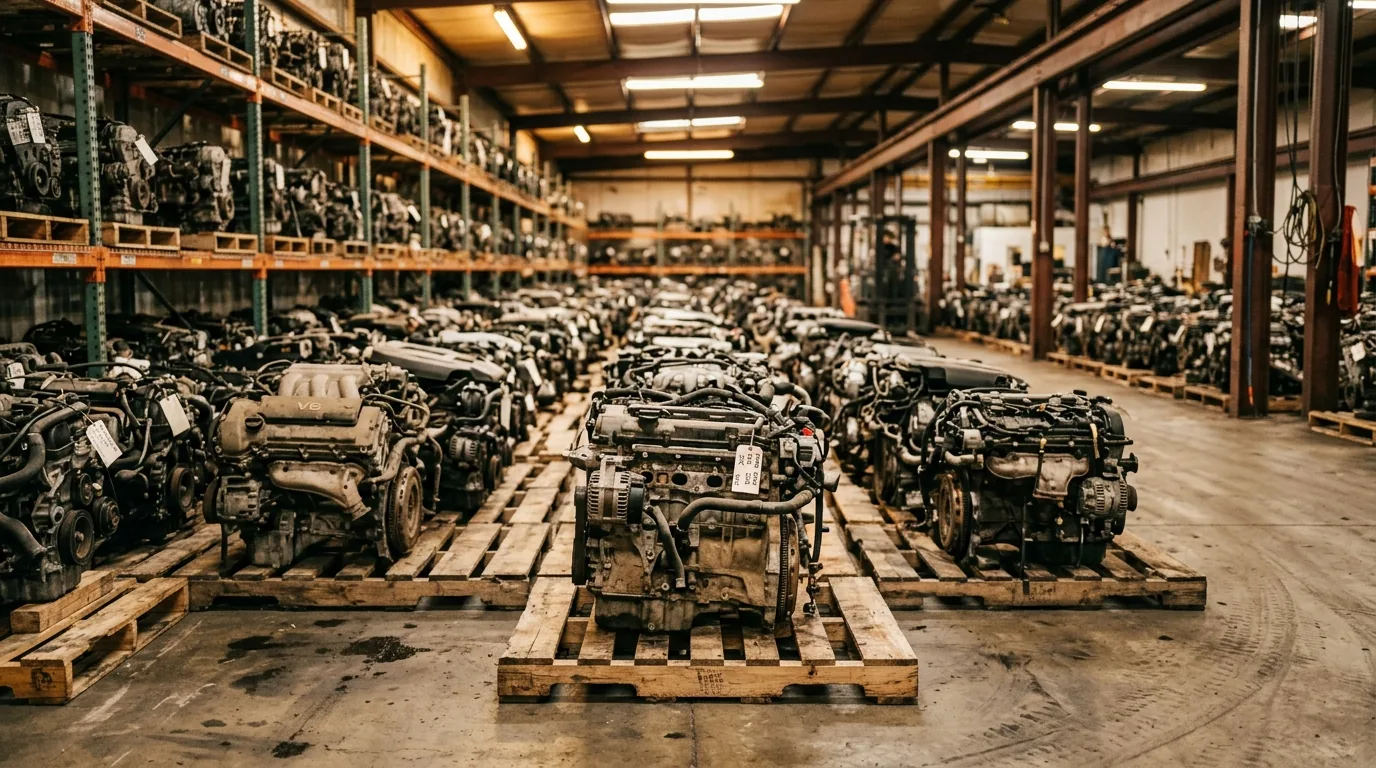
Used engine replacement ($1,800 to $5,500 installed). A complete used engine from a salvage yard replaces the failed unit. The median used engine costs $2,400 across 29,646 listings in our index. Installation labor runs $1,200 to $2,500 depending on the vehicle. Total cost: roughly $3,600 to $4,900 for most vehicles. A used engine is often faster than a rebuild (days vs. weeks) and can be more predictable if the donor unit has verified low mileage.
Making the Rebuild vs. Replace Decision
The right choice depends on the vehicle's value, the engine's condition beyond the bearings, and how long you plan to keep the car.
| Factor | Rebuild | Used Engine |
|---|---|---|
| Cost | $2,500 to $5,000+ | $1,800 to $5,500 installed |
| Turnaround | 2 to 4 weeks | 3 to 7 days |
| Best for | Engines with one failed system (bearings) | Engines with multiple wear issues |
| Warranty | Machine shop warranty, varies | 30 to 90 days from salvage yard |
| Risk | Low if machined by a reputable shop | Depends on donor engine condition and mileage |
*Source: PartPriceGuide.com analysis of salvage yard listings across 63 vehicle models, August 2026.*
Cheap Fixes for Engine Knock
Not every knock requires thousands of dollars. Several common causes have fixes under $400, and one costs nothing at all.
Switch to Higher-Octane Fuel ($0)
If your engine requires premium fuel (check the fuel door or owner's manual) and you've been running regular, detonation knock is the likely result. Fill up with 91 or 93 octane on your next tank. If the knock disappears within a tank or two of driving, the problem is solved. No mechanic visit, no parts, no labor.
Some engines that "recommend" rather than "require" premium will knock on regular fuel under heavy load (towing, steep grades, high temperatures) but run fine during light driving. Using mid-grade 89 octane in these situations is a reasonable compromise.
Carbon Cleaning ($100 to $300)
Professional carbon cleaning removes deposits from pistons, valves, and combustion chamber surfaces. Two methods are common:
- Chemical induction cleaning ($100 to $150): A solvent is fed through the intake while the engine runs, dissolving carbon deposits. Effective for moderate buildup.
- Walnut shell blasting ($200 to $300): Crushed walnut shells are blasted into the intake ports with the intake manifold removed. This is the gold standard for GDI engines with heavy intake valve deposits.
Both procedures should eliminate knock caused by carbon-induced detonation or pre-ignition. The effect is immediate: if carbon was the problem, the knock stops within the first drive after cleaning.
Oil Change and Top-Off ($30 to $100)
If the oil level is low or the oil is well past its change interval, topping off or changing the oil may resolve knock caused by insufficient lubrication. Check the dipstick first. If the oil level is at or below the low mark, add oil and listen for improvement. If the oil is black, gritty, or smells burnt, a full change with the correct viscosity (check the owner's manual) is warranted.
This fix only works when the knock was caused by temporarily low oil pressure, not by bearing damage that has already occurred. If the knock persists after bringing oil to the correct level with fresh oil, the damage is mechanical and an oil change will not reverse it.
Knock Sensor Replacement ($150 to $400)
The knock sensor is a piezoelectric sensor bolted to the engine block that detects vibrations consistent with detonation. When it detects knock, the ECM retards ignition timing to stop it. A failed knock sensor can cause two problems: it may not detect real knock (allowing detonation damage), or it may send false signals that cause the ECM to retard timing excessively, reducing power and fuel economy.
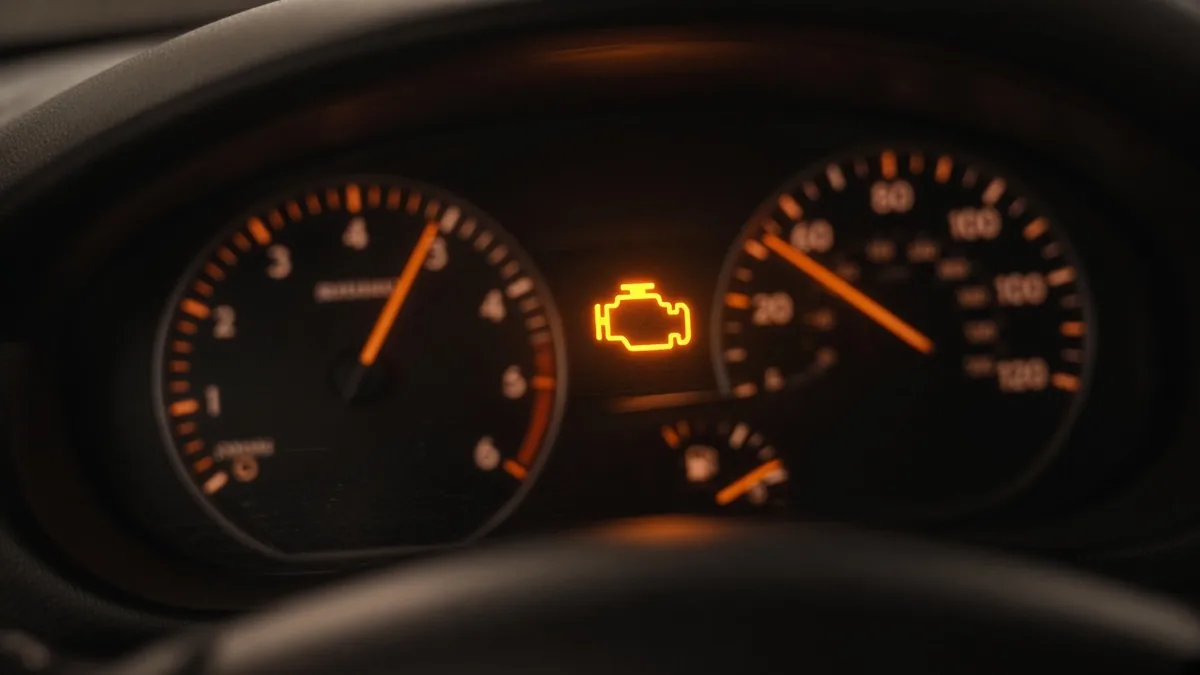
A check engine light with code P0325 (knock sensor circuit malfunction) confirms the diagnosis. Replacement costs $150 to $400, including $50 to $150 for the sensor and $100 to $250 in labor. The sensor itself is usually accessible on the side of the block, though on some V-type engines it sits in the valley under the intake manifold, increasing labor time.
| Fix | Cost | Works When |
|---|---|---|
| Higher-octane fuel | $0 | Using lower octane than the engine requires |
| Oil top-off or change | $30 to $100 | Oil level is low or oil is degraded |
| Carbon cleaning | $100 to $300 | Combustion chamber carbon causes detonation |
| Knock sensor replacement | $150 to $400 | P0325 code, sensor is confirmed faulty |
When You Need a New Engine
If the knocking is rod knock, main bearing knock, or the result of a spun bearing with oil starvation damage, the engine's internal components are compromised beyond what external repairs can address. At that point, you're choosing between a rebuild and a replacement.
We covered the rebuild vs. replace decision in the rod knock section above. For a full breakdown of used engine pricing by vehicle model, condition grade, and engine size, see our complete used engine cost guide. That guide covers 29,646 listings across 48 models, with prices ranging from $600 for a Nissan Rogue engine to $7,958 for a BMW X5.
A few additional factors to consider before committing to engine work:
Check the rest of the vehicle. An engine rebuild or replacement only makes sense if the transmission, body, and other major systems are in serviceable condition. Spending $4,000 on a new engine for a car that also needs a $2,500 transmission rebuild changes the math entirely.
Get the total installed cost, not just the engine price. Labor for an engine swap runs $1,200 to $2,500 at most shops. Add fluids, gaskets, motor mounts, and any accessories that need to transfer from the old engine to the new one. The engine itself is often less than half the total bill.
Consider vehicle value. If the total repair cost exceeds 50% to 75% of the vehicle's market value, most financial advisors and mechanics recommend against the repair. Check your vehicle's current value on NADA Guides or Kelley Blue Book before authorizing engine work.
For related repair cost data, see our used auto parts price guide for salvage pricing across 48 part categories.