A check engine light diagnosis costs $122 to $233 at a shop, and the repair that follows ranges from $0 for a loose gas cap to $3,500 or more for a catalytic converter replacement. The average repair bill lands around $415, according to CarMD's 2024 Vehicle Health Index. That average hides enormous variation, though: the six most common causes span a 100x cost range, and the cheapest fix is one you can do in your driveway in 30 seconds.
For a detailed breakdown, see our junkyard parts pricing guide.
- Diagnosis costs $122 to $233 at a professional shop (RepairPal data), free code reads at auto parts stores tell you the symptom but not the root cause
- Average repair cost is about $415, but actual bills range from $0 to $3,500+ depending on the failed component
- Loose gas cap is the cheapest fix ($0 to $30), catalytic converter is the most expensive ($1,300 to $3,500)
- A steady light means get it checked soon, a flashing light means stop driving to prevent catalytic converter damage
- O2 sensor replacement ($200 to $500) is the single most common check engine light repair
What the Check Engine Light Actually Means
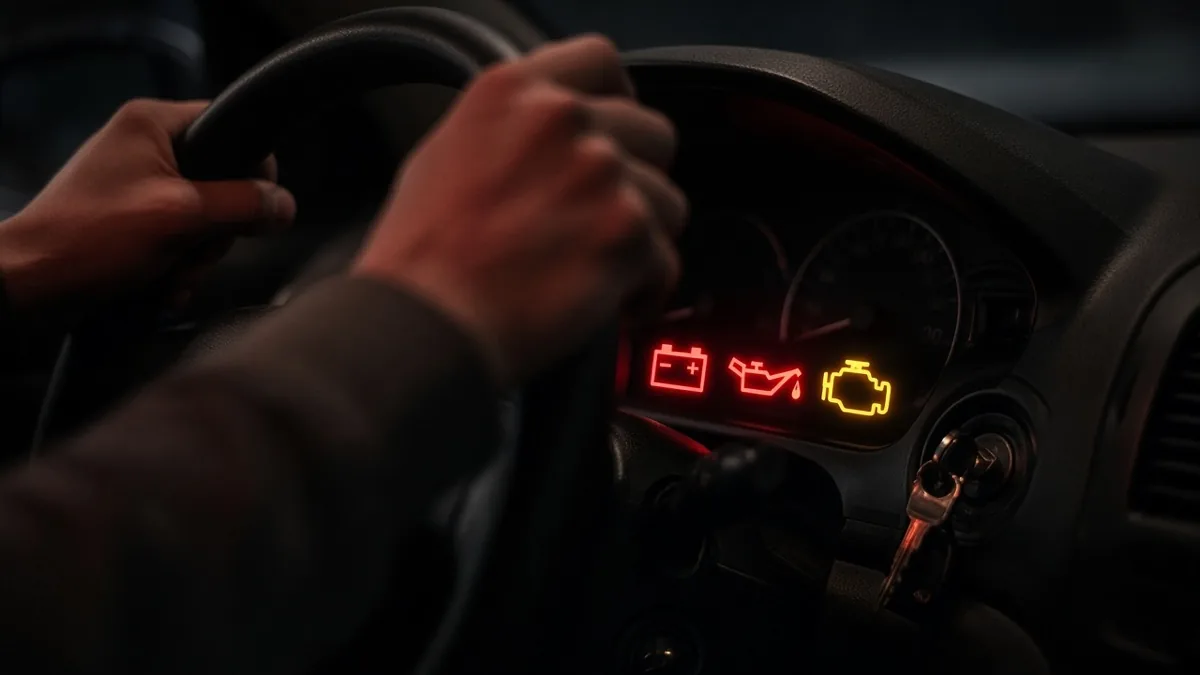
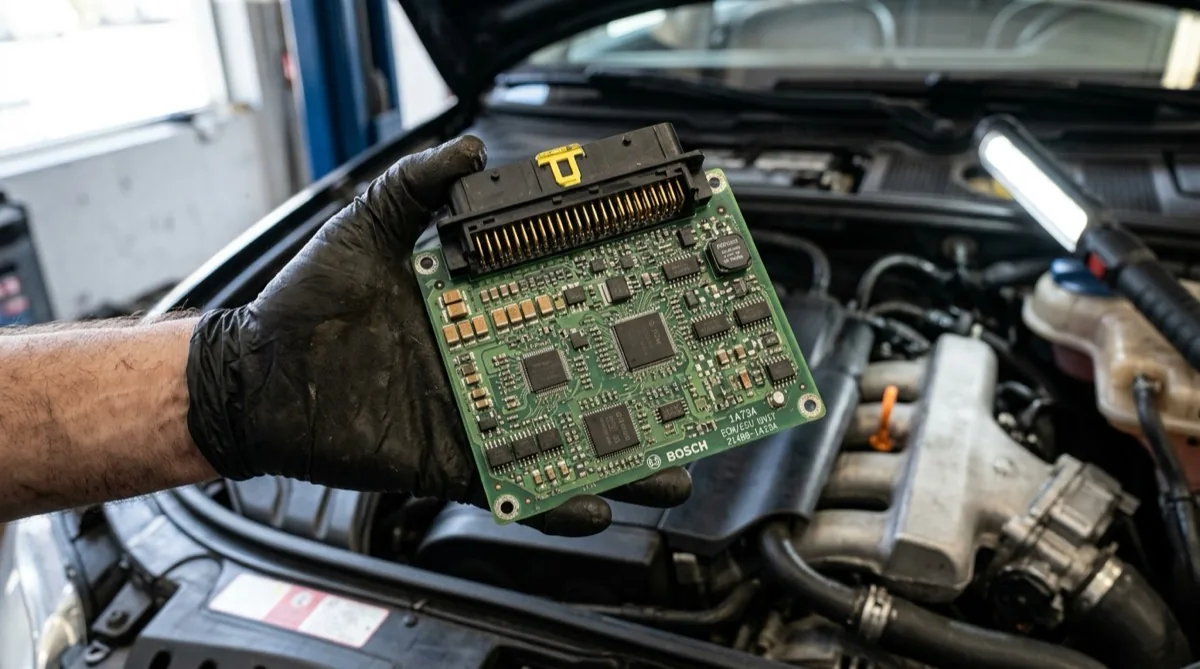
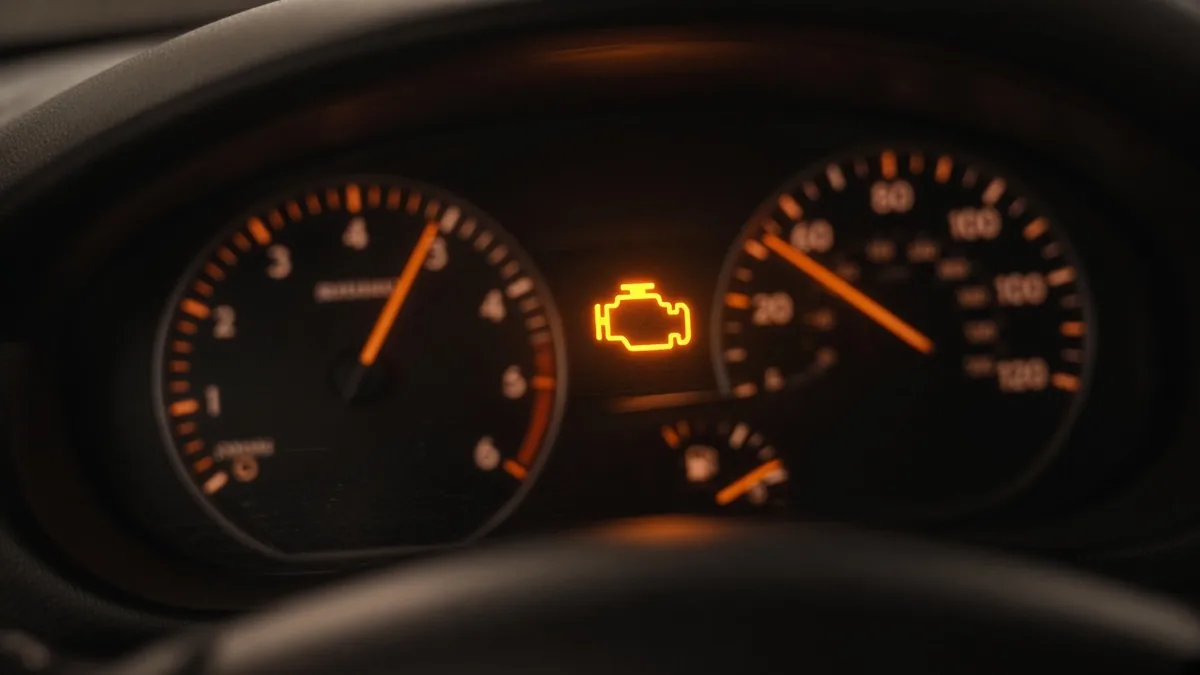
The check engine light, formally called the Malfunction Indicator Lamp (MIL), is controlled by your vehicle's Engine Control Module (ECM). The ECM continuously monitors dozens of sensors throughout the engine, exhaust, and emissions systems. When a sensor reading falls outside its expected range for a set number of drive cycles, the ECM stores a Diagnostic Trouble Code (DTC) and turns on the light.
The light itself doesn't tell you what broke. It tells you the ECM detected a reading it didn't expect. A P0420 code, for example, means catalytic converter efficiency is below threshold, but the cause could be the converter itself, a failed oxygen sensor feeding bad data, or an exhaust leak upstream. That distinction is why a $100+ professional diagnosis exists alongside the free code reads at parts stores.
Two display modes matter:
Steady light. The ECM detected a fault that affects emissions or fuel efficiency but isn't causing immediate damage. You can drive to a shop, but don't ignore it for months. Some causes worsen and create secondary damage that multiplies the repair bill.
Flashing light. The ECM is detecting active engine misfires severe enough to send unburned fuel into the catalytic converter. That raw fuel superheats the converter and can destroy it within minutes of continued driving. Pull over, shut the engine off, and have the vehicle towed. A $200 ignition coil problem becomes a $3,500 catalytic converter problem if you keep driving through a flashing check engine light.
For related diagnostics, see our car won't start causes guide.
Most Common Causes and Their Costs
Six failure categories account for the vast majority of check engine light triggers. Here's what each one involves and what you can expect to pay.
Loose or Missing Gas Cap ($0 to $30)
A gas cap that's loose, cracked, or missing allows fuel vapors to escape the sealed EVAP system. The ECM reads that as an evaporative emissions leak and sets a code, usually P0440, P0455, or P0457. Tighten the cap until it clicks, drive for two to three days, and the light should clear on its own. If the cap's rubber seal is cracked, a replacement runs $8 to $30 at any auto parts store.
Spark Plugs and Ignition Coils ($100 to $350)
Worn spark plugs or a failing coil pack cause misfires that trigger codes in the P0300 to P0308 range. A single coil replacement runs $100 to $200 at a shop. A full set of spark plugs and coils on a V6 or V8 runs $200 to $350. On most engines, the coils sit on top of the valve cover and each one is held in by a single bolt, making this one of the more DIY-friendly check engine light repairs.
Mass Airflow Sensor ($200 to $400)
The mass airflow (MAF) sensor sits in the air intake tract between the air filter and the throttle body. It measures how much air enters the engine so the ECM can calculate the correct fuel mixture. A dirty or failed MAF triggers P0100-series codes and causes rough idle, hesitation, and poor fuel economy. Cleaning with MAF-specific spray ($8) fixes it about half the time. Replacement costs $200 to $400 including labor, with the sensor itself running $80 to $250 depending on the vehicle.
Oxygen Sensor ($200 to $500)
O2 sensors monitor exhaust gas composition before and after the catalytic converter. Most vehicles have two to four of them. A failed O2 sensor sets P0130 to P0167 codes and skews the air-fuel ratio, reducing fuel economy and increasing emissions. Replacement costs $200 to $500 per sensor with labor. The upstream sensor (before the converter) fails more often because it's exposed to hotter exhaust gas.
Engine Control Module ($500 to $2,500)
ECM failure is less common but significantly more expensive. The module itself, a used unit from a salvage yard runs $154 median across 42,536 listings in our index. Programming the replacement to your vehicle adds $100 to $300 at a dealer or qualified shop. Total installed cost ranges from $500 on a common domestic model with a used ECM to $2,500 on a European vehicle requiring a new unit with dealer-level programming.
For a detailed breakdown, see our ECM replacement cost guide.
Catalytic Converter ($1,300 to $3,500)
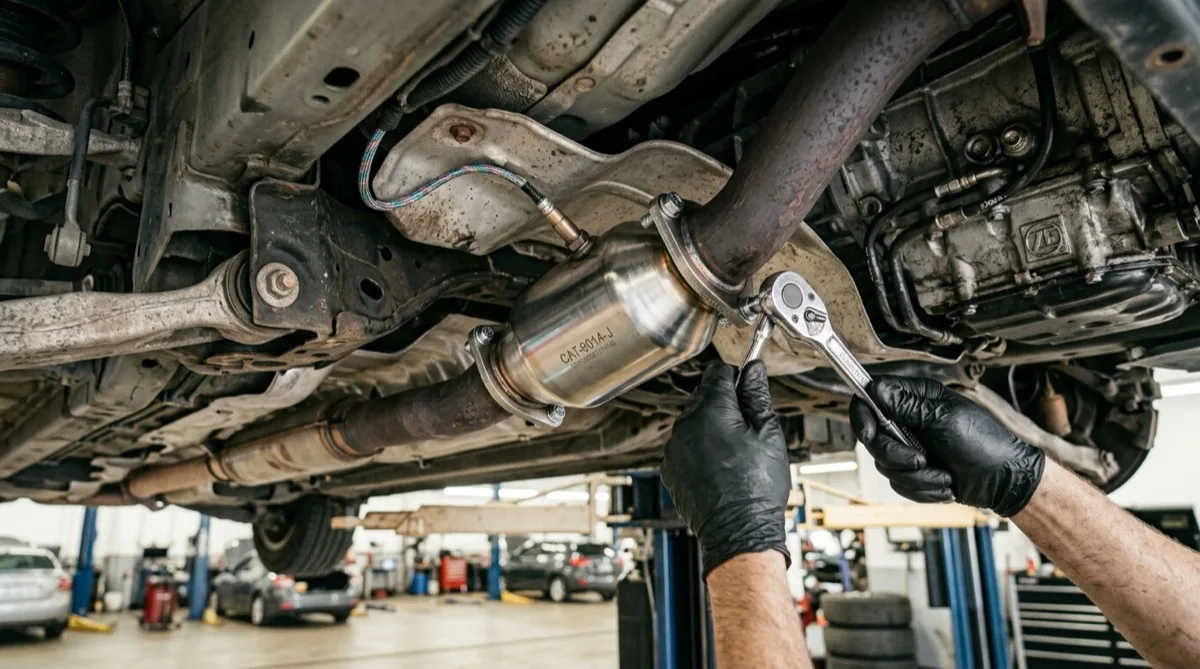
The catalytic converter is consistently the most expensive check engine light repair. P0420 and P0430 efficiency codes are the telltale signs. Direct replacement costs $1,300 to $3,500 depending on the vehicle, whether you use OEM or aftermarket, and whether your state requires a CARB-compliant unit (California and states that follow its standards). Some vehicles, particularly V6 and V8 models, have two converters, doubling the potential bill.
For a detailed breakdown, see our catalytic converter replacement cost guide.
How Much Diagnosis Costs
Professional check engine light diagnosis runs $122 to $233, according to RepairPal. That fee covers more than plugging in a scan tool. A proper diagnosis includes reading all stored and pending codes, interpreting freeze frame data, testing the suspect circuit or component, and confirming the root cause before recommending a repair.
Here's how the three levels of diagnosis compare:
| Diagnosis Level | Cost | What You Get |
|---|---|---|
| Free code read (AutoZone, O'Reilly) | $0 | The DTC number and a generic description |
| Basic scan tool (personal OBD-II reader) | $20 to $60 one-time | DTC codes plus live sensor data on your phone |
| Professional diagnosis (shop) | $122 to $233 | Root cause identification, circuit testing, repair recommendation |
Many shops apply the diagnostic fee toward the repair if you authorize the work, effectively making the diagnosis free. Ask before you authorize the scan.
Repair Cost by Cause
The table below consolidates the full cost picture for the six most common check engine light causes. Part costs reflect typical ranges from parts stores, salvage yards, and dealer parts departments. Labor assumes an independent shop rate of $110 to $160 per hour, consistent with national averages.
| Cause | Common DTCs | Part Cost | Labor | Total Cost |
|---|---|---|---|---|
| Loose/missing gas cap | P0440, P0455, P0457 | $0–$30 | $0 (DIY) | $0–$30 |
| Spark plugs/ignition coils | P0300–P0308 | $50–$200 | $50–$150 | $100–$350 |
| Mass airflow sensor | P0100–P0104 | $80–$250 | $80–$150 | $200–$400 |
| Oxygen sensor | P0130–P0167 | $100–$300 | $100–$200 | $200–$500 |
| Engine Control Module | P0600–P0606 | $154 median used, $300–$1,500 new | $100–$300 (+ programming) | $500–$2,500 |
| Catalytic converter | P0420, P0430 | $800–$2,500 | $200–$600 | $1,300–$3,500 |
The average repair cost of about $415 reported by CarMD reflects the weighted distribution of these causes: many cheap gas cap and sensor fixes pull the average down from the high end. If your code points to a catalytic converter, your bill will be well above average. If it points to a gas cap, you'll spend nothing.
When to Worry vs When It Can Wait
Not every check engine light requires an immediate shop visit. Here's a practical framework for deciding how urgently to respond.
Stop Driving Immediately
- Flashing check engine light. Active misfires are dumping raw fuel into the catalytic converter. Continued driving can cause $1,300 to $3,500 in converter damage within minutes.
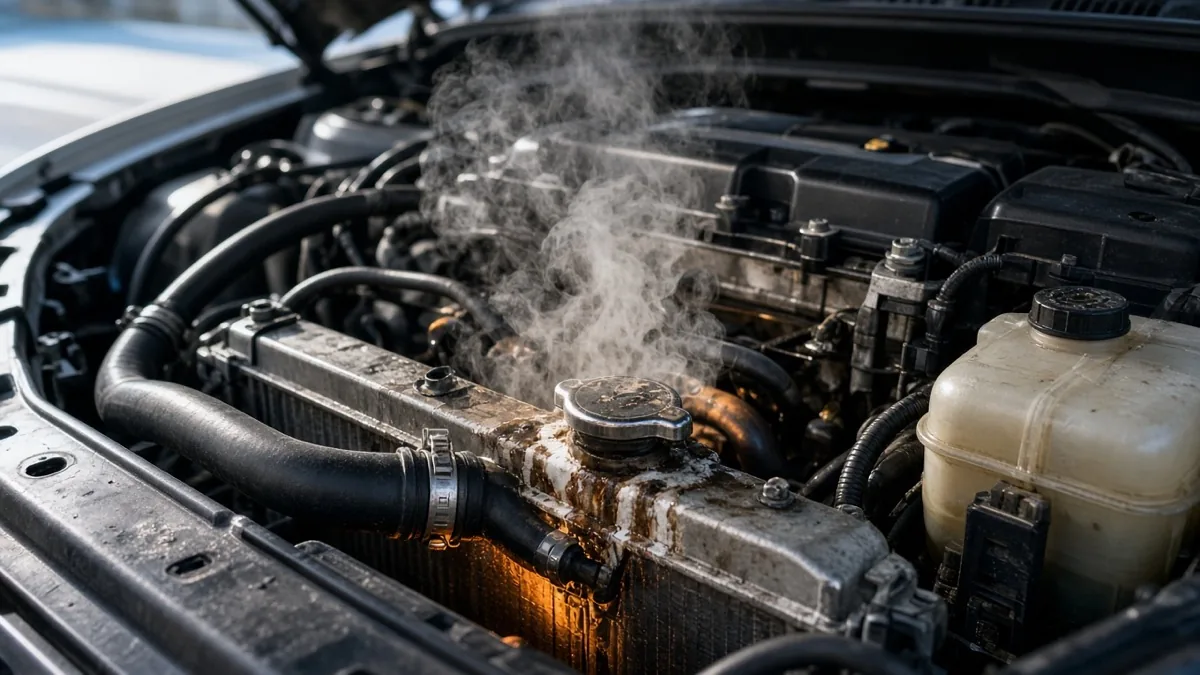
- Check engine light plus overheating. If the temperature gauge is climbing or you see steam, pull over and shut off the engine. Driving an overheating vehicle risks warping the cylinder head, a repair that starts at $1,500.
- Check engine light plus oil pressure warning. Low oil pressure with a check engine light can indicate catastrophic engine damage in progress.
For related diagnostics, see our car overheating causes guide.
Get It Checked This Week
- Steady check engine light with drivability symptoms. Rough idle, hesitation, poor fuel economy, or hard starting mean a sensor or ignition component is actively failing. The car is safe to drive short distances, but the condition is unlikely to resolve on its own and may worsen.
- Steady light that came on after fueling. Likely a gas cap issue. Tighten the cap, drive normally for two to three days, and see if the light clears. If it doesn't, get a code read.
Monitor It
- Steady check engine light, no symptoms, car drives normally. Many emissions-related codes, like a marginally slow O2 sensor or a small EVAP leak, don't affect driveability. These still need to be addressed before your next emissions inspection, but they won't strand you or cause secondary damage in the short term.
The key distinction: a flashing light is the ECM's way of telling you damage is happening right now. A steady light is the ECM's way of telling you something is out of spec but not yet destructive.
How to Save Money on Check Engine Light Repairs
Start with a free code read. AutoZone, O'Reilly, and Advance Auto Parts will read your codes at no charge. If the code points to a gas cap, fix it yourself and save the entire diagnostic fee. For anything else, the code gives you context before you walk into a shop.
Buy your own OBD-II scanner. A Bluetooth OBD-II reader ($20 to $60) paired with a free app like Torque or Car Scanner gives you the same codes a parts store reads, plus live sensor data. Over the life of a vehicle, it pays for itself after one use.
Get the diagnosis before authorizing the repair. Some shops bundle diagnosis and repair into a single quote. Ask for the diagnostic fee separately, then compare the recommended repair cost against other shops. Many shops waive the diagnostic fee if you approve the repair.
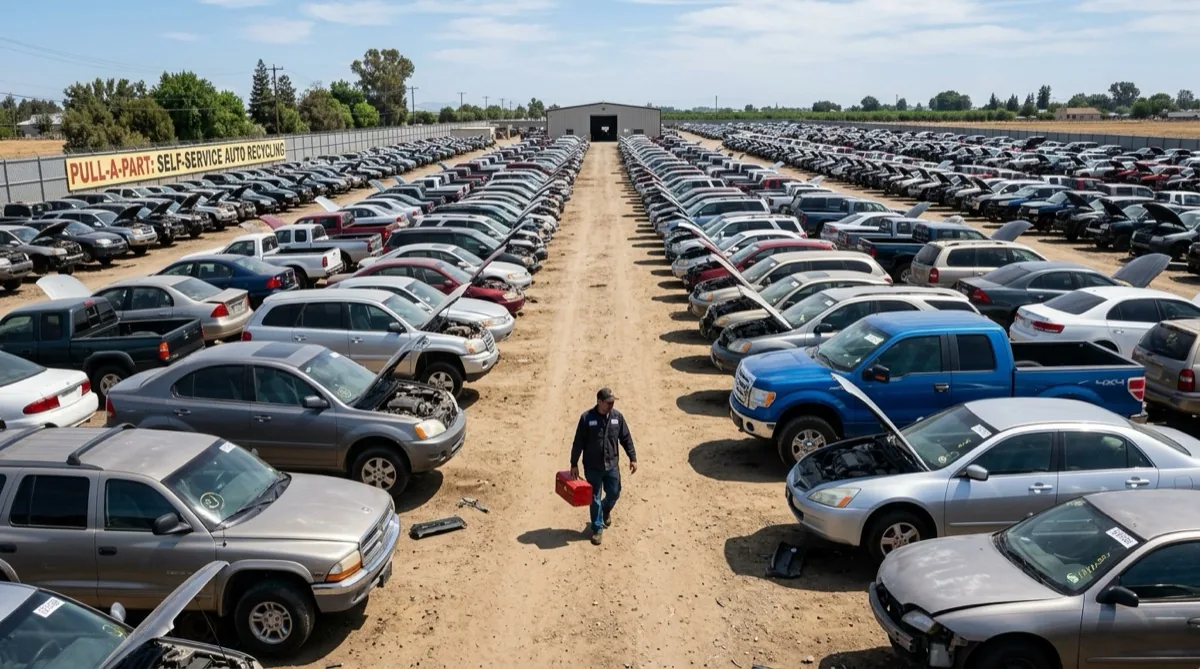
Consider used parts for expensive components. An engine computer costs $154 median from a salvage yard versus $800 to $1,500 new. For parts like ECMs that either work or don't, a used unit with a 30 to 90 day warranty from a full-service salvage yard is a practical way to cut the bill.
Get a second opinion on catalytic converter diagnosis. Because converter replacement is so expensive, it's worth $150 for a second shop to confirm the diagnosis before authorizing a $2,000 repair. A failed upstream O2 sensor can mimic a bad converter on the scan tool, and replacing the sensor first ($200 to $500) may clear the code entirely.