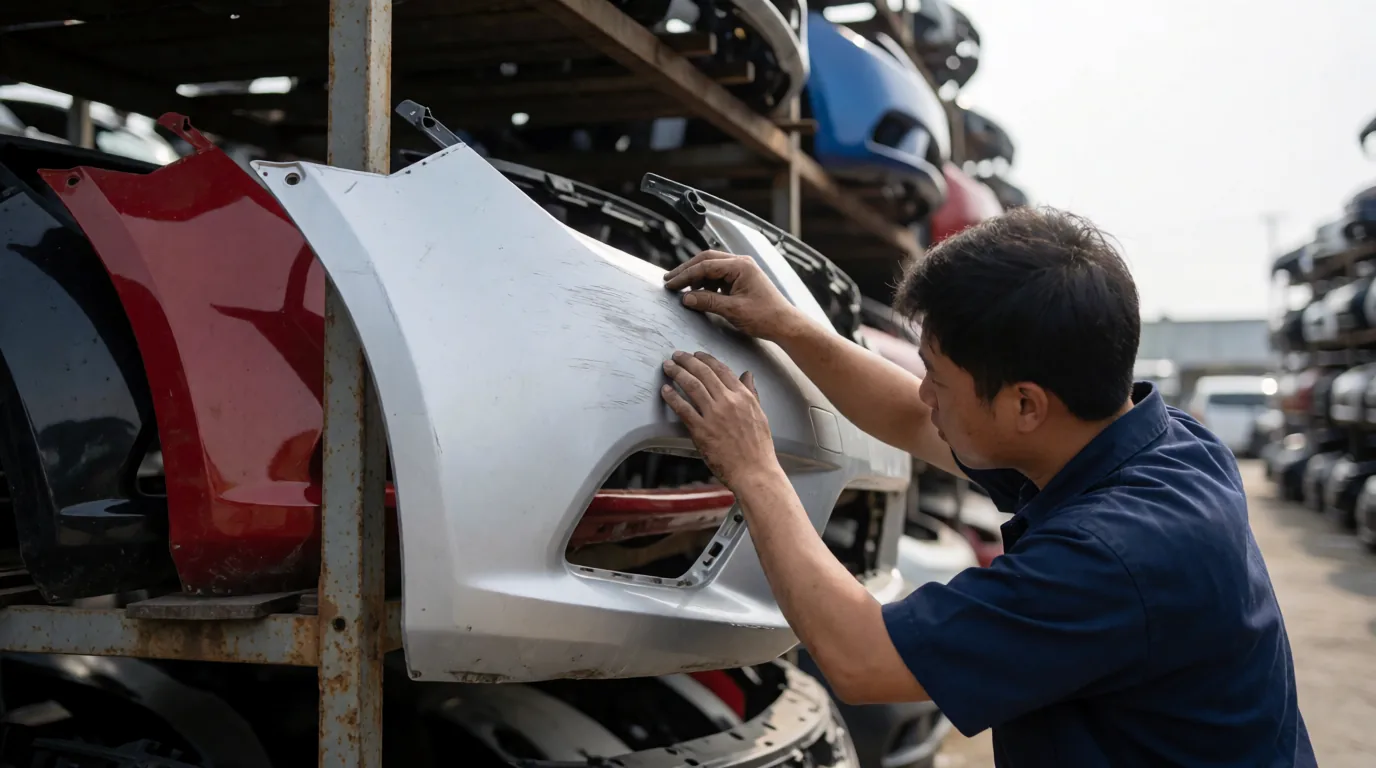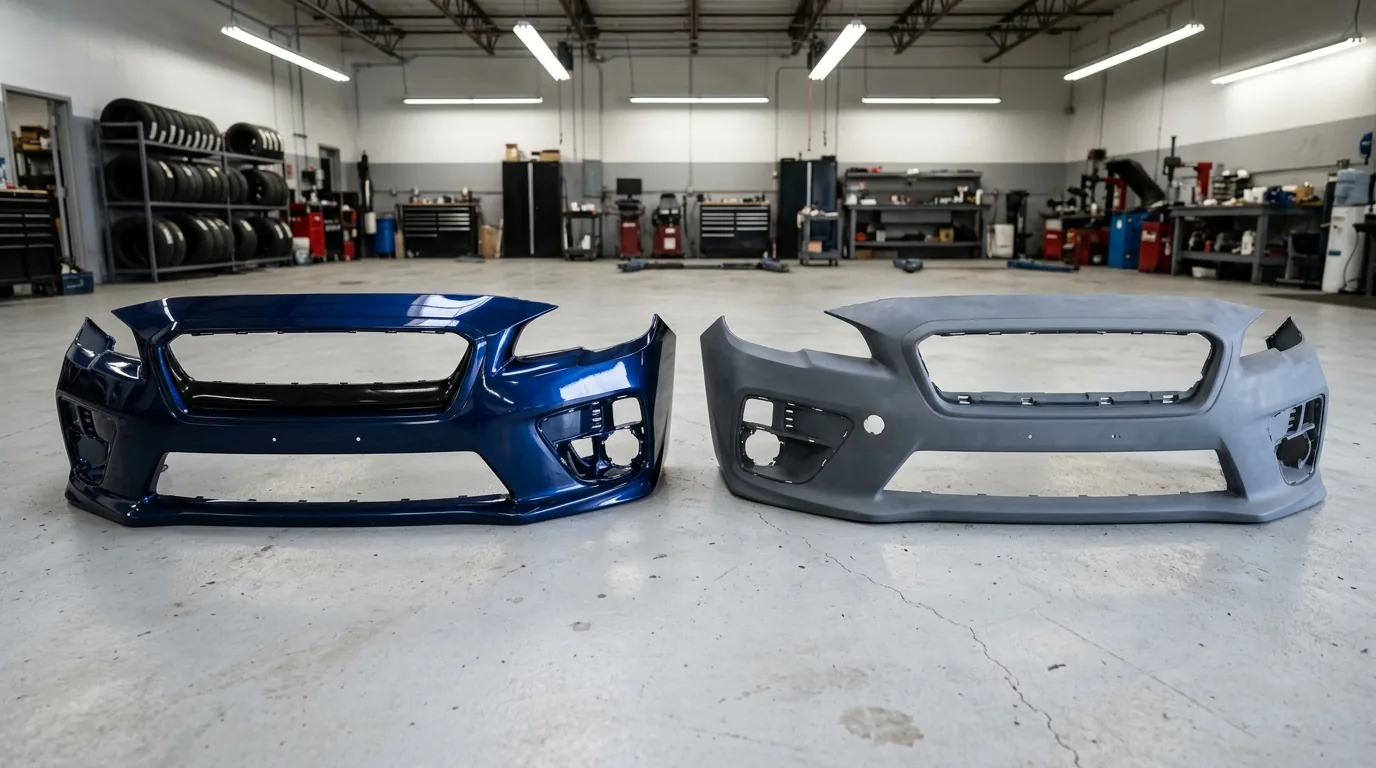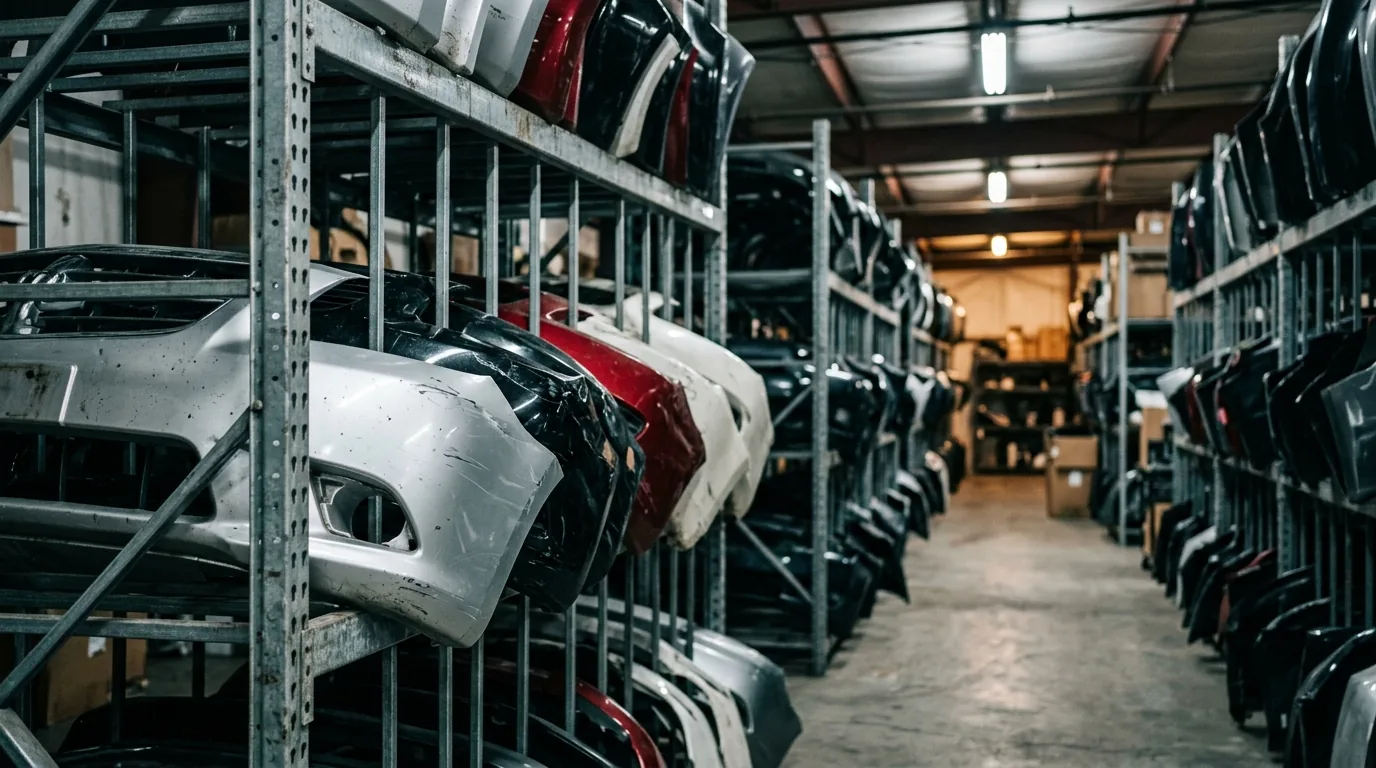
A used front bumper cover costs between $120 and $655, with a national median of $260. That range comes from 17,627 priced salvage yard listings across 51 vehicle models, which are real asking prices from yards around the country rather than dealer estimates.
Your model does most of the work in setting that number. A Toyota RAV4 front bumper medians at $120 while a Mercedes E-Class cover runs $655, a 5x spread that no generic pricing guide captures. Color and damage do the rest, and those two variables are why the same part on the same vehicle can list for $30 at one yard and $1,100 at another.
- Median used front bumper price: $260 across 17,627 priced salvage listings from 51 vehicle models
- Range: $120 to $655 by model median, with individual listings running from under $30 to over $1,300
- Cheapest models: Toyota RAV4 ($120), Toyota Tacoma ($150), Toyota Corolla ($158), Honda CR-V ($173)
- Most expensive: Mercedes E-Class ($655), BMW X5 ($595), BMW X3 ($590), Mercedes C-Class ($588)
- Every single listing is ungraded. Bumpers are priced from photos, not letter grades, so your inspection matters more than it does on mechanical parts
What a Used Front Bumper Costs
Across all 17,627 priced front bumper cover listings in the PartPriceGuide index, here is where prices actually land:
| Metric | Price |
|---|---|
| Lowest model median | $120 |
| Overall median | $260 |
| Overall average | $283 |
| Highest model median | $655 |
One thing worth flagging before you compare quotes: use the median, not the average, when you evaluate bumper pricing. Salvage listings occasionally carry data-entry errors where an entire donor vehicle gets logged as a body panel. The Ram 1500 front bumper set is a clean example, with a $270 median but a $694 average, because one listing was priced at $29,360. The median shrugs that off. The average doesn't.
*Source: PartPriceGuide.com analysis of 17,627 priced salvage yard listings, August 2026.*
Front Bumper Prices by Vehicle Model
Model is the single biggest lever on price. The table below shows median and average front bumper cover prices for the most-listed models in the index:
| Vehicle Model | Median Price | Avg Price | Listings |
|---|---|---|---|
| Toyota RAV4 | $120 | $142 | 1,534 |
| Toyota Tacoma | $150 | $190 | 338 |
| Toyota Corolla | $158 | $219 | 350 |
| Honda CR-V | $173 | $205 | 250 |
| Toyota Camry | $175 | $190 | 801 |
| Toyota Highlander | $183 | $220 | 332 |
| Subaru Forester | $190 | $214 | 136 |
| Nissan Sentra | $200 | $209 | 257 |
| Honda Pilot | $214 | $224 | 338 |
| Honda Civic | $215 | $238 | 469 |
| Hyundai Tucson | $225 | $276 | 697 |
| Chevy Traverse | $230 | $250 | 455 |
| Honda Accord | $250 | $247 | 241 |
| Jeep Grand Cherokee | $260 | $305 | 894 |
| Ford Edge | $274 | $292 | 560 |
| Nissan Rogue | $286 | $293 | 404 |
| Chevy Equinox | $290 | $295 | 353 |
| Ford Explorer | $300 | $350 | 988 |
| Hyundai Sonata | $312 | $333 | 1,046 |
| Chevy Silverado 1500 | $320 | $295 | 280 |
| Hyundai Elantra | $339 | $319 | 390 |
| Ford Escape | $350 | $341 | 213 |
| Chevy Tahoe | $374 | $351 | 785 |
| Ford Mustang | $400 | $430 | 488 |
| Mercedes C-Class | $588 | $618 | 388 |
| BMW X3 | $590 | $615 | 216 |
| BMW X5 | $595 | $632 | 410 |
| Mercedes E-Class | $655 | $677 | 330 |
Toyota owns the budget tier. Five of the eight cheapest front bumpers in the index wear a Toyota badge. That isn't a coincidence about build cost. Toyota runs long production cycles and carries bumper designs across multiple model years with minimal change, so a single salvage cover fits a wide band of donor and recipient vehicles. Wide interchange plus enormous fleet volume equals a buyer's market.
Supply alone doesn't set the price. The intuitive rule from mechanical parts, more listings means lower prices, only half-holds here. The RAV4 has the most listings in the set (1,534) and the lowest median ($120), which fits. But the Hyundai Sonata has 1,046 listings and a $312 median, well above the overall figure. Sonata covers sit higher because the current generation's front fascia is large, one-piece, and easy to crack, so the demand side keeps pace with supply.
European badges cost roughly 2.3x the index median. BMW and Mercedes front covers run $588 to $655 at the median. These bumpers integrate parking sensors, washer jets, adaptive cruise radar housings, and multi-piece trim, and fewer donor cars reach US yards. Even so, a $655 used OEM Mercedes cover undercuts a dealer replacement by a wide margin.
Check what your exact vehicle costs on the front bumper price index, which tracks all 51 models with live salvage pricing.

Why Grade Letters Don't Work on Bumpers
Every one of the 17,627 priced front bumper listings in the index is graded X, which means ungraded. Not most of them. All of them.
That's a sharp break from mechanical parts. Used alternators, engines, and transmissions get sorted into A, B, C, and X buckets based on donor mileage and bench testing, and the grade genuinely moves the price. A bumper cover has no mileage, no bearings, and nothing to bench test. Its value is entirely visual: how bad are the scuffs, is the paint faded, are the tab mounts snapped, does it have the right sensor cutouts.
So yards skip the letter and post photos instead. That shifts real work onto you as the buyer.
What this changes about how you shop:
- Photos are the spec sheet. Insist on shots of the full face, both ends where the fender meets, and the back side where the mounting tabs live. A cover that looks perfect head-on can have six broken tabs behind it.
- Ask what the yard didn't photograph. Lower valance scrapes and the underside of the chin are the two areas most often left out of a listing.
- Price is negotiable in a way it isn't on graded parts. With no grade to anchor to, the asking price reflects a yard employee's judgment. Point out specific flaws in the photos and there's usually room.
- Two listings at the same price are not the same part. A $250 cover in your exact factory color is worth several hundred dollars more to you than a $250 cover in the wrong color.
Our step-by-step salvage yard bumper guide walks through the exact inspection checklist and the paint code lookup that makes color matching reliable.
*Source: PartPriceGuide.com grade-level analysis, 17,627 front bumper listings, August 2026.*
Front vs Rear Bumper Pricing
Front bumper covers median at $260 against $240 for rear covers, an 8 percent premium.
| Metric | Front Bumper | Rear Bumper |
|---|---|---|
| Median | $260 | $240 |
| Average | $283 | $272 |
| Lowest model median | $120 | $89 |
| Highest model median | $655 | $800 |
| Priced listings | 17,627 | 19,083 |
Notice that rear bumpers reach a higher ceiling ($800 vs $655) even with a lower median. Rear covers on a handful of luxury and truck models integrate step pads, sensor arrays, and chrome trim that push individual listings past anything on the front-end side.
There's a practical takeaway buried in the sensor point. If your vehicle has front parking sensors or adaptive cruise, confirm the donor cover has the identical cutout pattern. A cover from the same model year but a lower trim level often has smooth plastic where your sensors need to sit, and you cannot drill your way out of that.
Why One Model Spans $30 to $1,100
The intra-model spread on bumper covers dwarfs anything you see on mechanical parts. Toyota RAV4 front covers list from $30 to $1,100 in the index, a 37x range within a single model. Chevy Malibu covers run $10 to $995. Compare that to a used alternator, where the same model typically spans 3x to 4x.
Four variables explain almost all of it.
Color. A cover in a high-volume factory color (silver, black, white, gray) that matches your paint code is the most valuable version of that part, because you can install it without a paint booth. An unusual color is worth less to almost every buyer, and yards price accordingly.
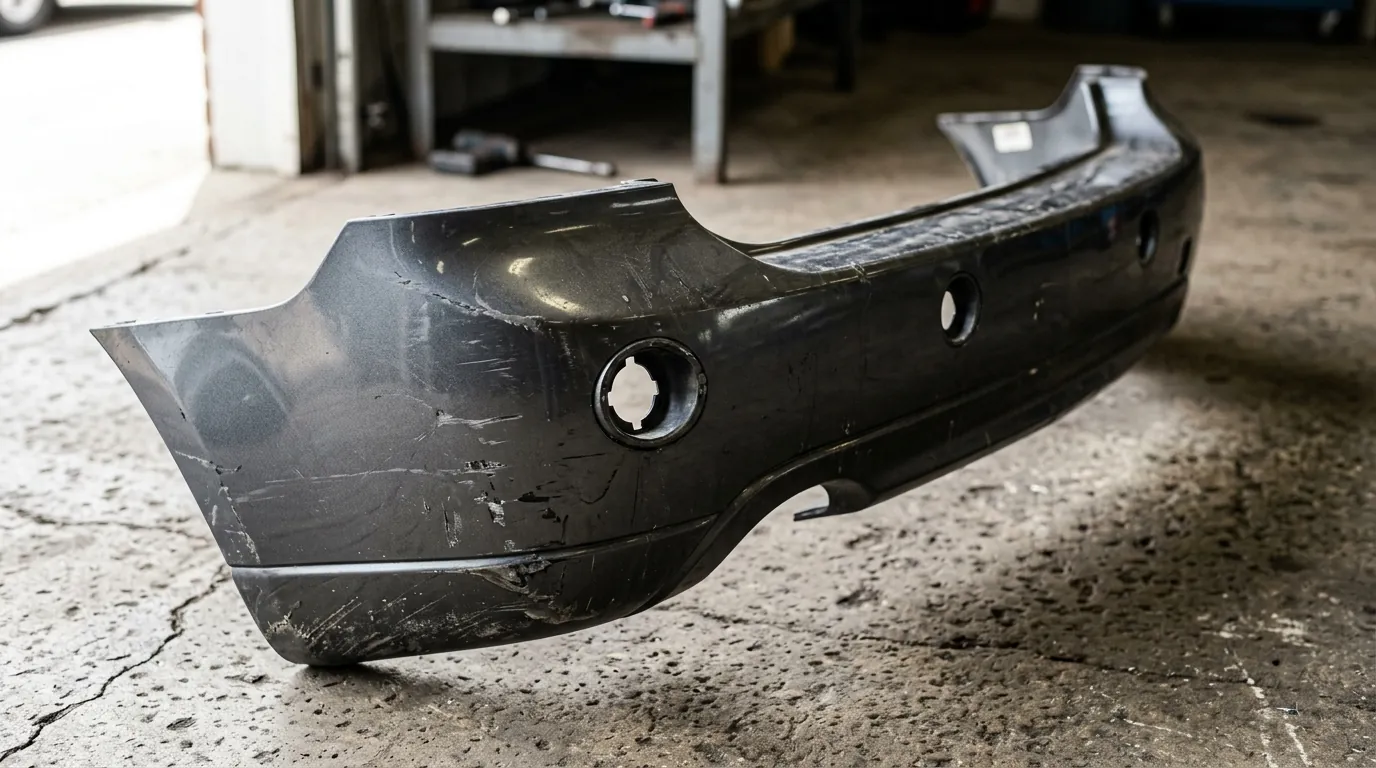
Cosmetic condition. A cover with light scuffs on the lower valance is a candidate for scuff repair. A cover with a stress crack radiating from a mount point is a candidate for the scrap bin. Both get listed. The condition gap alone can swing the price by 5x.
Trim level and sensor package. Base trims, sport packages, and off-road packages use different covers with different grille openings, fog light provisions, and sensor bores. A loaded-trim cover fits fewer buyers but commands more from the buyer it does fit.
Model year sub-generation. Manufacturers restyle front fascias mid-generation more often than they change mechanical parts. A 2019 cover may not fit a 2021 of the same nameplate even though the engine and transmission are identical.
The practical move is to filter for your paint code first and your budget second. Paying $340 for a color-matched cover beats paying $180 for one that needs $600 of paint work.
Used OEM vs New Aftermarket vs New OEM
| Factor | Used OEM | New Aftermarket | New OEM |
|---|---|---|---|
| Part price | $120–$655 (median $260) | $150–$400 | $500–$1,200 |
| Paint included | Yes, in donor color | No, primed only | No, primed only |
| Typical paint cost to add | $0–$700 | $300–$700 | $300–$700 |
| Panel gap fit | Factory tolerances | Varies by brand | Factory tolerances |
| Sensor and light cutouts | Exact | Usually correct | Exact |
| Availability | Same day at yards | 2–5 day shipping | 1–10 days, some backordered |
Fit is the other half of the story. Aftermarket bumper covers are reverse-engineered from OEM parts and the tooling quality varies widely between manufacturers, which shows up as uneven panel gaps at the fender and headlight seams. We break the whole comparison down, including what CAPA certification does and doesn't guarantee, in used OEM vs aftermarket bumper.
The Costs Beyond the Bumper Itself
The cover is the headline number, not the total. Budget for these before you decide:
Clips, retainers, and absorber foam ($15 to $60). Bumper covers mount with dozens of single-use plastic clips that break on removal. Buy the clip kit for your model up front. The impact absorber behind the cover is a separate part and is often damaged in the same collision that killed your bumper.
Paint and blend ($300 to $700 at most body shops). Only applies if you can't find your paint code. Blending into the adjacent fenders is what pushes this above simple single-panel painting, and it's what makes a color match worth hunting for.
Sensors, fog lights, and grille ($0 to $400). Many yard listings sell the shell only. Confirm in writing whether sensors, fog lamps, grille inserts, and the lower valance come with it, because sourcing those separately erases your savings fast.
Labor ($150 to $400). A front cover swap runs one to three hours at a shop. It's genuinely DIY-friendly on most vehicles if you have a socket set, a trim tool, and a second set of hands.
Shipping ($75 to $250 if not local.) Bumper covers are bulky and freight-classed. Local pickup is almost always the better economics, and it lets you inspect before you pay.
Add it up and a color-matched used OEM cover installed yourself lands around $275 to $400 all-in on a mainstream vehicle. The same repair at a body shop with a new OEM part routinely crosses $1,200.
Find live pricing for your specific vehicle on the front bumper price index, or jump straight to a high-volume model like the Toyota RAV4 front bumper or Ford Explorer front bumper.