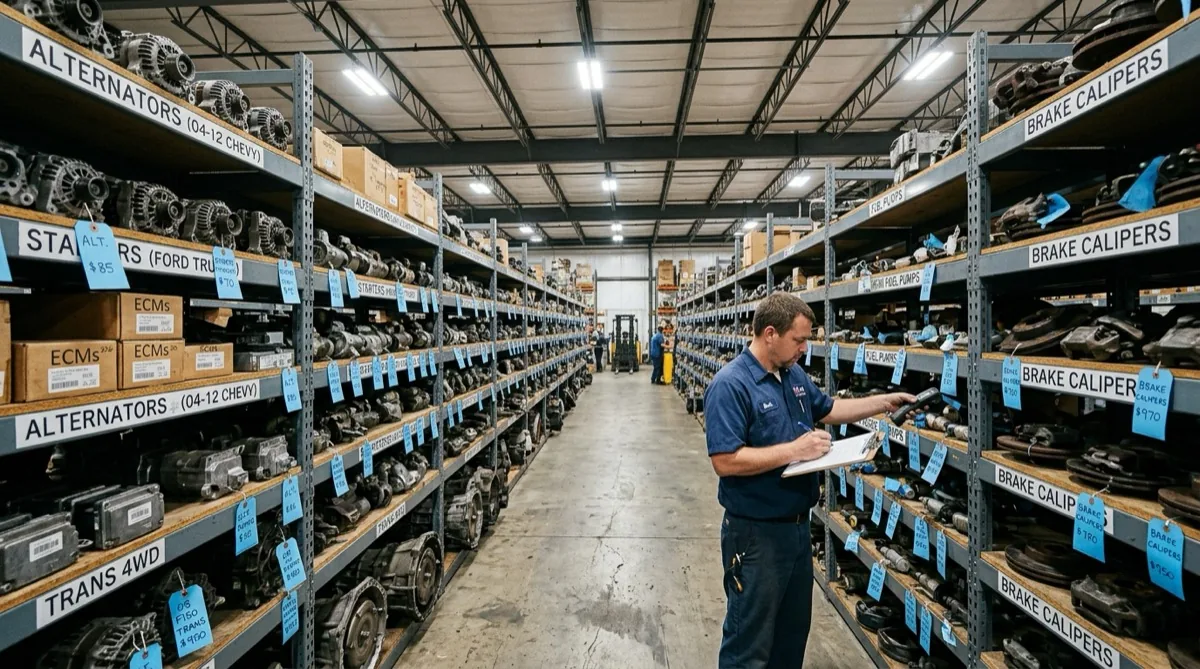
Replacing an ignition switch costs $150 to $450 total with a used part and $195 to $550 with a new aftermarket unit. The switch itself is a relatively inexpensive component at $78 median for a used part across 2,898 salvage yard listings. Labor runs $90 to $250 for one to two hours of shop time, though some vehicles require additional time for steering column disassembly or anti-theft system resets.
See also: how much do junkyards charge for parts.
One important distinction before you commit to a repair: the ignition switch and the ignition lock cylinder are different parts. The switch is the electrical component that routes power when you turn the key. The lock cylinder is the mechanical housing where the key goes in. Misdiagnosis between the two is common and leads to unnecessary parts purchases. We cover the difference in detail below.
- Used ignition switch: $150–$450 total ($78 median part + $90–$250 labor)
- New aftermarket switch: $195–$550 total ($100–$250 part + $90–$250 labor)
- New OEM switch: $245–$650 total ($150–$400 part + $90–$250 labor)
- The ignition switch and ignition lock cylinder are different parts with different failure modes and costs
- Common misdiagnosis: a key that won't turn is usually a lock cylinder or steering lock issue, not the electrical switch
- Dataset: 2,898 priced ignition switch listings across 63 vehicle models, August 2026
What Ignition Switch Replacement Costs
An ignition switch replacement has two main cost components: the switch itself and the labor to access and replace it. Some vehicles add a third cost if the anti-theft or immobilizer system needs to be reprogrammed after the swap.
| Cost Component | Used | New Aftermarket | New OEM |
|---|---|---|---|
| Part cost | $60–$178 (median $78) | $100–$250 | $150–$400 |
| Labor (1–2 hrs at $90–$130/hr) | $90–$250 | $90–$250 | $90–$250 |
| Anti-theft reprogram (if needed) | $0–$50 | $0–$50 | $0–$50 |
| Total | $150–$450 | $195–$550 | $245–$650 |
The labor cost varies primarily by how accessible the switch is. On older vehicles where the switch mounts directly on the steering column, the job takes under an hour. On newer models with integrated column assemblies and multi-layer trim panels, accessing the switch can push the job to two hours. Dealer labor rates run 20 to 40 percent higher than independent shops for the same procedure.
For broader context, see our used auto parts price guide.
Ignition Switch vs Ignition Lock Cylinder
These two parts sit next to each other on the steering column, but they do entirely different jobs. Confusing them is the single most common reason people buy the wrong part or pay for the wrong repair.
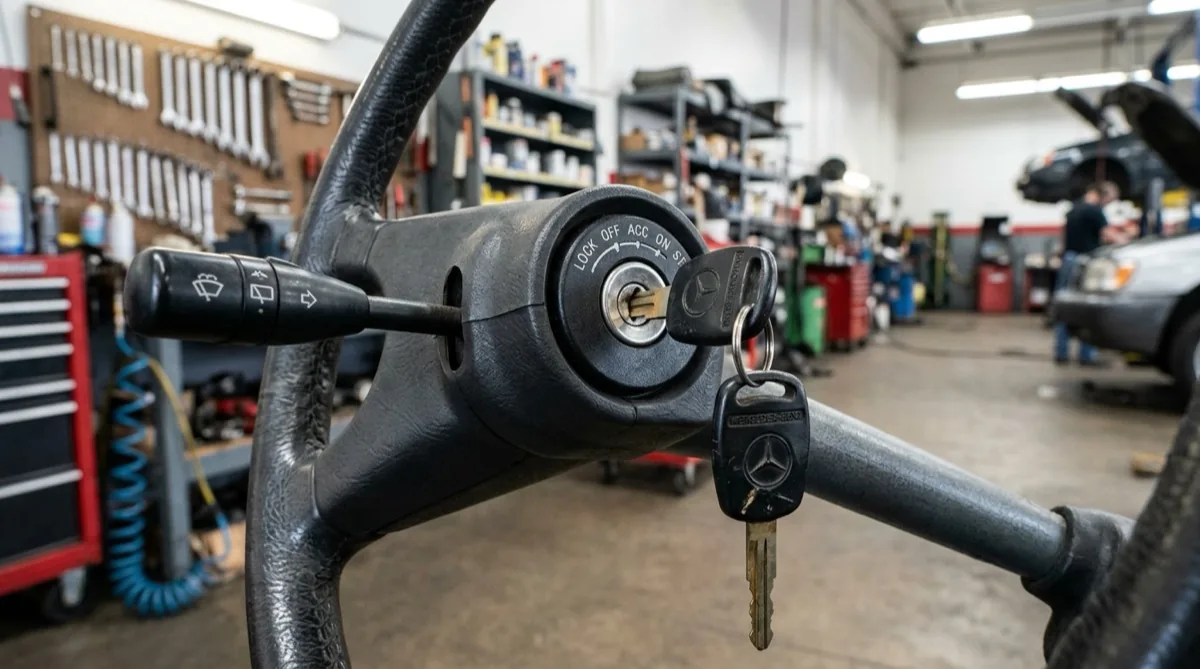
The ignition lock cylinder is the mechanical component. It is the housing you insert your key into, and it contains the tumblers that recognize your specific key cut. When the lock cylinder fails, the key physically won't turn, gets stuck, or the cylinder itself becomes loose and wobbly. Replacing a lock cylinder typically costs $150 to $350 for the part (since it must be rekeyed or come with new keys) plus $100 to $250 labor, for a total of $250 to $600.
The ignition switch is the electrical component. It sits behind or below the lock cylinder and translates the rotational positions (off, accessory, run, start) into electrical signals that power different vehicle systems. When the switch fails, the key turns freely but something electrical does not respond: no dash lights, no cranking, intermittent stalling, or accessories cutting out.
How to tell which one has failed:
| Symptom | Lock Cylinder | Ignition Switch |
|---|---|---|
| Key won't turn or is hard to turn | Yes | No |
| Key turns but nothing electrical happens | No | Yes |
| Engine stalls intermittently while driving | No | Yes |
| Dashboard lights flicker at certain key positions | Unlikely | Yes |
| Key slides in and out too easily | Yes | No |
| Accessories work in some key positions but not others | No | Yes |
Symptoms of a Failing Ignition Switch
Ignition switch failures are electrical, so the symptoms involve circuits dropping out rather than mechanical resistance at the key. The switch routes power to different systems depending on key position, and internal contact wear causes those circuits to fail selectively.
Engine stalls intermittently while driving. The switch's "run" position contacts wear out and momentarily lose connection, cutting power to the fuel pump or ignition system. The engine dies without warning, often restarting normally after turning the key off and back on. This is the most dangerous symptom because it can happen at highway speed.
No-crank or no-start condition. Turning the key to the "start" position produces no response from the starter motor, even though the battery is fully charged and connections are clean. The switch's start circuit has failed, so no signal reaches the starter relay or solenoid.
Accessories lose power intermittently. The radio resets, power windows stop working, or dashboard gauges go dead while driving, then come back moments later. The switch's accessory circuit contacts are failing intermittently.
Dashboard warning lights flicker or go dark. Multiple warning lights coming on simultaneously or the entire instrument cluster going dark at random points to a power delivery problem at the switch rather than individual sensor failures.
Vehicle starts but immediately dies. The switch can complete the "start" circuit to crank the engine but fails to hold the "run" circuit, so the engine fires and then loses power within a second or two as the key springs back from start to run position.
Key Won't Turn: Is It the Switch or Something Else?
A key that won't turn is almost never the ignition switch. The switch is an electrical component, and it does not resist key rotation. Before paying for a diagnosis, work through these common causes in order.
Steering wheel lock. The most common cause of a key that won't turn. When you remove the key with the steering wheel slightly turned, the locking mechanism engages. The fix is free: gently rock the steering wheel left and right while turning the key, and the lock will release.
Worn key. Keys wear down over years of use, and the worn profile may not fully engage the lock cylinder tumblers. Try a spare key if you have one. If the spare works, get a new key cut from the original key code (available from the dealer with proof of ownership) rather than copying the worn key.
Dirty or worn lock cylinder. Debris inside the cylinder can prevent the tumblers from aligning. A spray of dry graphite lubricant into the keyhole resolves this in many cases. If the cylinder tumblers are worn beyond what lubrication fixes, the lock cylinder needs replacement, not the ignition switch.
Locked shifter interlock (automatics). Some vehicles prevent the key from turning unless the transmission is firmly in Park. Firmly press the brake pedal and push the shifter into Park again, making sure it clicks fully into position.
Dead battery or electrical fault. On vehicles with electronic steering column locks, a dead battery can prevent the lock from releasing. Jump-starting the vehicle or connecting a battery charger may resolve the issue without any parts replacement.
If the key turns freely through all positions but the vehicle does not respond electrically, that is when the ignition switch becomes the suspect.
Can You Replace an Ignition Switch Yourself?
Ignition switch replacement is a manageable DIY job on most vehicles. The switch is an electrical component that plugs in with a wiring connector, so the work is more about accessing it than performing complex mechanical or hydraulic procedures.
Tools you'll need: socket set, screwdrivers (Phillips and flathead), a trim removal tool for steering column covers, and potentially a Torx bit set for column screws. No specialized automotive tools are required on most models.
The basic procedure: Remove the steering column covers (typically two to four screws and some plastic clips), locate the switch on the back or side of the lock cylinder housing, disconnect the wiring connector, remove the mounting screws or release the retaining tab, install the new switch, and reassemble.
Budget one to two hours for a first attempt, including time to carefully remove and reinstall the steering column trim without breaking clips. Experienced DIYers can finish in 30 to 45 minutes.
Anti-theft considerations. Some vehicles, particularly models from the mid-2000s onward, tie the ignition switch to the immobilizer system. On these vehicles, swapping the switch may require a relearn procedure using a scan tool or a dealer visit to reprogram the new switch to recognize the key's transponder chip. Check whether your specific vehicle requires this step before starting, because an aftermarket scan tool may not support the relearn on all makes.
Sourcing a used switch from a salvage yard at the $78 median price and doing the labor yourself brings the total cost to under $100, saving the full $90 to $250 labor charge.