Fuel Tank price snapshot
- Low
- $75
- Average
- $186
- High
- $900
Part price guide
Saurabh Kumar
Co-Founder & CTO, Part Price Guide
Built the pricing pipeline that collects and normalizes used OEM part listings from salvage yards and online marketplaces across the US.
Ambika Sharma
Co-Founder & COO, Part Price Guide
12 years of project management and technical operations experience. Reviews price guides for sample size, fitment accuracy, and data freshness.
Part overview
Across 176 vehicle models, the typical used fuel tank lists for $178, with model-level medians ranging from $75 to $900. Based on 136,846 priced salvage yard listings tracked by PartPriceGuide.
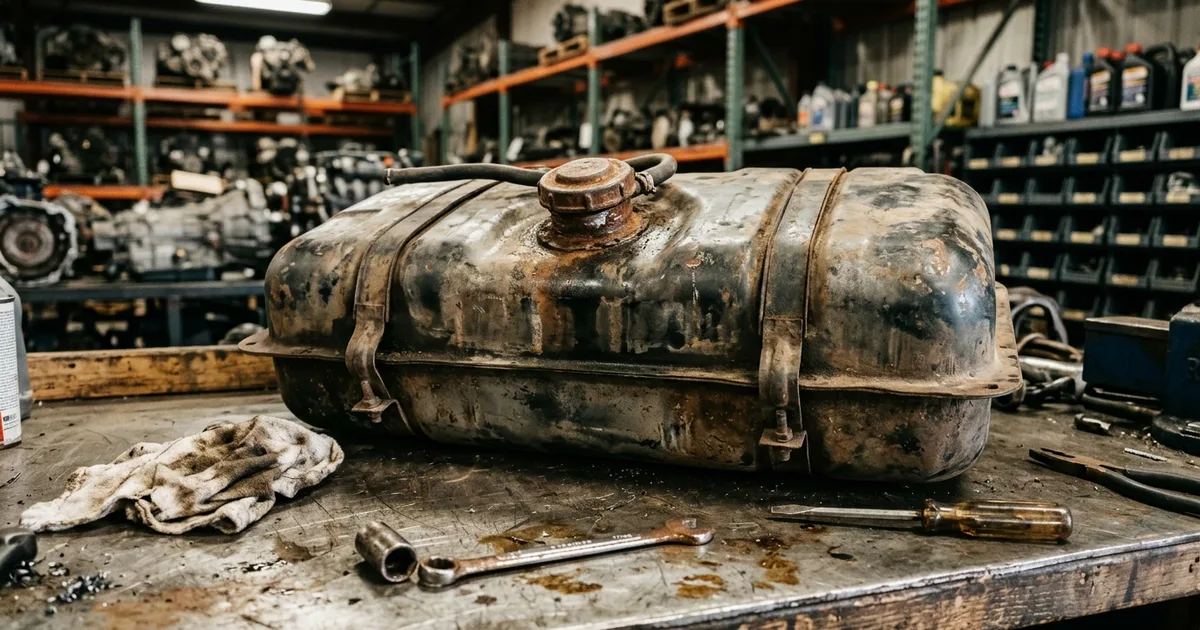
The fuel tank is a secure container beneath the vehicle engineered to safely hold gasoline or diesel fuel.
Replaced due to rust holes in steel tanks, puncture damage from road debris, or leaking seams causing strong fuel odors.
A used fuel tank costs $75 to $900, with a median asking price of $178. Based on price data across 176 vehicle-specific guides. Prices exclude shipping, core charges, and installation.
Vehicle-specific reference
176 of 184 guides currently priced
Price data updating
Price data updating
Price data updating
Price data updating
Price data updating
Price data updating
Price data updating
Price data updating
Compare by vehicle
Keep comparing
Common questions
Across 176 vehicle-specific guides with current pricing, used fuel tank guide medians run from $75 to $900, with a typical median of $178. Condition grade, mileage, and fitment move the price within that range.
Usually, yes. Buying a used fuel tank from a salvage yard or auto recycler typically costs a fraction of the new fuel tank replacement cost at a dealership. Compare the grade-level medians above against any replacement quote you've received, and remember our figures exclude shipping and installation labor.
Salvage yards, junkyards, pick-and-pull lots, and online used parts marketplaces all sell used fuel tanks. Our index tracks asking prices nationally, so you can benchmark a local quote against the market range before you buy.
Expect to pay toward the upper half of the $75–$900 range for a grade-A fuel tank with low mileage. Check the grade table above for the current grade-level medians, and confirm whether shipping and any core charge are included in the quote.
They can be — condition grade is the key. Grade A parts come off low-mileage vehicles with little to no damage, grade B is average, and grade C or ungraded parts are the gamble. Buy grade A or B from a yard that offers a return window or warranty, and confirm the mileage of the donor vehicle before paying. The grade-level medians above show what each tier should cost.
Yes. A gas tank is another name for a fuel tank. The prices on this page apply regardless of what it's called in your region or by your mechanic.
The fuel pump is a separate component mounted inside (or, on older vehicles, outside) the fuel tank, and on nearly every modern vehicle it can be accessed and replaced without removing the tank itself. Only buy a used fuel tank if the tank itself is damaged, rusted through, or contaminated — a running or starting problem traced to fuel delivery is almost always the pump, not the tank.
Buying a used fuel tank from a certified auto recycler is completely safe as long as the tank is free from major rust, structural punctures, or severe denting. Used OEM metal or molded plastic tanks offer factory-fit reliability at a fraction of the cost of new replacements. Be sure to flush and dry the interior before installation to remove residual debris or stagnant gasoline.
Inspect the exterior surface for deep rust scale, cracked seam welds, structural crushing, or repaired puncture holes. Look inside the tank neck for corrosion, and verify that all mounting strap flanges and evaporative emission (EVAP) port fittings are intact. Ensure the tank sealing surfaces for the fuel pump retaining lock ring are smooth and non-corroded.
You should replace your fuel tank if you notice persistent gasoline odors, visible fuel puddles under the car, or severe rust flaking that clogs your fuel filters. Internal rust scale will repeatedly ruin new fuel pumps and injectors, making cleaning impractical. Structural punctures along lower seams or near mounting straps also mandate replacement over temporary patches.
Fuel tanks are usually specific to exact body styles, drivetrain layouts (such as front-wheel drive versus all-wheel drive), and fuel types (gasoline versus diesel). Differences in EVAP emissions equipment between state certifications can also alter tank port configurations on otherwise identical models. Always match your original tank's shape, baffle layout, and emissions port counts prior to purchasing.
Salvage yards often sell fuel tanks as bare units, removing the fuel pump module and sending unit to sell separately. Some yards include the original pump assembly, but it is generally recommended to install a new or verified working fuel pump gasket and lock ring during replacement. Confirm with the seller exactly what hardware and internal components remain inside the tank.
Replacing a fuel tank is a labor-intensive job that requires safely elevating the vehicle, siphoning remaining fuel, and supporting the heavy tank with jacks. You will need to disconnect fuel lines, electrical connectors, filler necks, and EVAP vapor lines in tight spaces. Safety precautions against sparks, fumes, and spilled fuel make this repair best suited for experienced DIYers with proper ventilation.