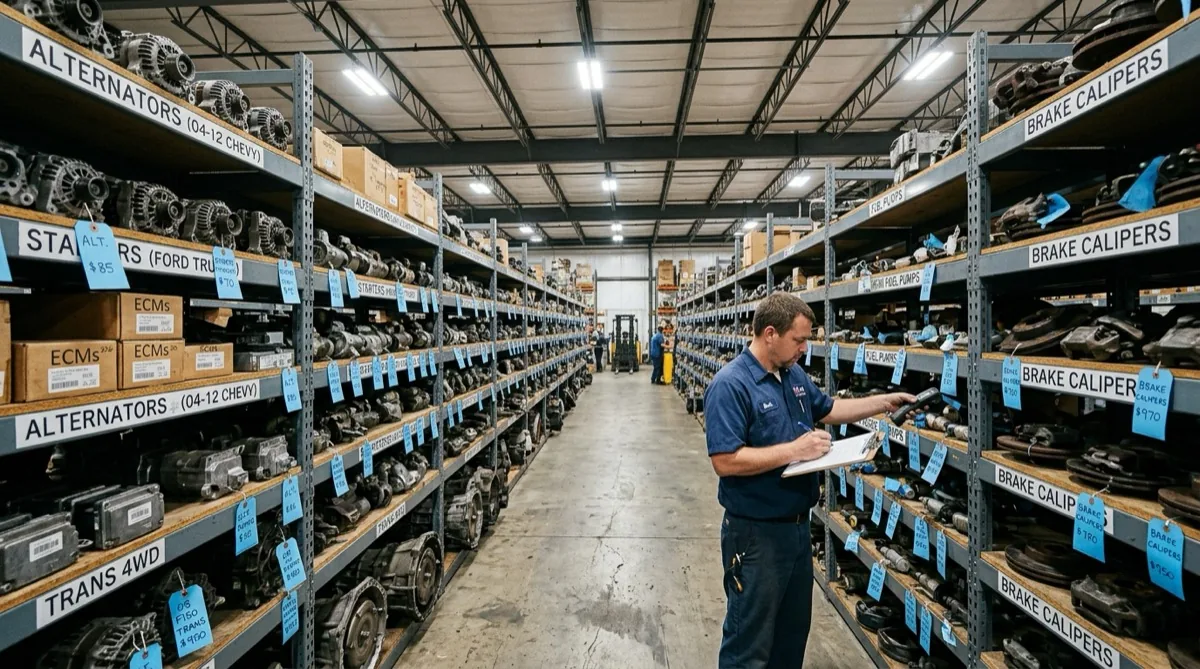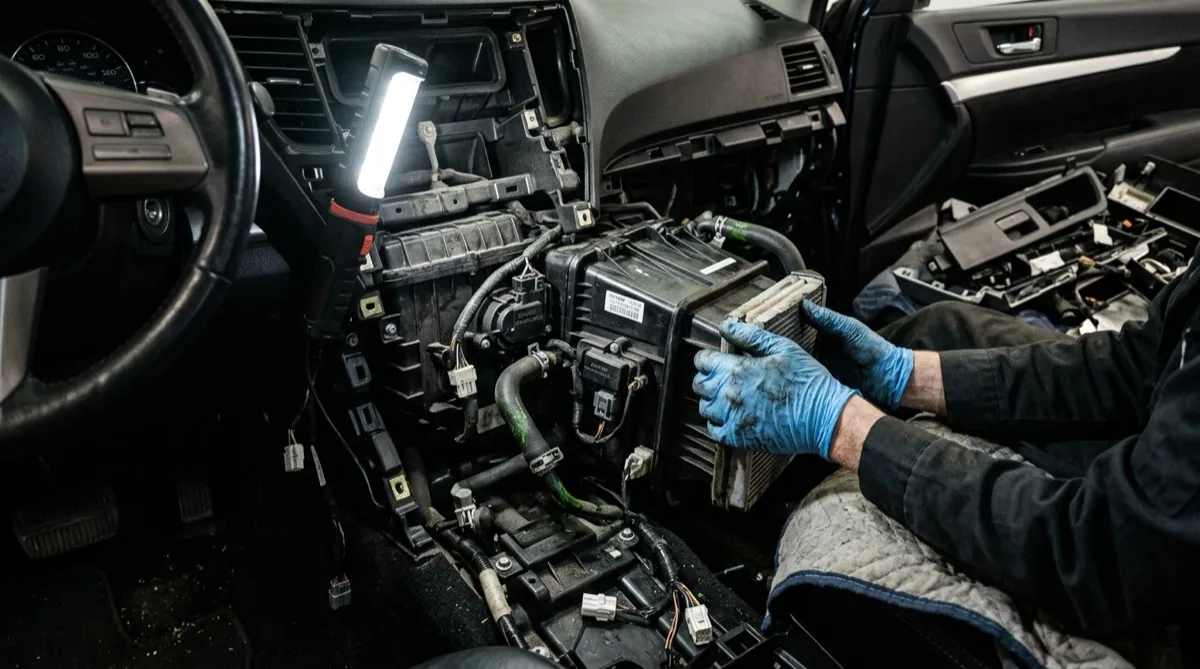
Fuel tank replacement costs $500 to $1,400 total at a repair shop, with the gas tank itself accounting for roughly half the bill. A used fuel tank runs $150 median across our salvage yard index, while new tanks range from $200 to $600 depending on the vehicle. Labor adds $250 to $800 for 2 to 5 hours of work, mostly spent safely dropping and raising the tank from underneath the vehicle.
For current salvage yard pricing, see our fuel tank pricing data.
Most fuel tanks never need replacement. They fail primarily from rust perforation in salt-belt states, collision damage, or cracks from road debris. When replacement is necessary, a used tank from a salvage yard offers genuine savings because the labor-to-part cost ratio favors part price reduction, unlike repairs where labor dominates the bill.
- Total cost: $500–$1,400 depending on vehicle, part source, and tank material
- Used fuel tank median: $150 with a range of $45–$605 across 63 vehicle models
- New tanks run $200–$600, with OEM units pushing past $700 on some trucks and SUVs
- Labor is $250–$800 for 2–5 hours at $95–$150/hr, a moderate share of the total
- Used tanks make financial sense here because part savings ($50–$450) are large relative to reinstallation labor
- Dataset: 127 priced used fuel tank listings per model sample across 63 vehicle models, August 2026
What Fuel Tank Replacement Costs
The fuel tank is a stamped steel or molded plastic container mounted underneath the vehicle, typically ahead of or just behind the rear axle. Replacing it requires dropping the tank from below, disconnecting fuel lines and electrical connectors, and transferring the fuel pump assembly and sending unit to the new tank.
| Cost Component | Used Part | New Part |
|---|---|---|
| Part cost | $45–$605 (median $150) | $200–$600 |
| Labor (2–5 hrs at $95–$150/hr) | $250–$800 | $250–$800 |
| Total | $295–$1,405 | $450–$1,400 |
*Part pricing source: PartPriceGuide.com analysis of used fuel tank salvage yard listings across 63 vehicle models, August 2026. Labor range based on published shop rates and flat-rate manual estimates.*
Additional costs can apply. If the fuel pump assembly or sending unit is damaged, add $150 to $400 for parts. New fuel tank straps run $30 to $80 if the originals are rusted through. A shop will also need to transfer any remaining fuel from the old tank, which adds minimal time but occasionally requires a fuel-safe container purchase.
Why Fuel Tanks Need Replacement
Fuel tanks are designed to last the life of the vehicle, so replacement is relatively uncommon compared to wear items like brakes or suspension components. When tanks do fail, the cause falls into one of four categories.
Rust and Corrosion
Rust is the leading reason for fuel tank replacement, particularly on vehicles in the northeastern and midwestern United States where road salt accelerates undercarriage corrosion. Steel tanks are vulnerable because salt spray contacts the tank's exterior surface continuously during winter driving. Over 10 to 15 years, this exposure can thin the tank walls until fuel seeps through pinhole perforations.
The rust often starts at weld seams and mounting strap contact points where the protective coating wears away from vibration. By the time you smell fuel or see wet spots under the vehicle, the corrosion is typically too widespread for a reliable patch repair.
Puncture or Collision Damage
Road debris, curb strikes, and collisions can crack or puncture a fuel tank. Plastic tanks handle minor impacts better than steel because they flex rather than dent, but a hard enough strike will crack HDPE just as it will rupture steel. Rear-end collisions frequently damage the tank even when the visible body damage appears minor, because the tank sits in the crush zone on many sedans and crossovers.
Fuel Pump Access
On some vehicles, the fuel pump sits inside the tank and can only be accessed by dropping the tank entirely. If the pump fails on a vehicle with significant tank corrosion, many shops will recommend replacing both components at once rather than reinstalling a compromised tank. This bundled approach avoids paying for tank removal labor twice.
Emissions and Evaporative System Compliance
Modern vehicles use sealed evaporative emission (EVAP) systems that capture fuel vapors and route them back to the engine for combustion. A cracked, warped, or corroded tank can cause EVAP leaks that trigger a check engine light with codes like P0440, P0442, or P0456. In states with emissions inspections, a leaking tank will cause an inspection failure. Replacing the tank is the only permanent fix when the tank itself is the vapor leak source.
For more on these codes, see our check engine light diagnosis and cost guide.
Steel vs Plastic Tanks
Vehicle manufacturers have shifted heavily toward high-density polyethylene (HDPE) plastic fuel tanks since the early 2000s. Understanding the differences matters when choosing between used and new replacements.
| Factor | Steel Tank | Plastic (HDPE) Tank |
|---|---|---|
| Corrosion resistance | Vulnerable, especially in salt-belt states | Immune to rust, highly resistant to chemicals |
| Impact behavior | Dents, can puncture on sharp impacts | Flexes on minor impacts, cracks on severe ones |
| Weight | Heavier by 30–40% | Lighter, improves fuel economy marginally |
| Repairability | Can be welded by specialists (fire risk) | Cannot be welded safely, must be replaced |
| Used part longevity | Check for rust carefully | Generally ages well if no cracks |
| Typical price (new) | $200–$500 | $250–$600 |
When buying a used steel tank, inspect the exterior thoroughly for surface rust, pinhole leaks, and corrosion at strap contact points. A used plastic tank needs inspection for cracks, warping, and intact fittings, but rust is not a concern.
Used vs New Fuel Tanks
Fuel tanks are one of the parts where buying used delivers meaningful savings without disproportionate risk. The math works differently here than on a heater core, where minimal part savings are dwarfed by high labor costs.
| Scenario | Part Cost | Labor | Total |
|---|---|---|---|
| New tank | $200–$600 | $250–$800 | $450–$1,400 |
| Used tank (median) | $150 | $250–$800 | $400–$950 |
| Savings from used | $50–$450 | $0 | $50–$450 |
That said, used fuel tank quality depends on where the donor vehicle spent its life. A tank pulled from a vehicle in Arizona or Texas with no road salt exposure may have decades of usable life remaining. A tank from a vehicle in Michigan or Pennsylvania could carry hidden corrosion that leads to failure within a year or two. Ask the salvage yard about the donor vehicle's geographic history when possible.
Browse current used fuel tank pricing and availability on our fuel tank price index.
For broader context on when used auto parts make sense and when new is the better call, see our used auto parts price guide.
When New Is the Better Choice
Buy new if the vehicle will be kept long-term and any of these apply:
- The vehicle operates in a heavy salt-exposure region and you are replacing a steel tank
- The price gap between used and new is under $75 for your specific vehicle
- No used tanks are available from dry-climate donor vehicles
- The vehicle is under 5 years old and a factory warranty or recall applies
New aftermarket tanks from brands like Spectra Premium, Dorman, and Liland typically cost $200 to $450 and carry a 1 to 2 year warranty. OEM tanks run $350 to $700 but are not materially better for most applications.