Grille price snapshot
- Low
- $74
- Average
- $245
- High
- $650
Part price guide
Saurabh Kumar
Co-Founder & CTO, Part Price Guide
Built the pricing pipeline that collects and normalizes used OEM part listings from salvage yards and online marketplaces across the US.
Ambika Sharma
Co-Founder & COO, Part Price Guide
12 years of project management and technical operations experience. Reviews price guides for sample size, fitment accuracy, and data freshness.
Part overview
Across 179 vehicle models, the typical used grille lists for $200, with model-level medians ranging from $74 to $650. Based on 355,729 priced salvage yard listings tracked by PartPriceGuide.
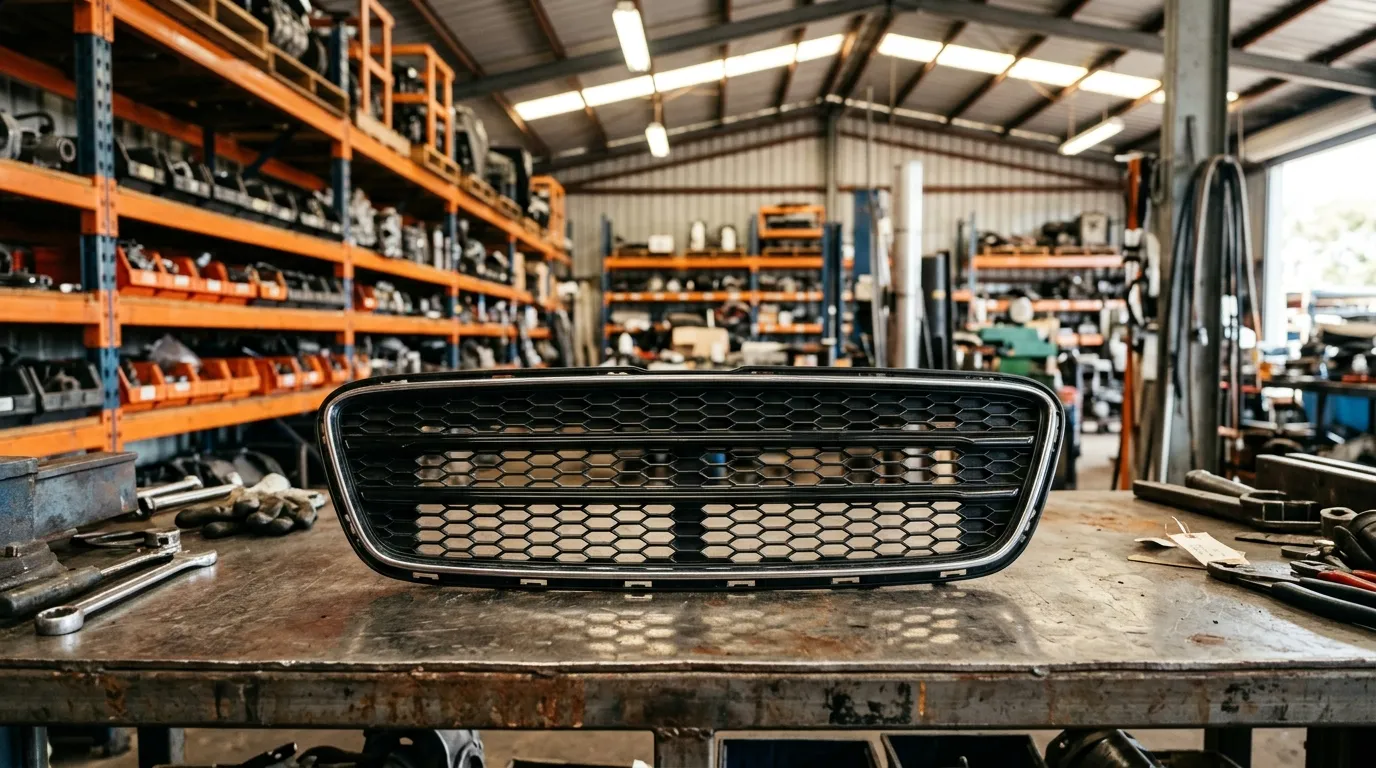
The grille is the front fascia mesh panel that permits cooling airflow into the engine bay while protecting components from flying road debris.
Replaced following front collisions, stone impacts that crack the plastic mesh, or severe flaking of chrome decorative trim.
A used grille costs $74 to $650, with a median asking price of $200. Based on price data across 179 vehicle-specific guides. Prices exclude shipping, core charges, and installation.
Vehicle-specific reference
179 of 184 guides currently priced
Price data updating
Price data updating
Price data updating
Price data updating
Price data updating
Compare by vehicle
Keep comparing
Common questions
Across 179 vehicle-specific guides with current pricing, used grille guide medians run from $74 to $650, with a typical median of $200. Condition grade, mileage, and fitment move the price within that range.
Usually, yes. Buying a used grille from a salvage yard or auto recycler typically costs a fraction of the new grille replacement cost at a dealership. Compare the grade-level medians above against any replacement quote you've received, and remember our figures exclude shipping and installation labor.
Salvage yards, junkyards, pick-and-pull lots, and online used parts marketplaces all sell used grilles. Our index tracks asking prices nationally, so you can benchmark a local quote against the market range before you buy.
Expect to pay toward the upper half of the $74–$650 range for a grade-A grille with low mileage. Check the grade table above for the current grade-level medians, and confirm whether shipping and any core charge are included in the quote.
They can be — condition grade is the key. Grade A parts come off low-mileage vehicles with little to no damage, grade B is average, and grade C or ungraded parts are the gamble. Buy grade A or B from a yard that offers a return window or warranty, and confirm the mileage of the donor vehicle before paying. The grade-level medians above show what each tier should cost.
Yes. A grill is another name for a grille. Other common names include front grille, front grill, radiator grille. The prices on this page apply regardless of what it's called in your region or by your mechanic.
Verify compatibility by matching your vehicle's specific year, trim level, and sub-model, as grilles frequently vary between base, sport, or luxury packages. Check whether your original grille houses integrated features like emblem camera mounts, distance sensor brackets, or shutter assemblies. Cross-referencing part numbers ensures snapping tabs line up perfectly.
Inspect the entire outer perimeter and rear mounting tabs to confirm that no plastic clips or screw bosses are snapped off. Check chrome or painted finishes for heavy pitting, peeling, or deep stress cracks resulting from front-end road impacts. Confirming that center mesh panels and emblem mounting brackets are intact guarantees a factory-fresh look.
Installing a used front grille is typically a simple DIY project requiring basic trim tools, screwdrivers, or socket wrenches. While some grilles pop out from the upper core support in minutes, others require unclipping the front bumper cover for access. Taking care while depressing plastic retaining tabs prevents accidental breakage during installation.
A used OEM grille is significantly better than cheap aftermarket copies because it utilizes superior UV-stabilized plastic and precision-molded mounting clips. Aftermarket grilles often suffer from brittle material quality, ill-fitting clip points, and premature chrome flaking. Choosing a salvage original maintains precise panel alignment and long-lasting finish quality.
Front grilles are commonly replaced due to rock impacts, minor fender benders, sun fading, or broken mounting clips that cause looseness. A cracked grille allows road debris to hit delicate radiator fins and ruins front-end appearance. Replacing a damaged grille with a clean used OEM part instantly restores your vehicle's front aesthetic value.
Buying a clean used grille from a salvage network is far cheaper than purchasing brand-new trim pieces from a dealership parts counter. Look for complete salvage assemblies that include emblem badges and mesh inserts to avoid buying separate add-on pieces. Choosing local pickup options also eliminates shipping fees on bulky body components.