A used AC compressor is worth it when your old unit failed from a leaking shaft seal or a dead clutch coil, and it's a bad idea when the old one came apart internally. That single distinction predicts more about your outcome than mileage, brand, or the yard you buy from.
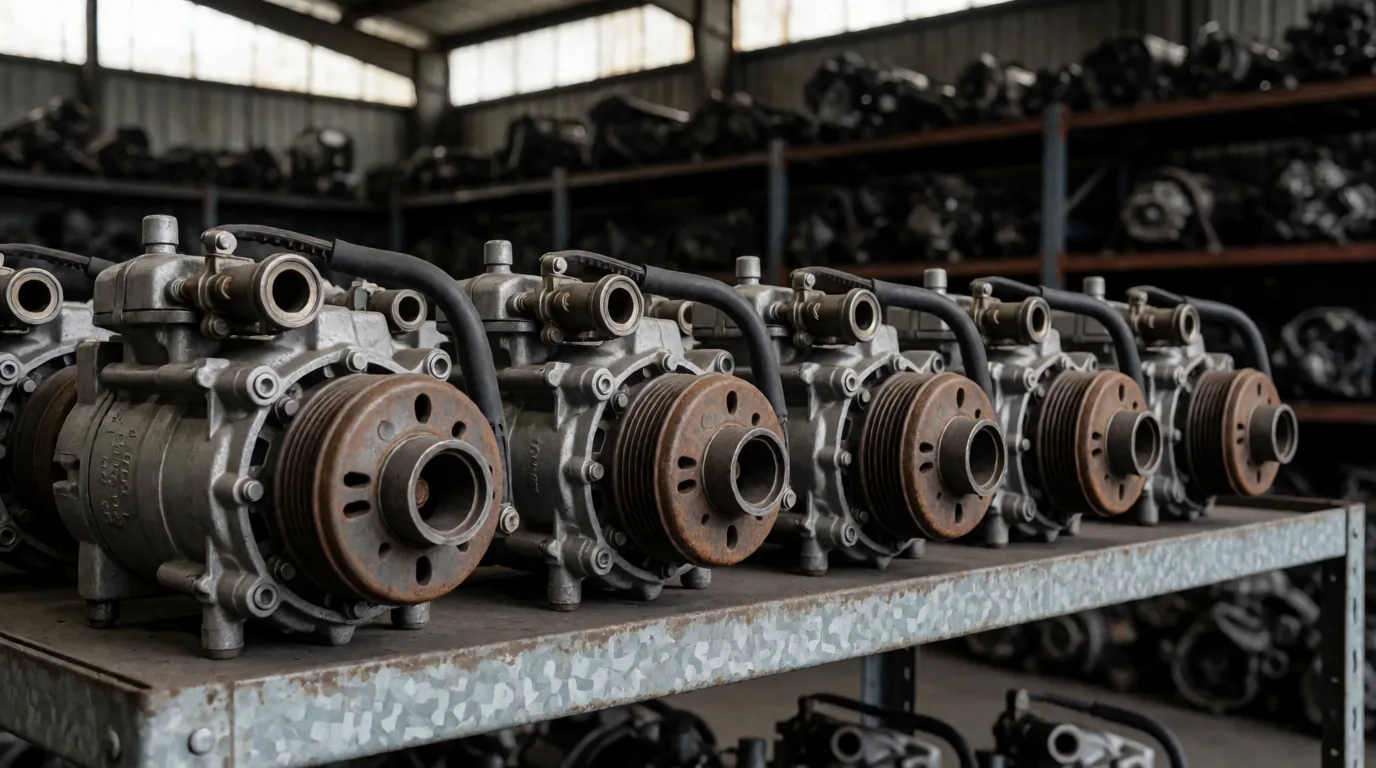
The money case is straightforward. Used compressors carry a $149 national median across 22,777 priced salvage listings, against $400 to $900 for a new OEM unit. The risk case is what most buyers get wrong.
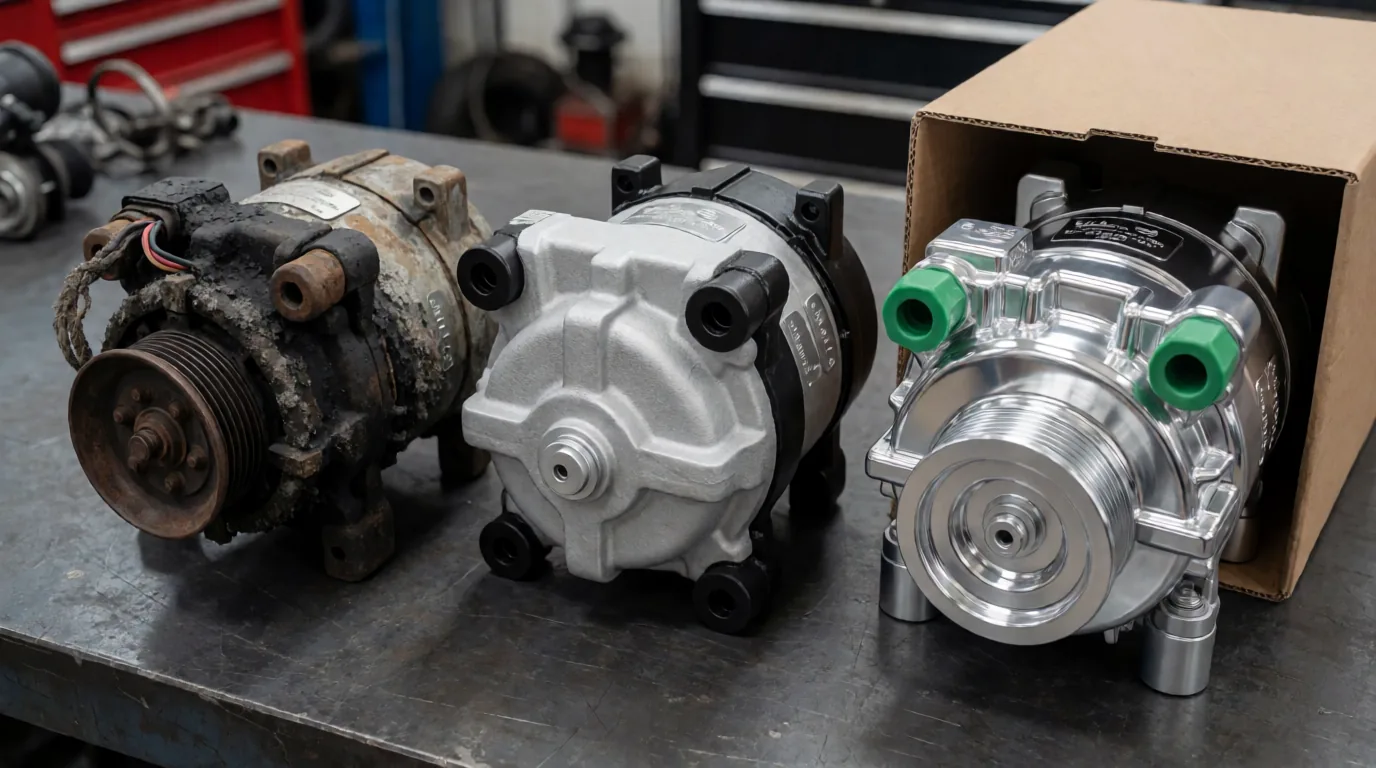
- Used compressors run a $149 median versus $400 to $900 new, a 60 to 80 percent savings on the part
- Failure mode of the OLD compressor decides everything. Seal leak means go ahead. Internal grenade means flush the system first or skip used entirely
- Grade A costs 45% more than ungraded ($160 vs $110) because internal condition is unverifiable on the shelf
- Expect 40,000 to 100,000 additional miles from a used unit in a clean system, tied directly to donor mileage
- Skip used on hybrids. Electric compressors cost 2 to 4x more used and carry oil-contamination risks that erase the savings
The Short Answer
Buy used if all four of these are true: your vehicle is worth under roughly $12,000, the failed compressor still turns freely by hand, you can get donor mileage from the yard, and you're replacing the receiver/drier and orifice tube at the same time.
Skip used if any of these apply: the old compressor is seized or noisy, your vehicle is a hybrid or EV, the system uses R-1234yf and you can't confirm the donor's refrigerant type, or you're paying a shop $400 in labor and want that labor covered by a real warranty.
Everything below explains why those lines fall where they do. For the full pricing picture by vehicle and grade, start with our used AC compressor cost breakdown.
Failure Mode 1: Clutch and Bearing Wear
The clutch is the most common used-compressor complaint, and it's the easiest one to screen for before you buy.
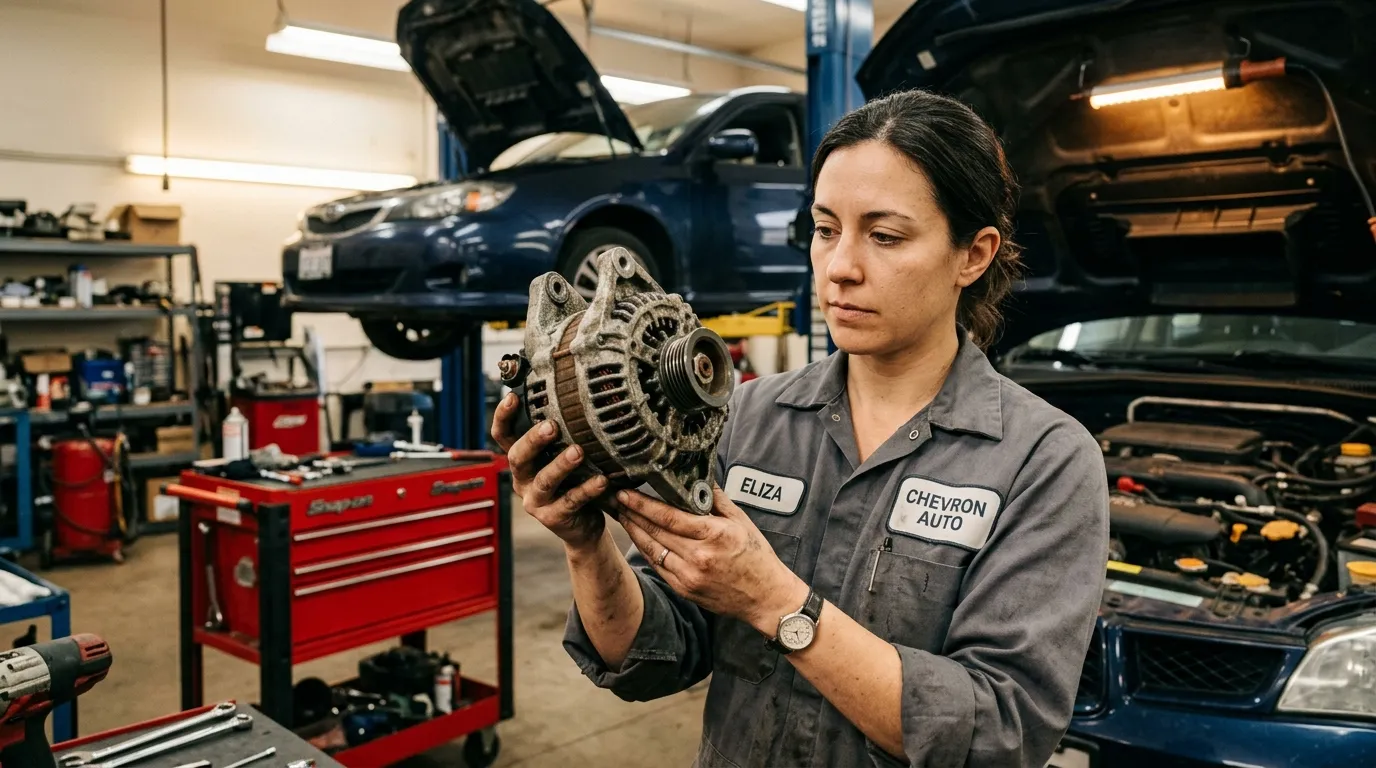
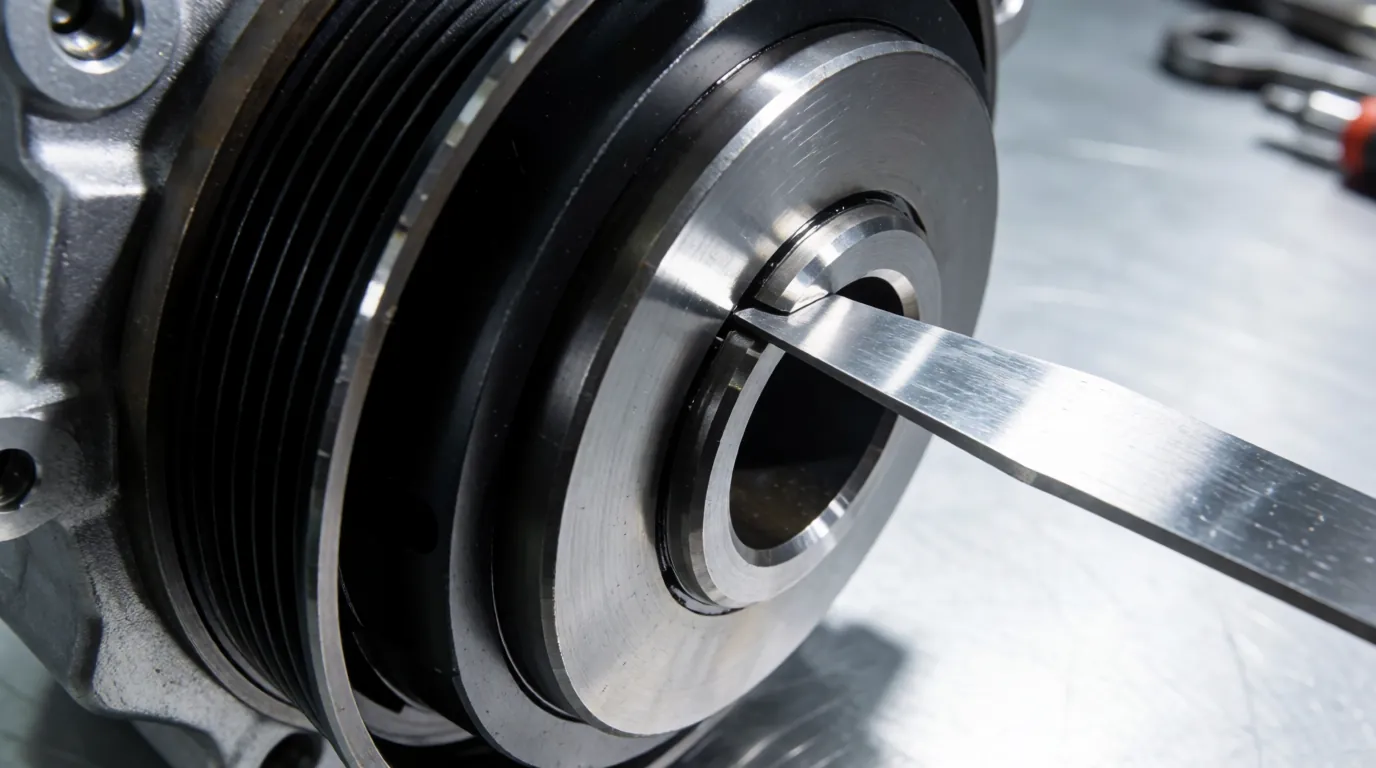
The electromagnetic clutch has three parts that wear: the pulley bearing, the clutch plate, and the coil. The bearing spins whenever the engine runs, even when the AC is off, so it accumulates far more hours than the compressor itself. A donor vehicle with 140,000 miles has a compressor at maybe 60 percent of expected life but a pulley bearing that's been turning the entire time.
Signs of a worn clutch on a shelf unit:
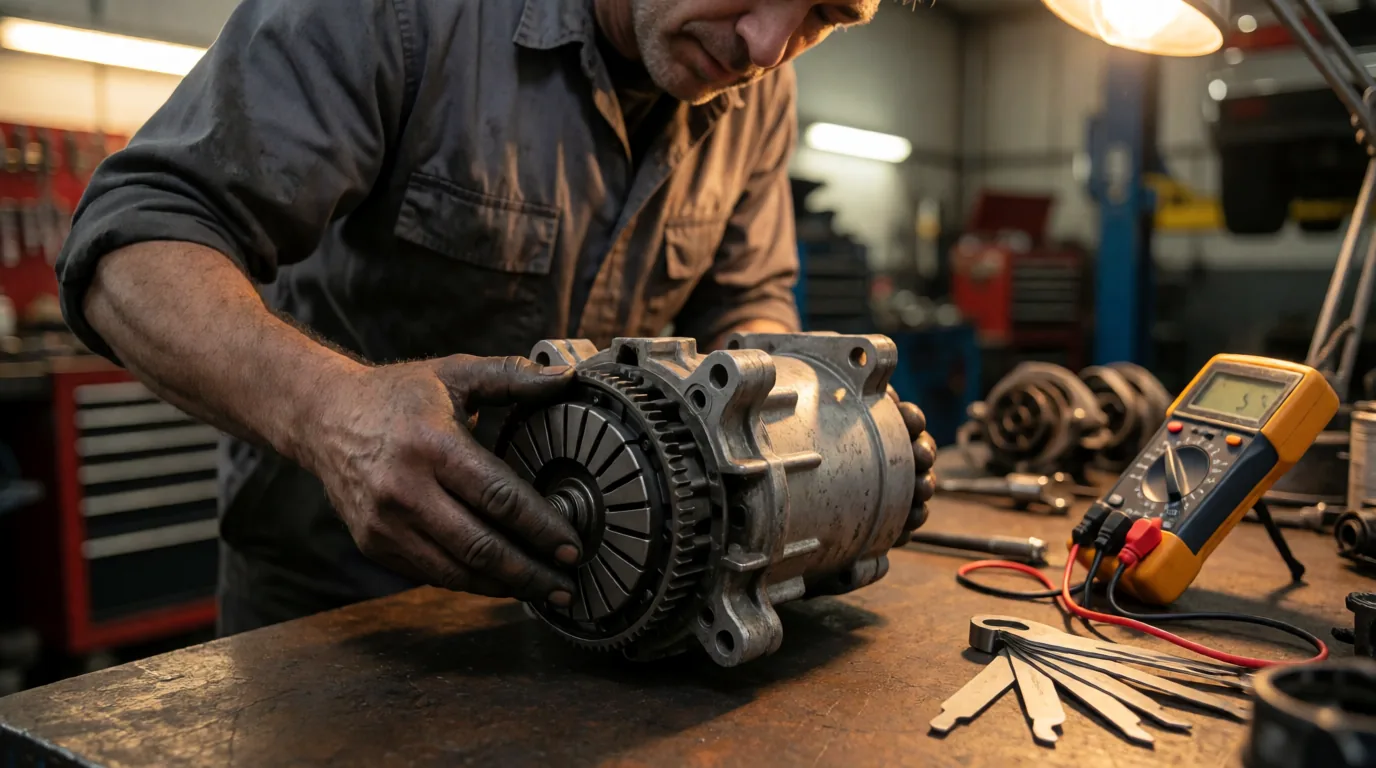
- Roughness or grinding when you spin the pulley by hand
- Visible wobble in the clutch plate as it rotates
- Uneven air gap between plate and pulley. It should measure roughly 0.02 to 0.03 inches all the way around
- Burnt smell or discoloration on the friction surface, which means the plate was slipping
The good news: a bad clutch doesn't mean a bad compressor. Clutch assemblies are sold separately for $60 to $120 on most applications, and swapping one takes about 30 minutes with a clutch puller. If a yard is selling a $90 compressor with a rough bearing and the internals check out, it can still be the cheapest path to cold air.
The bad news: a slipping clutch on the donor vehicle often means the compressor was hard to turn, which points at internal wear. Treat a burnt clutch as a warning about what's inside, not just a $90 repair.
Failure Mode 2: Internal Contamination
More used compressors die from debris left in the system than from anything wrong with the compressor itself.
Here's the sequence that kills them. The original compressor wears internally. Aluminum shavings from the swash plate and Teflon fragments from the piston coatings mix into the refrigerant oil. That mixture circulates through the condenser, the lines, the evaporator, and the expansion device. The compressor eventually seizes or starts making noise, and you replace it.
The debris doesn't leave when the old compressor does. It sits in the condenser tubes and the low side lines. A new compressor starts pumping, pulls that debris back in, and scores its own bearing surfaces. Failure often comes within 500 to 5,000 miles.
This is why the industry standard for a compressor replacement after internal failure is:
| Step | Why It Matters | Cost |
|---|---|---|
| Flush condenser and lines | Removes circulating metal and Teflon debris | $100 to $200 |
| Replace receiver/drier or accumulator | Desiccant is saturated and traps debris | $20 to $60 |
| Replace orifice tube or expansion valve | Screens clog with debris and starve the system | $15 to $50 |
| Replace or flush the condenser | Parallel-flow condensers often can't be flushed clean | $80 to $250 |
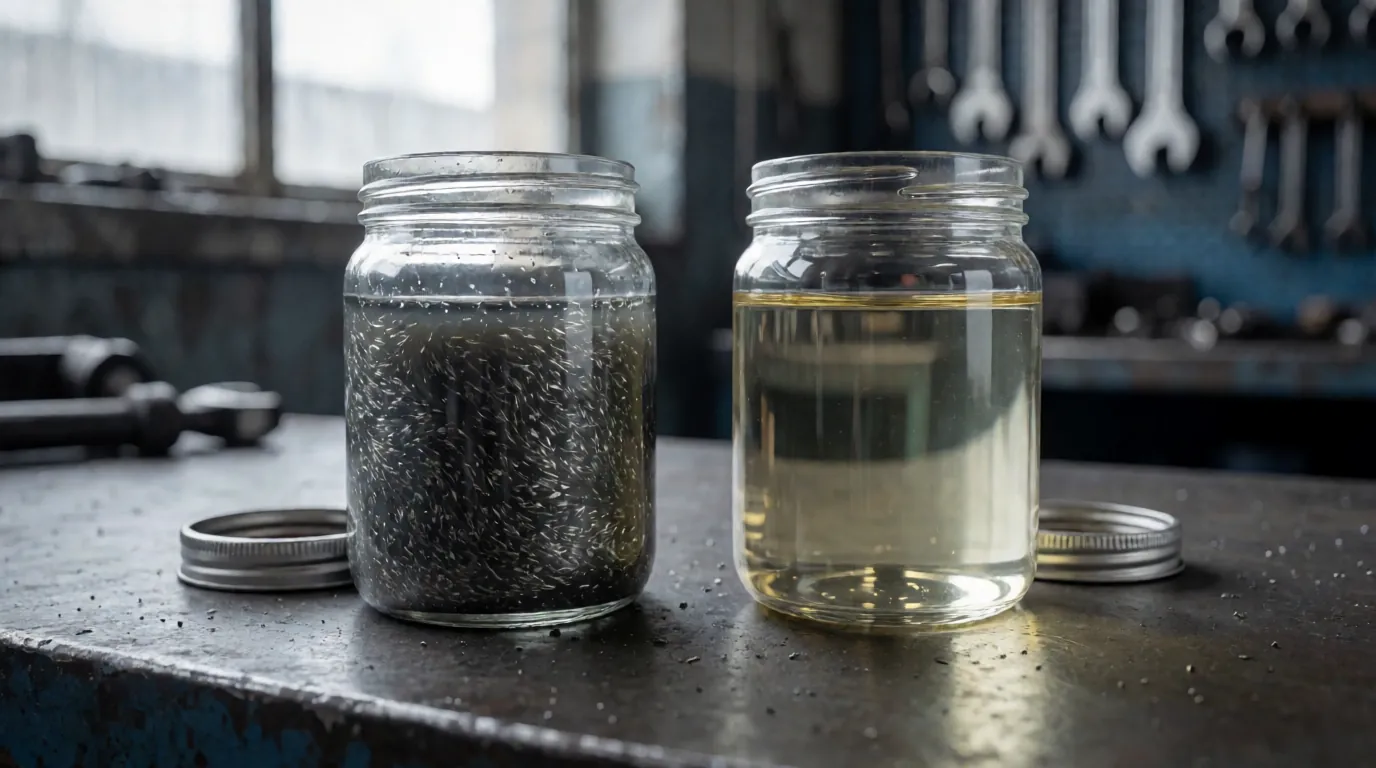
How to tell which failure mode you had. Drain the oil from your old compressor into a clear container. Clear to light amber oil means a seal or clutch failure, and you're clear to install a used unit with just a drier and orifice tube. Gray, black, or visibly glittery oil means internal failure, and the flush is mandatory. Metal flakes you can feel between your fingers mean plan on a condenser too.
Failure Mode 3: Refrigerant Mismatch
R-134a and R-1234yf compressors are not interchangeable, and the mismatch is easy to make because the parts look identical.
Vehicles built roughly through 2014 use R-134a. Model year 2015 onward began the transition to R-1234yf, and by 2021 nearly all new US-market vehicles had switched. Some models ran both refrigerants across different model years or trim levels, which is exactly where buyers get burned.
The differences that matter:
- Service port fittings differ. R-1234yf ports are physically different so technicians can't cross-charge. Your recovery machine won't connect.
- Seal materials differ. R-1234yf runs at slightly higher pressures and uses HNBR seal compounds. R-134a seals in a yf system degrade faster.
- Oil specs differ. Both use PAG oil, but viscosity and additive packages are application-specific. Wrong viscosity means poor lubrication at the swash plate.
- Cost differs sharply. R-1234yf refrigerant runs $80 to $150 per pound versus $10 to $20 for R-134a. A botched charge is an expensive mistake on a yf system.
Check the underhood label before you shop. Every vehicle has a sticker listing refrigerant type and charge weight, usually on the radiator support or underside of the hood. Match it exactly. When a salvage yard listing doesn't state refrigerant type, ask them for the donor's model year and verify against that year's spec for your trim.
If you're weighing whether the yf premium pushes you toward a new unit, our used vs new AC compressor comparison runs the break-even math on both refrigerant generations.
When a Used Compressor Makes Sense
Used wins clearly in four situations.
Your old compressor leaked but still turns. Shaft seal leaks are the single most common AC failure and they leave the system clean. You need a compressor, a drier, an orifice tube, and a recharge. No flush, no condenser. Total DIY cost lands around $300 with a $149 used unit against $600 or more going new.
Your vehicle's value doesn't support a new part. On a 12-year-old sedan worth $5,000, a $900 compressor plus $400 labor is 26 percent of the vehicle's value. The used route at $149 plus supporting parts keeps the repair proportional.
You need cold air this week. Salvage yards have inventory on the shelf. The Ford F150 alone shows 1,396 priced listings in our index, and Hyundai Elantra shows 1,303. For common vehicles, same-day availability is realistic in a way that special-ordering an OEM part isn't.
You're doing the work yourself. The savings math changes completely when labor is free. A DIY installer who can flush, vacuum, and charge properly captures the full $250 to $700 part-cost savings. Someone paying shop labor twice if the used unit fails does not.
When to Walk Away
Skip the used compressor in these cases, even though the price looks good.
Hybrid and EV applications. Electric compressors run on 200 to 400 volt DC and use POE oil specifically because it doesn't conduct electricity. If a used unit was contaminated with even a small amount of standard PAG oil, resistance drops and you get a high-voltage fault or a destroyed inverter. Used electric compressors also list at two to four times belt-driven prices, which is visible in the Toyota RAV4 data: a $153 median but a $208 average, with hybrid units pulling that average up.
Your old compressor is seized. A locked compressor almost always means internal destruction and a contaminated system. You can still buy used, but only after budgeting the flush and likely a condenser. At that point the total is close enough to a reman-with-warranty that the reman usually wins.
The yard can't tell you donor mileage. Compressors are rated for 100,000 to 150,000 miles. Buying one with no mileage data is buying a lottery ticket. Yards that grade their inventory nearly always have this in their system, which is part of what that 45 percent Grade A premium buys you.
You're paying a shop and the warranty doesn't cover labor. Almost no salvage warranty covers reinstallation labor. If a shop charges $400 for the job and the compressor fails at month two, your $250 in part savings evaporates and then some. This is the same warranty-versus-labor calculus we walk through for used alternators, except AC labor runs two to three times higher.
Five Ways to Cut Your Risk
- Diagnose before you buy. Drain the old compressor's oil and inspect it. This ten-minute step tells you whether you need a flush, and it's the highest-value diagnostic in the whole job.
- Demand donor mileage. Under 80,000 miles is a good target. Over 130,000 and you're buying the tail end of the unit's life.
- Never reuse the drier. The desiccant bag saturates with moisture the moment the system opens. A $30 part protects a $149 one.
- Pull a proper vacuum. Hold 29 inches of mercury for at least 45 minutes and confirm it doesn't creep. Moisture in the system forms acid that attacks the compressor from the inside.
- Match the oil charge. Drain the used compressor completely and refill with the exact volume and viscosity your vehicle specifies. Too much oil reduces cooling capacity, too little destroys the unit.
Check real pricing for your specific vehicle on our AC compressor price index, or read the full cost breakdown by model and grade before you set a budget.