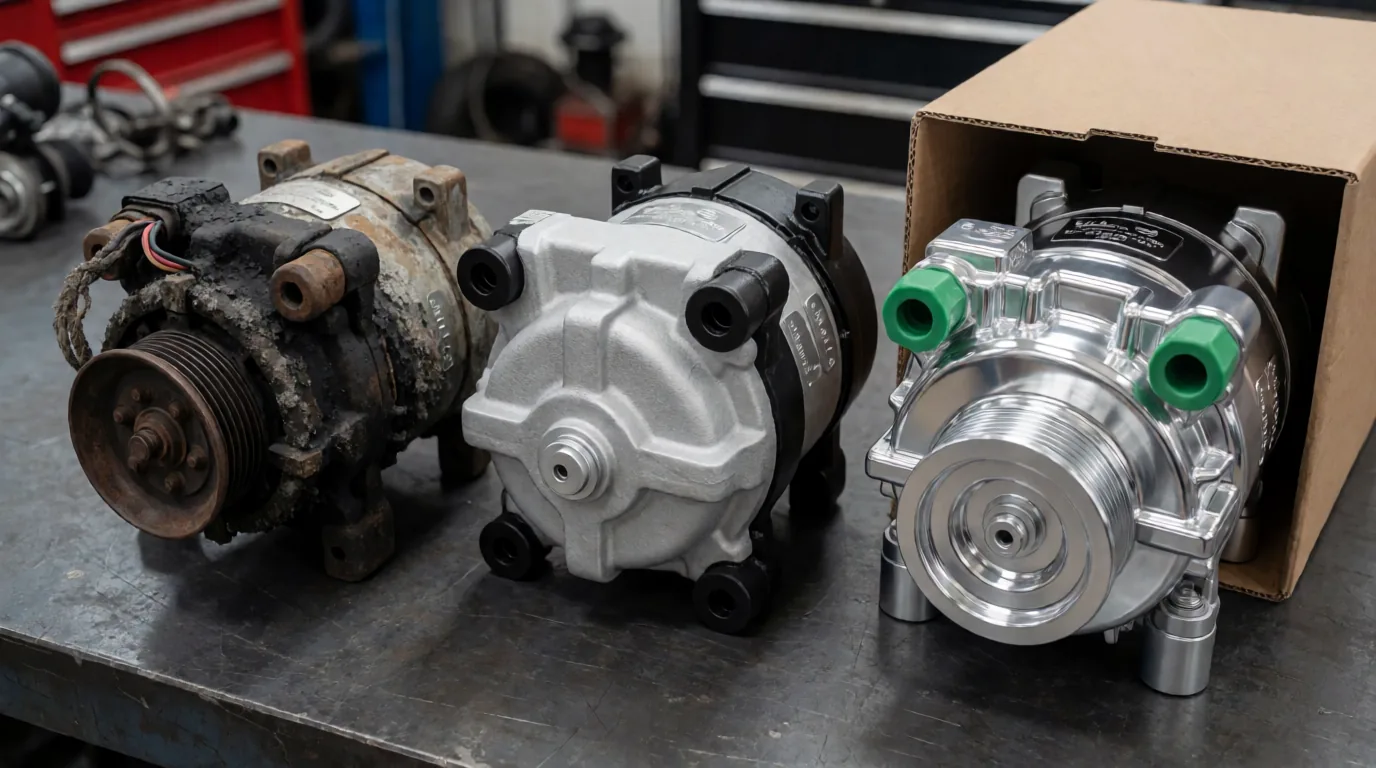
A used AC compressor costs $149 at the national median, with model medians spanning $100 to $267. That figure comes from 22,777 priced salvage yard listings across 51 vehicle models, which is actual asking prices from yards, not shop estimates or dealer quotes.
The spread is narrower than most salvage parts but the grade premium is unusually steep. A Grade A compressor carries a $160 median while an ungraded unit sells for $110, a 45 percent gap that tells you something important about how buyers treat this part.
- Median used AC compressor price: $149 across 22,777 priced listings from 51 vehicle models
- Model medians range $100 to $267, with Jeep Cherokee and Nissan Sentra cheapest and Mercedes E-Class highest
- Grade A costs 45% more than ungraded ($160 vs $110), the widest grading premium we track on any electrical or HVAC part
- The compressor is rarely the whole bill. Drier, orifice tube, flush, and recharge typically add $250 to $500
- Ford F150 leads on supply with 1,396 priced listings and a $143 median, so common trucks give you the most negotiating room
Overall Used AC Compressor Pricing
Across every priced listing in the PartPriceGuide index, here is what used AC compressors actually sell for:
| Metric | Price |
|---|---|
| Model median (low) | $100 |
| National median | $149 |
| National average | $154 |
| Model median (high) | $267 |
| Priced listings | 22,777 |
Individual listings tell a wider story than the model medians. The cheapest units in the index list at $15 (Ford Mustang, Hyundai Tucson) and the most expensive hits $1,144 on a Jeep Wrangler. Those extremes are usually condition-driven: a $15 compressor is a core with a seized clutch, and a four-figure listing is typically a complete AC assembly or a rare hybrid electric compressor.
*Source: PartPriceGuide.com analysis of 22,777 salvage yard listings, August 2026.*
Prices by Vehicle Model
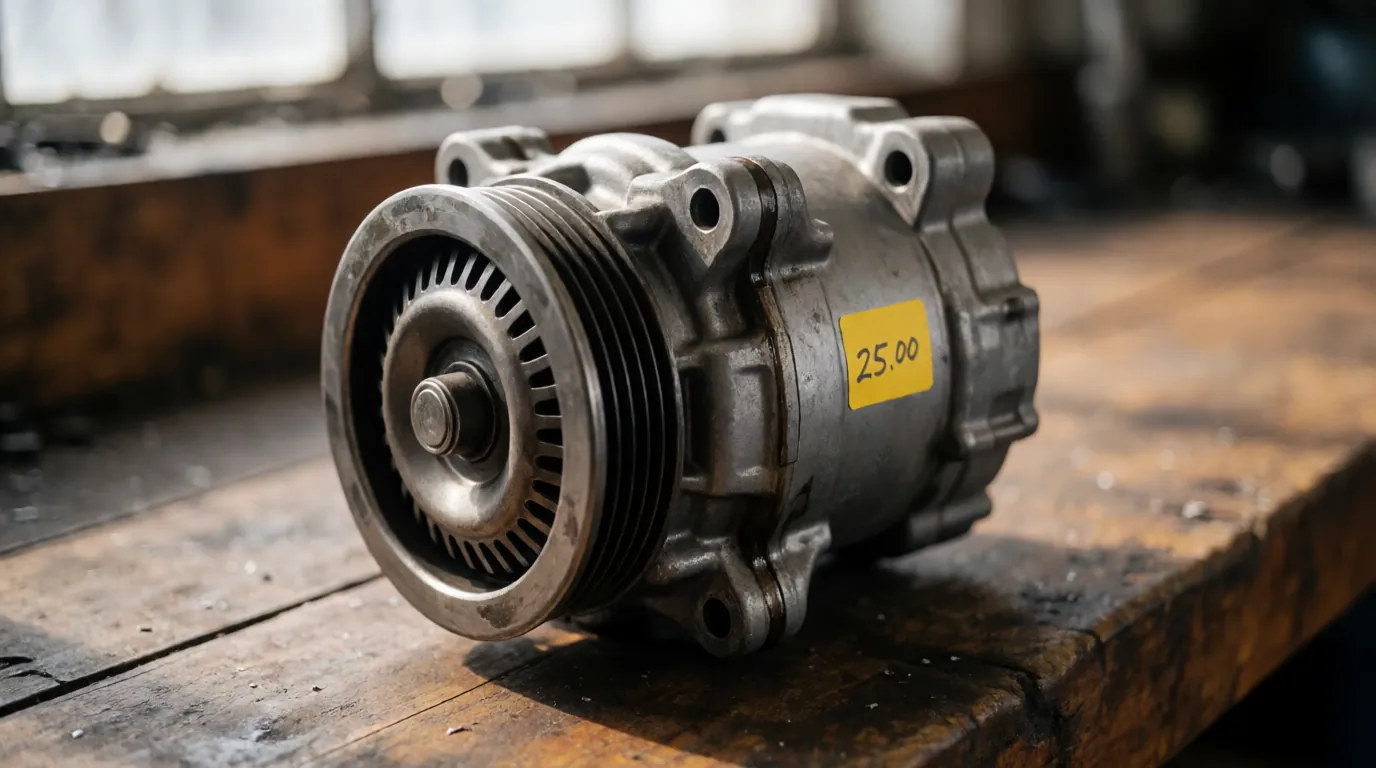
Model choice moves your price more than anything else you control. The table below shows median and average pricing for the 15 most-listed AC compressor applications in the index:
| Vehicle Model | Median Price | Avg Price | Listings |
|---|---|---|---|
| Ford F150 | $143 | $160 | 1,396 |
| Hyundai Elantra | $140 | $152 | 1,303 |
| Chevy Silverado 1500 | $163 | $168 | 1,178 |
| Mercedes E-Class | $267 | $285 | 997 |
| Jeep Wrangler | $193 | $203 | 808 |
| Ford Explorer | $149 | $161 | 791 |
| Toyota RAV4 | $153 | $208 | 739 |
| Dodge Challenger | $102 | $123 | 718 |
| Nissan Altima | $117 | $138 | 669 |
| GMC Sierra 1500 | $163 | $164 | 638 |
| Ford Escape | $147 | $158 | 634 |
| Toyota Corolla | $120 | $143 | 617 |
| Ford Mustang | $179 | $197 | 604 |
| Honda CR-V | $148 | $169 | 581 |
| Hyundai Sonata | $125 | $153 | 574 |
Volume doesn't automatically mean cheap. The Ford F150 has the most listings in the index at 1,396 and still sits at a $143 median, above the Corolla ($120) and the Altima ($117). Truck compressors run larger displacement and often feed rear or auxiliary AC circuits, which keeps demand high even when supply is deep.
The Toyota RAV4 average is the tell. Its median is $153 but the average jumps to $208, the biggest median-to-average gap in the top 15. That spread comes from hybrid RAV4 models using electrically driven compressors that cost two to three times the belt-driven version. If you drive a hybrid, ignore the median and budget toward the average.
Luxury premiums are real but smaller than you would guess. The Mercedes E-Class tops the list at $267, roughly 2.7 times the cheapest models. On alternators that same comparison stretches past 6x. Compressors are more standardized across manufacturers, so the German tax is milder here.
Check the current price for your exact vehicle on our AC compressor price index, which covers all 51 models with data.
Jump straight to your vehicle: Ford F150 AC compressor prices, Hyundai Elantra, Chevy Silverado 1500, or Mercedes E-Class.
How Condition Grade Affects Price
Salvage yards assign letter grades based on donor vehicle mileage and inspection results. On AC compressors, that grade moves the price more than on almost any other part we track:
| Grade | Median | Average | Min | Max | Models Graded |
|---|---|---|---|---|---|
| A (Best) | $160 | $160 | $103 | $250 | 51 |
| B (Mid) | $144 | $157 | $94 | $420 | 51 |
| X (Ungraded) | $110 | $119 | $53 | $300 | 50 |
| C (Lower) | $100 | $98 | $58 | $200 | 22 |
Why the premium exists: an AC compressor fails on the inside. Worn swash plates, scored pistons, and metal shavings in the oil produce no external symptom you can spot on a shelf. You can't spin-test your way to confidence the way you can with a bearing-driven part. When a buyer pays $50 more for Grade A, they are buying the yard's mileage records and inspection, not better metal.
When ungraded makes sense: if you already plan to flush the system, replace the drier, and pull vacuum properly, a $110 Grade X unit from a low-mileage donor can be a smart buy. Ask the yard for the donor vehicle's odometer reading even when the part carries no grade. Most counter-service yards have it in their system.
When to skip Grade C entirely: at a $100 median, Grade C saves you $60 against Grade A. A single failed install costs a full recharge ($120 to $250) plus labor. The math doesn't work.
*Source: PartPriceGuide.com grade-level analysis across 22,777 listings, August 2026.*
Why AC Compressor Prices Swing So Hard
Four factors explain nearly all the variance between listings on the same vehicle.
Refrigerant generation. Vehicles built before roughly 2015 use R-134a. Newer ones use R-1234yf, which requires different seals, different PAG oil, and different service equipment. R-1234yf compressors from late-model donors trade at a premium because the donor pool is younger and thinner. Our used vs new AC compressor comparison breaks down when that premium is worth paying.
Clutch versus clutchless design. Most compressors use an electromagnetic clutch that engages the pulley. Variable-displacement compressors on many European and newer Japanese vehicles run clutchless, cost more new, and hold value better used.
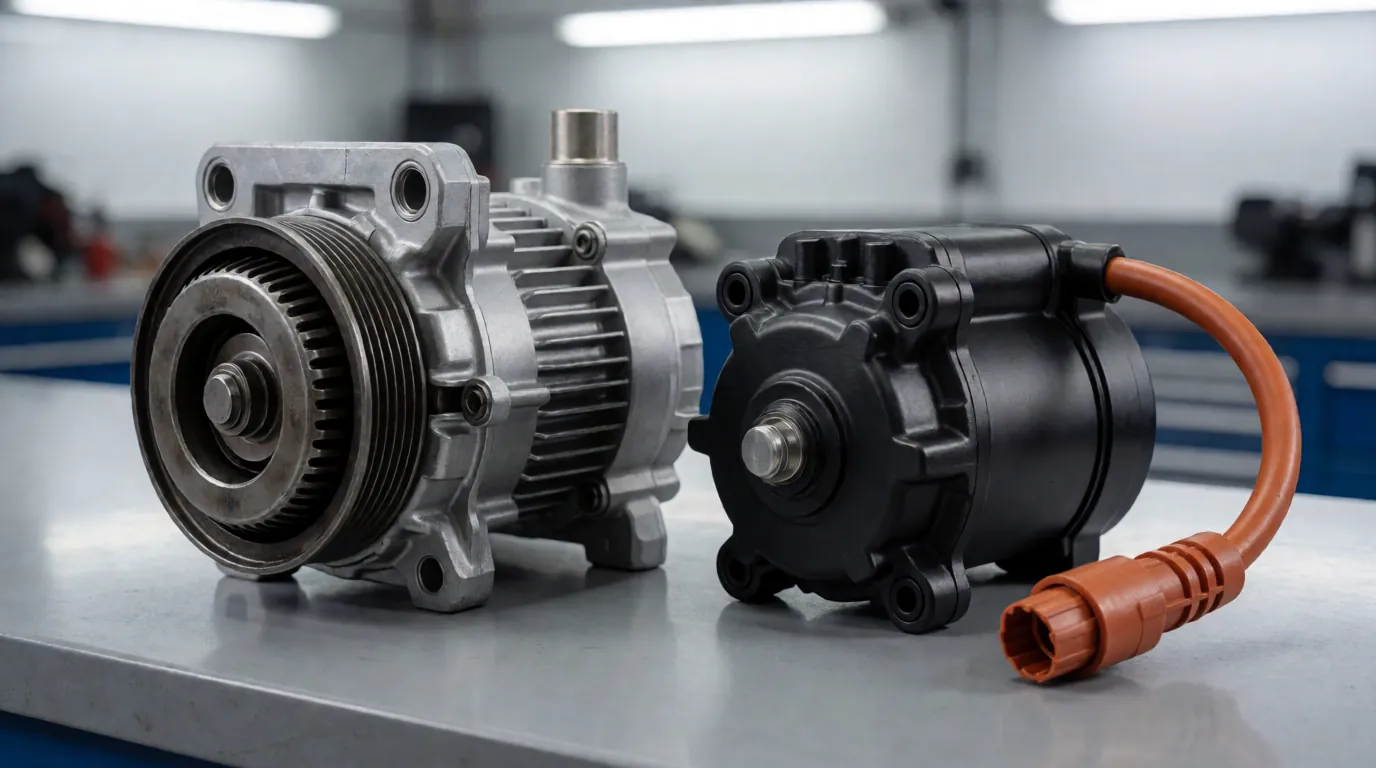
Electric compressors on hybrids and EVs. These are a different part entirely. They run on high-voltage DC, use non-conductive POE oil instead of PAG, and typically list at two to four times the belt-driven equivalent. Never cross-shop them by model name alone.
Completeness of the listing. Some yards sell the compressor bare. Others include the clutch, pulley, and connector pigtail. A bare core at $60 stops looking cheap once you source a clutch assembly for $80.
The Full Cost of an AC Compressor Job
The compressor is often less than half your total spend. Here is what a realistic job costs when you buy used:
| Line Item | Typical Cost | Notes |
|---|---|---|
| Used compressor | $100 to $267 | Model median range |
| Receiver/drier or accumulator | $20 to $60 | Non-negotiable, it absorbs moisture |
| Orifice tube or expansion valve | $15 to $50 | Catches debris from the old failure |
| PAG oil (correct viscosity) | $10 to $25 | Must match compressor spec |
| System flush | $100 to $200 | Required if the old unit grenaded |
| Evacuate and recharge | $120 to $250 | Shop service, includes vacuum test |
| Shop labor (if not DIY) | $150 to $400 | 2 to 4 hours on most vehicles |
Don't skip the flush after an internal failure. When a compressor comes apart internally, aluminum and Teflon debris travels through the condenser and lines. Install a clean compressor into a contaminated system and you'll kill it, sometimes within weeks. This is the single most common reason used compressors get blamed for being unreliable when the real culprit is the install.
Where to Buy and What to Expect
Used AC compressors come from three channels with meaningfully different pricing.
Self-service junkyards (Pull-A-Part, LKQ Pick Your Part) sit at the bottom of the range, often $40 to $90. You pull the part yourself, which lets you inspect the donor vehicle. Look at whether the AC lines were cut or unbolted. A hacked-off line means the system sat open and the desiccant absorbed moisture. Most self-service yards offer a 30-day exchange, not a refund.
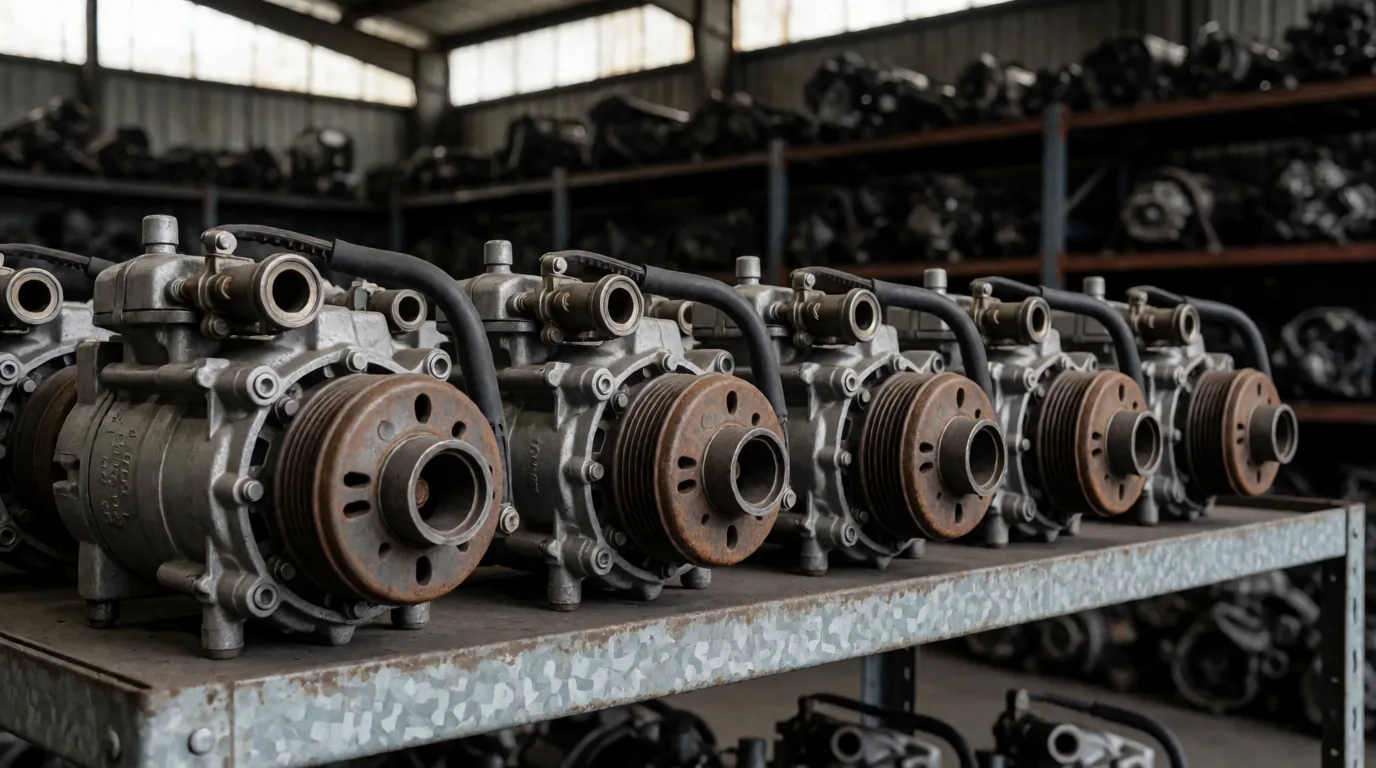
Full-service salvage yards test, grade, and warranty their inventory. This is where most of the 22,777 listings in our index come from. Expect $110 to $220 for common applications with a 30 to 90 day warranty, and ask whether the warranty covers labor on a second install. Almost none do, which is worth knowing before you choose.
Online recyclers (Car-Part.com, eBay) offer the widest selection. Shipping runs $20 to $45 because compressors are heavy and awkward. The advantage is filtering by donor mileage, which local yards rarely let you do. If your vehicle is uncommon, this is usually your only realistic source.
One negotiating note: yards price AC compressors seasonally. Demand spikes from May through August, and inventory turns fast. Buying in late fall or winter frequently saves 15 to 25 percent on the same part number.
How to Inspect a Used Compressor Before You Buy
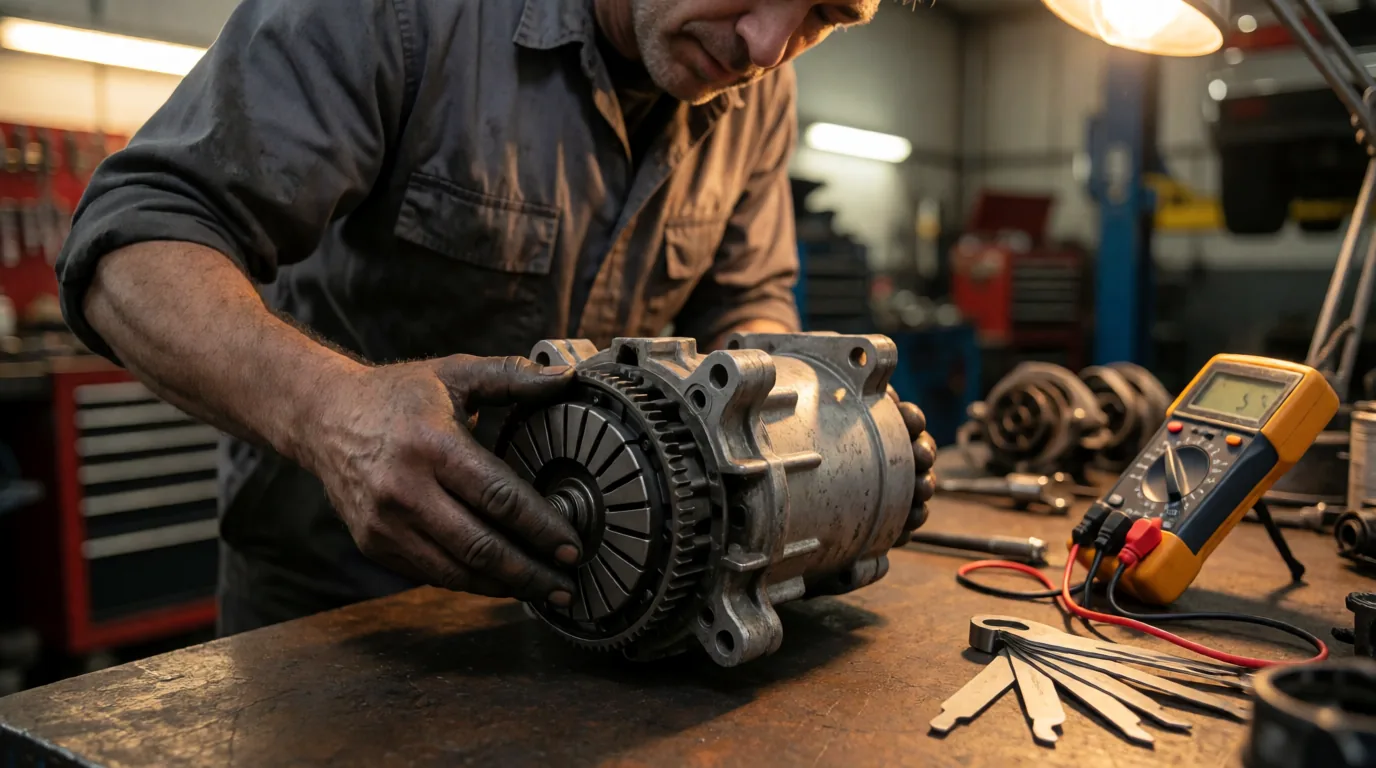
You can't fully test a compressor off the vehicle, but these five checks eliminate most bad units:
- Spin the clutch plate by hand. It should turn smoothly with even resistance. Grinding, catching, or a wobble means a failed clutch bearing.
- Check the clutch air gap. The gap between the clutch plate and pulley should be even all the way around, roughly 0.02 to 0.03 inches. An uneven gap indicates a warped plate or a bad shaft bearing.
- Look at the shaft seal area. Oil residue and dirt caked around the shaft snout means the seal was leaking on the donor vehicle.
- Tip the compressor and drain a little oil. Clean oil is clear to light amber. Gray, black, or glittery oil means internal wear, and metal flakes mean the unit is scrap.
- Confirm the connector and port fitting match yours. Compressors that look identical often differ in electrical connector, manifold port orientation, or mounting boss spacing. Bring your old unit or a clear photo.
If the yard lets you plug 12V into the clutch coil, do it. A healthy coil pulls in with a firm click and draws roughly 3 to 5 amps. No click means a dead coil, which is repairable but adds cost.
Not sure whether the used route fits your situation at all? Our breakdown of whether a used AC compressor is worth it walks through the failure modes and the vehicles where it makes the least sense. If you have gone through this decision on other parts, the same logic we applied to used alternators mostly holds, with one big exception: alternators don't contaminate the rest of the system when they die.
Browse all 51 models with live pricing on our AC compressor price index.