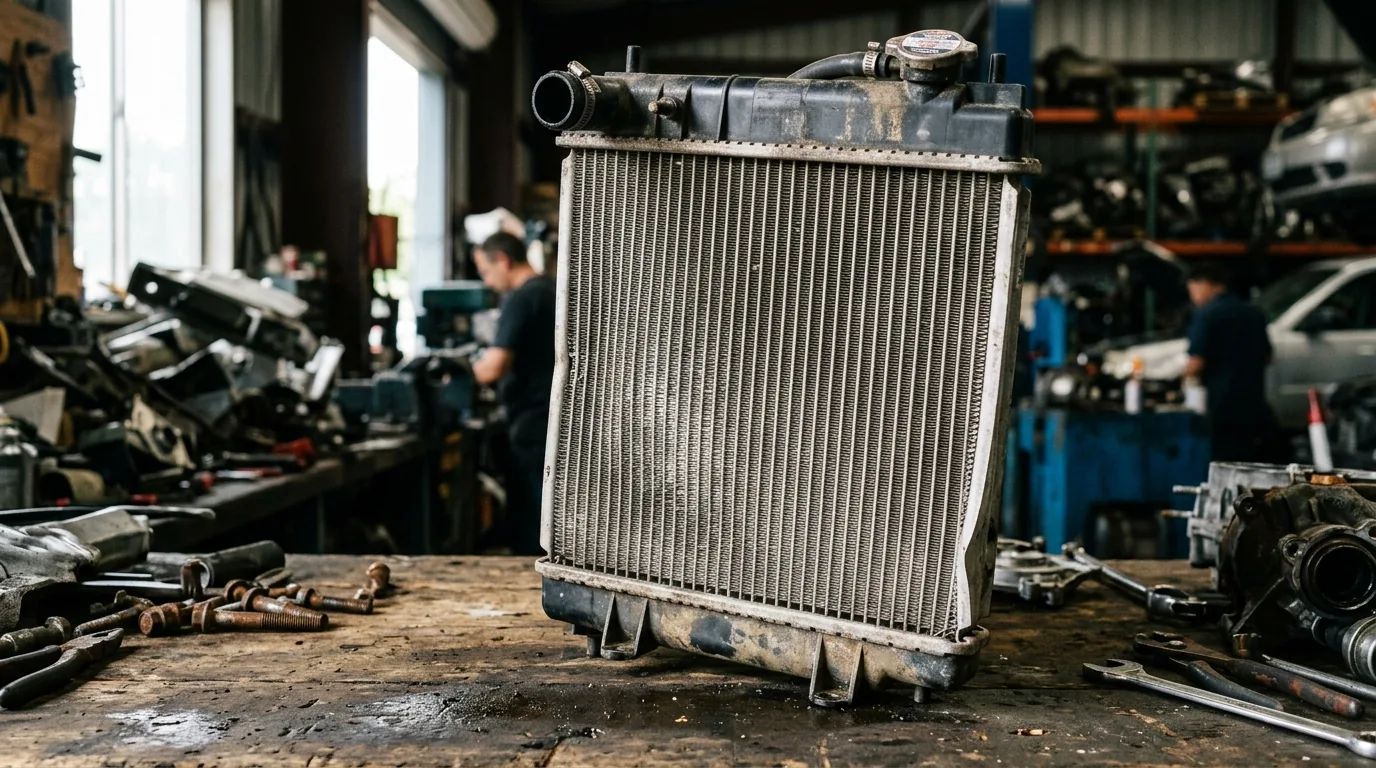
Junkyard radiators cost between $106 and $323 by model, with a national median of $172 across 41,113 priced salvage yard listings. Self-pull yards charge 30 to 50% less than counter-service operations, which puts most radiators in the $70 to $150 range if you pull the part yourself.
Radiators are one of the best value pulls at a salvage yard. They weigh 15 to 25 lbs, sit at the front of the engine bay with nothing stacked on top of them, and come out in under an hour on most vehicles, a fraction of the effort a transmission or transfer case demands.
- Self-pull yards charge 30-50% below counter-service, expect $70-$150 for most models
- Counter-service yards run $106-$323 with inspection and a 30-90 day warranty
- Scrap value sets a price floor: aluminum runs $3.00-$4.50/lb, so a 20 lb radiator is worth $60-$90 as scrap alone
- Removal takes 30-60 minutes: radiators weigh 15-25 lbs and need only hand tools
- Bent fins are usually cosmetic; pinhole leaks and cracked plastic tanks are the real disqualifiers
What Junkyards Charge for Radiators
Radiator pricing sits in a much tighter band than most drivetrain parts. There's no low-range gearset or electronic control module to inflate the top end, a radiator is a core, two tanks, and a set of fittings. Across our full dataset of 41,113 priced listings covering 51 models:
| Metric | Price |
|---|---|
| Overall median | $172 |
| Cheapest model median | $106 |
| Most expensive model median | $323 |
| Models tracked | 51 |
*Source: PartPriceGuide.com analysis of 41,113 salvage yard listings, August 2026.*
Self-Pull vs Counter-Service Pricing
The yard type sets the base price more than the vehicle does:
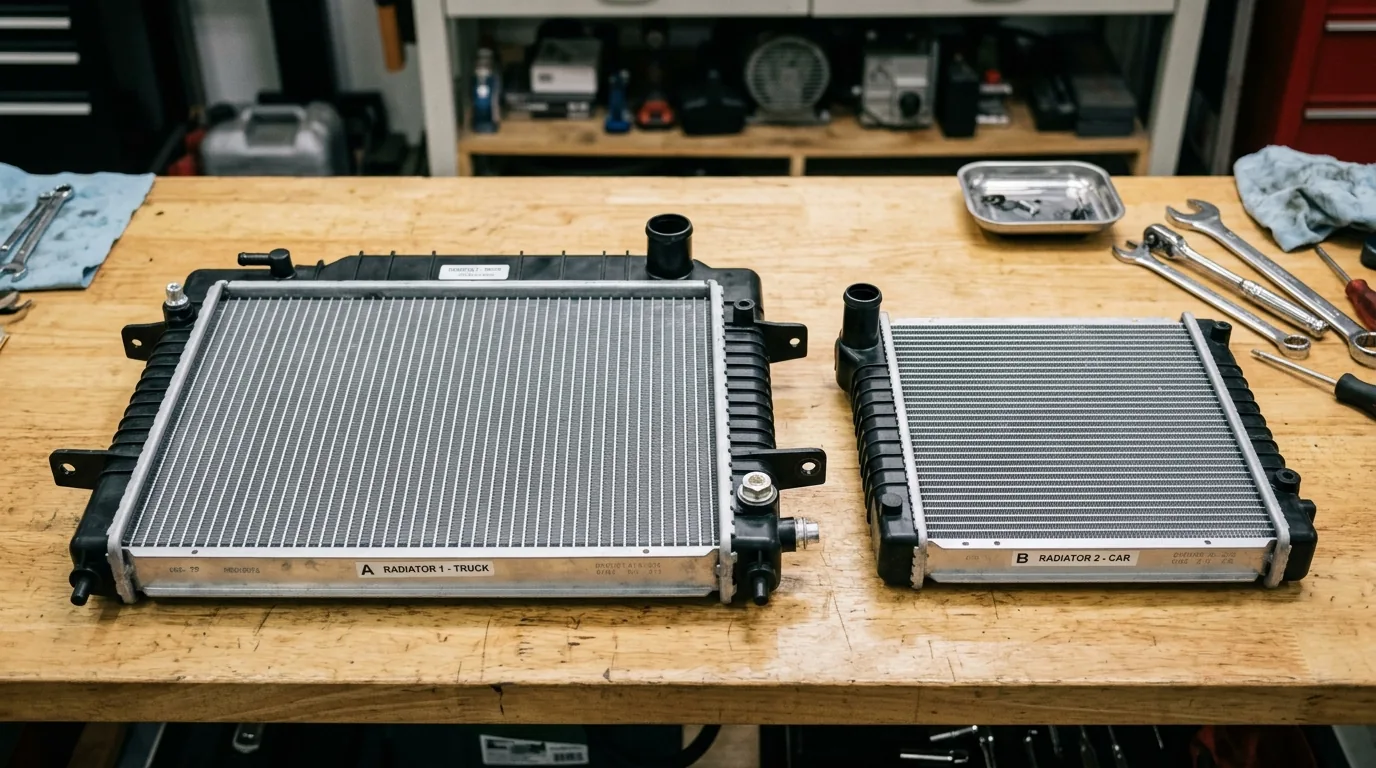
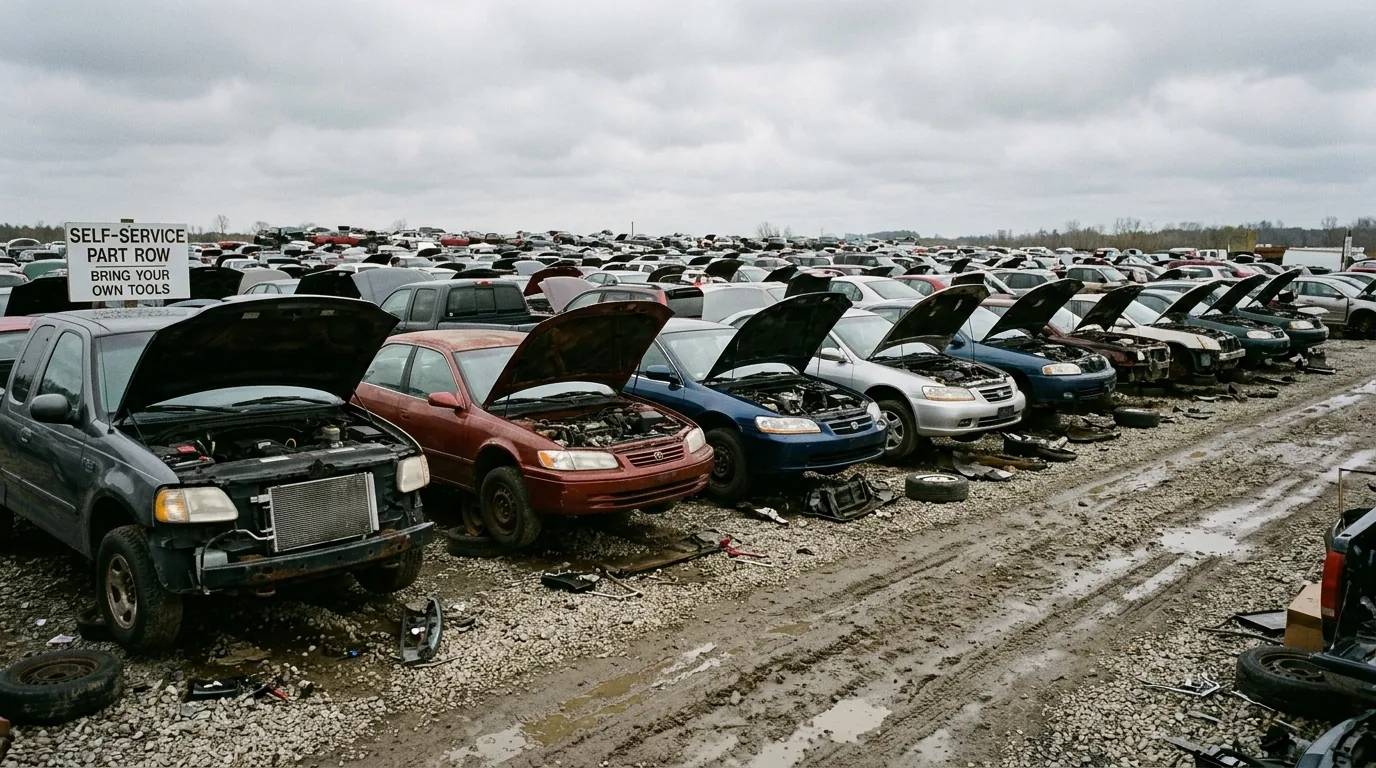
Self-pull yards (Pull-A-Part, LKQ Pick Your Part, Wrench-A-Part) price radiators as a flat category, usually one price for cars and one for trucks and SUVs, regardless of model. Expect $60 to $150. Radiators are the ideal self-pull part because the extraction is quick and you can hold the core up to daylight to check for corrosion and pinholes before you pay. The trade-off is no warranty beyond a 24 to 48 hour exchange window.
Counter-service yards pull, inspect, and inventory the part for you. Many list their stock on Car-Part.com, so you can search availability before visiting. Prices run $106 to $323 with a 30 to 90 day warranty, and staff match the unit to your VIN so you don't end up with a radiator that has the wrong transmission cooler port configuration. Most of the 41,113 listings in our index come from this channel.
The scrap floor matters here. Aluminum-core radiators scrap for roughly $3.00 to $4.50 per pound. A 20 lb radiator carries $60 to $90 of intrinsic metal value whether or not anyone buys it as a part. Yards know this, so they rarely discount a radiator below scrap; it's why you almost never see a counter-service radiator under $100, even on a 15-year-old economy car with a hundred units in the yard. When you negotiate, the scrap value is the real floor, not the sticker.
For a full breakdown of radiator pricing across every source, junkyards, online recyclers, and rebuilders, see our used radiator cost guide.
Junkyard Prices by Vehicle Model
The table below shows what salvage yards charge for the 15 most commonly listed radiator models:
| Vehicle Model | Median Price | Listings |
|---|---|---|
| Jeep Wrangler | $160 | 2,368 |
| Ford Explorer | $164 | 2,333 |
| Jeep Grand Cherokee | $176 | 2,094 |
| Chevy Silverado 1500 | $225 | 1,810 |
| Toyota RAV4 | $178 | 1,297 |
| Ford F-150 | $177 | 1,286 |
| Chevy Tahoe | $224 | 1,267 |
| GMC Yukon | $278 | 1,252 |
| GMC Sierra 1500 | $210 | 1,241 |
| Dodge Durango | $150 | 1,113 |
| Ford Escape | $168 | 1,110 |
| Toyota Camry | $170 | 1,058 |
| Honda Accord | $140 | 986 |
| Ram 1500 | $150 | 827 |
| Chevy Malibu | $125 | 561 |
Expect to pay more for: full-size SUVs. The GMC Yukon ($278), Chevy Silverado 1500 ($225), and Chevy Tahoe ($224) carry heavier cores with integrated transmission coolers, and the extra aluminum alone adds $20 to $30 of scrap value the yard prices in.
The Wrangler surprise: the Jeep Wrangler has the most listings in the dataset (2,368) and a below-median price of $160, the opposite of Wrangler transfer cases, where enthusiast demand pushes prices to the top of the range. Radiators are not an upgrade path, so supply wins.
Look up the exact price for your vehicle on a model page like Chevy Silverado 1500 radiator prices.
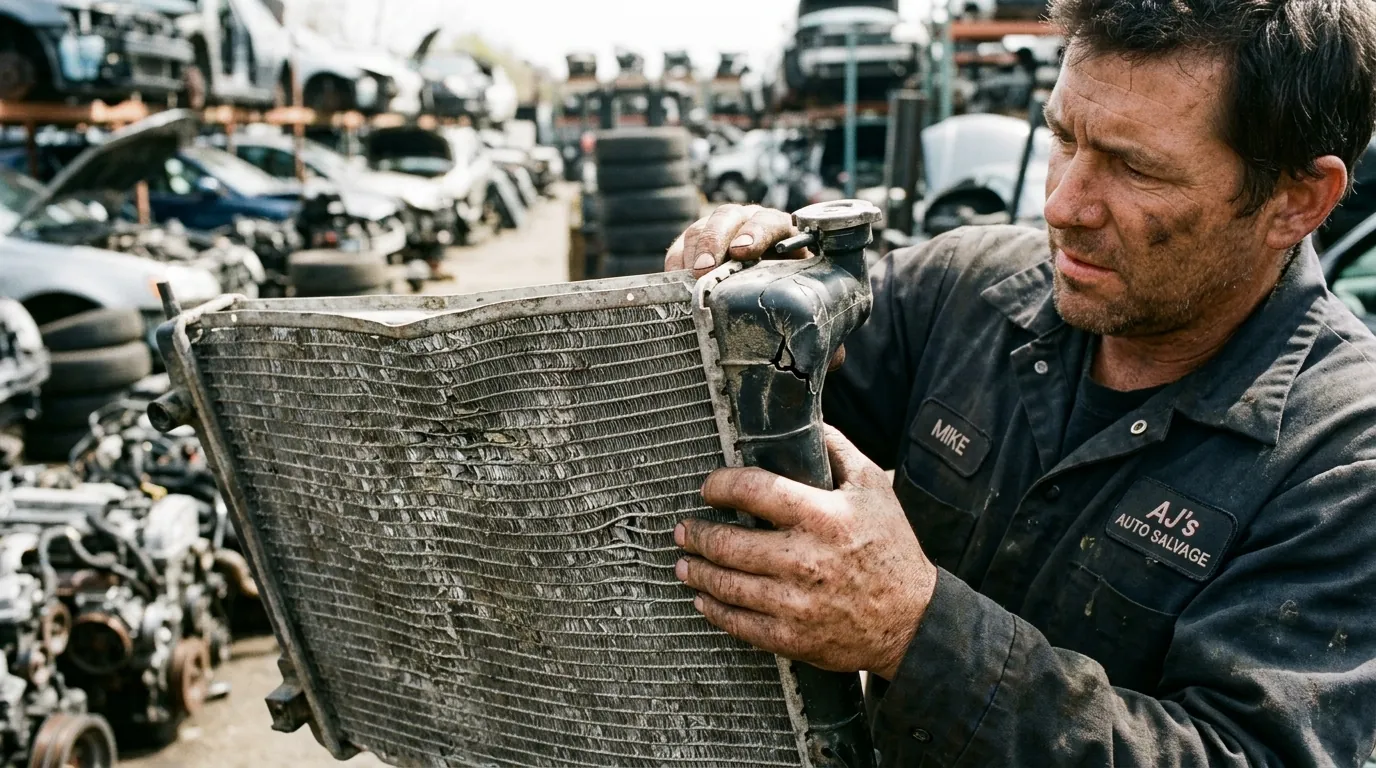
How to Inspect a Junkyard Radiator
A radiator that fails a week after installation costs you a second coolant flush and a second afternoon. Check these five things before you pay:
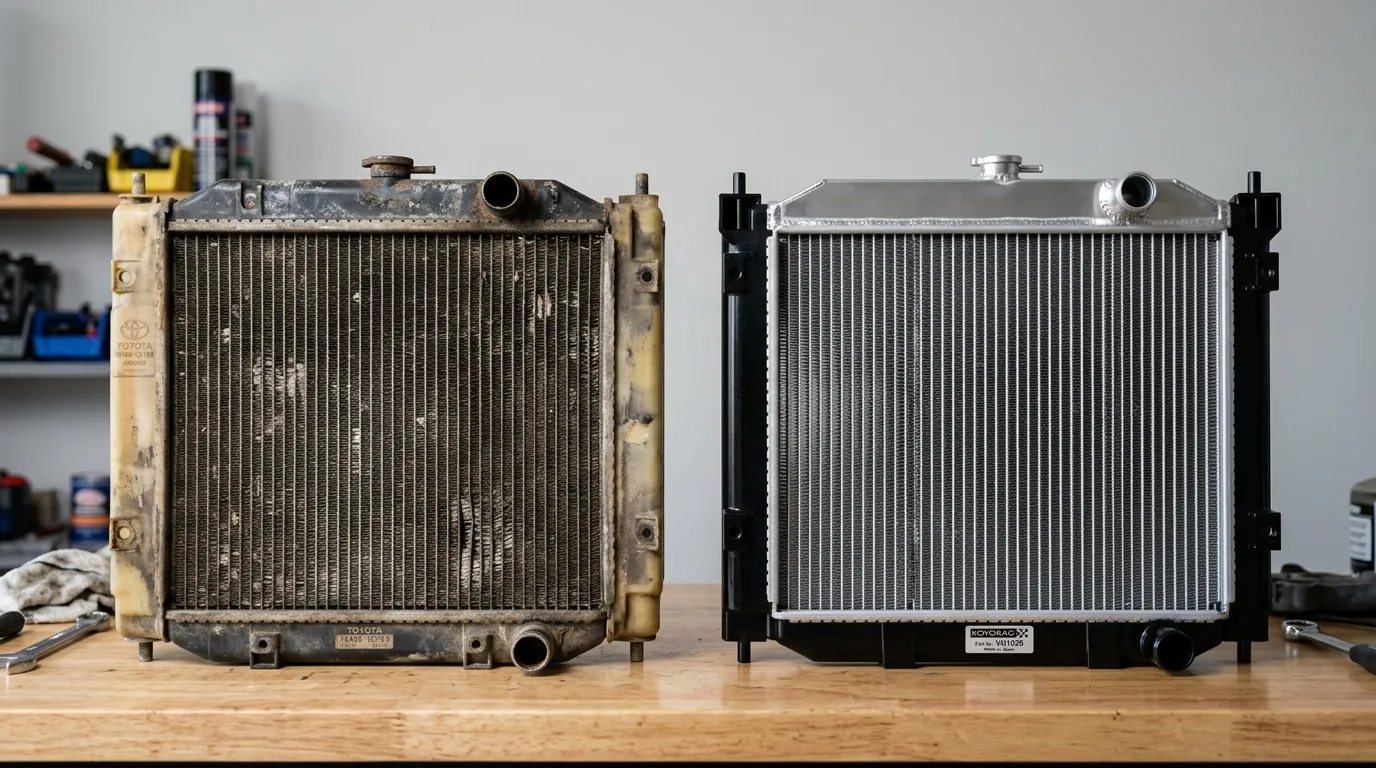
- Hunt for pinhole leaks. Look for white, green, or chalky crusting anywhere on the core, the tank seams, or around the fittings. Dried coolant residue marks a leak point even when the system is empty and nothing is dripping. Run your fingers along the tube-to-header joints, that seam is where most pinholes start.
- Judge the fins honestly. Bent fins across a small patch are cosmetic and comb straight with a fin tool. What disqualifies a radiator is *missing* fin material, fins corroded into powder, or a section where impact has crushed the tubes flat. Once more than roughly 15% of the core face is damaged or blocked, cooling capacity drops enough to matter.
- Check the plastic end tanks for cracks. Most modern radiators use plastic tanks crimped onto an aluminum core. Heat cycling makes them brittle. Inspect the neck around the upper hose fitting, the filler neck, and the crimp line where the tank meets the core. Hairline cracks are hard to see; flex the tank gently by hand and look for any seam that opens up.
- Inspect the transmission cooler lines. Automatic-transmission vehicles route fluid through a cooler built into one tank. Check both fittings for stripped threads, corrosion, and any sign of coolant and transmission fluid mixing (a pink, milky residue inside the fitting). A failed internal cooler cross-contaminates both systems and will destroy a transmission; this is the single most expensive thing to miss on a used radiator.
- Confirm the mounting and port layout. Compare the inlet and outlet positions, mounting tab locations, and fan shroud bolt pattern against your own radiator. Same model year doesn't always mean same part, engine option, tow package, and manual versus automatic transmission all change the configuration. Not every radiator that physically resembles yours will fit; our guide on whether radiators are universal covers the interchange rules in detail.
Radiator Removal Tips
Pulling a radiator is one of the fastest jobs at a self-pull yard. Most come out in 30 to 60 minutes.
Tools you'll need: 8-14mm socket set, flat screwdriver or hose clamp pliers, line wrench for transmission cooler fittings, drain pan, and work gloves.
Step sequence:
- Open the petcock at the bottom corner of the radiator, or pull the lower hose, and drain the coolant into a pan.
- Remove the upper radiator support bar or the plastic cover across the top of the core.
- Unbolt the fan shroud and lift it clear. On electric-fan vehicles, unplug the fan connector first.
- Loosen the clamps and pull the upper and lower hoses off the radiator necks.
- Disconnect the transmission cooler lines with a line wrench and let them drain. Cap or bag the ends.
- Remove the two to four bolts or clips holding the radiator to the core support.
- Lift the radiator straight up and out, keeping it vertical so the core doesn't twist.
Handle it carefully on the way out. The most common way a good junkyard radiator becomes a bad one is getting set down on gravel or leaned against a fender, which punctures a tube. Carry it by the tanks, never by the core, and lay it flat on cardboard in your trunk.
Before committing to a used unit, compare it against new aftermarket pricing, our used vs new radiator comparison covers when a new part is the better buy. To check current pricing for your specific vehicle, browse the radiator price index by model.