Used OEM radiators cost $172 median across 41,113 salvage yard listings, ranging from $106 to $323 by model. New aftermarket radiators cost $80 to $250, which means for most vehicles, a brand-new part is the same price or cheaper than a used one.
That inverts the usual salvage-yard math. On engines, transmissions, and transfer cases, buying used saves 50% to 70%. On radiators, the savings often disappear entirely, and the used option only makes sense in a narrow set of cases.
- Used OEM radiator: $172 median across 41,113 salvage yard listings, range $106–$323 by model
- New aftermarket: $80–$250: frequently *cheaper* than the used OEM equivalent
- New OEM: $200–$600 from a dealer, rarely justified outside warranty or luxury fitment cases
- Labor is $150–$300 either way (1–2 hours), so the part choice is the only real variable
- Used OEM is worth it mainly for European and luxury models where aftermarket core quality and fitment get unreliable
Price Comparison
| Factor | Used OEM | New Aftermarket | New OEM |
|---|---|---|---|
| Price range | $106–$323 | $80–$250 | $200–$600 |
| Typical cost | $172 median | ~$130 | ~$350 |
| Warranty | 30–90 days | 1 year to lifetime | 1–2 years |
| Condition | Unknown internal scale/corrosion | New | New |
| Lead time | Same-day at yards | 1–3 day shipping | 1–5 day shipping |
| Fitment confidence | Exact (OEM part number) | High on mainstream, variable on European | Exact |
The relationship flips on low-volume and European models. A BMW or Audi radiator at the $323 end of the used range can undercut a $400+ OEM unit meaningfully, and the aftermarket options in that segment are thinner and less consistent.
*Used pricing source: PartPriceGuide.com analysis of 41,113 salvage yard listings, August 2026.*
Why Aftermarket Radiators Are So Cheap
Three structural reasons keep new radiator prices low:
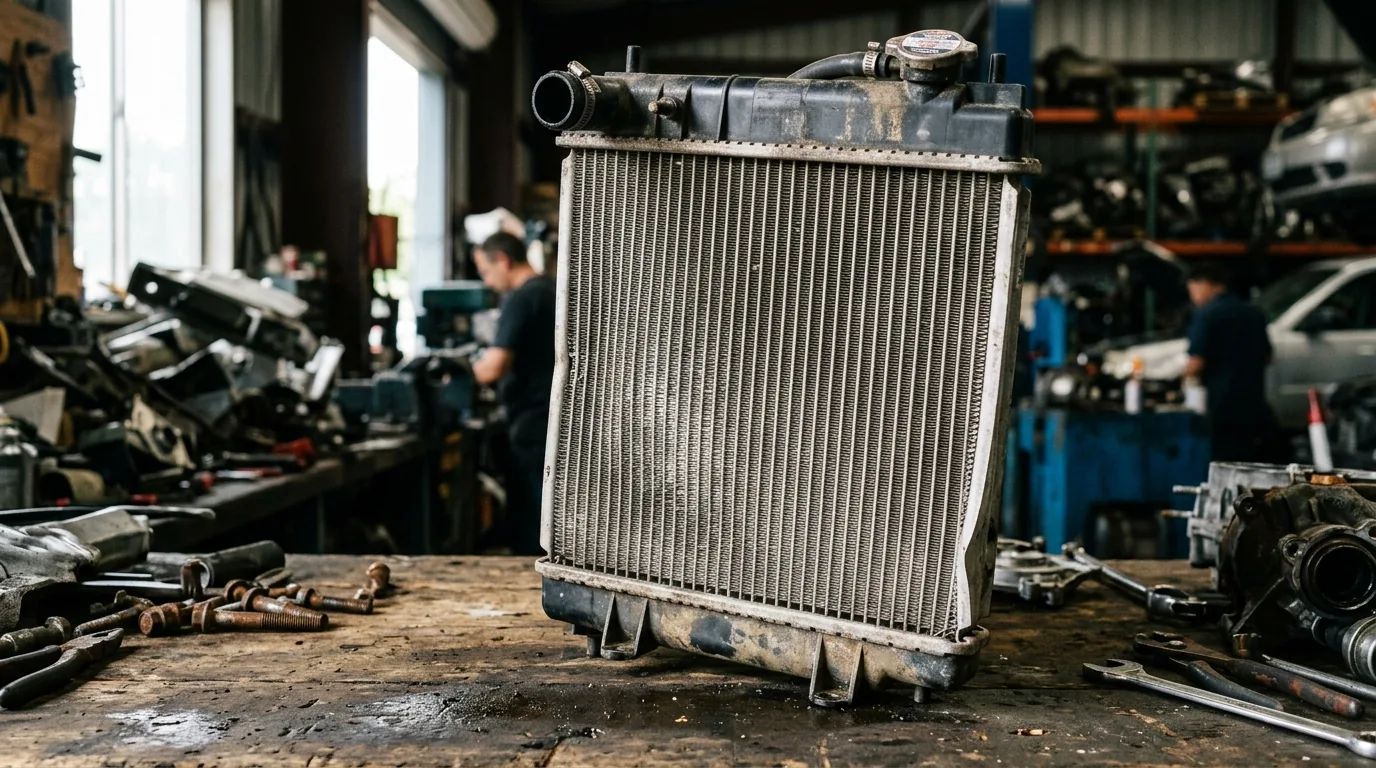
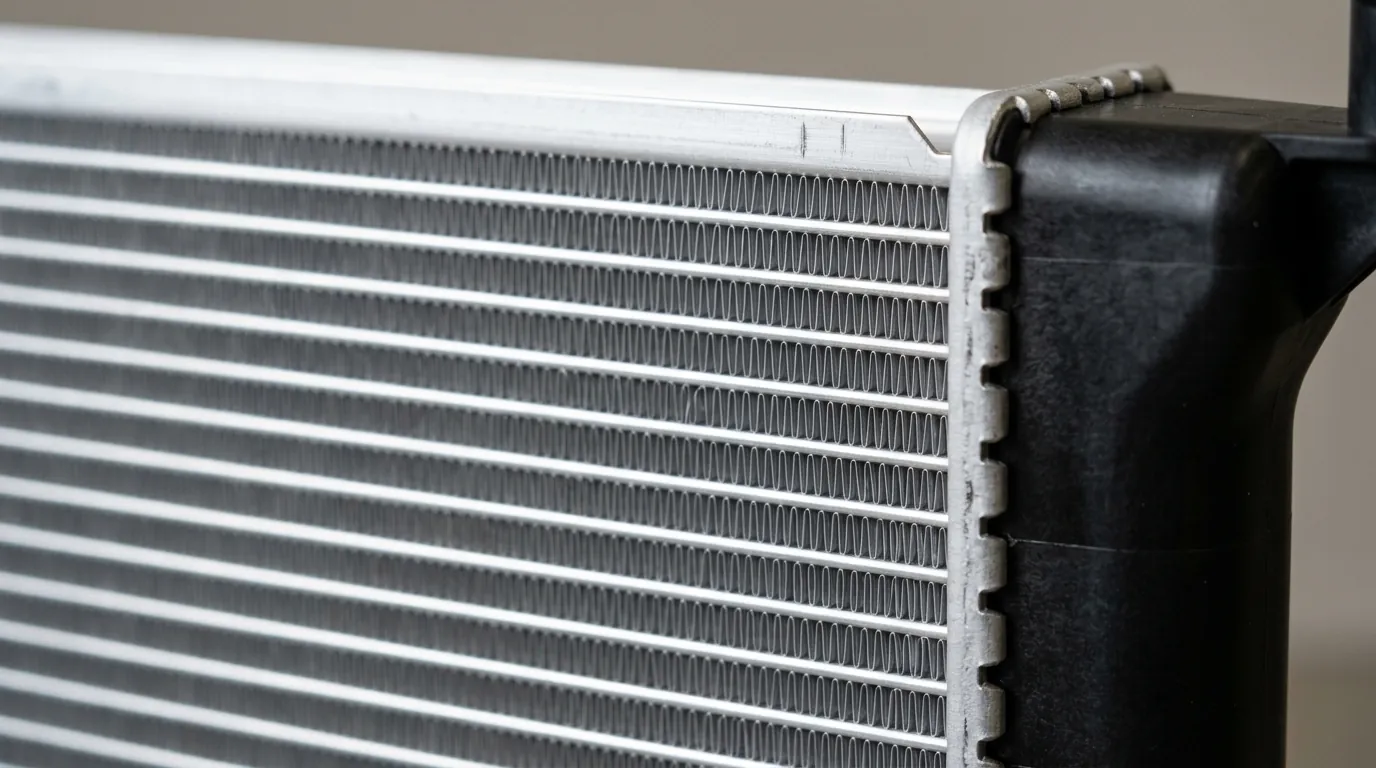
The design is a commodity. A modern radiator is a stamped aluminum core with crimped-on plastic end tanks. There are no precision-machined internals, no electronics, and no calibration. The manufacturing process has been standardized for three decades, and the tooling cost per model is low enough that dozens of suppliers can produce the same part profitably.
Volume is enormous. Radiators fail on nearly every vehicle eventually; plastic tanks crack, cores clog, seams leak. That predictable, universal demand supports mass production runs that drive unit cost down.
Competition is brutal. Spectra Premium, Denso, Koyorad, TYC, CSF, and a long tail of import brands all compete on the same part numbers. Retail listings for the same vehicle routinely span $80 to $200 across sellers, and price pressure runs downhill.
Compare that to a transfer case or a transmission, where remanufacturing requires disassembly, inspection against factory tolerances, and dyno testing. Those processes cost real money, which is why used units retain a large price advantage there and not here.
When Used OEM Makes Sense
Used OEM is the right call in a handful of specific situations:
European and luxury vehicles. BMW, Mercedes, Audi, and Volvo radiators often integrate transmission coolers, expansion tanks, or sensor ports into the assembly. Budget aftermarket versions of these approximate the geometry and sometimes leak at the transmission cooler junction, an expensive failure mode. A used OEM unit from a low-mileage donor avoids the risk.
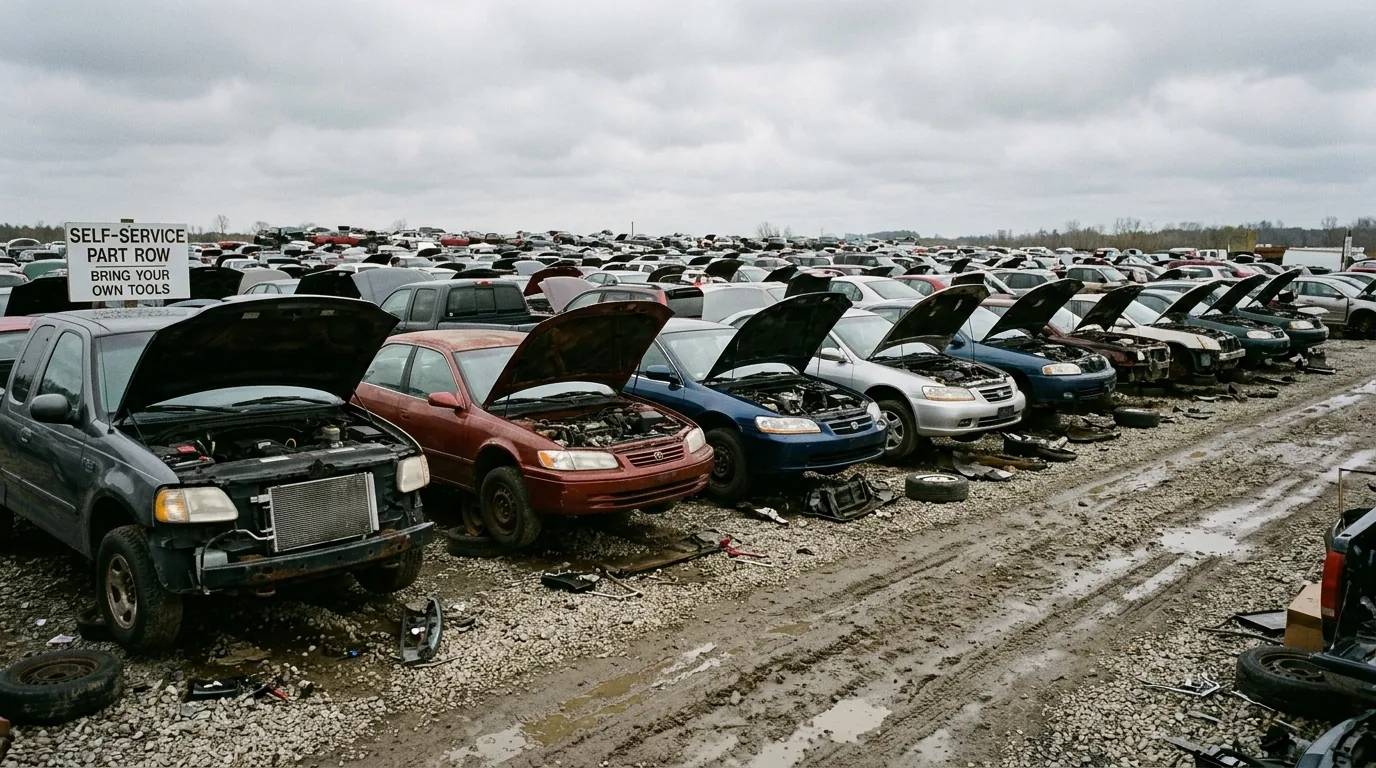
Discontinued or low-volume models. If aftermarket coverage is thin or nonexistent, the salvage yard — searchable through Car-Part.com — may be the only source that isn't a $600 dealer part.
Vehicles with fitment-sensitive mounting. Some models have tight clearances where a millimeter of tank difference causes hose routing or fan shroud interference. If forums for your specific vehicle document aftermarket fitment problems, OEM geometry is worth paying for.
You need it today. A local yard can hand you a radiator this afternoon. Online aftermarket orders take one to three days, and that matters if the car is your only transport.
Collision damage, not failure. A radiator pulled from a rear-ended donor has almost no service hours on it. Grade A units carry a $180 median, a slight premium over the $172 overall median, and reasonable when the donor was low-mileage.
For what to inspect before handing over cash at a yard, see our junkyard radiator pricing guide.
When Aftermarket Is the Better Buy
For most people, this is the default answer:
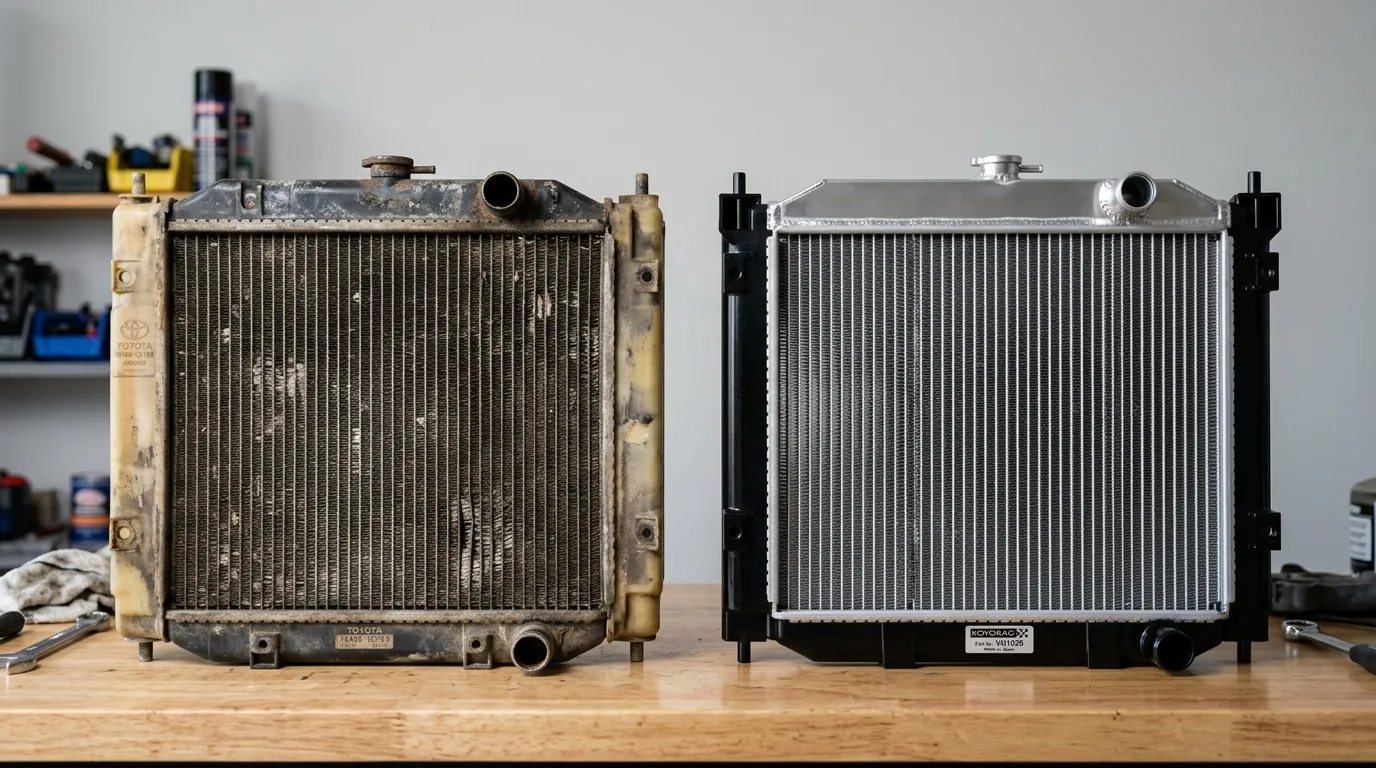
Mainstream domestic and Japanese vehicles. Ford, Chevy, Toyota, Honda, Nissan, and Hyundai radiators have deep aftermarket coverage from established manufacturers. Denso and Koyorad supply OEM radiators to Japanese automakers; the aftermarket box from those brands is frequently the same core.
Tight budgets. An $80 to $130 aftermarket radiator plus $150 in labor is the cheapest path to a working cooling system. Nothing in the used market beats it.
You want a warranty. Aftermarket radiators ship with one-year to lifetime coverage. A used unit gets you 30 to 90 days, and typically no labor coverage.
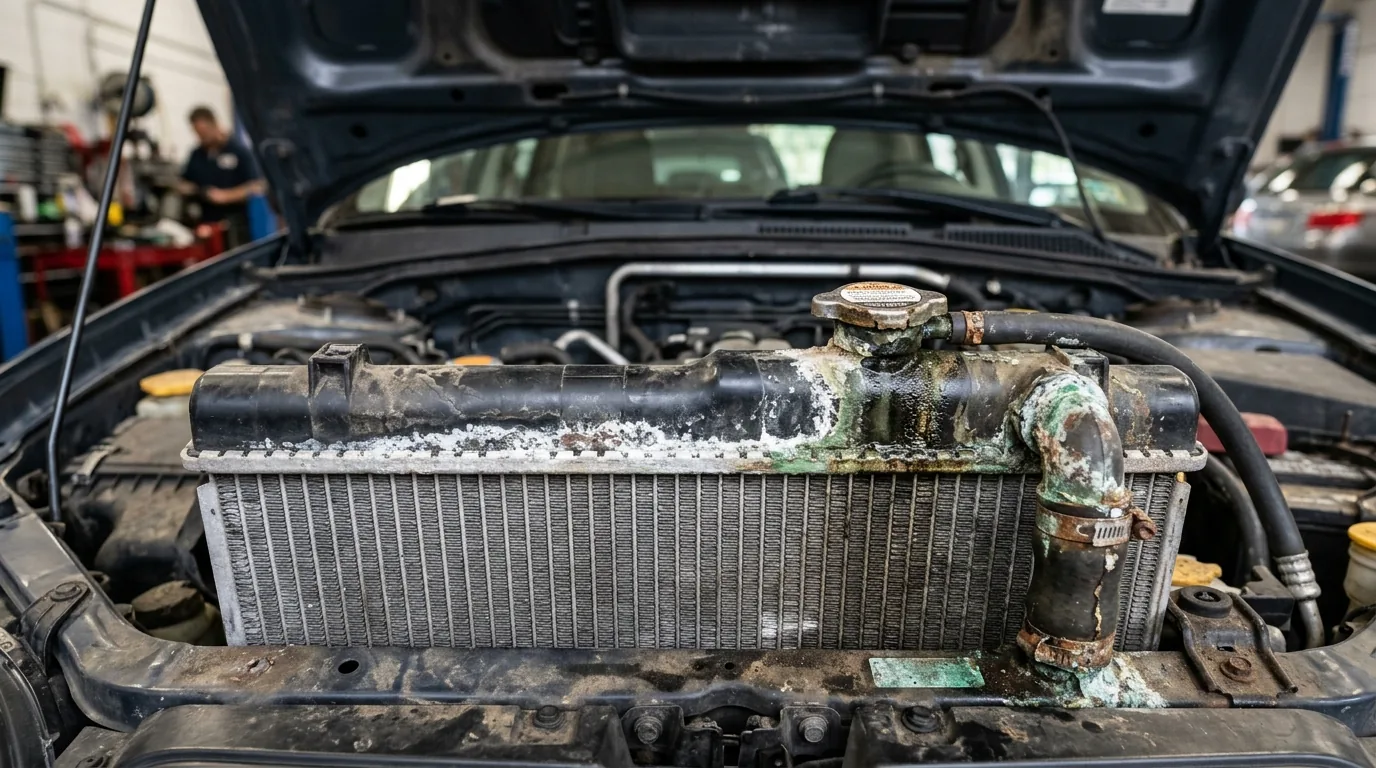
The old radiator failed from age, not impact. If your radiator clogged or the tank cracked at 140,000 miles, a same-age used unit from a similar-mileage donor is running the same clock. You're buying the failure that hasn't happened yet.
Grade C used units are on the table. Grade C radiators sit at a $100 median, cheap, but the discount reflects visible fin damage, corrosion, or high donor mileage. At that price you're within reach of a new aftermarket unit anyway.
Warranty and Quality Comparison
| Source | Warranty | What's Covered | Real-World Risk |
|---|---|---|---|
| Self-pull yard | 24–48 hour exchange | DOA only | Internal scale invisible until installed |
| Counter-service yard | 30–90 days | Defective part only | Labor not covered on re-do |
| Aftermarket (budget) | 1 year | Part replacement | Occasional tank seam or fitment issues |
| Aftermarket (Denso/Koyorad/CSF) | 1 year–lifetime | Part, sometimes prorated | Very low |
| New OEM | 1–2 years | Part, sometimes labor at dealer | Very low |
Used radiator grading reflects external condition, not flow capacity:
| Grade | Median Price | What the Grade Reflects |
|---|---|---|
| Grade A | $180 | Low donor mileage, clean fins, no visible damage |
| Grade B | $171 | Moderate mileage, minor fin damage or oxidation |
| Grade C | $100 | Visible fin damage, corrosion, or high donor mileage |
Total Cost of Replacement by Source
Labor is the constant. Radiator replacement takes one to two hours on most vehicles; drain the coolant, pull the upper and lower hoses, disconnect the fan shroud and any transmission cooler lines, lift the radiator out, reverse the process, refill and bleed the system. That runs $150 to $300 at typical shop rates regardless of where the part came from.
| Part Source | Part Cost | Labor | Total |
|---|---|---|---|
| New aftermarket | $80–$250 | $150–$300 | $230–$550 |
| Used OEM | $106–$323 | $150–$300 | $250–$600 |
| New OEM | $200–$600 | $150–$300 | $350–$900 |
Add coolant ($20 to $40) and, on some vehicles, a thermostat or hoses replaced at the same time since the system is already drained. Doing those together is cheap insurance and adds little labor.
Before you replace anything, confirm the radiator is actually the problem, overheating has several causes and a few of them are much cheaper. Our guide to bad radiator symptoms walks through the diagnostic checks. For the full breakdown of used pricing by vehicle model and grade, see used radiator cost, and check current listings on the radiator price index.