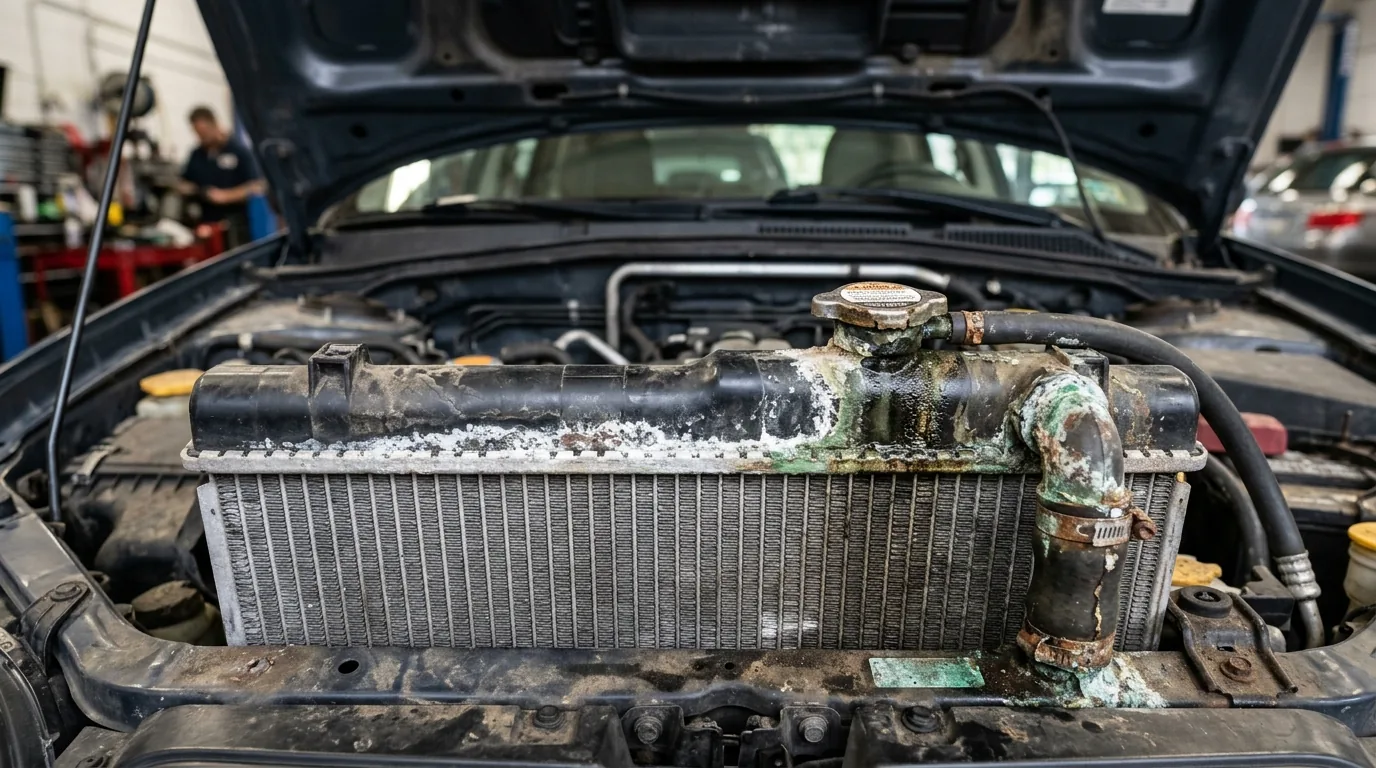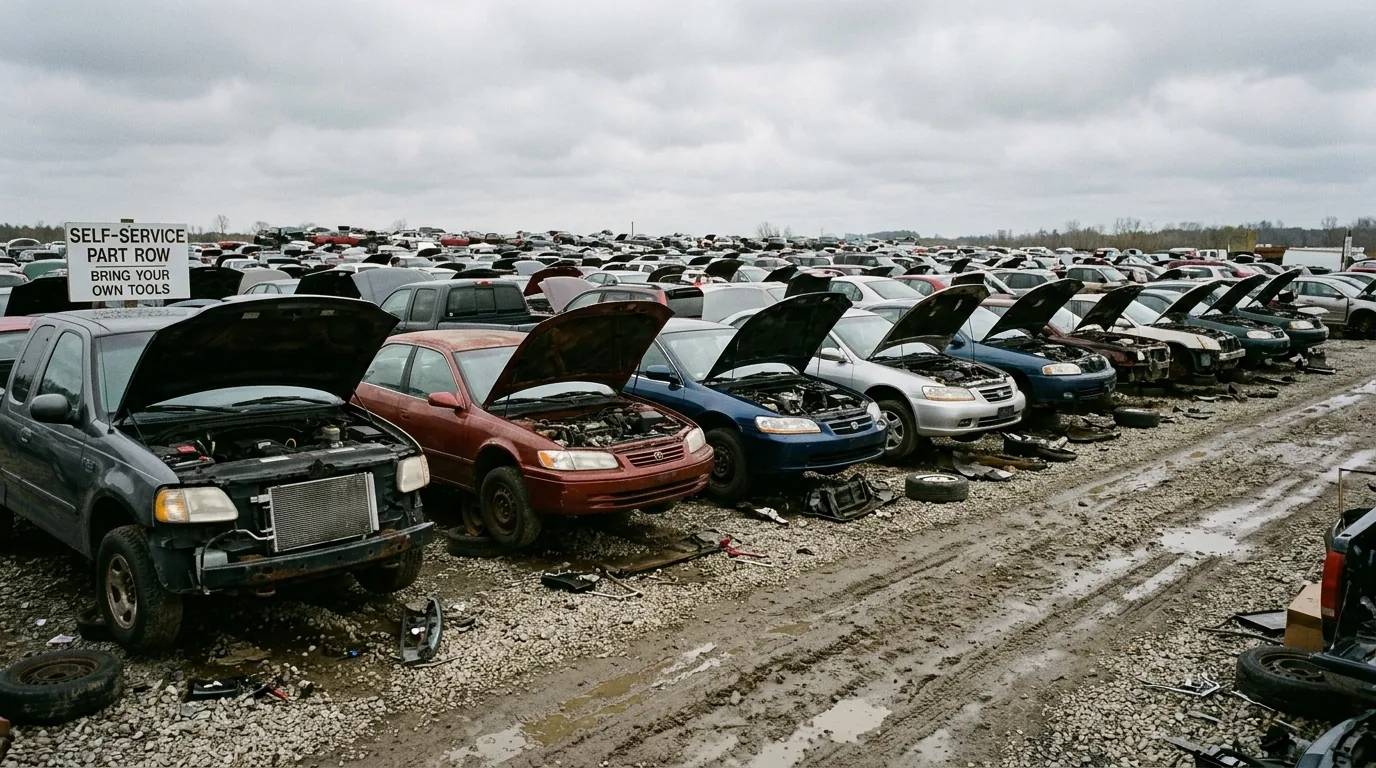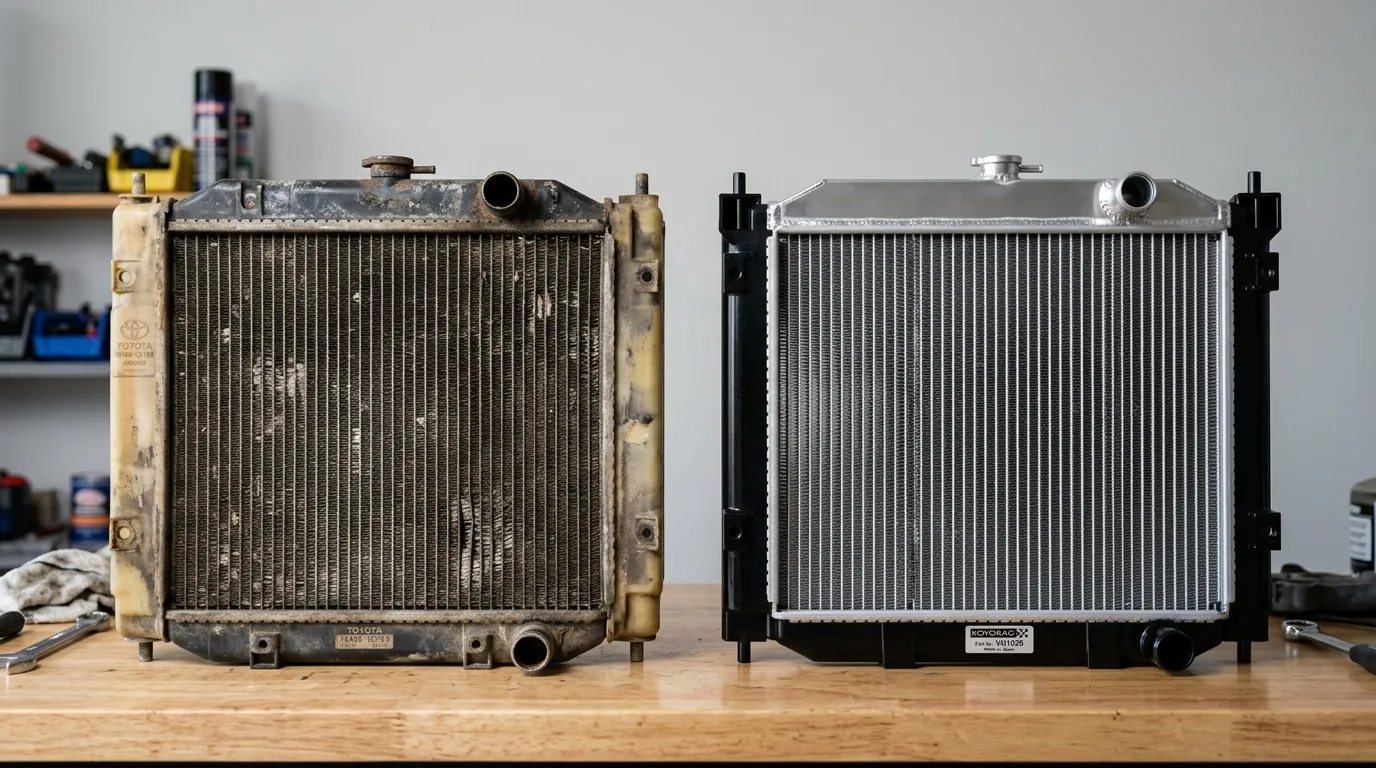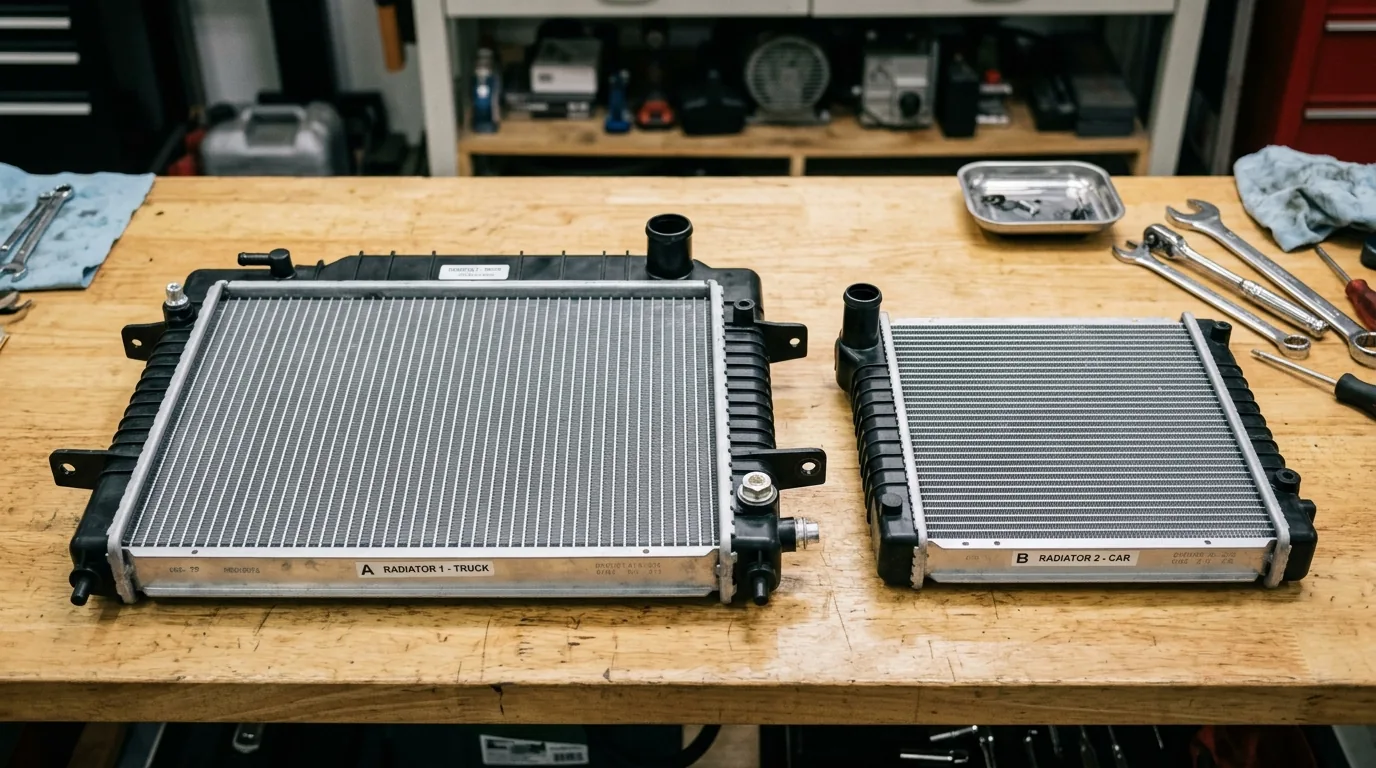
No, radiators aren't universal. Core dimensions, inlet and outlet hose positions, mounting tab locations, transmission cooler presence, and cooling capacity all vary between vehicles, and a mismatch in any one of them means the part won't install.
What *is* true is that radiators interchange far more often than most buyers expect, not across brands at random, but across models that share a chassis. Two vehicles built on the same platform by the same parent company usually run the identical radiator, and that opens up cheaper donor listings for the exact same part.
- Radiators are not universal: five separate specs have to match before one will fit
- Platform siblings do interchange: Silverado/Sierra, Tahoe/Yukon, Charger/Challenger, Impreza/Outback
- Hollander interchange numbers are the fastest free way to confirm compatibility
- Transmission cooler lines are the most-missed spec: an automatic needs the cooler ports, a manual doesn't
- Median used radiator price is $172 across 51 models, so interchange shopping usually saves $30-$70
Are Radiators Universal? (Short Answer: No)
There's no such thing as a universal OEM replacement radiator. The radiator is a structural, dimension-critical part: it bolts or slots into the core support at fixed points, connects to hoses that leave the engine at a fixed angle, and sits inside a fan shroud molded to its exact face.
Universal radiators do exist, but only in the hot rod and custom fabrication market, where the builder cuts and welds mounts and routes custom hoses. For a stock vehicle repair, that's not a usable path.
Across our index, used radiators run $106 to $323 by model median, with a $172 overall median and a $185 average. The spread between models is what makes interchange worth checking, if your model sits at the top of the range and a platform sibling sits at the bottom, you're buying the same aluminum core for less.
*Source: PartPriceGuide.com analysis of 41,113 salvage yard listings, August 2026.*
What Makes Radiators Different
Five specifications determine whether a radiator fits. All five must match.
1. Core dimensions. Height, width, and thickness are set by the core support opening. A radiator an inch too tall won't drop in. Thickness matters just as much, a two-row core from a tow-package truck may not clear the fan shroud on a base model.
2. Inlet and outlet position. The upper hose inlet and lower hose outlet are placed to meet the engine's hose routing. Manufacturers use left-side inlets on some engines and right-side on others in the same body. A mirrored radiator physically bolts in but leaves the hoses stretched across the fan.
3. Transmission cooler. Most automatics run transmission fluid through a cooler built into the radiator's end tank, using two hard lines. Manual-transmission versions of the same vehicle typically have no cooler and no ports. Buying a manual radiator for an automatic leaves you with nowhere to connect the trans lines, and buying a cooler-equipped radiator for a manual is harmless but means capping two ports.
4. Mounting points. Radiators mount by rubber-isolated pegs into the lower support, upper brackets, or side tabs. The pattern is platform-specific, and broken or missing tabs on a salvage unit are a common defect worth inspecting.
5. Cooling capacity. Row count and fin density are matched to the engine's heat load. A V8 with a tow package gets more core than the same body with a base four-cylinder. Capacity doesn't affect fitment, but it very much affects whether the vehicle runs cool under load.
Which Vehicles Share Radiators
Platform sharing is where interchange becomes practical. When one manufacturer builds two models on the same chassis with the same engine options, the radiator is usually a single part number carried across both.
| Platform Pair | Median Price | Price Range | Notes |
|---|---|---|---|
| Chevy Silverado 1500 | $225 | $20-$550 | Same platform, same radiator as Sierra |
| GMC Sierra 1500 | $210 | $20-$550 | Cheaper median for the identical part |
| Chevy Tahoe | $224 | $45-$944 | Full-size SUV twin of the Yukon |
| GMC Yukon | $278 | $25-$1,090 | Same platform, higher median |
| Dodge Charger | $149 | $20-$1,810 | Shares LX platform with Challenger |
| Dodge Challenger | $140 | $44-$1,810 | Same platform, same cooling package |
| Subaru Impreza | $106 | $50-$445 | Identical median to Outback |
| Subaru Outback | $106 | $50-$445 | Shared platform in overlapping model years |
| Jeep Grand Cherokee | $176 | $50-$1,200 | Shares chassis with Durango in 2011+ years |
| Dodge Durango | $150 | $35-$755 | $26 cheaper median for the platform sibling |
The Impreza and Outback case is the cleanest: identical $106 median, identical range, because in overlapping model years they're the same cooling system on the same platform.
What doesn't interchange, despite looking like it should: models that share a nameplate across a generation change, and models that share a body but not an engine bay layout. A redesign year almost always brings a new core support, which resets the radiator part number even though the badge on the tailgate never changed. Treat generation boundaries as hard breaks and verify by part number, not by model year proximity.
Full model-by-model pricing is on our radiator price index, and the sourcing math behind these numbers is covered in the used radiator cost guide.
How to Check Radiator Compatibility
Three methods, most reliable first.
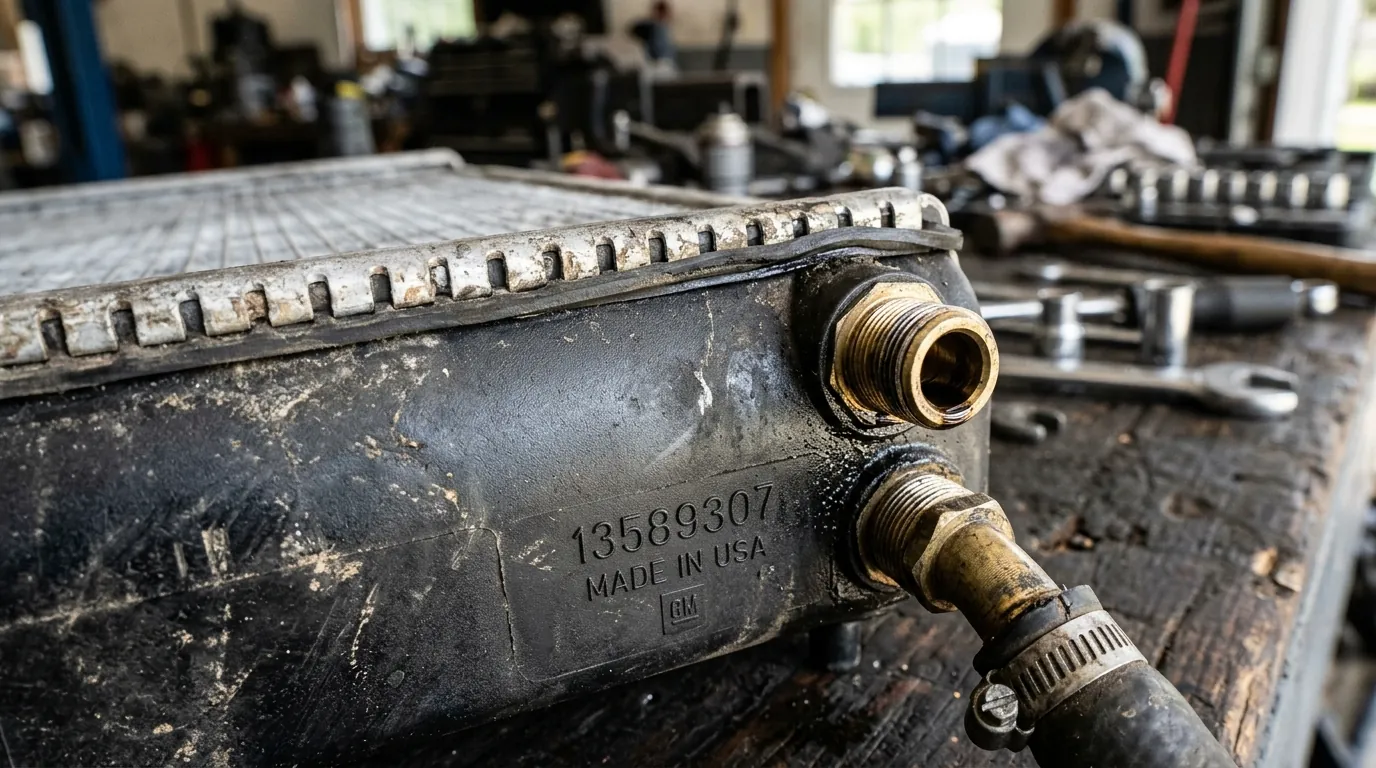
OEM part number. Every OEM radiator carries a stamped or printed part number on the end tank or a sticker on the core. If the donor number matches yours, the part is identical; this is the only method with no ambiguity. Photograph your existing radiator's tank before you start shopping.
Hollander interchange number. The salvage industry's interchange system assigns one number to every group of parts that fit interchangeably. Look yours up free at Car-Part.com by entering year, make, model, and part. Any listing sharing your Hollander number is a confirmed fit, including donors from other nameplates you would not have thought to search. Major aftermarket suppliers like Dorman also publish interchange catalogs that cross-reference OEM numbers. Yard counter staff can run the same lookup from their inventory system.
Physical measurement. When you're standing in a self-pull yard with no lookup available, measure and compare all five specs:
- Core height, edge to edge of the finned area
- Core width, tank to tank
- Core thickness, front face to back face
- Inlet position, which side, and how far from the top corner
- Outlet position and transmission cooler port count
If all five match your original, the radiator will install. Bring your old unit or a tape measure and a photo with dimensions written on it.
One caution: same model year doesn't guarantee same radiator. Engine option, transmission type, and towing package all split a single model into multiple radiator part numbers. A 5.3L tow-package Silverado and a 4.3L base Silverado from the same year use different cores. Your VIN resolves which one you have — manufacturers like Spectra Premium offer online fitment tools that decode VIN to the exact radiator part number.
Does Radiator Size Affect Cooling?
Yes. Cooling capacity scales with core surface area, thickness, and row count, which is exactly why manufacturers fit thicker radiators to tow packages and larger engines.
Upgrading, fitting a heavy-duty radiator from a tow-package version of your vehicle, is a legitimate move if the core support and fan shroud accept the extra thickness. It buys real headroom for towing, mountain grades, or hot-climate stop-and-go driving. Check shroud clearance before you commit, since a thicker core can push the fan into the water pump pulley on tight engine bays.
Downgrading is the mistake to avoid. Fitting a base-model radiator to a vehicle with a tow package, a larger engine, or a transmission cooler requirement strips out cooling capacity the vehicle was engineered around. It will look fine in the driveway and overheat under load, which is when overheating does the most damage — see our guide to bad radiator symptoms for what to watch for.
If you're pulling from a salvage yard, the safest rule is to match the donor's engine and transmission option to yours, not just the model. See our junkyard radiator prices guide for what to inspect before you pull one, and our used vs new radiator comparison if you're weighing a new aftermarket unit instead.