Junkyard starters cost about $91 at the median, with most vehicles landing between $71 and $134 across 23,667 priced salvage yard listings. Self-pull yards run cheaper still, typically $25 to $60, because they price starters as a flat category instead of by vehicle.
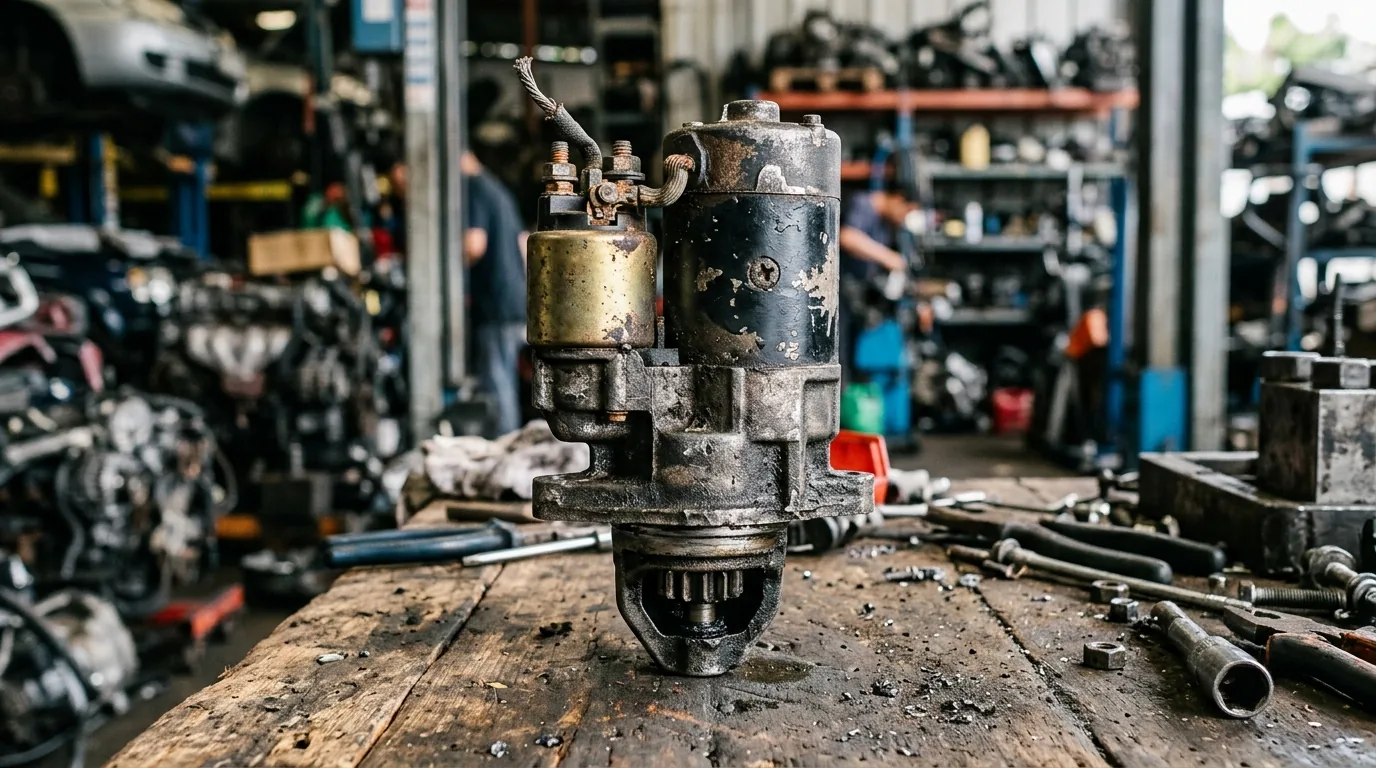
That makes the starter one of the best-value parts in the entire yard. It's a sealed electric motor with no wear surfaces exposed to coolant or road grime, it weighs 8 to 15 lbs, and on most vehicles it's held on by two bolts and a wire.
- Median junkyard starter price is $91 across 23,667 listings covering 51 models
- Self-pull yards charge $25-$60: flat-rate pricing that ignores what vehicle it came off
- Counter-service yards charge $60-$147 with testing and a 30-90 day warranty
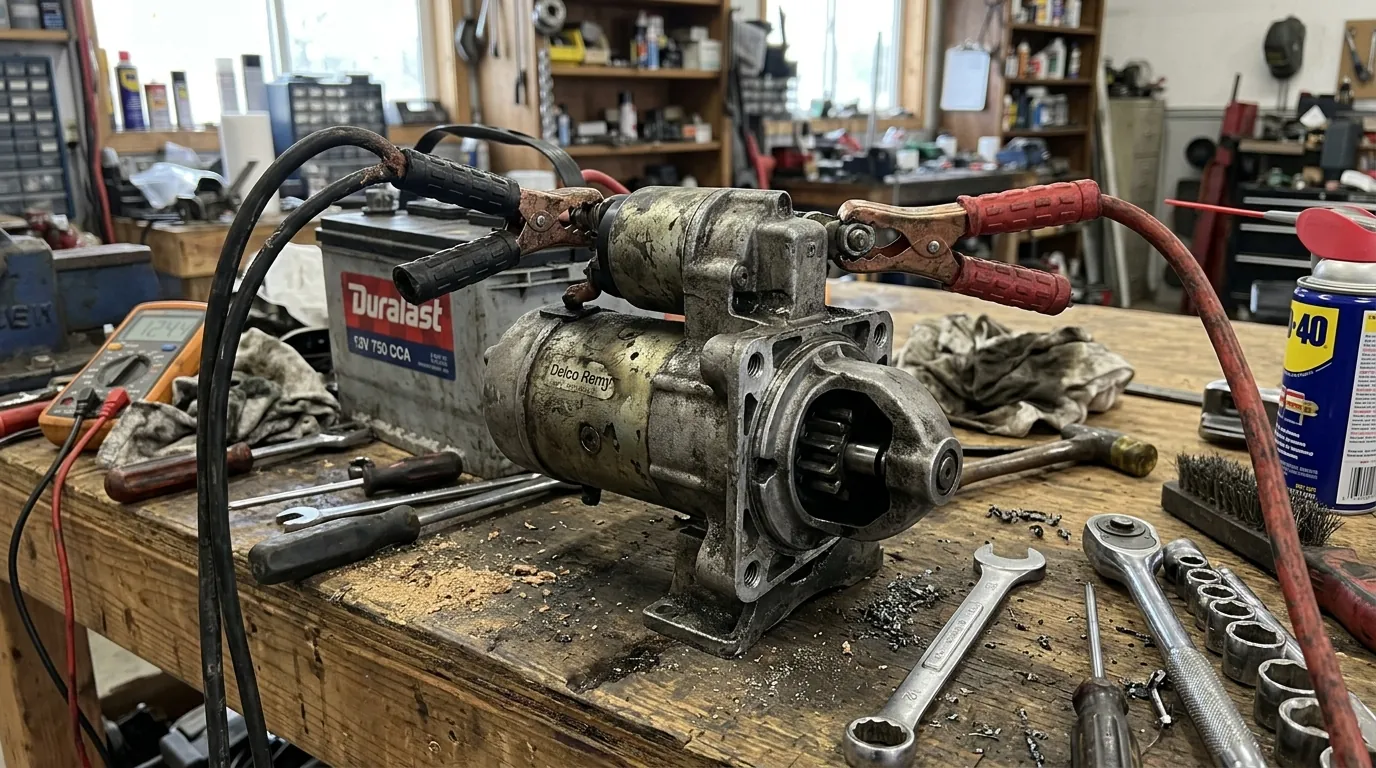
- You can bench test a starter on the spot with a 12V battery and two jumper cables
- Removal takes 15-30 minutes: two or three bolts, a cable nut, and a solenoid wire
What Junkyards Charge for Starters
Starters price in an unusually tight band. There's no size premium the way there is with radiators or transmissions, a starter for a full-size V8 truck is physically similar to one for a compact sedan, and both are cheap to stock and quick to pull. Across our dataset of 23,667 priced listings covering 51 models:
| Metric | Price |
|---|---|
| Overall median | $91 |
| Typical model range | $71-$134 |
| Ungraded / self-pull median (Grade X) | $60 |
| Models tracked | 51 |
*Source: PartPriceGuide.com analysis of 23,667 salvage yard listings, August 2026.*
Self-Pull vs Counter-Service Pricing
The channel you buy through moves the price more than the vehicle does.
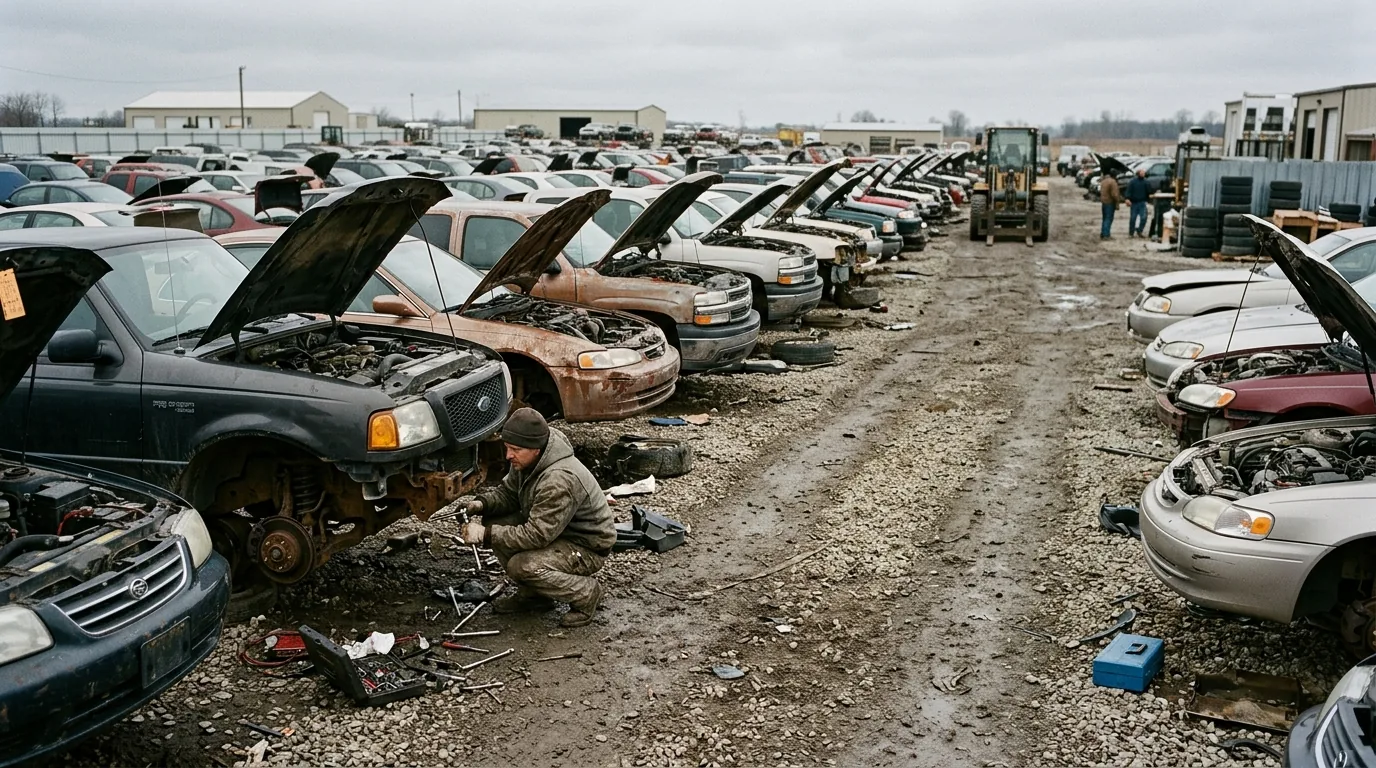
Self-pull yards (Pull-A-Part, LKQ Pick Your Part, Wrench-A-Part) post one starter price for the entire lot, often $25 to $45 before core charge and tax, and rarely above $60. A starter off a Mercedes C-Class costs the same as one off a Corolla, which is exactly where the arbitrage lives: the models that price highest at counter-service are the ones worth walking the rows for. The trade-off is no warranty beyond a 24 to 48 hour exchange window, and no guarantee the unit works until you test it yourself.
Counter-service yards pull, test, and inventory the starter for you. Expect $60 to $147 with a 30 to 90 day warranty, and staff who match the unit to your VIN so you don't end up with the wrong tooth count or mounting flange. Most of the 23,667 listings in our index come from this channel and online aggregators like Car-Part.com; the prices in the table below reflect counter-service pricing, not self-pull.
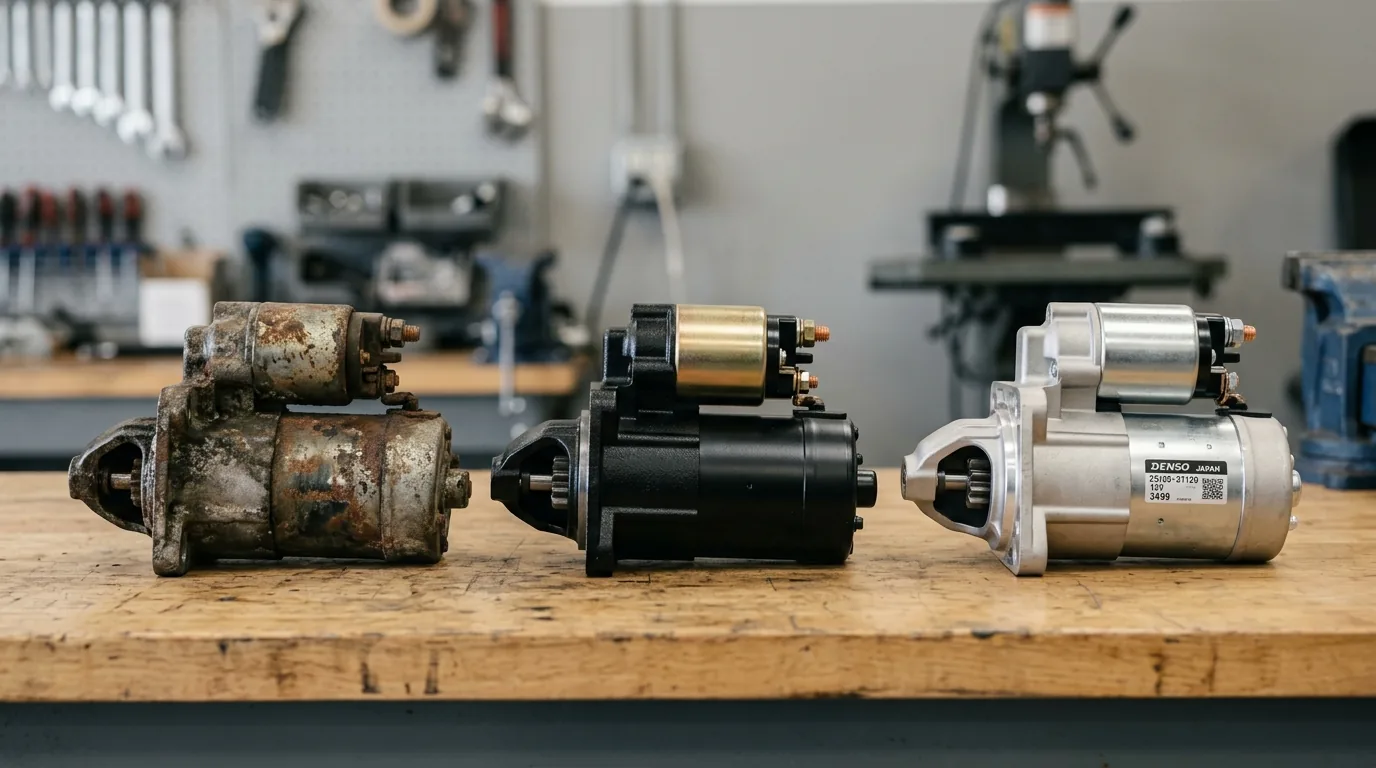
The warranty is worth more on a starter than on most parts. A starter either works or it doesn't, and a dead one means pulling your own back off and doing the job twice. Paying $40 more for a tested unit with a 90-day guarantee is reasonable if you only want to be under the car once.
For the full picture across every source, junkyards, online recyclers, and remanufacturers, see our used starter cost guide.
Junkyard Prices by Vehicle Model
Here's what salvage yards charge for the 15 most commonly listed starter models:
| Vehicle Model | Median Price | Listings |
|---|---|---|
| Ford Explorer | $90 | 1,261 |
| GMC Sierra 1500 | $91 | 1,129 |
| Dodge Challenger | $85 | 1,074 |
| Toyota Corolla | $80 | 972 |
| Chevy Silverado 1500 | $104 | 939 |
| Ram 1500 | $79 | 861 |
| Honda Civic | $95 | 831 |
| Ford F-150 | $93 | 706 |
| Honda Accord | $95 | 651 |
| Jeep Wrangler | $106 | 641 |
| GMC Yukon | $85 | 613 |
| Chevy Tahoe | $121 | 607 |
| Mercedes C-Class | $134 | 605 |
| Toyota Tacoma | $85 | 491 |
| Toyota Camry | $71 | 365 |
Expect to pay more for: the Mercedes C-Class ($134) and Chevy Tahoe ($121). The Mercedes premium is a parts-scarcity and brand effect rather than a hardware one; European starters are less interchangeable across model years and fewer yards stock them. The Tahoe sits high partly because full-size GM SUVs use higher-torque units shared with the truck line.
The spread is only $63. From the cheapest model ($71) to the most expensive ($134) is a narrower range than almost any other part we track. If you're shopping for a starter, the yard type matters far more than the badge on the car.
Look up the exact price for your vehicle on a model page like the Ford Explorer starter.
How to Test a Starter at the Yard
This is the single biggest advantage starters have over other used parts: you can fully verify one in about 30 seconds, right there in the aisle. Bring a small 12V battery (a lawn tractor or motorcycle battery works fine) and two jumper cables.
The bench test:
- Set the starter on the ground or a tailgate with the drive gear pointing away from you and nothing in its path.
- Clamp the negative cable from the battery to the starter's metal housing or mounting flange.
- Clamp the positive cable to the large main terminal, the one your battery cable bolts to.
- Briefly jump the small solenoid terminal (the spade or small stud) to positive.
What a good starter does: the solenoid clacks once and the motor spins hard and immediately, with the Bendix gear snapping forward and holding. It should sound aggressive, not labored. Hold the jump for no more than a second or two; a starter run unloaded on the bench overheats fast.
What failure sounds like:
- One loud click, no spin. The solenoid is engaging but the motor isn't turning. Either the solenoid contacts are burned or the armature is seized. Walk away.
- Rapid clicking. Almost always a weak test battery rather than a bad starter; recheck your connections and battery charge before condemning the unit.
- Spins but the gear doesn't extend. The Bendix drive is stuck or the overrunning clutch has failed. This is the failure mode that produces the classic grinding whine on a car, and it's not worth buying.
- Spins slowly or drags. Worn bushings or shorted armature windings. It may crank a warm engine and fail on a cold morning.
Also check the Bendix gear teeth by hand. Rotate the drive gear and look for chipped, rounded, or missing teeth. A chewed-up gear tells you the flywheel it was mating with was damaged too, but more importantly it will chew your flywheel next.
Finally, count the teeth on the drive gear and compare the mounting flange bolt pattern against your own unit before you pay. Same engine family does not guarantee the same starter. Once you've confirmed the unit passes, check our used starter cost data to make sure the asking price is fair.
Starter Removal Tips
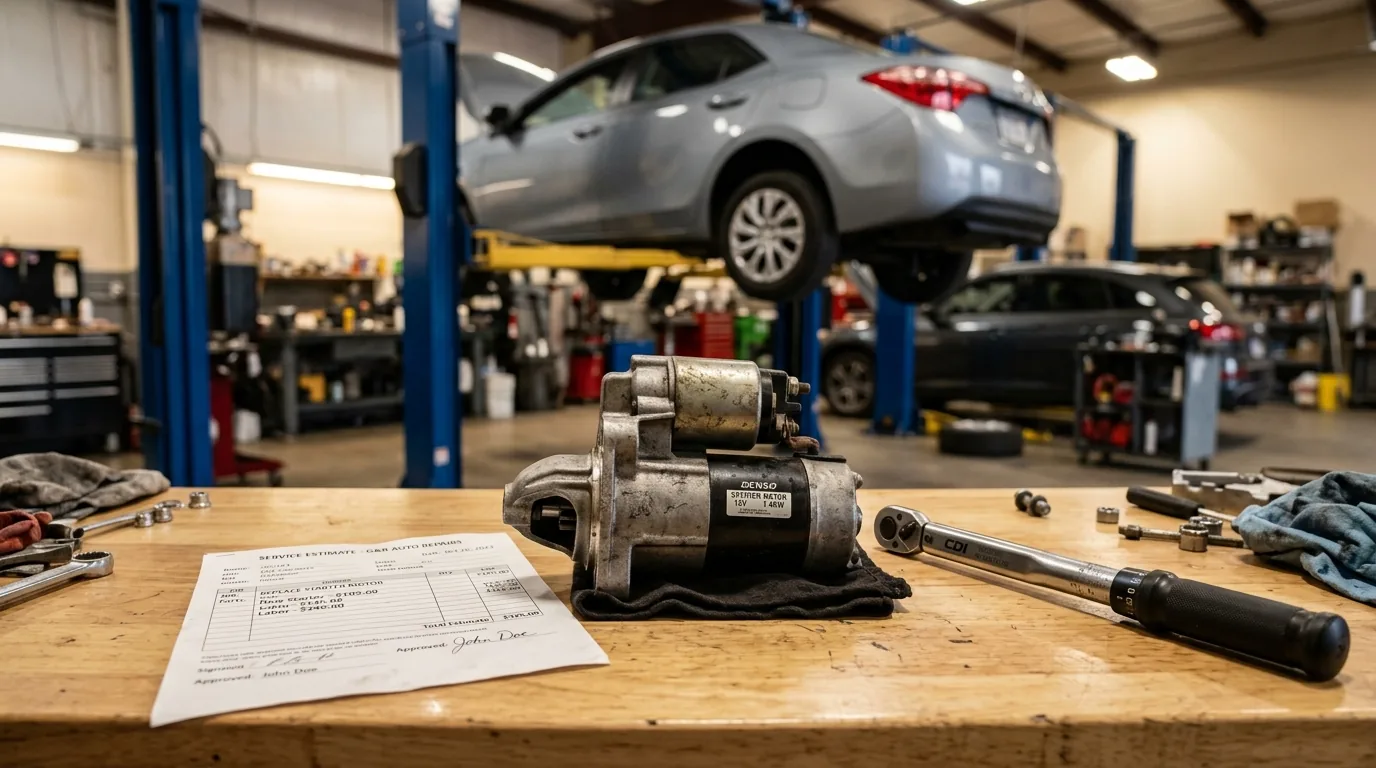
Pulling a starter is a 15 to 30 minute job on most vehicles — see our starter replacement cost guide for how access difficulty affects labor pricing.
Tools you'll need: 10-15mm socket set with a long extension and a swivel, a wrench for the battery cable nut, and a small flat screwdriver for the solenoid connector.
Step sequence:
- Locate the starter; it bolts to the bellhousing where the engine meets the transmission, low on the block. On transverse four-cylinders it's usually reachable from above; on V8 trucks it's under the exhaust manifold and easier from below.
- Disconnect the battery if the car still has one. Even in a yard, the main starter terminal can be live.
- Remove the nut on the large battery cable at the starter terminal and swing the cable clear.
- Unplug or unbolt the small solenoid wire.
- Remove the two or three mounting bolts. Support the starter with your free hand on the last one; it will drop.
- Angle it out. Some starters need to rotate 90 degrees or clear a shim plate on the way past the crossmember.
Watch for shims. Some GM and older domestic V8s use thin metal shims between the starter and block to set gear mesh clearance. If you find any, take them with the starter; they're part of the fit.
Don't drop it. A starter that lands on gravel can crack the nose cone casting or bend the Bendix shaft, which is the difference between a $30 win and a wasted trip. Carry it by the body, not the drive gear.
Deciding between a yard pull and a rebuilt unit? Our used vs remanufactured starter comparison breaks down when the extra cost of a reman is worth it. To check current pricing for your specific vehicle, browse the starter price index by model.