Replacing a starter costs $250 to $600 total at a shop when you install a used unit, $230 to $700 with a remanufactured one, and $280 to $850 with a new OEM part. The starter itself is the small half of that bill, a used starter runs $91 median across our index, meaning the part is typically only 15 to 30 percent of what you actually pay.
That ratio is what makes starter replacement different from most driveline repairs. On a transmission or engine swap, the part dominates and labor is a rounding error by comparison. On a starter, the labor is the story, and it swings from $150 to $500 based on one thing: how buried the starter is in your particular engine bay.
- Total cost with a used starter: $250–$600: $91 median part plus $150–$500 labor
- The part is only 15–30% of the bill. Labor is the dominant cost, unlike engine or transmission work
- Easy-access starters (most RWD trucks) take 30–45 minutes and cost $150–$250 in labor
- Buried starters (GM 3.6L V6, Chrysler Pentastar, Toyota 2GR V6) sit under the intake manifold and push labor past $400
- DIY is realistic on many vehicles and saves the entire labor charge, two or three bolts and two wires
What Starter Replacement Costs
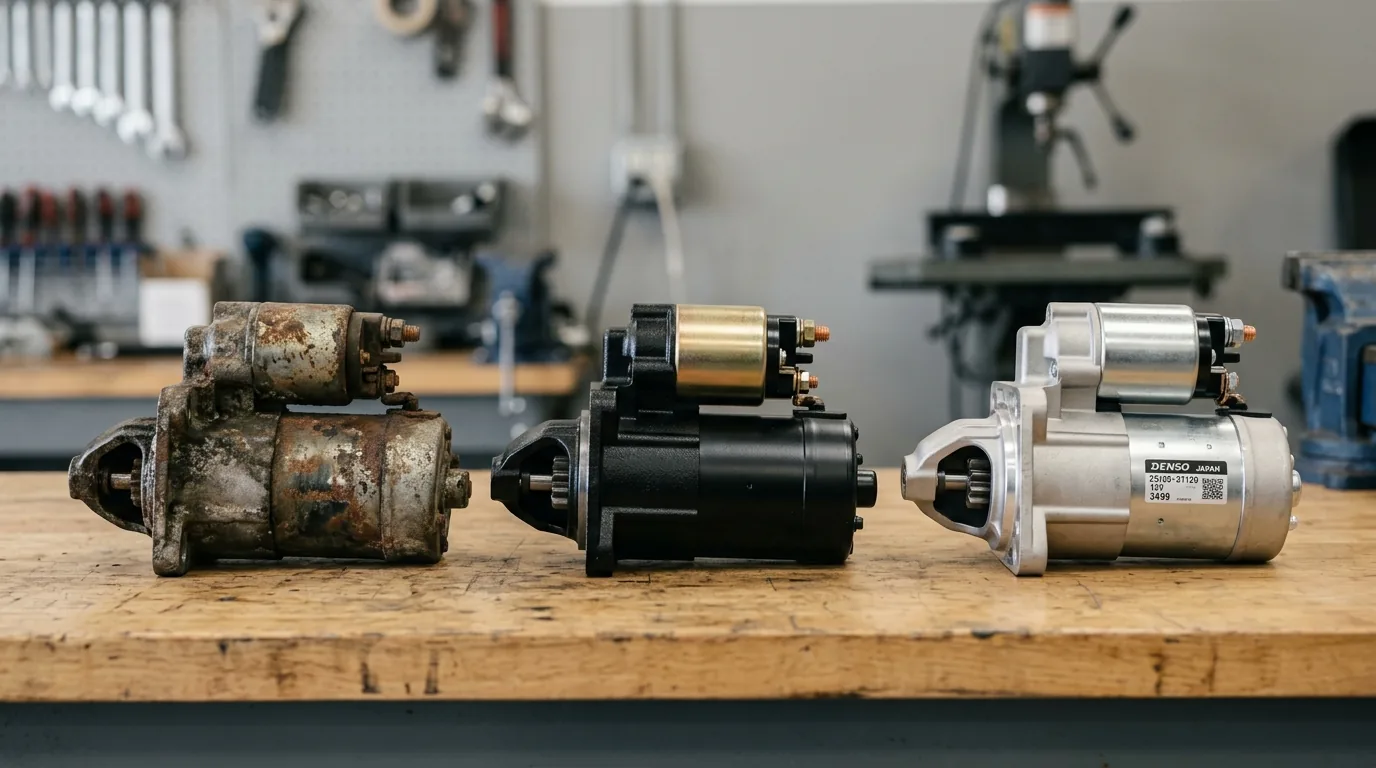
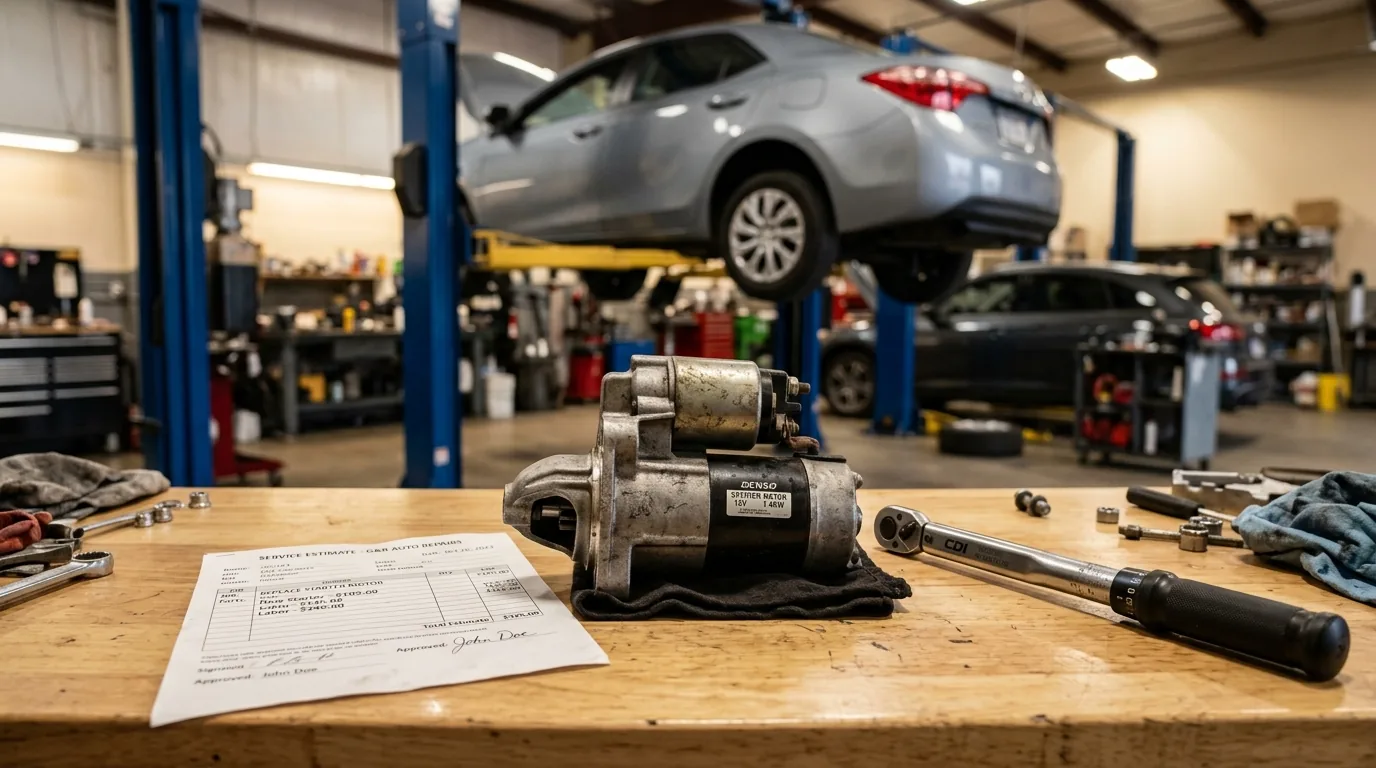
Starter replacement has exactly two line items: the part and the labor to install it. Labor does not change based on which part you buy, so the decision between used, remanufactured, and new only moves the smaller of the two numbers.
| Cost Component | Used | Remanufactured | New OEM |
|---|---|---|---|
| Part cost | $60–$147 (median $91) | $80–$200 | $130–$350 |
| Labor (0.5–4 hrs) | $150–$500 | $150–$500 | $150–$500 |
| Total | $250–$600 | $230–$700 | $280–$850 |
*Part pricing source: PartPriceGuide.com analysis of 23,667 salvage yard listings, August 2026.*
Part Cost vs Labor — Where Your Money Goes
Here's the split that surprises most people getting a quote:
| Scenario | Part | Labor | Part as % of total |
|---|---|---|---|
| Ford F-150, used starter | $93 | $150–$220 | 30–38% |
| Honda Civic, used starter | $95 | $200–$320 | 23–32% |
| Chevy Traverse, used starter | $147 | $400–$550 | 21–27% |
| Toyota Highlander, new OEM | $280 | $350–$500 | 36–44% |
The practical consequence: shop around for labor rates, not for the part. An independent shop at $110 per hour versus a dealer at $180 per hour saves you far more on a three-hour starter job than the difference between a used and a new starter ever will.
Why Some Vehicles Cost More
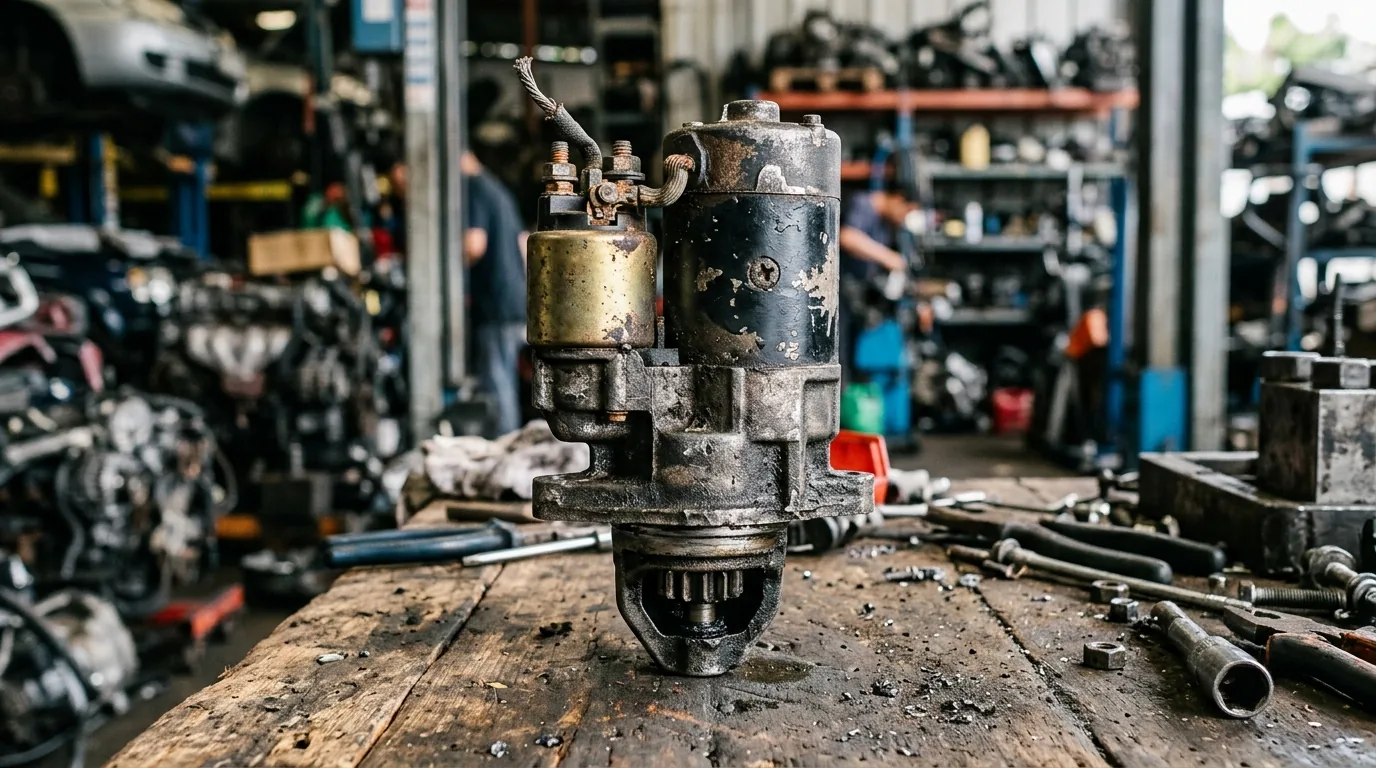
Every starter does the same job, a small electric motor throws a pinion gear into the flywheel ring gear and spins the engine. The difference in cost comes down to where the engineers put it.
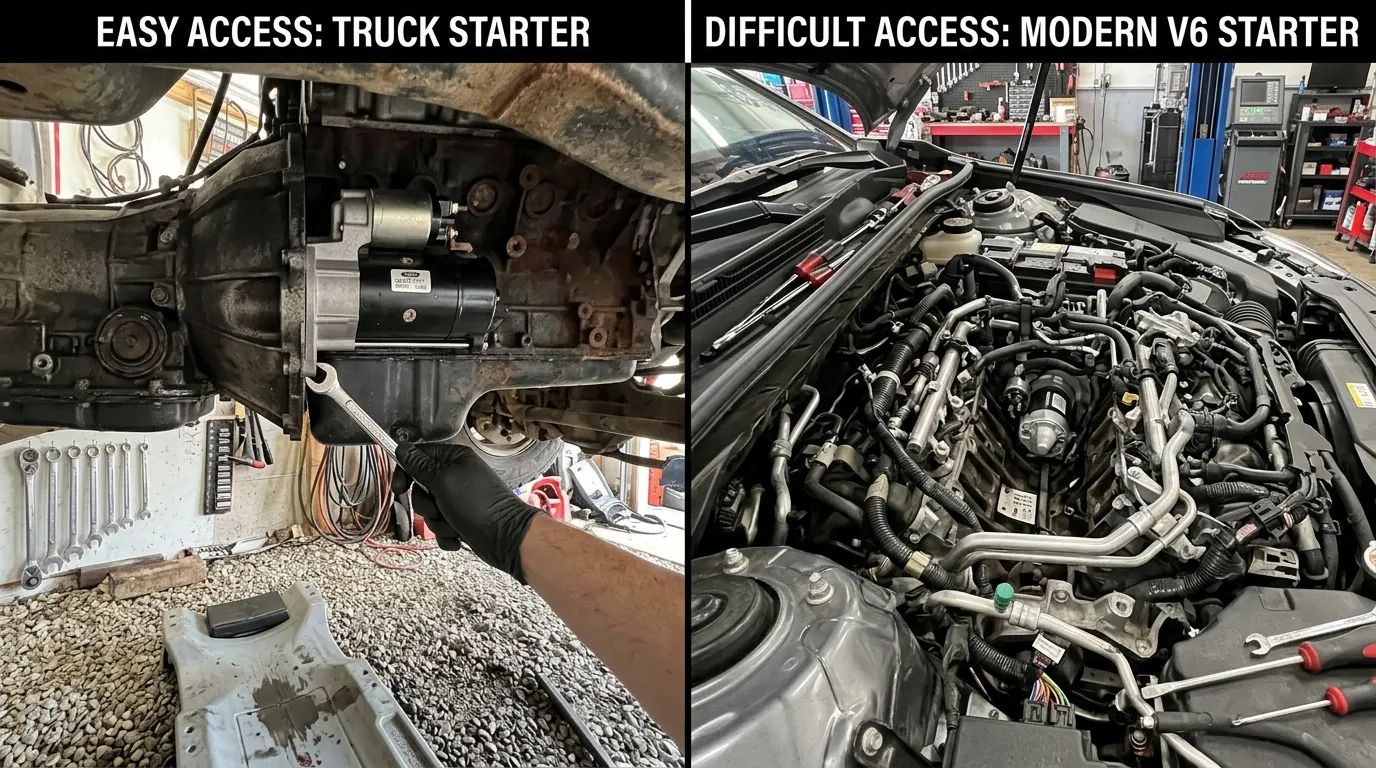
Easy access (0.5–1.0 hour, $150–$250 labor). On most rear-wheel-drive trucks and body-on-frame SUVs, the starter bolts to the outside of the bellhousing at the bottom of the engine, reachable from underneath with the vehicle on a lift or ramps. Two bolts, a battery cable, and a small trigger wire. Ford F-150, Chevy Silverado, Ram 1500, Toyota Tacoma, and Jeep Wrangler all fall here.
Moderate access (1.0–2.0 hours, $200–$350 labor). Transverse four-cylinder engines in front-wheel-drive cars usually put the starter on the back side of the block facing the firewall, or low on the transmission side. You reach it from above after removing an air intake duct or a wiring bracket, or from below after dropping a splash shield. Toyota Camry, Honda Civic, Ford Escape, and most Subaru boxers land in this band; the boxer layout keeps the starter on top of the bellhousing, but there's intake plumbing and heat shielding in the way.
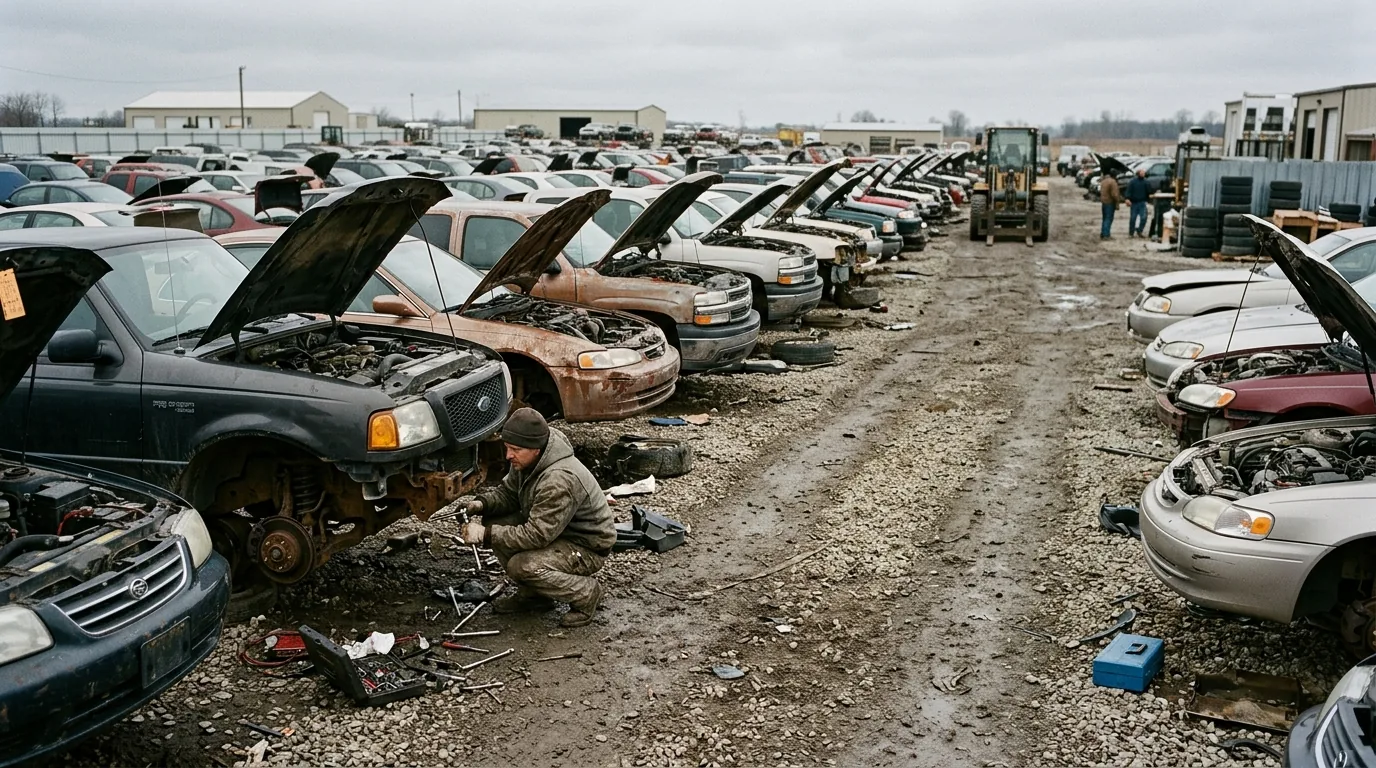
Buried (2.5–4.0 hours, $350–$550 labor). A handful of transverse V6 designs place the starter in the valley between the cylinder banks, underneath the intake manifold. The GM 3.6L V6 (Traverse, Acadia, Enclave, and V6 Equinox), the Chrysler Pentastar 3.6L (Durango, Grand Cherokee, V6 Charger), and the Toyota 2GR-FE V6 (Highlander, Sienna, V6 Camry) all require pulling the upper and sometimes lower intake manifold to get at the starter. That means new gaskets, a coolant drain on some applications, and a torque sequence going back together. On these applications especially, sourcing the part from a junkyard at self-pull prices can offset the steep labor bill.
Estimated Total Cost by Popular Model
Part prices below are the median used starter price from our salvage listing index. Labor estimates assume a $110 to $160 per hour independent shop rate, consistent with AAA national averages.
| Vehicle | Used part (median) | Access | Labor | Estimated total |
|---|---|---|---|---|
| Toyota 4Runner | $60 | Easy | $160–$250 | $220–$310 |
| Ram 1500 | $79 | Easy | $150–$230 | $230–$310 |
| GMC Yukon | $85 | Easy | $150–$240 | $235–$325 |
| GMC Sierra 1500 | $91 | Easy | $150–$230 | $240–$320 |
| Ford F-150 | $93 | Easy | $150–$220 | $245–$315 |
| Toyota Tacoma | $85 | Easy | $160–$240 | $245–$325 |
| Chevy Silverado 1500 | $104 | Easy | $150–$230 | $255–$335 |
| Jeep Wrangler | $106 | Easy | $160–$250 | $265–$355 |
| Chevy Tahoe | $121 | Easy | $150–$240 | $270–$360 |
| Toyota Camry (4-cyl) | $71 | Moderate | $200–$320 | $270–$390 |
| Toyota Corolla | $80 | Moderate | $200–$300 | $280–$380 |
| Ford Escape | $76 | Moderate | $220–$350 | $295–$425 |
| Honda Civic | $95 | Moderate | $200–$320 | $295–$415 |
| Honda Accord | $95 | Moderate | $200–$320 | $295–$415 |
| Nissan Altima | $85 | Moderate | $220–$400 | $305–$485 |
| Chevy Equinox (4-cyl) | $77 | Moderate | $250–$450 | $325–$525 |
| Subaru Outback | $75 | Moderate | $250–$400 | $325–$475 |
| Subaru Forester | $89 | Moderate | $250–$400 | $340–$490 |
| Dodge Durango (Pentastar) | $92 | Buried | $350–$500 | $440–$590 |
| Toyota Highlander (V6) | $95 | Buried | $350–$500 | $445–$595 |
| BMW X5 | $131 | Buried | $350–$550 | $480–$680 |
| Mercedes C-Class | $134 | Buried | $350–$550 | $485–$685 |
| Chevy Traverse (3.6L V6) | $147 | Buried | $400–$550 | $545–$700 |
Can You Replace a Starter Yourself?
On a large share of vehicles, yes, and it's one of the highest-payoff DIY jobs available, precisely because labor is the dominant cost. Doing it yourself on a Ford F-150 saves roughly $200. On a Chevy Traverse it would save $450, though that's also the job you're least likely to want to attempt.
Attempt it if the starter is reachable from underneath or from the top of the engine bay. The mechanical work is genuinely simple: disconnect the negative battery terminal, remove the heavy battery cable and the small solenoid trigger wire, remove two or three mounting bolts, and pull the unit out. Reverse the process. Budget an hour for a first attempt on an easy-access vehicle, plus jack stands or ramps.
Skip it if your vehicle has the starter under the intake manifold. That job brings in manifold gaskets, possible coolant loss, fuel line disconnects, and a specific bolt torque sequence. A mistake there costs more than the labor you saved.
Two things that trip people up. First, the negative battery terminal must come off before you touch the starter's main cable; that cable is hot at all times, and shorting it to the block will weld a wrench in place. Second, verify the starter is actually the failed component before buying one. A dead battery, corroded ground strap, or bad ignition switch produces the same no-crank symptom, and a voltage check at the starter's terminals while a helper turns the key separates the cases in two minutes. An ASE-certified technician can run this diagnostic quickly and rule out non-starter causes before you invest in a part.
If you're buying used, our junkyard starter pricing guide covers what to inspect and what to pay at a self-service yard. If you're weighing a salvage unit against a rebuilt one, our used vs remanufactured starter comparison breaks down the warranty and lifespan tradeoff.