A used starter costs $91 at the median, with model medians running from $60 to $147. That range comes from 23,667 priced salvage yard listings across 51 vehicle models, real asking prices from yards nationwide, not shop estimates or dealer quotes.
Starters are one of the cheapest used parts you can buy. The $60-to-$147 model spread is a 2.5x gap, the tightest of any component we track, and it means the part itself is almost never the expensive half of a starter job. Labor is.
- Median used starter price: $91 across 23,667 priced salvage yard listings, average $95
- Model medians range from $60 to $147: a 2.5x spread, the tightest of any part in our index
- Cheapest models: Toyota 4Runner ($60), Toyota Camry ($71), Nissan Sentra ($72)
- Most expensive: Chevy Traverse ($147), Kia Optima ($135), Mercedes C-Class ($134)
- Condition grade barely moves the price: Grade A to Grade B is only $4, because a starter either cranks or it doesn't
- Remanufactured starters cost $90 to $180 with a lifetime warranty, so reman frequently beats used on total value
Overall Used Starter Pricing
Across all 23,667 priced listings in the PartPriceGuide index, here's what used starters actually sell for:
| Metric | Price |
|---|---|
| Median | $91 |
| Average | $95 |
| Lowest model median | $60 (Toyota 4Runner) |
| Highest model median | $147 (Chevy Traverse) |
| Models with data | 51 |
| Priced listings | 23,667 |
Practically, this means you don't need to shop hard. The difference between a good deal and a bad deal on a used starter is about $40. On a transmission it's $1,200.
For most four-cylinder cars, budget $70 to $95. For V6 crossovers and mainstream trucks, budget $85 to $115. For German luxury and large-displacement V8s, budget $120 to $150.
*Source: PartPriceGuide.com analysis of 23,667 salvage yard listings, August 2026.*
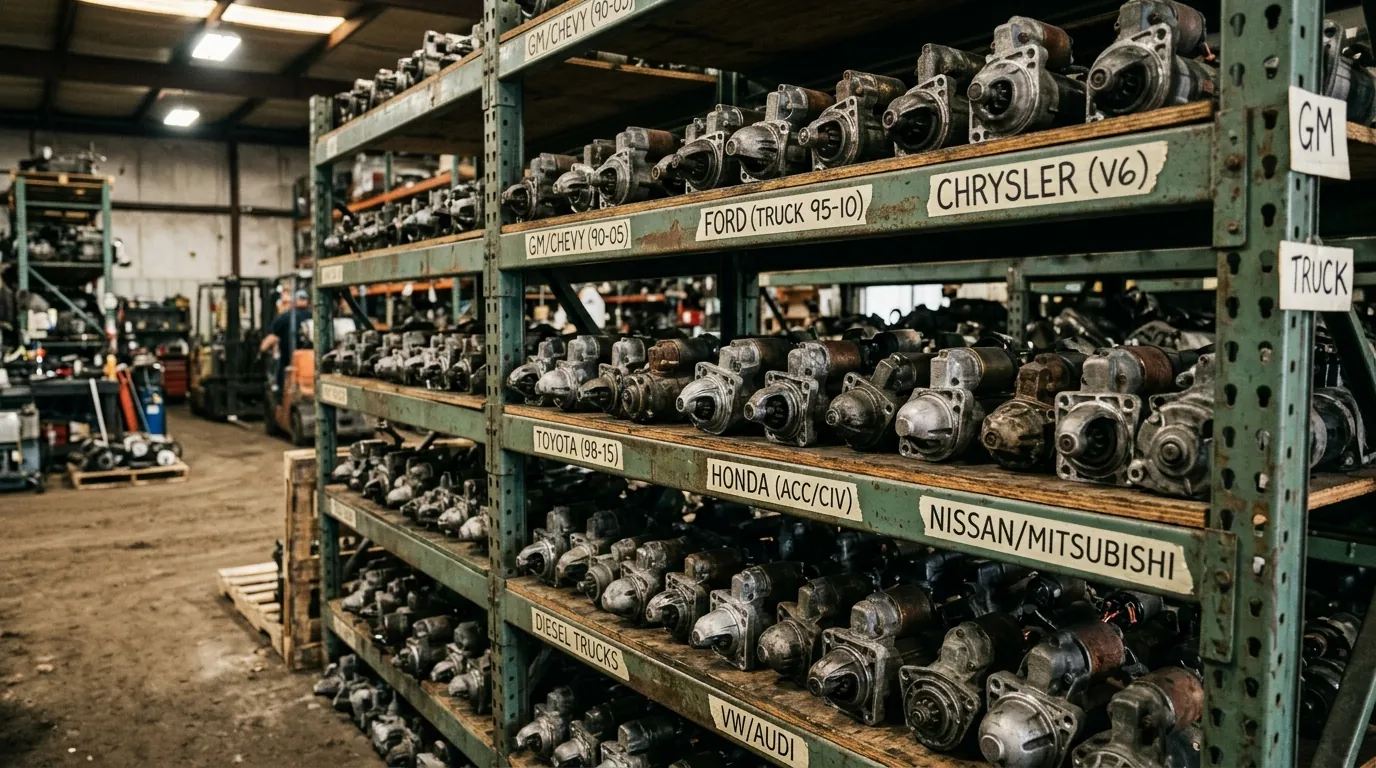
Prices by Vehicle Model
The table below shows actual pricing for the 20 most-listed starter applications in our index:
| Vehicle Model | Median | Avg | Listings |
|---|---|---|---|
| Ford Explorer | $90 | $130 | 1,261 |
| GMC Sierra 1500 | $91 | $114 | 1,129 |
| Dodge Challenger | $85 | $113 | 1,074 |
| Toyota Corolla | $80 | $108 | 972 |
| Chevy Silverado 1500 | $104 | $125 | 939 |
| Dodge Durango | $92 | $122 | 882 |
| Ram 1500 | $79 | $111 | 861 |
| Honda Civic | $95 | $113 | 831 |
| Ford F-150 | $93 | $119 | 706 |
| Kia Forte | $79 | $125 | 694 |
| Honda Accord | $95 | $118 | 651 |
| Jeep Wrangler | $106 | $133 | 641 |
| Hyundai Sonata | $100 | $123 | 630 |
| GMC Yukon | $85 | $108 | 613 |
| Chevy Tahoe | $121 | $126 | 607 |
| Mercedes C-Class | $134 | $145 | 605 |
| Toyota Highlander | $95 | $127 | 574 |
| BMW X3 | $121 | $150 | 554 |
| Toyota Tacoma | $85 | $120 | 491 |
| Hyundai Elantra | $97 | $109 | 453 |
Truck and car pricing barely separate. The Ram 1500 ($79) is cheaper than the Honda Civic ($95). The GMC Yukon ($85) is cheaper than the Hyundai Sonata ($100). On almost every other part (radiators, brakes, suspension, cooling), full-size trucks carry a large premium because the components are physically bigger. Starters break that rule, because a V8 truck starter is only modestly larger than a four-cylinder unit, and pickups are salvaged in such volume that supply overwhelms the size premium.
Supply is doing most of the work. The models with the most listings sit at or below the overall median: Explorer ($90), Sierra ($91), Challenger ($85), Corolla ($80), Ram ($79). When a yard has thirty of a part on the shelf, it prices to move them. The Chevy Traverse, which tops the index at $147, has a fraction of that supply.
Averages run high, medians stay honest. Look at the Kia Forte: $79 median but a $125 average. Ford Explorer: $90 median, $130 average. Those gaps come from a minority of listings priced as complete assemblies, new-old-stock units, or simple data entry errors. The median is the number to plan around, and it's why we lead with it.
German luxury carries a modest premium, not a huge one. The Mercedes C-Class ($134) and BMW X3 ($121) sit above the pack, but only by about $40 over the median. On radiators, the German premium is closer to $100. Starters on these platforms often use stop-start-capable or reinforced units, which justifies some of it, but the absolute dollars stay small.
Check the exact price for your vehicle on our Ford F-150 starter page or any of the other 51 models with current data.
How Condition Grade Affects Price
Salvage yards assign letter grades to indicate part condition. Here's how grading moves starter pricing:
| Grade | Median | What It Means |
|---|---|---|
| A (Best) | $100 | Low-mileage donor, tested, no visible housing damage |
| B (Mid) | $96 | Higher-mileage donor, functional, normal wear |
| C (Lower) | $73 | Visible damage, corrosion, or untested with known issues |
| X (Ungraded) | $60 | Not inspected or graded by the yard |
Here's why the gap is so small. A transfer case is a mechanical assembly with chains, bearings, shift forks, and seals all wearing at different rates, which is why its Grade A premium is $97. A starter is far closer to binary. Power the solenoid, and either the pinion throws out and the motor spins the flywheel, or it doesn't. There's no meaningful "partly working" tier that a visual inspection can identify. Yards know this, so they don't differentiate much on price.
Grade X is the interesting one. At a $60 median, ungraded starters are 40% below Grade A, a much steeper discount than Grade C at $73. That inversion happens because ungraded stock is inventory the yard hasn't touched: no inspection, no bench test, no photos, and often no way to confirm the application. Yards discount it hard to move it. If the yard lets you bench-test before you pay, or offers even a 30-day exchange, Grade X is the best value in the entire table. If it's a no-returns online listing, the $40 you save isn't worth pulling the starter twice.
Grade C at $73 reflects units with real problems: corroded housings, damaged mounting ears, stripped bolt holes, or a solenoid the yard already knows is weak. Skip it. Starter replacement labor is high enough that you never want to do the job twice to save $27.
The practical takeaway: for starters, buy on a bench test, not on a letter grade. Any full-service yard with a starter bench can confirm in thirty seconds whether the unit cranks and whether the solenoid clicks cleanly. That test is worth more than any grade in this table. Donor mileage matters too, but not the way people assume; starters wear by start cycles, so a 140,000-mile highway commuter's starter has seen far fewer cycles than a 70,000-mile delivery vehicle's.
*Source: PartPriceGuide.com grade-level analysis across 23,667 listings, August 2026.*
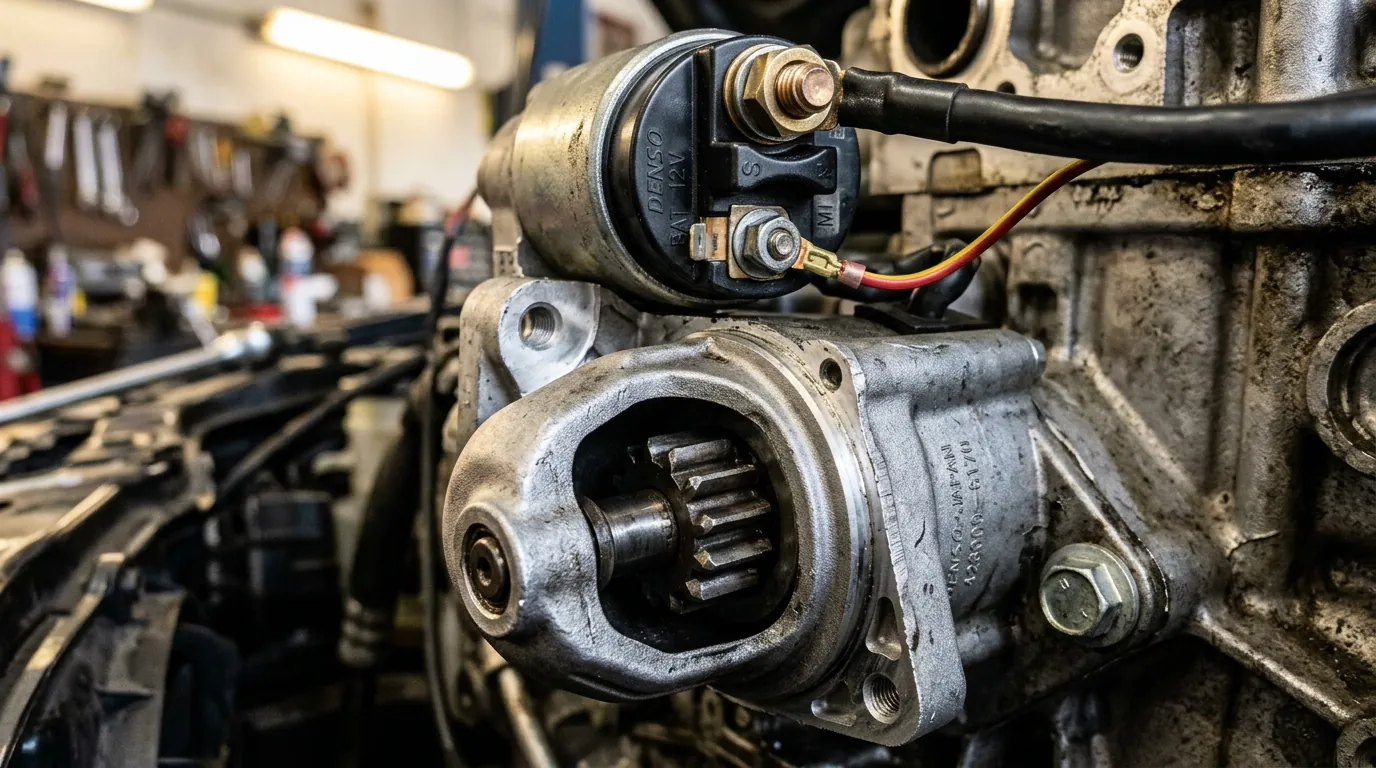
Cheapest and Most Expensive Starters
Five cheapest models
| Model | Median | Why It's Cheap |
|---|---|---|
| Toyota 4Runner | $60 | Long production run with a shared starter across generations, enormous salvage supply, famously durable units |
| Toyota Camry | $71 | Highest-volume sedan in the country, standardized four-cylinder starter, abundant stock |
| Nissan Sentra | $72 | Small economy-car starter, low torque requirement, deep salvage supply |
| Mazda 3 | $75 | Compact application, high production volume, no stop-start complexity on most years |
| Dodge Charger | $75 | Shared Chrysler LX platform starter across Charger, Challenger, and 300 |
Five most expensive models
| Model | Median | Why It's Expensive |
|---|---|---|
| Chevy Traverse | $147 | Large V6 crossover with a starter mounted under the intake on some years, limited interchange, strong replacement demand |
| Kia Optima | $135 | Newer platform with stop-start-capable units on later trims, thinner salvage supply |
| Mercedes C-Class | $134 | OEM-specific unit, stop-start duty cycle, higher parts pricing across the platform |
| BMW X5 | $131 | Stop-start-rated starter built for far higher cycle counts, expensive to replace new |
| Ford Mustang | $126 | Performance V8 applications with higher-torque gear-reduction starters, strong enthusiast demand |
Start-stop technology. This is the biggest one and it's getting bigger. Vehicles with automatic engine stop-start use a starter engineered for hundreds of thousands of cycles instead of tens of thousands: reinforced brushes, upgraded solenoid contacts, and often a tandem-solenoid design that can re-engage a still-spinning flywheel. These are genuinely different parts, they cost far more new, and they are not interchangeable with the standard unit even on the same engine. The Kia Optima, Mercedes C-Class, and BMW X5 all reflect this.
Salvage supply, not part cost. The Chevy Traverse starter isn't an exotic piece of hardware. It's expensive used because the vehicles are still on the road in numbers, the starter is a common failure point, and yards see steady demand against modest supply. Price here reflects the market, not the metal.
Installation difficulty leaking into part price. On applications where the starter sits under the intake manifold or requires dropping a subframe, replacement demand concentrates at the yard rather than the parts store, because owners who are already paying for four hours of labor want an OEM unit. Yards notice and price accordingly.
What's absent is just as telling: there's no scrap floor. Unlike radiators, where aluminum content sets a hard minimum, a starter's copper and steel content is worth only a few dollars. Nothing stops a yard from pricing one at $25 to clear shelf space, which is exactly why the cheap end goes as low as it does.
Where to Buy a Used Starter
Used starters come from three channels, and the price difference between them is larger than the difference between condition grades.
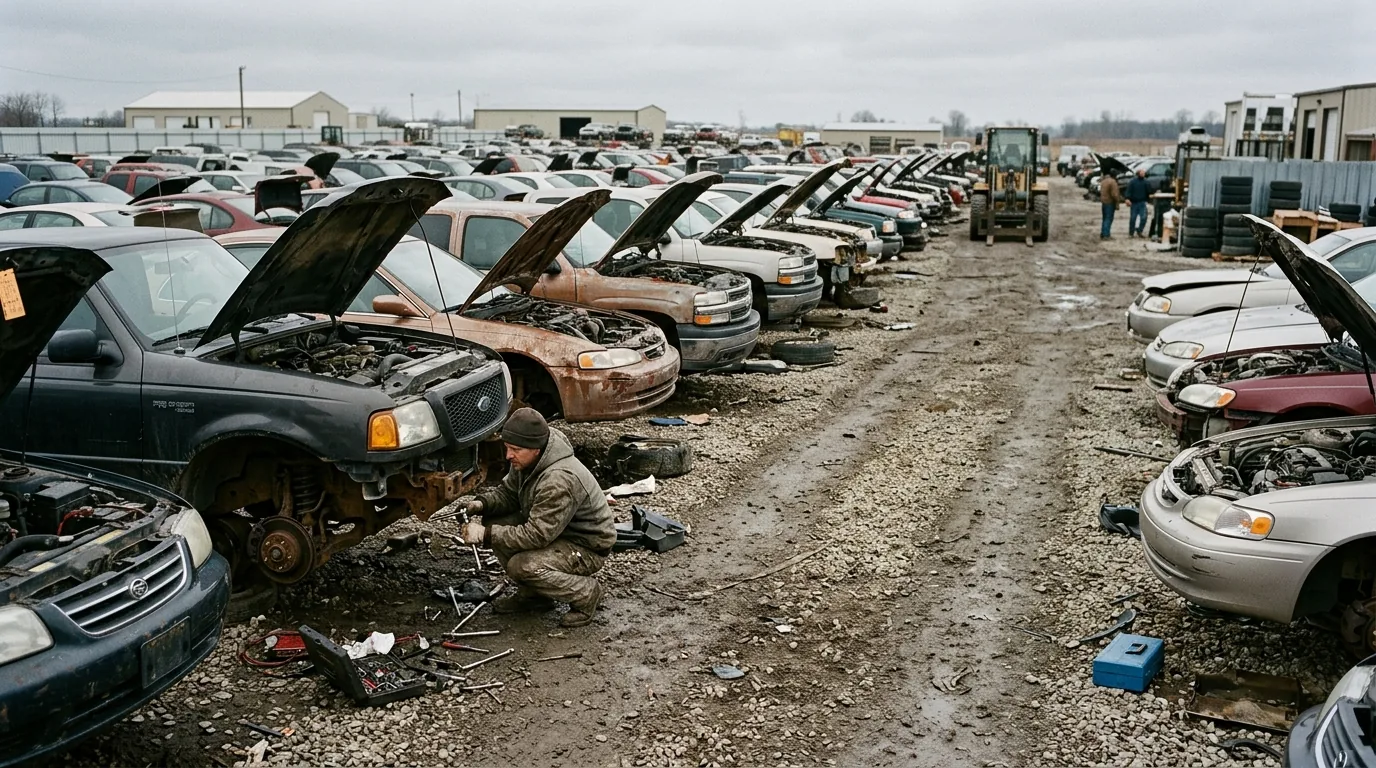
Self-service junkyards (Pull-A-Part, LKQ Pick Your Part, U-Pull-It) are the cheapest option by a wide margin. Most chains price starters at a flat rate regardless of vehicle, commonly $25 to $45, which is well under half the $91 full-service median. This is the single best reason to buy a starter used rather than reman.
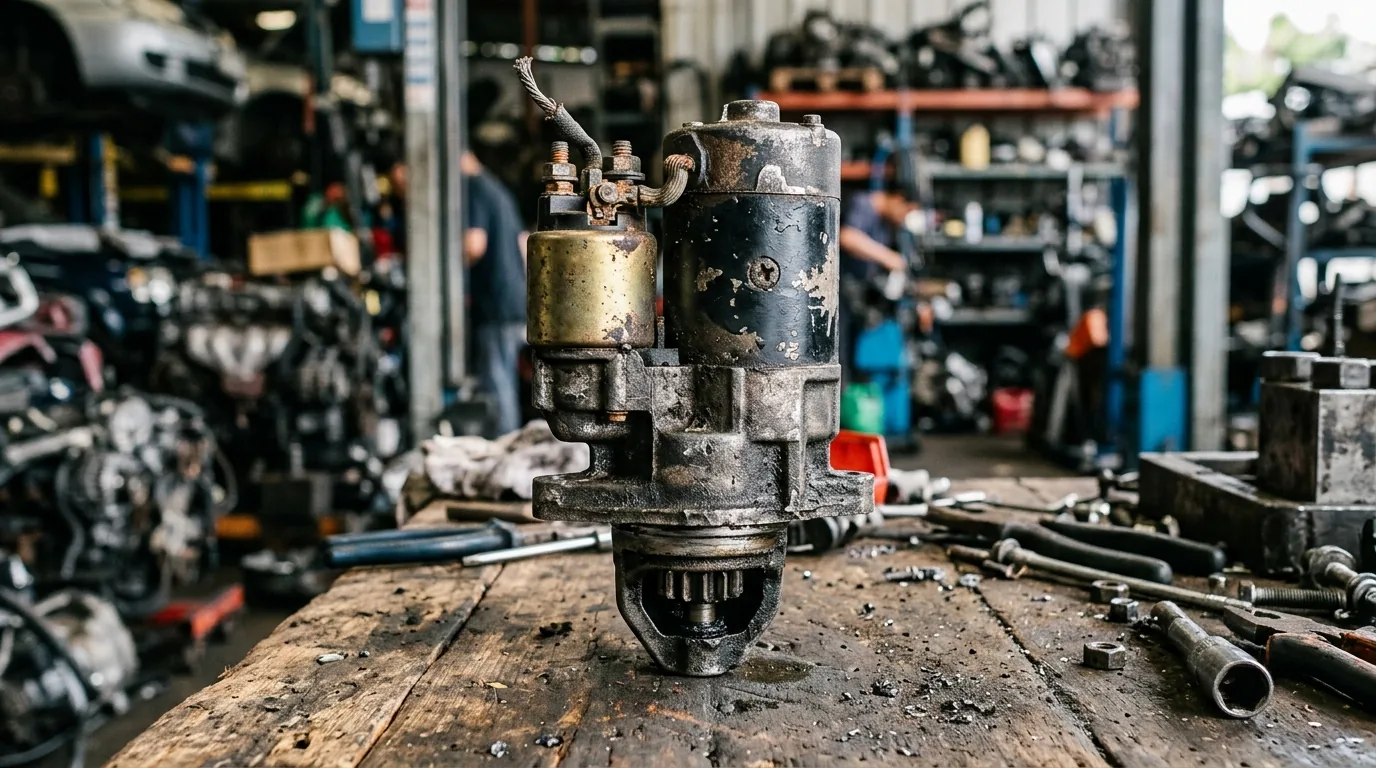
The catch is labor and risk. Pulling a starter means getting under the vehicle, disconnecting the battery, removing heat shields, and often working around the exhaust or a suspension crossmember. On easy applications it's fifteen minutes; on transverse V6 layouts it can be well over an hour on the ground. You also can't test in the yard, so you're buying blind on the one thing that matters. Inspect the drive gear teeth for chipping, check that the pinion moves freely on the shaft, and look for a housing that's been soaked in oil from a leaking rear main; heat plus oil kills starters.
For chain-by-chain pricing and what to expect at the counter, read our junkyard starter price guide.
Full-service salvage yards pull, clean, and usually bench-test the unit before it hits the shelf. This is where the bulk of our 23,667 listings originate, and the $91 median reflects this channel. Most offer 30 to 90 day warranties. On a starter, a bench test is genuinely valuable; it's a fast, definitive test, and a yard that performs one has removed almost all of your risk. If the counter tells you the unit was tested, the premium over self-service is well spent.
Online recyclers (Car-Part.com, eBay Motors) offer the deepest selection, which matters for low-volume or older applications your local yards don't stock. Starters ship well; they're compact, dense, and hard to damage in transit, so shipping runs a modest $12 to $25 and packing complaints are rare compared to bulkier parts. The tradeoff is that you're trusting a listing rather than a bench test, so buy only from sellers with a stated return window.
Whichever channel you use, confirm the part number before buying. Starters vary within the same model year by engine option, transmission type, and whether the vehicle has stop-start. A physically identical-looking unit can have a different tooth count, a different mounting bolt pattern, or a solenoid wired for a different control strategy. Your VIN will resolve which variant your vehicle uses.
Used vs Remanufactured vs New
This is the section that matters most, and for starters the answer is different from most other salvage parts.
| Factor | Used (Salvage) | Remanufactured | New OEM |
|---|---|---|---|
| Price range | $60–$147 | $90–$180 | $200–$500 |
| Median price | $91 | ~$130 | ~$300 |
| Warranty | 30–90 days | 1 year to lifetime | 1–2 years |
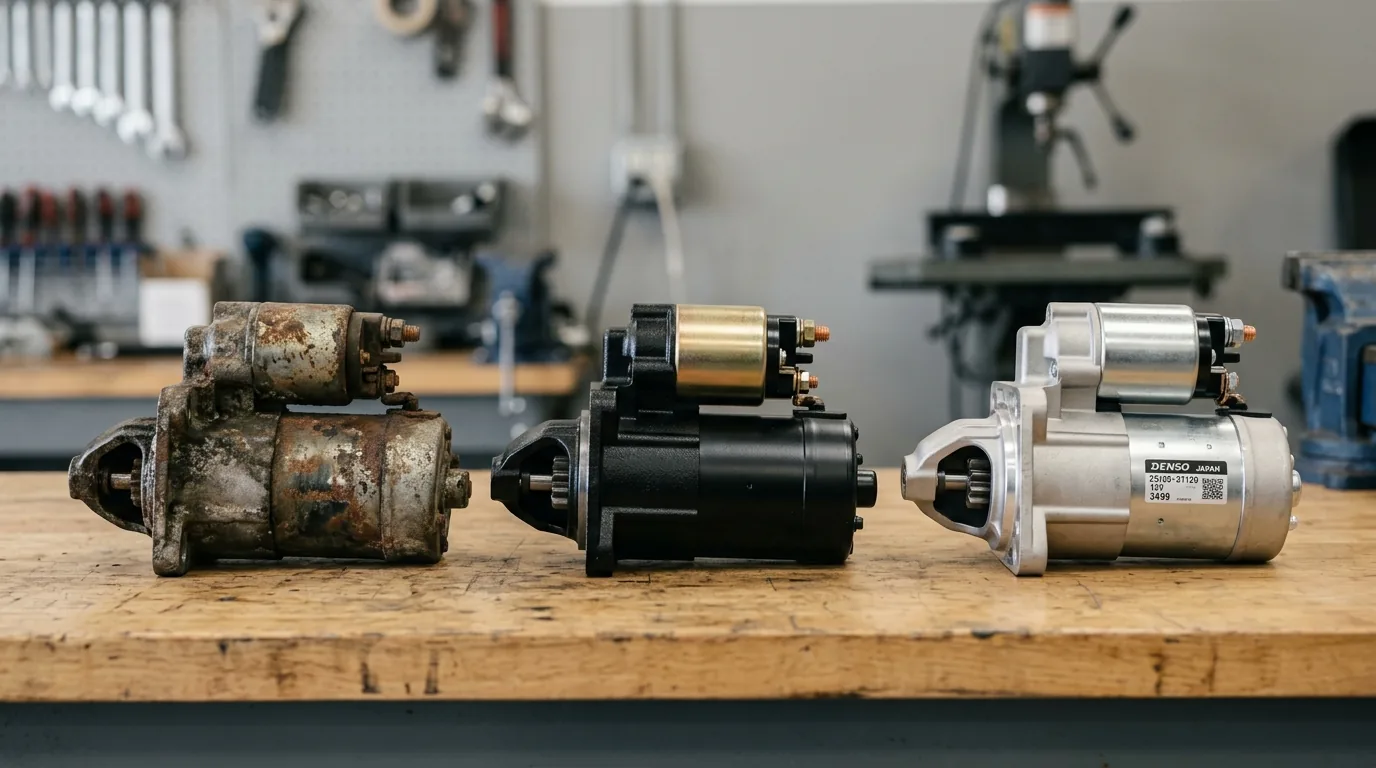
| Expected life | 60k–100k miles | 100k+ miles | 150k+ miles |
| Fit certainty | Exact, if part number matches | Exact | Exact |
| Lead time | Same-day at yards | Same-day at most parts stores | 1–5 days |
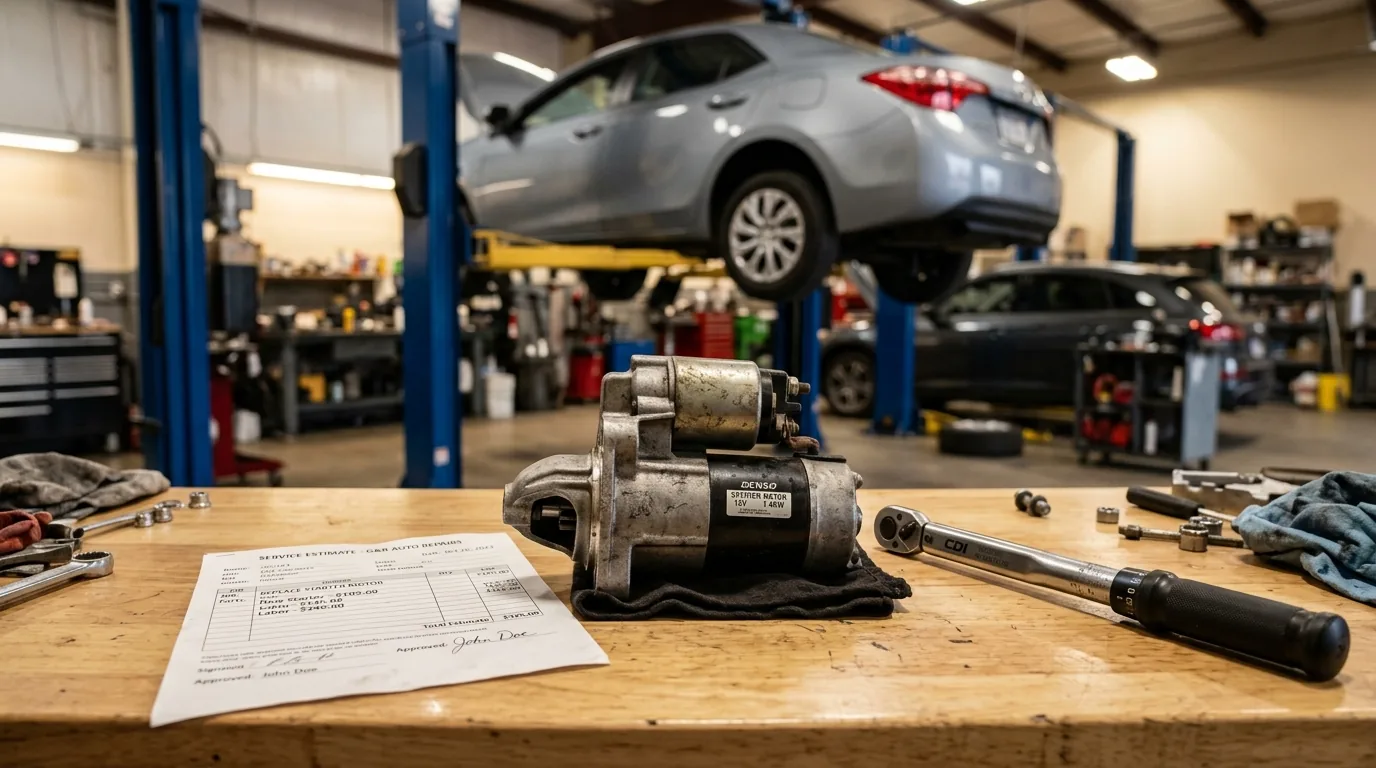
That $39 delta has to be weighed against labor. Starter replacement runs $90 to $350 in labor depending on how buried the unit is. If the used starter fails in eight months, you pay that labor again, and it exceeds the part cost either way. On an easy application you might do the job yourself and shrug it off. On a Traverse or a transverse V6 where the intake comes off, a failed part is a genuinely expensive mistake.
The reman process is also unusually good for this specific part. Remanufacturing a starter means replacing exactly the components that wear: brushes, bushings, the solenoid contacts, and the drive. What remains is a cast housing and field windings that don't wear out. A reman starter is closer to new than a reman transmission or engine is, which is why the warranties are so generous.
For the full side-by-side including warranty economics, read our used vs remanufactured starter comparison.
When used genuinely makes sense:
- You're at a self-service yard. At $25 to $45 flat rate, used beats everything on price. This is the strongest case by far.
- You need OEM specifically. On stop-start applications and some German platforms, the aftermarket reman may not match the original duty cycle. A used OEM unit will.
- You need it today and no store stocks your application. Yards have it on the shelf.
- You're doing the labor yourself on an easy application. If swapping it back out costs you thirty minutes rather than $300, the warranty matters much less.
- The vehicle is short-term. A 60,000-mile horizon is plenty if you're selling in the spring.
When remanufactured is the better call:
- A shop is doing the work. Labor dominates the bill. Pay the extra $40 for a warranty that covers the part when it fails.
- The starter is hard to reach. Anything requiring intake removal, subframe drops, or more than two hours of labor.
- The vehicle is a keeper. Lifetime-warranty reman units are one of the best value propositions in the parts aisle.
One thing to confirm before you buy anything: make sure the starter is actually the failed component. A no-crank condition traces to a dead battery, corroded terminals, a bad ground strap, a failed ignition switch, a neutral safety switch, or a relay far more often than to the starter itself, and none of those are fixed by a new starter. Have the battery load-tested and the grounds checked first — any ASE-certified technician can run these tests in minutes. Our guide to starter replacement cost covers the full diagnostic sequence and what shops charge for each step.
Browse all 51 models with real pricing data on our starter price index, or jump straight to your vehicle's model page for its full price distribution.