Starter price snapshot
- Low
- $50
- Average
- $95
- High
- $210
Part price guide
Saurabh Kumar
Co-Founder & CTO, Part Price Guide
Built the pricing pipeline that collects and normalizes used OEM part listings from salvage yards and online marketplaces across the US.
Ambika Sharma
Co-Founder & COO, Part Price Guide
12 years of project management and technical operations experience. Reviews price guides for sample size, fitment accuracy, and data freshness.
Part overview
Across 175 vehicle models, the typical used starter lists for $87, with model-level medians ranging from $50 to $210. Based on 127,261 priced salvage yard listings tracked by PartPriceGuide.
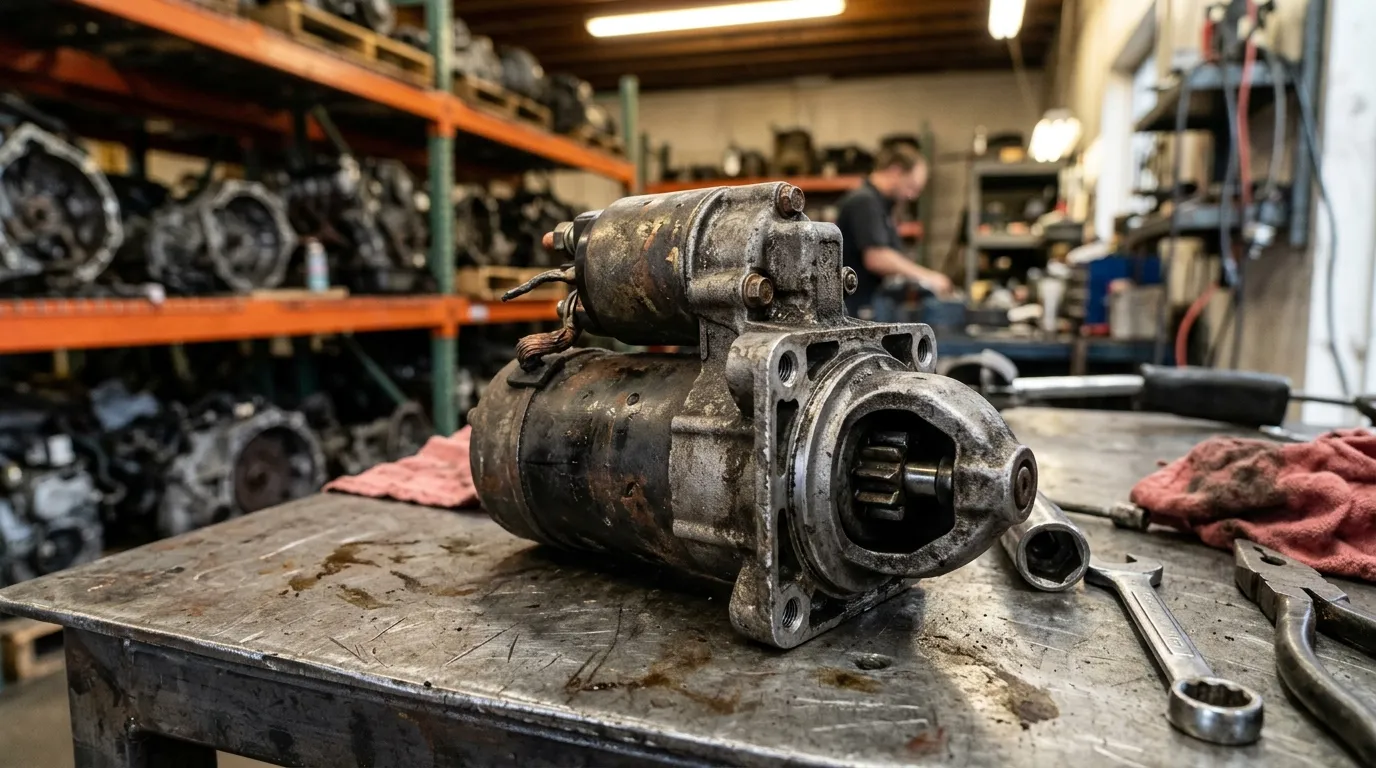
The starter motor is an electric motor that cranks the engine when the driver turns the key or presses the start button.
Common failure symptoms include a single loud click when turning the key, grinding noises, or complete non-cranking despite a fully charged battery.
A used starter costs $50 to $210, with a median asking price of $87. Based on price data across 175 vehicle-specific guides. Prices exclude shipping, core charges, and installation.
Condition comparison
| Grade | Price range | Relative range | Listings |
|---|---|---|---|
| Grade AClean / low wear | $50–$206 | 175 | |
| Grade BStandard used | $50–$216 | 173 | |
| Grade CVisible wear | $25–$200 | 117 | |
| Grade XUngraded | $35–$213 | 175 |
Median by grade
Median asking price by seller-reported condition grade · $50–$210 overall range
Vehicle-specific reference
175 of 184 guides currently priced
Price data updating
Price data updating
Price data updating
Price data updating
Price data updating
Price data updating
Price data updating
Price data updating
Price data updating
Compare by vehicle
Keep comparing
Common questions
Across 175 vehicle-specific guides with current pricing, used starter guide medians run from $50 to $210, with a typical median of $87. Condition grade, mileage, and fitment move the price within that range.
Usually, yes. Buying a used starter from a salvage yard or auto recycler typically costs a fraction of the new starter replacement cost at a dealership. Compare the grade-level medians above against any replacement quote you've received, and remember our figures exclude shipping and installation labor.
Salvage yards, junkyards, pick-and-pull lots, and online used parts marketplaces all sell used starters. Our index tracks asking prices nationally, so you can benchmark a local quote against the market range before you buy.
Expect to pay toward the upper half of the $50–$210 range for a grade-A starter with low mileage. Check the grade table above for the current grade-level medians, and confirm whether shipping and any core charge are included in the quote.
They can be — condition grade is the key. Grade A parts come off low-mileage vehicles with little to no damage, grade B is average, and grade C or ungraded parts are the gamble. Buy grade A or B from a yard that offers a return window or warranty, and confirm the mileage of the donor vehicle before paying. The grade-level medians above show what each tier should cost.
Yes. A starter motor is another name for a starter. The prices on this page apply regardless of what it's called in your region or by your mechanic.
The starter solenoid is a small electromagnetic switch mounted on (or built into) the starter motor that engages the starter drive gear and completes the high-current circuit when you turn the key. If your starter clicks but doesn't turn the engine over, the solenoid alone may be at fault and can sometimes be replaced separately. But if the starter motor itself is worn, drags, or spins weakly, you need the whole starter assembly — a used solenoid alone won't fix a bad motor.
Purchasing a used OEM starter motor provides an affordable solution when dealing with sudden starting issues, particularly on older vehicles. Original equipment starters feature heavy-duty internal armatures and solenoids that outlast low-cost aftermarket replacement units. Buying a tested unit from a reliable auto recycler ensures dependable engine cranking.
Perform a quick bench test using jumper cables and a 12-volt battery to verify that the starter solenoid extends and the pinion gear spins rapidly. Listen for smooth motor rotation without harsh grinding, clunking, or slow cranking sounds. Inspect the starter drive gear teeth for chipping or excessive wear pattern rounding.
A failing starter motor typically produces a single loud click or continuous spinning sound without turning the engine over when you turn the key. Intermittent starting failures, slow engine cranking, or dashboard lights staying bright while the starter refuses to engage also point to starter issues. Replacing a worn starter restores reliable key-turn engine ignition.
Starters vary by engine displacement, transmission type (manual versus automatic), and fly-wheel ring gear tooth counts. Check the part number stamped on the starter casing and verify whether your engine uses a top-mount or bottom-mount starter position. Matching your VIN through a salvage yard inventory search ensures exact electrical and mounting compatibility.
Difficulty depends on engine bay layout; while some starters are easily accessible from underneath the car, others require removing intake manifolds. The job involves disconnecting the battery, removing heavy power cables, and unbolting the starter mounting flange. Basic mechanical skills and proper jack stand safety precautions are required for installation.
Replacing the complete used starter assembly is usually more practical and cost-effective than replacing just the solenoid on a worn unit. Complete assemblies include a pre-tested solenoid, internal planetary gears, and fresh motor brushes working as a unified system. Swapping the entire unit eliminates multiple failure points and saves significant repair time.