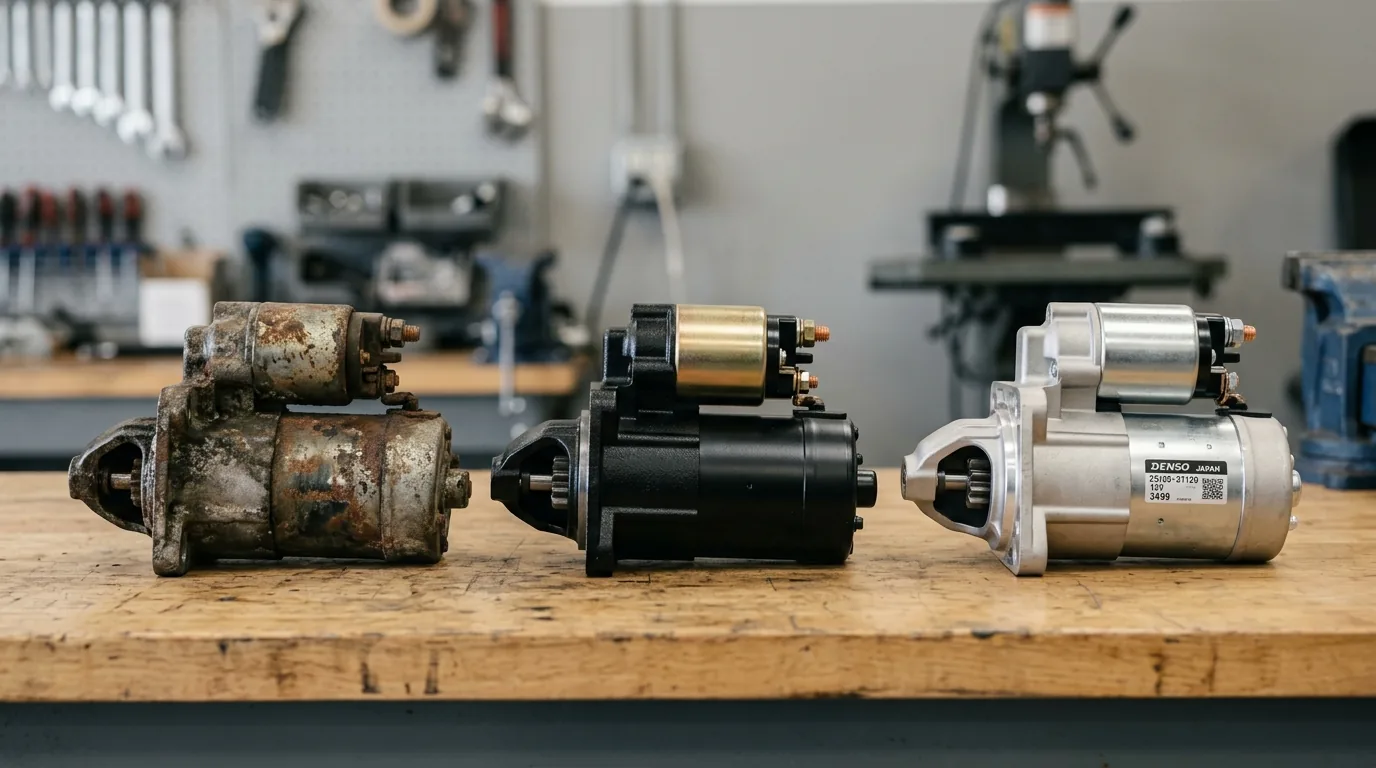
Used starters cost $91 median across 23,667 salvage yard listings, while remanufactured units run $80 to $200 at chain parts stores. That gap is only $20 to $50 on most applications, which means the usual "used saves you a fortune" logic doesn't apply here, and a remanufactured starter with a multi-year warranty is often the smarter buy.
This is genuinely different from engines, transmissions, and transfer cases, where used parts save 50% to 70% and the math strongly favors salvage. Starters are small, simple, mass-produced commodities. Remanufacturing one is cheap, so the reman price sits right on top of the used price.
- Used starter: $91 median ($60–$147 by model) from 23,667 salvage yard listings, 30–90 day warranty
- Remanufactured: $80–$200 at AutoZone, O'Reilly, Advance, and NAPA, 1–3 year warranty, lifetime at some stores
- New OEM: $130–$350, longest life but rarely worth the premium on an older vehicle
- The price gap is $20–$50, not hundreds, so the reman warranty usually wins on value
- Used only clearly wins at self-pull yards ($25–$50 pulled yourself) or on a beater you are not keeping
Price Comparison
| Factor | Used | Remanufactured | New OEM |
|---|---|---|---|
| Typical cost | $91 median | $80–$200 | $130–$350 |
| Price range | $60–$147 by model | $80–$200 + core | $130–$350 |
| Warranty | 30–90 days | 1–3 years (lifetime at some stores) | 1–2 years |
| Availability | Local yard stock | In stock at most parts stores | Order or dealer stock |
| Lead time | Same day if in stock | Same day, often on the shelf | Same day to 3 days |
| Core charge | None | $20–$60 refundable | $20–$60 refundable |
The gap widens slightly at the top end. A diesel truck starter might be $147 used and $190 reman, still under $50 apart. Even in the worst case, the reman premium on a starter is smaller than the cost of driving back to the yard once. For the full model-by-model used pricing behind that $91 median, see our used starter cost breakdown.
*Used pricing source: PartPriceGuide.com analysis of 23,667 salvage yard listings, August 2026.*
Why the Gap Is So Small
Three things compress starter pricing in a way that doesn't happen with larger drivetrain parts.
Starters are commodity parts. A handful of manufacturers (Denso, Bosch, Mitsubishi Electric, Valeo, Hitachi) supply nearly every starter on the road. Applications share housings, solenoids, and drive assemblies across dozens of vehicle platforms. High volume drives the unit cost down at every stage, new and reman alike.
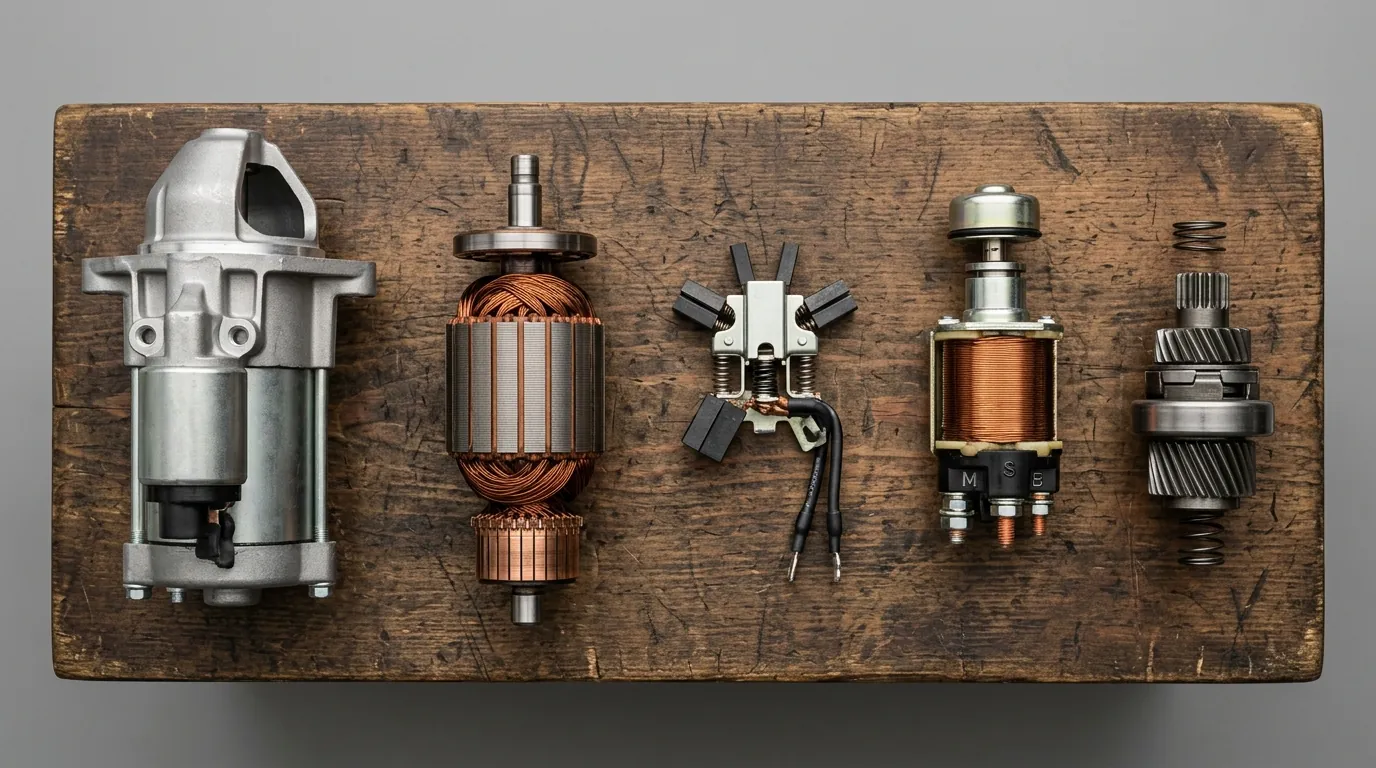
Remanufacturing a starter is genuinely cheap. The process follows APRA remanufacturing standards: disassemble, clean the housing, replace brushes and bushings, resurface or replace the commutator, install a new solenoid contact kit and drive gear, reassemble, bench test. It takes well under an hour on an assembly line and the replacement parts are inexpensive. Compare that to a transmission, where remanufacturing means teardown, machining, dozens of new hard parts, and dyno testing, costs that show up as a 3x price premium over used.
The core charge subsidizes the reman price. When you buy a remanufactured starter, you hand back your old one and the remanufacturer gets free raw material. That core feedstock is why a reman starter can be priced within $20 of a used one and still be profitable.
Salvage yard pricing has a floor. Pulling a starter takes labor, and yards price small parts to cover handling, inventory, and counter time regardless of the part's intrinsic value. That floor sits around $60 to $80 at most counter-service yards, right where reman pricing starts.
Warranty Comparison
This is where the two options genuinely diverge.
| Source | Warranty Length | What's Covered | What's Not |
|---|---|---|---|
| Self-pull yard | 0–30 days, often none | Sometimes a store credit exchange | Everything else |
| Counter-service yard | 30–90 days | Defective part only | Labor, shipping, diagnosis |
| Remanufactured (parts store) | 1–3 years, lifetime on premium lines | Free replacement part, no receipt hunting | Labor in most cases |
| New OEM (dealer) | 1–2 years | Part, sometimes labor if dealer-installed | Abuse, wiring faults |
A remanufactured starter's 1-to-3-year warranty covers that scenario, and the lifetime warranty offered on premium reman lines at most chain stores covers it indefinitely. Walk in with the failed unit, walk out with a replacement.
The catch is that neither warranty covers labor. If a shop charges you $150 to $250 to install a starter and it fails at month ten, the free replacement part still leaves you paying labor again. That's exactly the risk the longer warranty is designed to reduce, and on a $20 to $50 price difference, reducing that risk is cheap insurance. Our starter replacement cost breakdown shows how labor dominates the bill on most vehicles.
When Used Wins
Used starters aren't a bad buy. They're a situational one. Three cases where used is the right call:
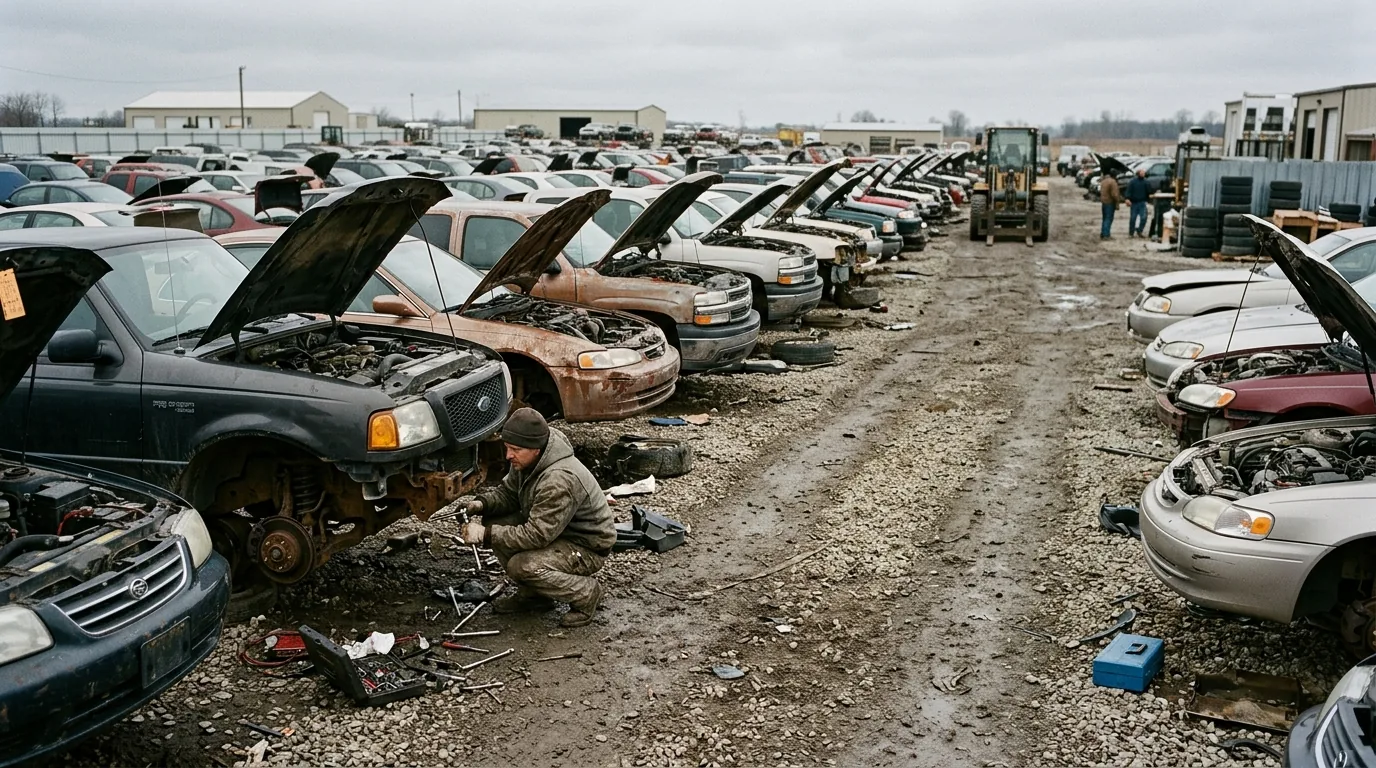
You're pulling it yourself at a self-service yard. Self-pull yards price starters at $25 to $50 flat, regardless of vehicle. At that price the gap over reman is real money; you're paying a third to half of what the parts store charges. A starter is also one of the easier self-pull parts: two or three bolts and two electrical connections on most vehicles, usually reachable without dropping anything. See our junkyard starter pricing guide for what yards charge and how to test a unit before you pay for it.
The vehicle is a beater you're not keeping. If the car is worth $2,000 and you plan to drive it another year, a three-year warranty has no value to you. Buy the cheapest working starter and move on.
You need a specific OEM part number. Some applications (certain European models, hybrids with integrated starter-generators, older or low-volume vehicles) have poor or nonexistent reman coverage. A salvage unit may be the only option short of a dealer part at three to five times the price.
You need it right now and the yard has it. If the parts store has to order the reman unit and the yard has one on the shelf, same-day availability can be worth more than warranty length. This is the weakest of the four cases, though, most chain stores stock common reman starters.
When Remanufactured Wins
For most people in most situations, remanufactured is the correct answer for a starter. The case is simple:
The price difference is small. $20 to $50 over a counter-service used starter. On a part that costs under $200 either way, that's a rounding error against the labor cost of the job.
The warranty is 10 to 30 times longer. Ninety days versus three years, or versus lifetime at stores that offer it. There's no other common car part where you can buy that much warranty coverage for $30.
The failure modes are already addressed. Starters fail in predictable ways: worn brushes, pitted solenoid contacts, a worn drive gear, tired bushings. Remanufacturing replaces every one of those components. A used starter has an unknown amount of brush and contact life remaining, and no way to check it from the outside.
Returns are frictionless. A parts store return takes ten minutes at a counter that's open seven days a week. A salvage yard return means a drive back out, a receipt hunt, and a stock check to see whether they even have another one.
Labor makes the part cost secondary. If you're paying a shop, installation runs $150 to $250 on most vehicles, more than the part itself. Our starter replacement cost breakdown walks through the labor side by vehicle type. When labor dominates the bill, optimizing the part price by $30 while accepting a much higher chance of doing the job twice is a bad trade.
When New Makes Sense
New OEM starters at $130 to $350 are the right choice in a narrow set of cases:
- The vehicle is under warranty or nearly new. Installing a reman part can complicate a powertrain warranty claim on a late-model vehicle.
- Performance or high-compression engines. Modified engines with raised compression need a starter with full torque capacity and no accumulated wear. This is also true of some diesels.
- Fleet or commercial vehicles. When downtime costs more per day than the part premium, buying the longest-life option is straightforward math.
- Known reman quality problems on your specific application. A few platforms have well-documented reman failure rates, worth ten minutes on a model-specific forum before you buy.
- Start-stop systems. Vehicles with automatic engine start-stop cycle the starter far more often than a conventional car, and they use heavy-duty starters. Reman coverage for these is thinner and quality varies more.
Outside of those, a new OEM starter on a vehicle with 120,000 miles is money spent on longevity the rest of the car won't use.
For model-specific used pricing across thousands of salvage yard listings, check the starter price index. For the full picture on what used starters cost by vehicle and grade, see our used starter cost guide.