Before you hand over cash for a junkyard wheel, check five things in this order: bolt pattern, hub bore, cracks, bends, and bead seat corrosion. The first two decide whether the wheel fits your car at all, and the last three decide whether it's safe on any car.
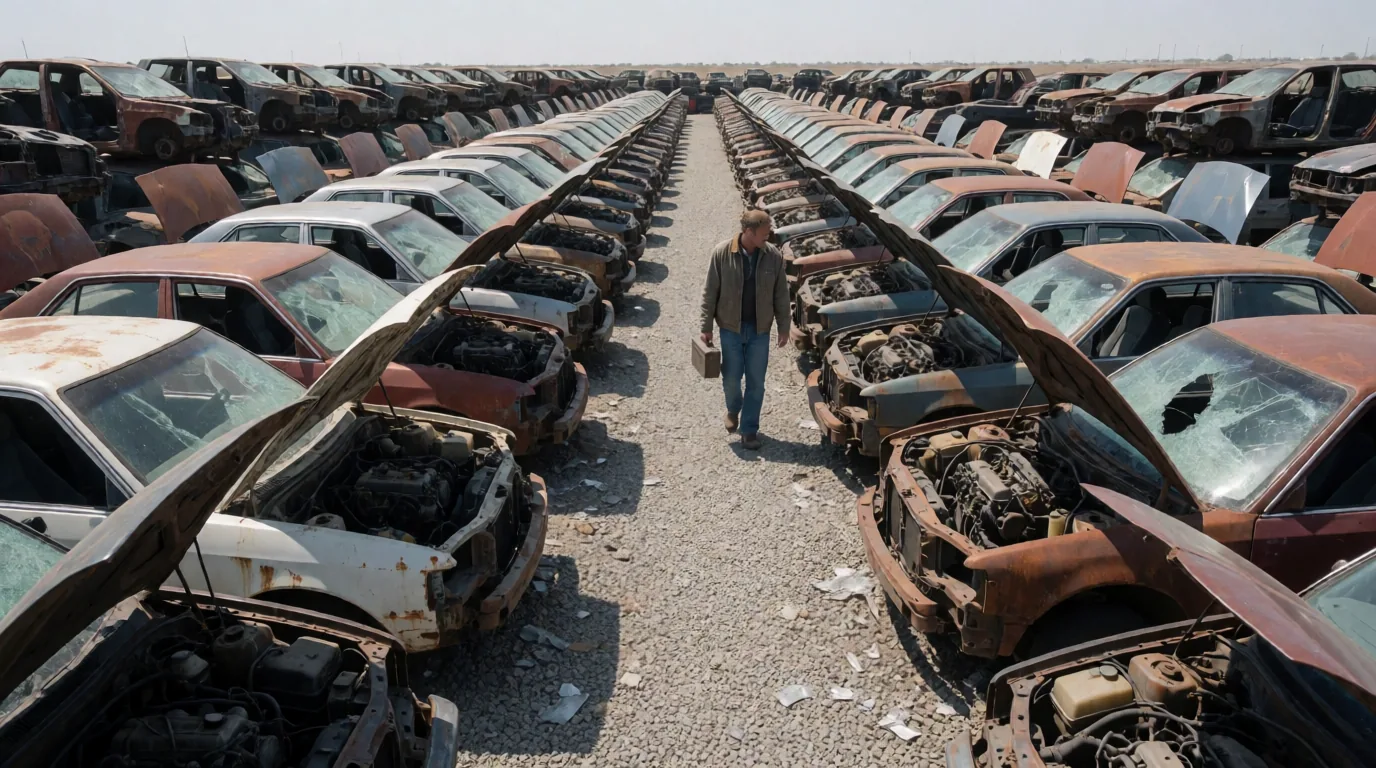
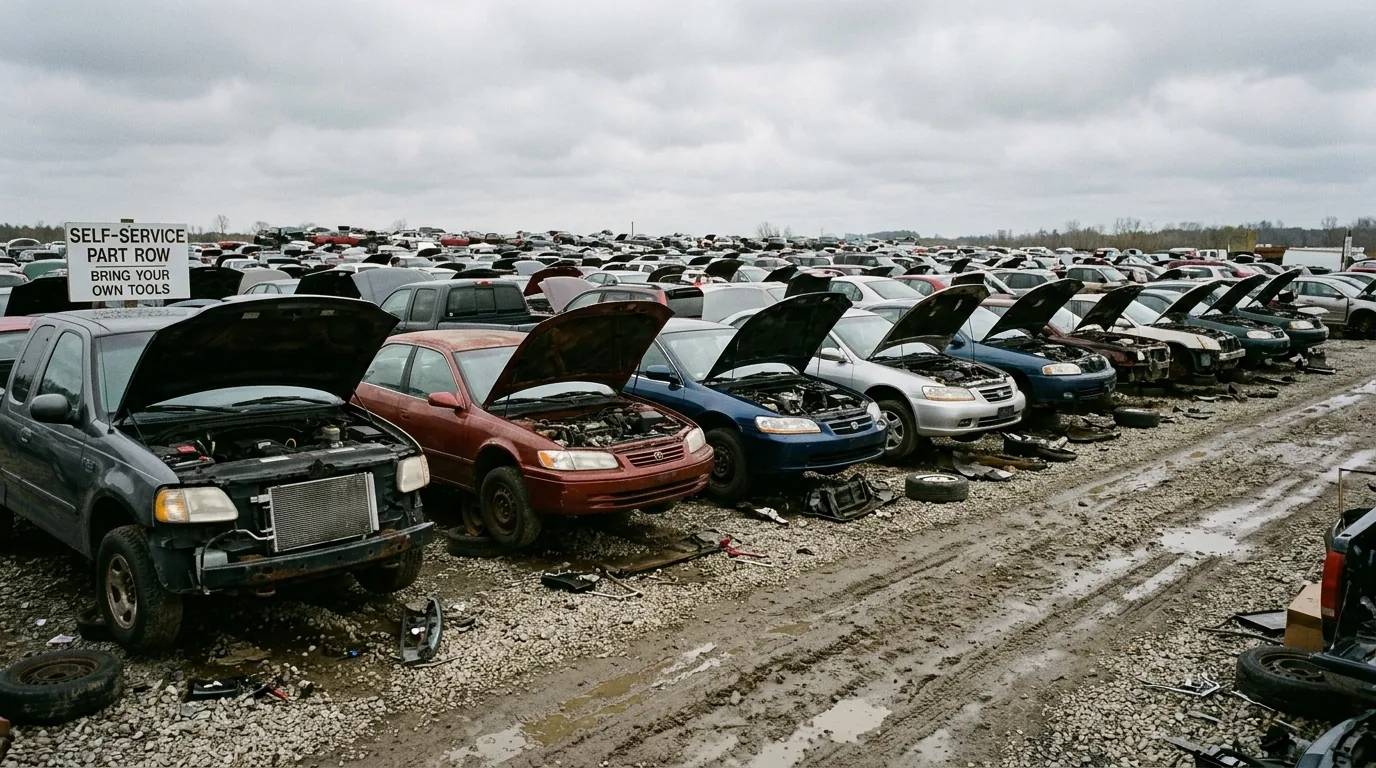
That order matters because it saves you time. A yard worker isn't going to let you mount a wheel on a hub to test it, so you're inspecting by hand on a gravel lot with whatever you brought in your pocket. Confirm the numbers first, then spend your effort on the condition check.
- Fitment comes first: bolt pattern and hub bore rule out most wheels in under a minute, before you inspect anything else
- Cracks hide on the inside: the inner barrel, spoke-to-hub junctions, and lug hole area are where they start, not the face you see from the curb
- A slow leak with no nail in the tire is the classic symptom of a cracked or corroded rim
- Curb rash is cosmetic until it reaches the bead seat, folds metal, or leaves a flat spot on the lip
- Walk away from welds: a repair bead means the wheel already failed once, and welding alters the heat treatment of cast aluminum
Check Fitment Before You Check Condition
Four specifications decide whether a wheel physically fits your car, and getting any one of them wrong means the wheel is scrap to you no matter how clean it looks. Sort these out before you inspect for damage.
Bolt pattern
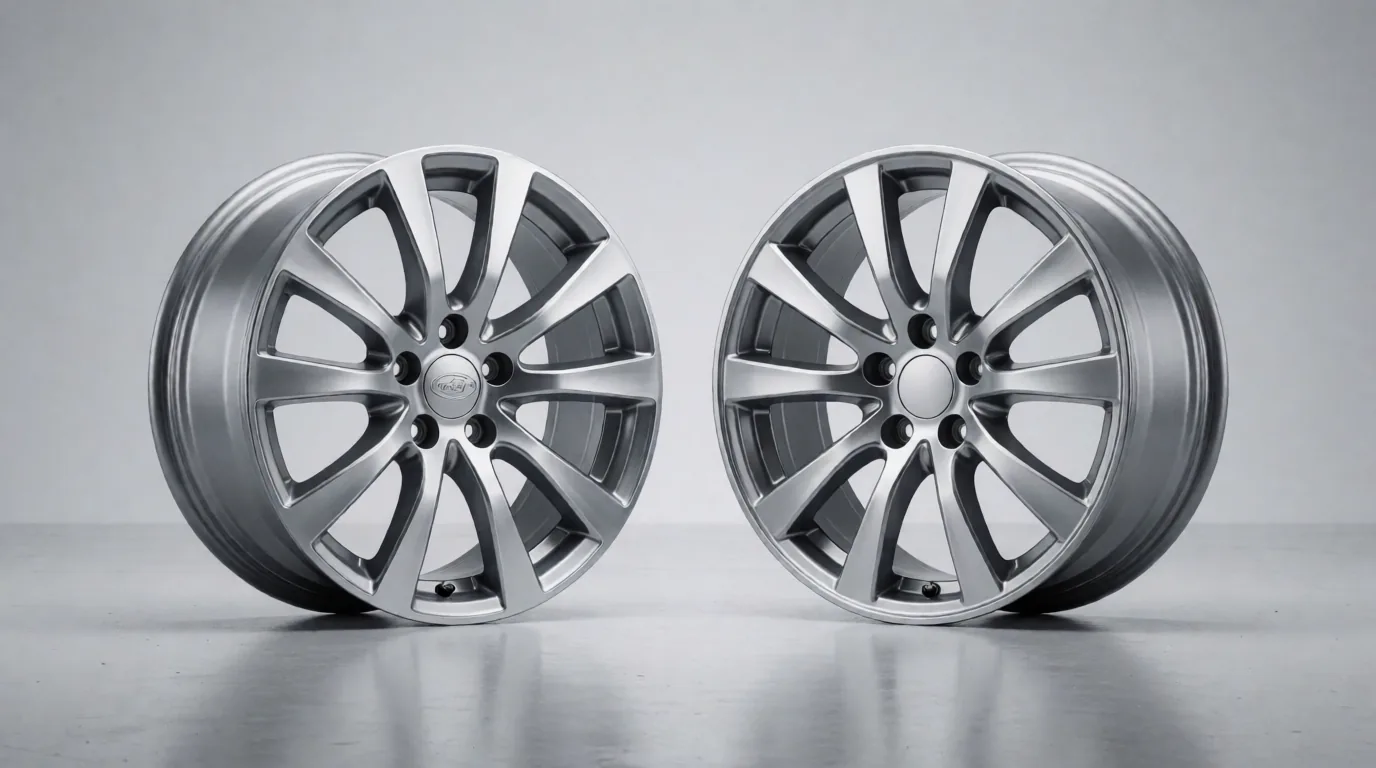
Bolt pattern, also written as PCD or bolt circle, is the number of lug holes and the diameter of the circle they sit on. It's written as something like 5x114.3, meaning five lugs on a 114.3mm circle. Four and six lug patterns are measured straight across from center to center of opposing holes. Five lug patterns aren't, because there's no hole directly opposite another one, which is why people get this wrong so often.
For a five lug wheel, measure from the center of one hole to the outer edge of the hole two positions away, or just carry a bolt pattern gauge. Patterns that differ by a couple of millimeters, like 5x114.3 versus 5x115, look identical on the rack and will not seat correctly. Don't trust the wheel that's on the donor car either, since the previous owner may have installed the wrong thing.
Hub bore
The hub bore is the center hole that slides over the hub flange. If it's smaller than your hub, the wheel won't go on. If it's larger, the wheel is no longer hub-centric, which means the lug nuts alone are carrying the centering job that the hub flange normally does.
An oversized bore isn't automatically a dealbreaker. Hub-centric rings, which are plastic or aluminum spacers that fill the gap, are the standard fix and cost a few dollars. But you need to know the number before you leave, so measure the bore with calipers and write it down.
Offset and width
Offset, marked as ET followed by a number in millimeters, is how far the mounting face sits from the wheel's centerline. It controls where the wheel sits inside the fender well. Get it wrong in one direction and the tire rubs the strut or the inner fender liner. Get it wrong in the other and it rubs the fender lip or sticks past the bodywork.
Width and diameter are usually stamped alongside the offset on the back of the spokes or inside the barrel. A wheel that's an inch wider than stock can still bolt on fine and then rub at full lock.
Lug seat type
This one gets skipped and it shouldn't. Lug seats come in three shapes: conical or tapered, ball or radius, and flat with a shank that passes through a washer. Your existing lug nuts match one of them.
Put a conical nut against a ball seat and the two surfaces touch on a narrow ring instead of the full designed contact area. The joint doesn't clamp properly, the nut works loose, and the seat elongates. If the used wheel's seats don't match your nuts, you need a matching set of nuts, not a shortcut.
How to Check a Used Wheel for Cracks
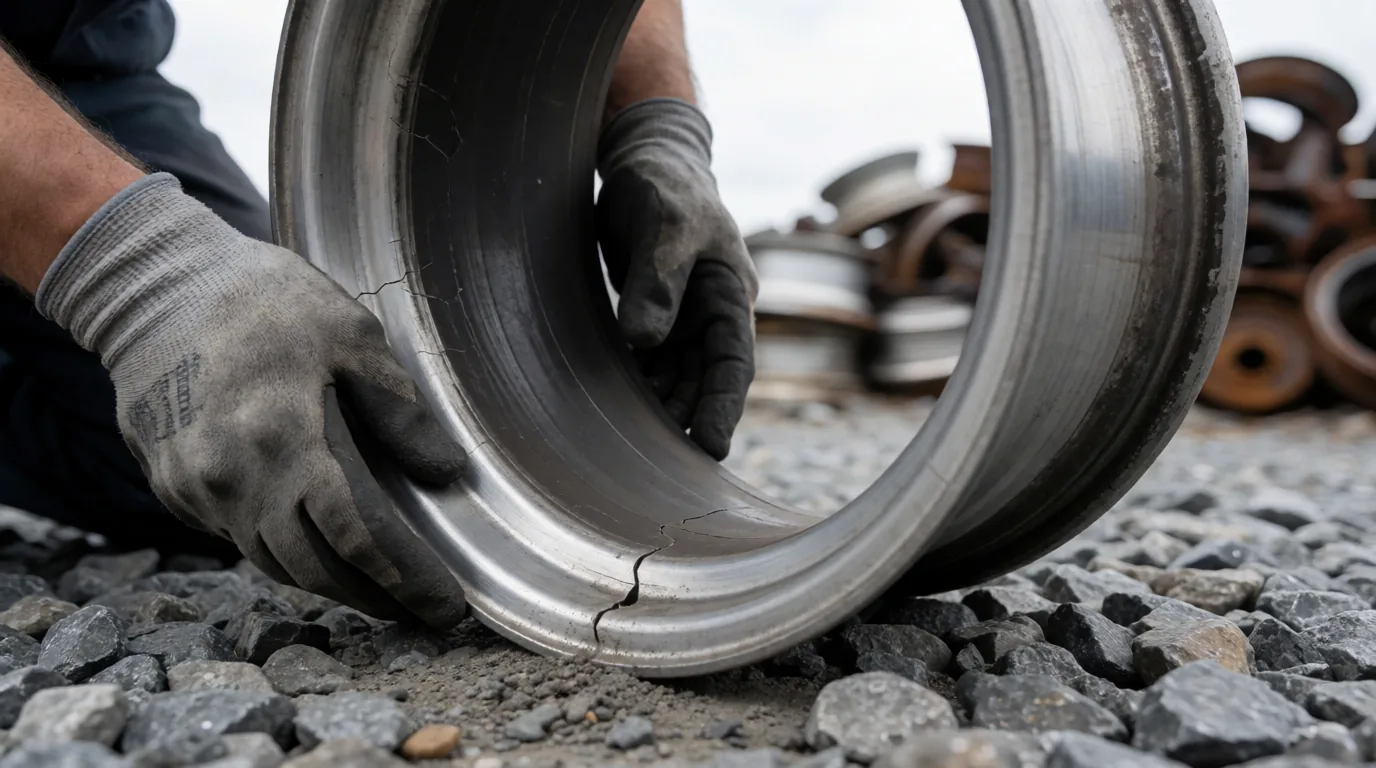
Cracks almost always start on the inside of the wheel, which is exactly where a rack of stacked rims makes them hard to see. Pull the wheel out, stand it up, and look at the face nobody looks at.
Three locations account for most of what you'll find:
The inner barrel and inner lip. This is where a pothole impact concentrates. The inner lip is thinner than the outer lip on many designs and it takes the hit first. Run your fingertips around the full circumference. A crack you can't see will often catch a fingernail.
Spoke-to-hub junctions. Look at the radius where each spoke meets the center hub, on the back side. These junctions carry the cornering loads, and fatigue cracks propagate from the transition radius outward.
Around the lug holes. Cracks radiating out from a lug hole usually mean the wheel was run with loose or overtightened lugs. Check for elongated, no longer round holes at the same time.
Bring a flashlight and a rag. Junkyard wheels are coated in brake dust and road film, and a hairline crack under grime is invisible. Wipe the suspect area clean and look again with light raking across the surface rather than pointing straight at it.
One symptom worth asking about: if the donor car's tire was flat and the tire has no puncture, suspect the rim. Slow leaks with no obvious cause come from cracks and from corrosion on the bead seat far more often than people expect.
The Roll Test for a Bent Rim
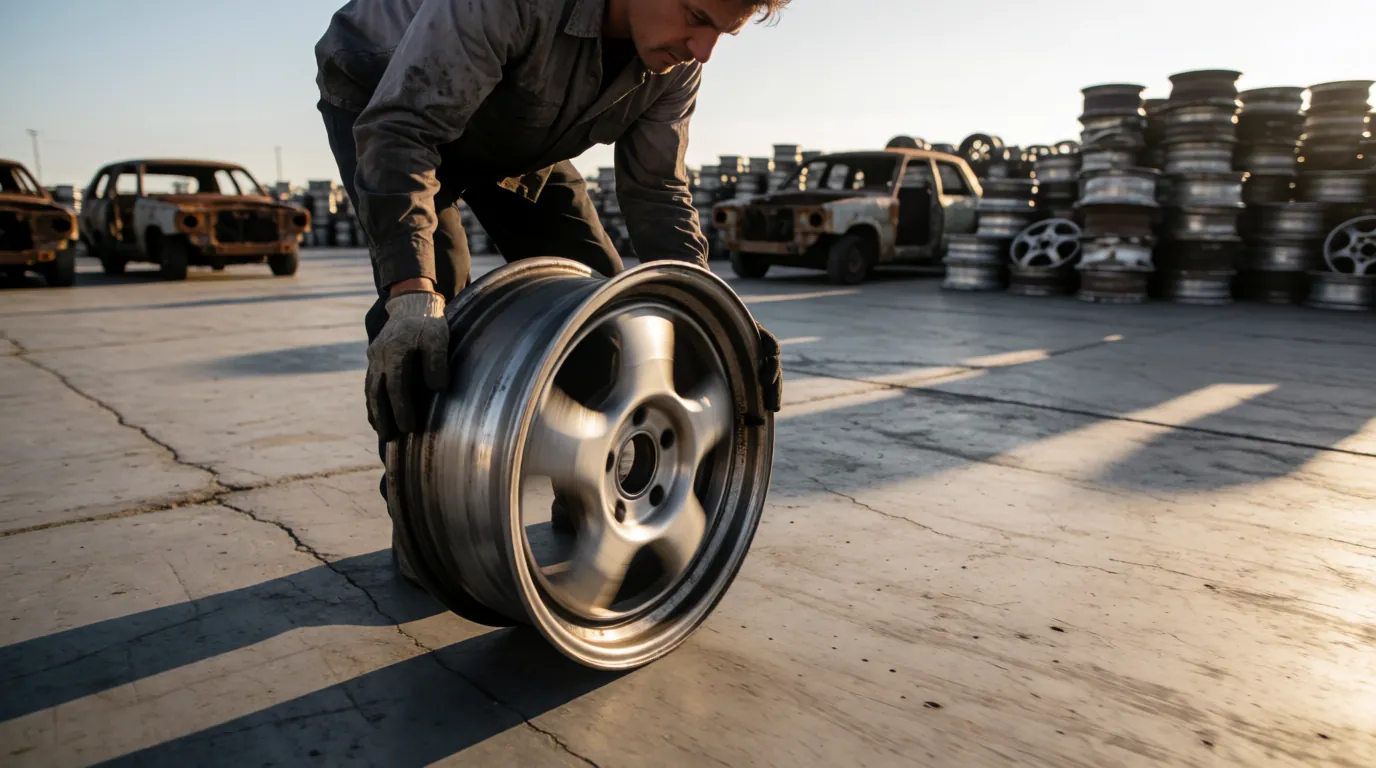
You can find most bends without any tools by rolling the wheel across flat ground and watching it. Stand the wheel up, give it a firm push along a level stretch of pavement, and crouch to watch it travel away from you.
A straight wheel tracks in a line and falls over gradually when it slows. A bent wheel wobbles visibly, hops, or veers consistently to one side. This is a coarse test and it catches the obvious damage, which is most of what matters at a salvage yard.
For a closer check, lay the wheel flat and lay a straightedge across the inner lip, rotating it around the circumference while watching the gap underneath. Do the same on the outer lip. A consistent gap means the lip is true. A gap that opens and closes as you rotate means the lip is out of round.
Bends concentrate on the inner lip because that's the impact side, and because it's hidden, sellers frequently don't know it's there. A bent lip won't hold a tire bead reliably and shows up later as a vibration at highway speed or a tire that loses a few PSI a week.
Curb Rash vs Structural Damage
Curb rash on the outer lip face is a finish problem, and it's the single biggest reason a perfectly good wheel sits cheap at a salvage yard. Aluminum scuffed against concrete looks bad and changes nothing about how the wheel carries load.
It stops being cosmetic in three cases:
The damage wraps onto the bead seat. The bead seat is the ledge inside the lip where the tire seals against the metal. Anything that gouges or deforms that surface causes a leak that no amount of bead sealer fixes permanently. Run a finger over the seat surface; it should be smooth all the way around.
Metal is folded or missing, not scuffed. A scuff removes the finish. An impact folds the lip over or tears material out. Folded metal has already yielded, and straightening it work-hardens the aluminum further.
There's a flat spot. Sight down the lip edge from an angle. A section that's noticeably flattened rather than curved means the wheel took a hard, concentrated hit, and that's the same impact that produces the cracks described above. Inspect that area especially closely.
Heavy rash on the face with a clean bead seat and no flat spots is a bargaining chip, not a reason to walk.
Corrosion, Repairs, and Other Deal Breakers
Weld repairs. Look for a bead of weld on the inner barrel or lip. Welding cast aluminum locally re-heats it and changes the temper in the surrounding zone, so the repaired area no longer has the fatigue properties the wheel was designed and validated with. A weld also tells you the wheel already cracked once, in a spot that was highly stressed enough to crack. Pass on it.
Bead seat corrosion. In regions that salt the roads, aluminum wheels corrode where the steel of the tire bead area and moisture meet, leaving a crusty white oxide on the seat. Light surface oxide cleans up with a wire brush. Pitting deep enough to feel is a chronic slow leak.
Heat damage. A wheel off a car that burned is unusable regardless of appearance, because the aluminum's heat treatment is gone. Discolored paint, scorched valve stem remnants, melted center cap, or soot in the barrel are the giveaways. If the donor car shows fire damage anywhere, skip its wheels.
Stripped or elongated lug holes. Holes that are no longer round, or seats that are galled and shiny, mean the wheel was run loose. The clamping surface is compromised.
Missing or mismatched TPMS hardware. Not a safety issue for the wheel itself, but budget for it. Whether the donor sensor comes with the wheel, and whether it's compatible with your car, is covered in our OEM vs aftermarket wheel comparison.
What to Bring to the Yard
Five items turn a guessing game into an inspection:
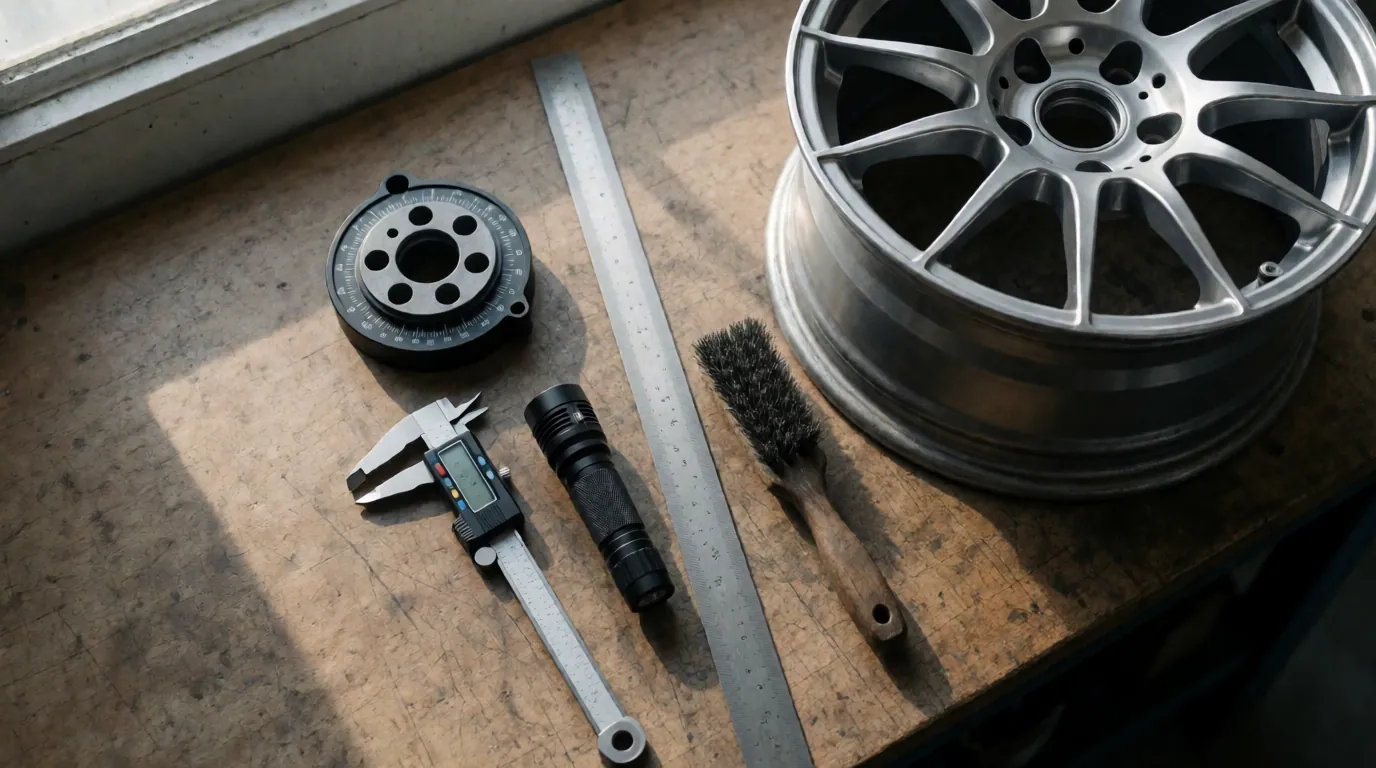
- Digital calipers for hub bore and lug hole measurements.
- A bolt pattern gauge, or a tape measure and the willingness to do the five lug math correctly.
- A bright flashlight, ideally one you can angle across a surface rather than shine straight at it.
- A rag and a small wire brush to clear grime off the bead seat and inner barrel.
- A short straightedge for checking lip runout.
Write down your car's specs before you go: bolt pattern, hub bore, factory offset range, and wheel diameter and width. Trying to recall whether it's 5x114.3 or 5x120 while standing in a salvage yard is how people buy wheels they can't use.
Are Junkyard Wheels Safe?
A structurally sound used wheel is as safe as a new one, because wheels don't have a wear surface that degrades with mileage the way pads, bearings, and bushings do. A rim either has damage or it doesn't. That's what makes salvage a genuinely good way to buy them, and it's different from most other used parts.
The catch is that the damage that matters is concentrated on surfaces you have to deliberately turn the wheel over to see. A yard prices on appearance, so a wheel with a mint face and a cracked inner barrel sits on the rack at the same price as a sound one. Your inspection is the entire quality control step in the transaction.
Two final habits. Have the tire shop balance the wheel before it goes on the car and ask them to tell you how much weight it took; an unusually large amount points to a bend the roll test missed. And when the wheel is mounted with a tire, check that it holds pressure for a week before you trust it on a trip.
For the fitment guarantees you give up when you move away from factory wheels, read the OEM vs aftermarket comparison. For what these wheels typically sell for, see our breakdown of used rims cost.
Browse current listings on the used wheel price index.