Wheels price snapshot
- Low
- $86
- Average
- $215
- High
- $610
Part price guide
Saurabh Kumar
Co-Founder & CTO, Part Price Guide
Built the pricing pipeline that collects and normalizes used OEM part listings from salvage yards and online marketplaces across the US.
Ambika Sharma
Co-Founder & COO, Part Price Guide
12 years of project management and technical operations experience. Reviews price guides for sample size, fitment accuracy, and data freshness.
Part overview
Across 179 vehicle models, the typical used wheels lists for $200, with model-level medians ranging from $86 to $610. Based on 564,783 priced salvage yard listings tracked by PartPriceGuide.
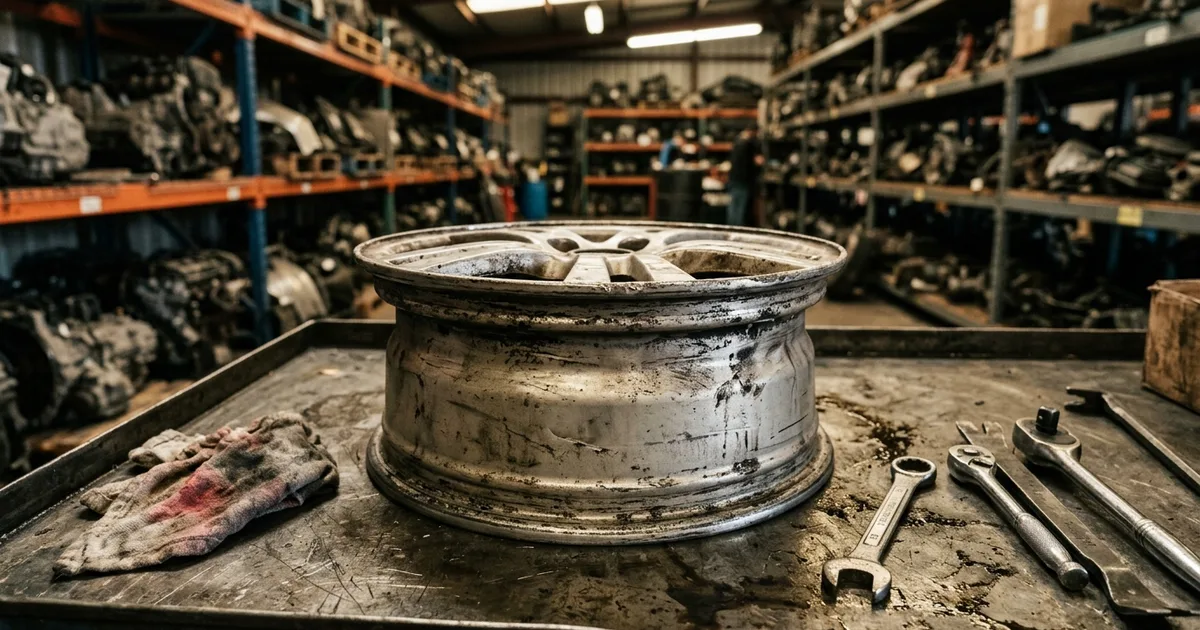
Wheels are metal rims that hold the tires and attach to the vehicle's hub assembly to support the weight of the vehicle.
Commonly replaced after impact with potholes or curbs bends or cracks the rim, causing tire air loss or severe steering vibration.
A used wheels costs $86 to $610, with a median asking price of $200. Based on price data across 179 vehicle-specific guides. Prices exclude shipping, core charges, and installation.
Vehicle-specific reference
179 of 184 guides currently priced
Price data updating
Price data updating
Price data updating
Price data updating
Price data updating
Compare by vehicle
Keep comparing
Common questions
Across 179 vehicle-specific guides with current pricing, used wheels guide medians run from $86 to $610, with a typical median of $200. Condition grade, mileage, and fitment move the price within that range.
Usually, yes. Buying a used wheels from a salvage yard or auto recycler typically costs a fraction of the new wheels replacement cost at a dealership. Compare the grade-level medians above against any replacement quote you've received, and remember our figures exclude shipping and installation labor.
Salvage yards, junkyards, pick-and-pull lots, and online used parts marketplaces all sell used wheelss. Our index tracks asking prices nationally, so you can benchmark a local quote against the market range before you buy.
Expect to pay toward the upper half of the $86–$610 range for a grade-A wheels with low mileage. Check the grade table above for the current grade-level medians, and confirm whether shipping and any core charge are included in the quote.
They can be — condition grade is the key. Grade A parts come off low-mileage vehicles with little to no damage, grade B is average, and grade C or ungraded parts are the gamble. Buy grade A or B from a yard that offers a return window or warranty, and confirm the mileage of the donor vehicle before paying. The grade-level medians above show what each tier should cost.
Yes. A rims is another name for a wheels. Other common names include car rims, truck rims, factory wheels, oem wheels, alloy wheels, wheel rim. The prices on this page apply regardless of what it's called in your region or by your mechanic.
Inspect the inner and outer rim lips for bends, cracks, gouges, or severe curb rash that could prevent a tire from holding air. Check the lug nut seat holes for elongation or ovaling, and inspect the rear mounting face for heavy corrosion or pitting.
You must verify the bolt pattern, rim width, center bore size, and wheel offset stamped on the back of the wheel spokes. Even if two wheels look identical from the front, improper offset or center bore differences will cause brake caliper clearance issues or hub vibration.
Purchasing used OEM wheels is a safe, high-quality alternative to cheap aftermarket replicas, as factory wheels undergo strict structural impact testing. Avoid wheels with structural welds, heavy bends, or deep gouges, but surface scratches can easily be refinished.
Have a tire shop place the used rim on a spin balancer to check for radial or lateral runout without a tire mounted. A bent wheel will wobble visibly up and down or side to side when spun on the balancing machine axle.
Factory original wheels are engineered specifically for your vehicle's load rating, hub fitment, and suspension clearance, using superior metal alloys. Cheap aftermarket rims often use weaker casting processes, bend easily over potholes, and require hub-centric adapter rings.
Used wheels may still have tire pressure monitoring sensors installed, but salvage yards typically sell them as unverified bonus items because sensor battery life cannot be guaranteed. Be prepared to transfer your existing sensors or purchase fresh valve stem sensors when mounting tires.