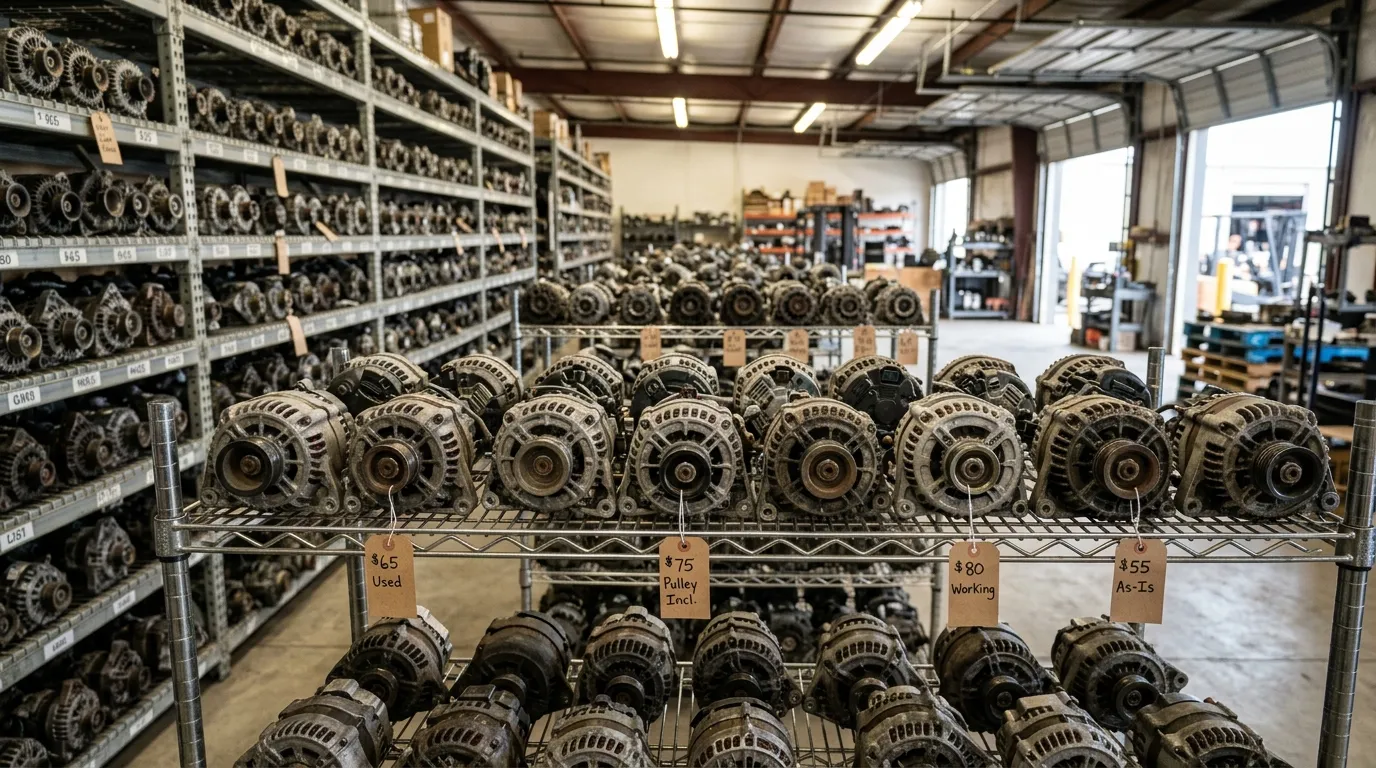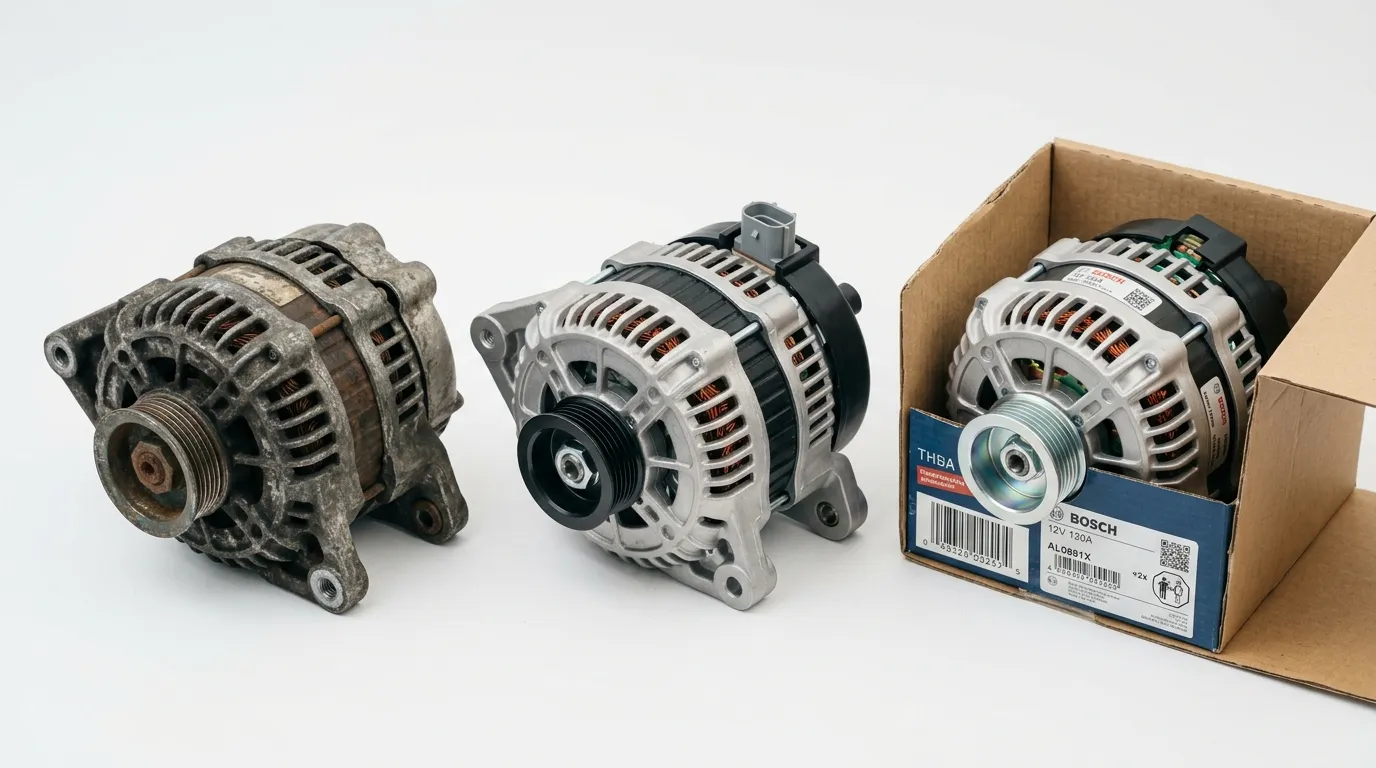
A used alternator costs a median of $96, a remanufactured unit runs about $150, and a new OEM alternator costs $200 to $500. Used saves 40 to 60 percent over reman and 60 to 80 percent over new — but the trade-offs in warranty coverage and remaining lifespan are real and worth quantifying before you buy.
Those used prices come from 12,236 priced salvage yard listings across 45 vehicle models. Reman and new pricing draws from major retailers (AutoZone, O'Reilly, RockAuto) as of August 2026.
- Used median: $96 | Reman: ~$150 | New OEM: $200–$500
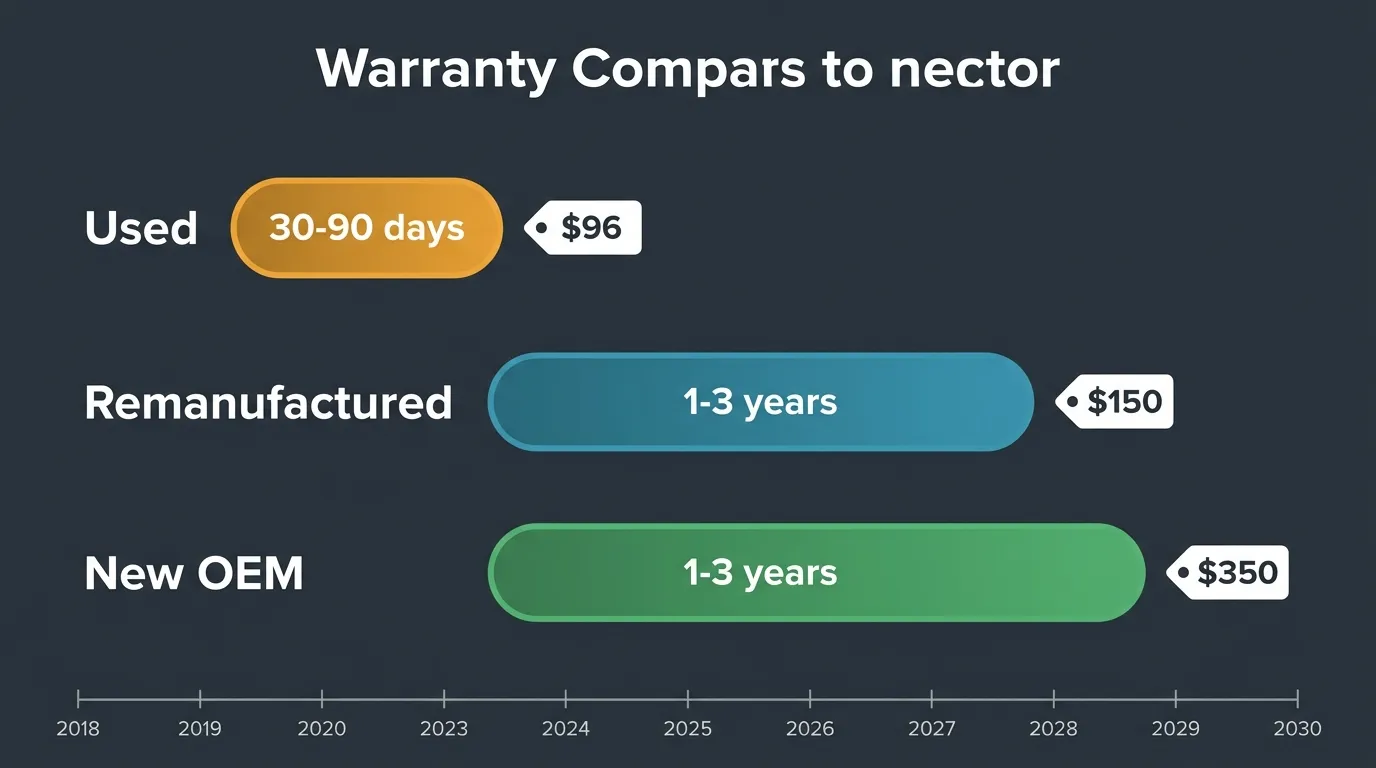
- Used warranty: 30–90 days | Reman: 1–3 years | New: 1–3 years
- Used lifespan: 80k–150k miles | Reman: 100k–200k miles | New: 150k–250k miles
- Best value for vehicles under $8,000: used alternator from a graded yard
- Best value for 100k+ mile plans: remanufactured with lifetime warranty
Price Comparison
Here is the actual cost breakdown across all three options:
| Option | Price Range | Median/Typical | Savings vs New |
|---|---|---|---|
| Used (salvage yard) | $65–$400 | $96 | 60–80% |
| Remanufactured | $100–$250 | ~$150 | 40–60% |
| New OEM | $200–$500 | ~$350 | — |
Where the gap is largest: luxury and specialty models. A Mercedes E-Class alternator costs $400 used, roughly $300 reman, and $600+ new. A Toyota Corolla costs $96 used, $120 reman, and $250 new. The percentage savings from buying used are fairly consistent, but the dollar savings scale with model complexity.
*Source: Used pricing from PartPriceGuide.com analysis of 12,236 listings, August 2026. Reman and new pricing from major auto parts retailers.*
Warranty and Coverage
This is where the three options diverge most:
| Option | Typical Warranty | What It Covers | Return Process |
|---|---|---|---|
| Used | 30–90 days | Defect on arrival | Exchange at the yard |
| Reman | 1–3 years (some lifetime) | Manufacturing defects | Retailer exchange |
| New OEM | 1–3 years | Full manufacturer warranty | Dealer or retailer |
Remanufactured warranties are the strongest value proposition for reman. AutoZone's Duralast Gold line carries a lifetime warranty. O'Reilly's Ultima line offers 3 years. This matters most if the alternator fails — reman warranty replacement is free, while a used alternator failure means buying another one.
New OEM warranties match reman in length but cost 2x to 3x more. Unless the vehicle is under manufacturer warranty and requires OEM parts, reman warranty coverage is functionally identical for less money.
Expected Lifespan
| Option | Expected Remaining Life | Key Factor |
|---|---|---|
| Used | 80,000–150,000 miles | Unknown mileage history |
| Reman | 100,000–200,000 miles | New bearings, brushes, regulator |
| New OEM | 150,000–250,000 miles | All-new components |
Remanufactured units replace the three components most likely to fail: bearings, brushes, and the voltage regulator. The housing, rotor, and stator are retained from the core. This gives reman about 70 to 80 percent of new-alternator lifespan at 40 to 60 percent of the cost.
Total Cost of Ownership
Price per mile is a better comparison than sticker price:
| Option | Price | Expected Life | Cost Per 10k Miles |
|---|---|---|---|
| Used | $96 | 100k mi (midpoint) | $9.60 |
| Reman | $150 | 150k mi (midpoint) | $10.00 |
| New | $350 | 200k mi (midpoint) | $17.50 |
The tiebreaker is risk tolerance. Used alternators have higher variance (could last 80k or 150k), while reman is more predictable. If a failure would strand you or cost significant labor to replace (interference engines, transverse-mounted V6s), the reman's longer warranty justifies the $54 premium.
When to Buy Which
Buy used when:
- Vehicle is worth under $8,000
- The model has high salvage yard supply (500+ listings in our index)
- You can install it yourself (labor cost is zero)
- You need the part today and a local yard has it
Buy remanufactured when:
- You plan to keep the vehicle for 100,000+ more miles
- The alternator is difficult to access (high labor cost makes a repeat job expensive)
- A retailer near you offers a lifetime warranty
- The model is too rare to find used at salvage yards
Buy new OEM when:
- The vehicle is under manufacturer warranty
- You are rebuilding a specialty or collector vehicle
- No reman option exists for your specific application
For most daily drivers, the decision is between used and reman. The alternator price lookup shows how much used costs for your specific model — if it is under $100, used is almost always the better play.