Replacing a blower motor costs $200 to $500 total at an independent shop, depending on part source and vehicle access. A used blower motor runs $76 median across our salvage yard index of over 2,000 priced listings spanning 63 vehicle models, with individual prices ranging from $20 to $391. New aftermarket motors cost $80 to $250, and OEM replacements run $150 to $400. Labor adds $100 to $250 for one to two hours of work.
[INTERNAL-LINK: salvage yard pricing overview -> /blog/price-analysis/how-much-do-junkyards-charge-for-parts]
Before replacing the motor, check the blower motor resistor and fuse. The resistor controls lower fan speeds and fails more often than the motor itself. A resistor swap costs $50 to $150, and a fuse costs nothing if you have a spare in the fuse box. Diagnosing the correct failed component first can save $150 to $400.
- Total replacement cost: $200-$500 with labor and parts at an independent shop
- Used blower motor: $76 median across 63 vehicle models in our salvage yard index ($20-$391 range)
- New aftermarket motor: $80-$250, new OEM: $150-$400
- Labor: $100-$250 for 1-2 hours, with access from behind the glove box or under the dash
- Check the resistor first. Fan works on high only? A $50-$150 resistor fix solves it
- Common symptoms: no airflow, intermittent fan operation, squealing noises from behind the dash
- DIY-friendly repair on most vehicles with basic hand tools
What Blower Motor Replacement Costs
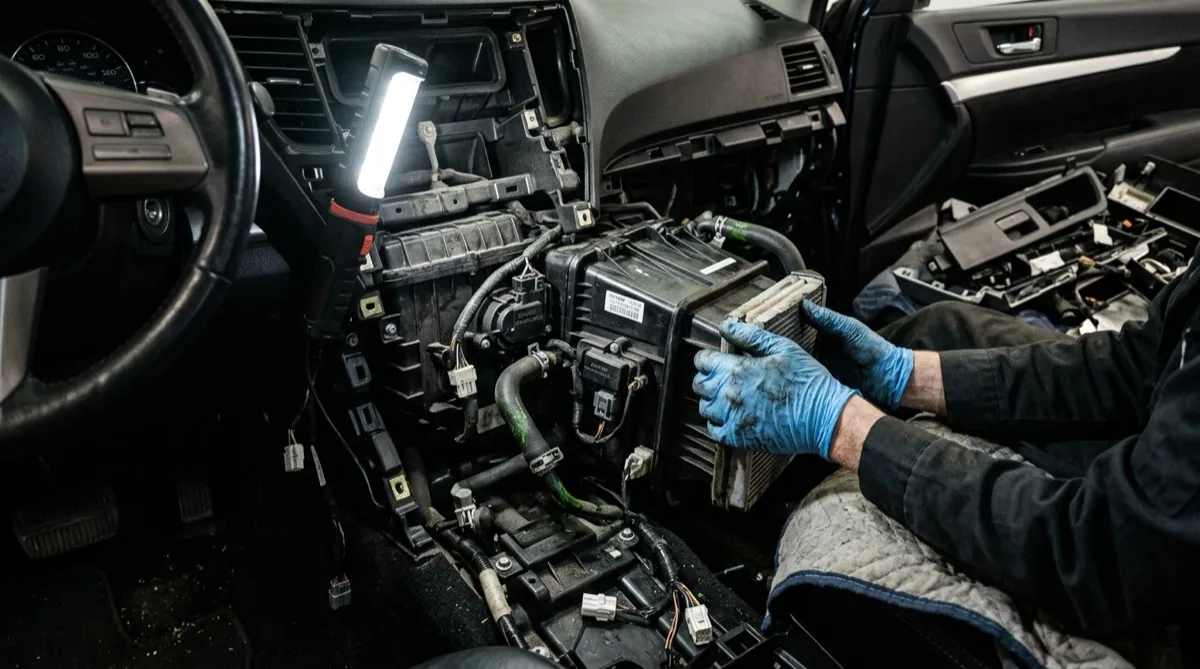
Blower motor replacement has two cost components: the part and the labor. Unlike heater core replacement, which requires pulling the entire dashboard, the blower motor sits in an accessible location on most vehicles. This keeps labor charges lower.
| Cost Component | Used | New Aftermarket | New OEM |
|---|---|---|---|
| Part cost | $20-$391 (median $76) | $80-$250 | $150-$400 |
| Labor (1-2 hrs at $100-$125/hr) | $100-$250 | $100-$250 | $100-$250 |
| Total | $200-$500 | $180-$500 | $250-$650 |
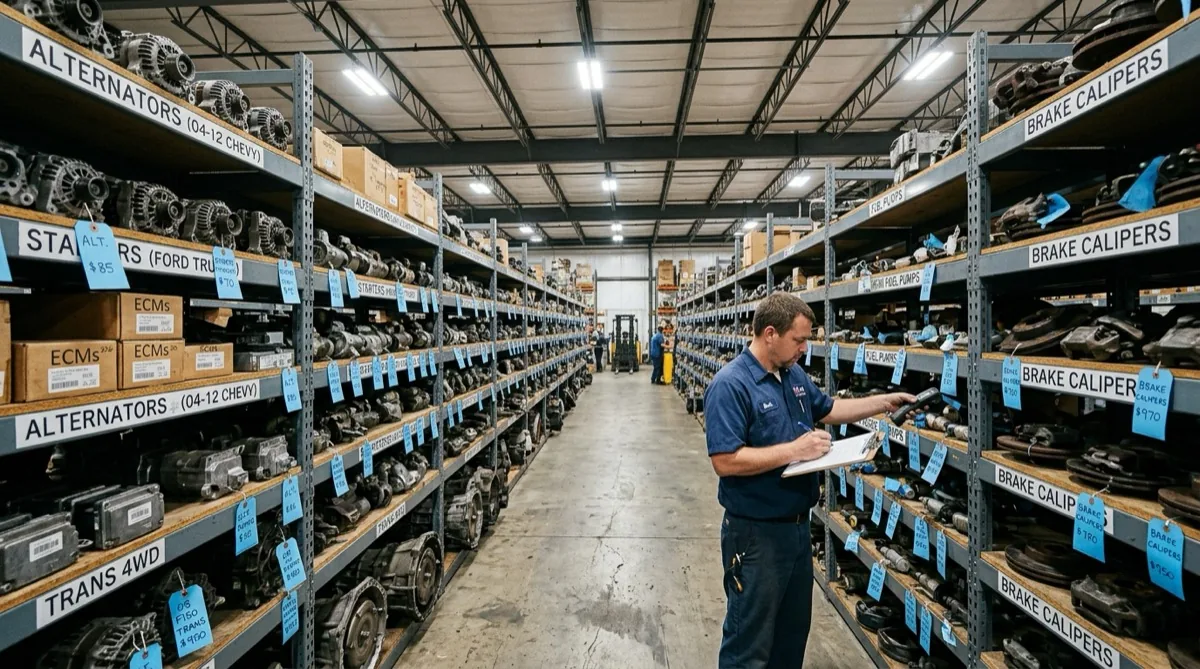
New aftermarket blower motors are widely available and often cost less than used OEM units because the motor design is straightforward. A used part is the better choice when you want the exact manufacturer unit at a lower price, especially for European vehicles where aftermarket options are limited.
For a broader look at salvage yard pricing, see our used auto parts price guide.
*Part pricing source: PartPriceGuide.com analysis of 2,000+ priced salvage yard listings across 63 vehicle models, August 2026.*
Symptoms of a Failing Blower Motor
A failing blower motor gives clear warning signs before it stops entirely. Recognizing these symptoms early lets you plan the repair on your schedule rather than losing heat or air conditioning without warning.
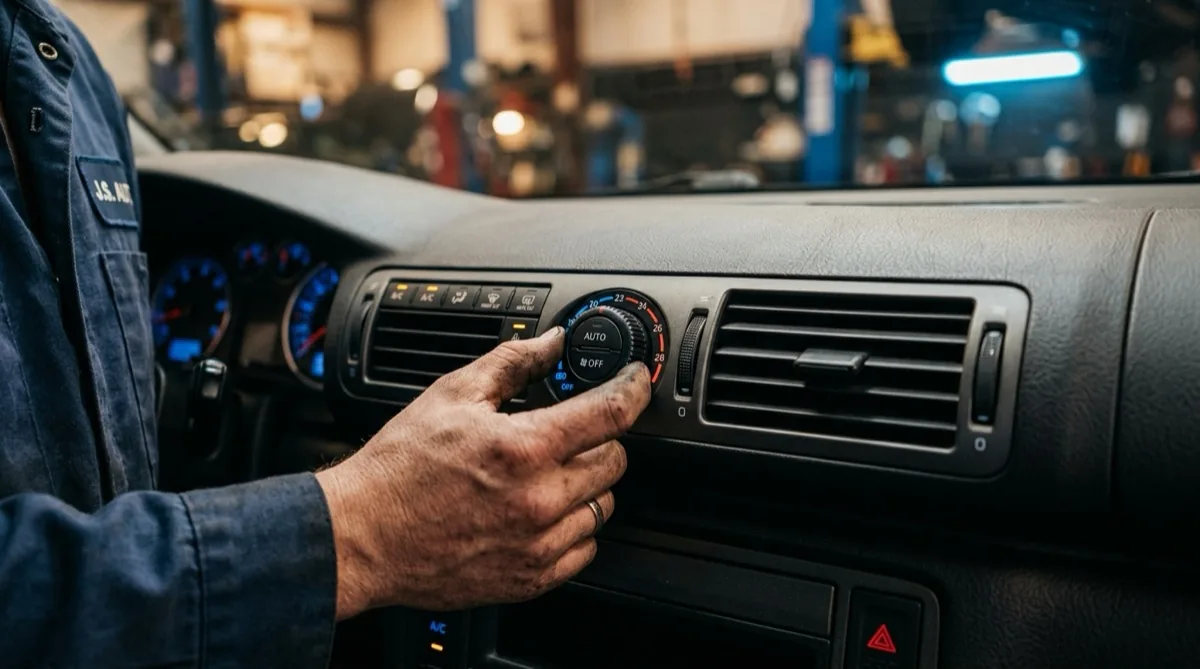
No airflow from any vent on any speed setting. This is the most definitive symptom of a dead motor. The temperature controls still produce warm or cold air at the heater core and evaporator, but without the blower fan spinning, nothing pushes that air into the cabin. Before assuming the motor failed, check the HVAC fuse first. A blown fuse is a free fix.
Intermittent operation. The fan cuts in and out, sometimes working normally and then stopping mid-drive. This often indicates worn motor brushes making inconsistent contact, or a failing electrical connector. Tapping the area near the motor housing sometimes restarts it temporarily, which confirms the motor is the problem.
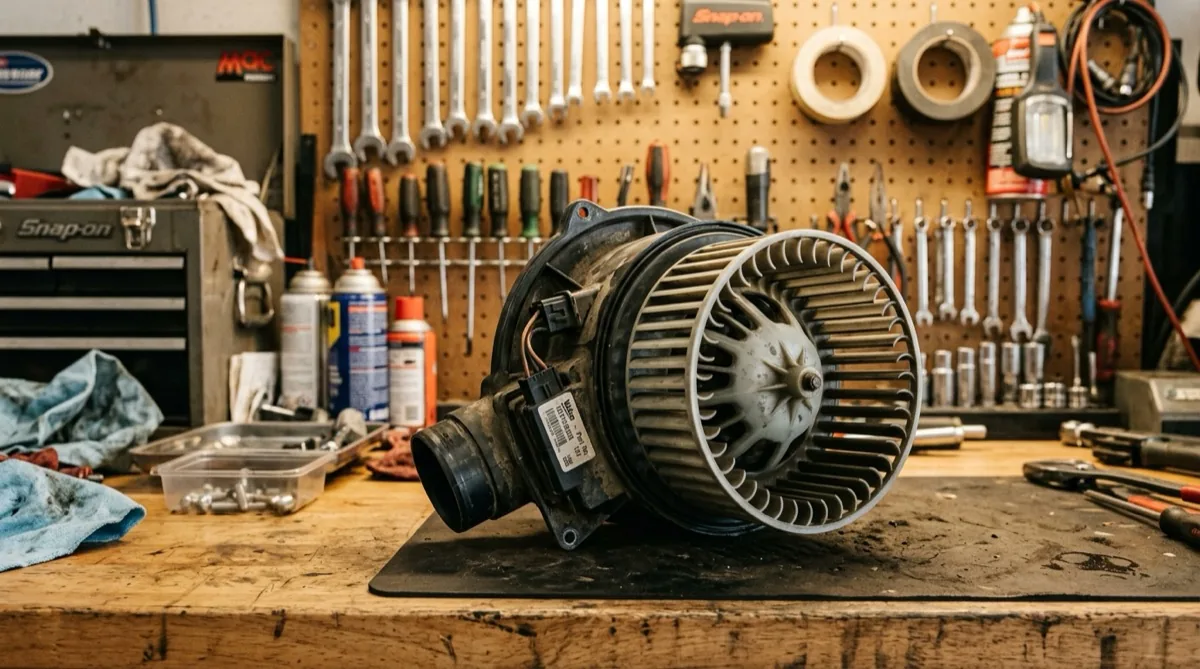
Squealing or grinding from behind the dashboard. Worn bearings produce a high-pitched squeal that rises with fan speed. A grinding noise means the bearing has partially seized and is damaging the motor shaft. Debris like leaves or acorns caught in the fan wheel through the cabin air intake creates a rattling sound instead.
Weak airflow that does not change with the speed dial. A motor with deteriorating brushes or windings may spin but cannot generate enough force to push air through the duct system. Every speed setting produces roughly the same weak output.
Burning smell from the vents. An overworked motor drawing excessive current overheats its windings. Turn off the fan immediately if you smell burning electrical insulation, and inspect the wiring for heat damage before installing a replacement motor.
Fan works only on the highest speed. This specific pattern almost always points to the blower motor resistor, not the motor. See the next section for how to tell them apart.
If your HVAC blows air but it is not cold, the blower motor is working correctly and the problem is elsewhere in the system. Our guide to AC not blowing cold air covers those causes.
Blower Motor Resistor vs Motor Failure
The blower motor resistor is a separate component that controls fan speed by regulating voltage to the motor. It is the most commonly misdiagnosed part in blower complaints, and replacing it costs a fraction of a full motor swap.
Resistor failure symptoms: the fan works on the highest speed only. Lower speed settings produce no response. This happens because the resistor uses wire coils or a transistor circuit to reduce voltage at each lower speed setting. When it burns out, only the direct full-voltage circuit for high speed remains functional.
Motor failure symptoms: no airflow on any speed, or airflow accompanied by grinding, squealing, or intermittent cutouts.
| Diagnosis | Likely Part | Part Cost | Labor | Total |
|---|---|---|---|---|
| Fan works on high only | Resistor | $15-$50 | $50-$100 | $50-$150 |
| Fan works on high only (electronic) | Control module | $50-$150 | $50-$100 | $100-$250 |
| No fan on any speed | Motor | $20-$391 | $100-$250 | $200-$500 |
| Fan makes grinding/squealing noise | Motor | $20-$391 | $100-$250 | $200-$500 |
Some newer vehicles use an electronic blower motor control module instead of a traditional wire-wound resistor. These modules cost $50 to $150 and serve the same function. The diagnostic logic is identical: fan works only on high means the module or resistor has failed, not the motor.
If the heater core is producing insufficient heat on top of fan issues, the blower motor is only one piece of the puzzle. See our heater core replacement cost guide for that repair.
Cost by Popular Model
Part prices below are the median used blower motor price from our salvage yard listing index. Labor estimates assume independent shop rates of $100 to $125 per hour.
| Vehicle | Used Part (Median) | Listings | Labor | Estimated Total |
|---|---|---|---|---|
| Nissan Altima | $65 | 84 | $100-$180 | $165-$245 |
| Ford F-150 | $75 | 37 | $100-$200 | $175-$275 |
| Toyota RAV4 | $75 | 550 | $100-$180 | $175-$255 |
| Toyota Camry | $76 | 202 | $100-$180 | $176-$256 |
| Honda Civic | $76 | 50 | $100-$180 | $176-$256 |
| Ford Escape | $76 | 134 | $100-$200 | $176-$276 |
| Jeep Grand Cherokee | $76 | 91 | $110-$220 | $186-$296 |
| Ram 1500 | $76 | 226 | $100-$200 | $176-$276 |
| Mercedes C-Class | $96 | 105 | $130-$260 | $226-$356 |
| Chevy Silverado 1500 | $105 | 436 | $100-$200 | $205-$305 |
| Honda Accord | $106 | 125 | $100-$180 | $206-$286 |
| BMW X5 | $190 | 145 | $150-$300 | $340-$490 |
European vehicles sit at the top of the price range. BMW and Mercedes blower motors are larger units with integrated electronics in some models, which increases both the part cost and the complexity of the swap.
Check current pricing for your exact year and model on our blower motor price lookup.
Labor and Access Points
Labor cost for blower motor replacement depends on where the motor is mounted. There are two common locations, and the difference in access can swing the labor bill by 30 to 45 minutes.
Behind the glove box
Most Japanese and Korean vehicles (Honda Civic, Toyota Camry, Hyundai Sonata, Kia Forte) mount the blower motor behind the glove box on the passenger side. Access involves dropping the glove box door, which either swings down past its stops or comes off entirely with two to four screws. The motor is then directly visible with its electrical connector and mounting fasteners exposed.
This is the faster configuration. A shop can complete the swap in 45 minutes to one hour, keeping labor at the lower end of the $100 to $180 range.
Under the dashboard or in the HVAC housing
American trucks and SUVs (Ford F-150, Chevy Silverado, Ram 1500, Jeep Grand Cherokee) often mount the motor higher in the HVAC housing, accessible from under the passenger-side dashboard. This requires working in a cramped position, sometimes removing additional trim panels, ductwork, or the lower dash panel for clearance.
This configuration adds 30 to 45 minutes of labor. Trucks with full-size HVAC systems (dual-zone or rear AC) may have a second blower motor for the rear, which is a separate unit with its own cost.
Dual-zone and rear AC systems
Vehicles with rear air conditioning (minivans like the Honda Odyssey and Toyota Sienna, and full-size SUVs like the Chevy Tahoe and Ford Expedition) have a second blower motor mounted in the rear HVAC unit. If the rear blower fails, the replacement cost is similar to the front motor, but access varies. Some rear motors are accessible from behind a side panel in the cargo area, while others require partial headliner or pillar trim removal.
Can You Replace a Blower Motor Yourself?
Blower motor replacement is one of the more accessible DIY automotive jobs. The motor location avoids coolant, refrigerant, and safety-critical systems, making the risk of causing additional damage low.
Tools you need: a socket set or nut driver (usually 7mm or 8mm for the mounting screws), a Phillips screwdriver, and a trim panel removal tool if the glove box has retaining clips. No specialized automotive tools are required.
The procedure: Remove the glove box or lower dash trim to expose the motor housing. Unplug the electrical connector. Remove three to four screws holding the motor to the HVAC housing. Pull the old motor straight out, insert the replacement, reinstall the screws, reconnect the connector, and test on all fan speeds.
Budget one to two hours for a first attempt. Experienced DIYers finish in 30 to 45 minutes. The most time-consuming step is usually getting the glove box or trim panels off, not the motor swap itself.
Before installing, test the replacement. If you sourced a used motor from a salvage yard, connect the electrical connector before mounting it and turn the fan on briefly to verify it spins on all speeds. A used motor that has been sitting may have a stuck bearing that was not obvious when you tested it by hand.
Replace the cabin air filter at the same time. A clogged filter forces the motor to work harder, which shortens its lifespan. A new filter costs $10 to $25 and takes two minutes to install. If a restricted filter contributed to the motor failure, skipping the filter replacement puts the new motor at risk.
Doing the work yourself saves the entire $100 to $250 labor charge, bringing the total cost down to just the part price.