Lexus RX drive shaft price snapshot
- Low
- $70
- Average
- $231
- High
- $584
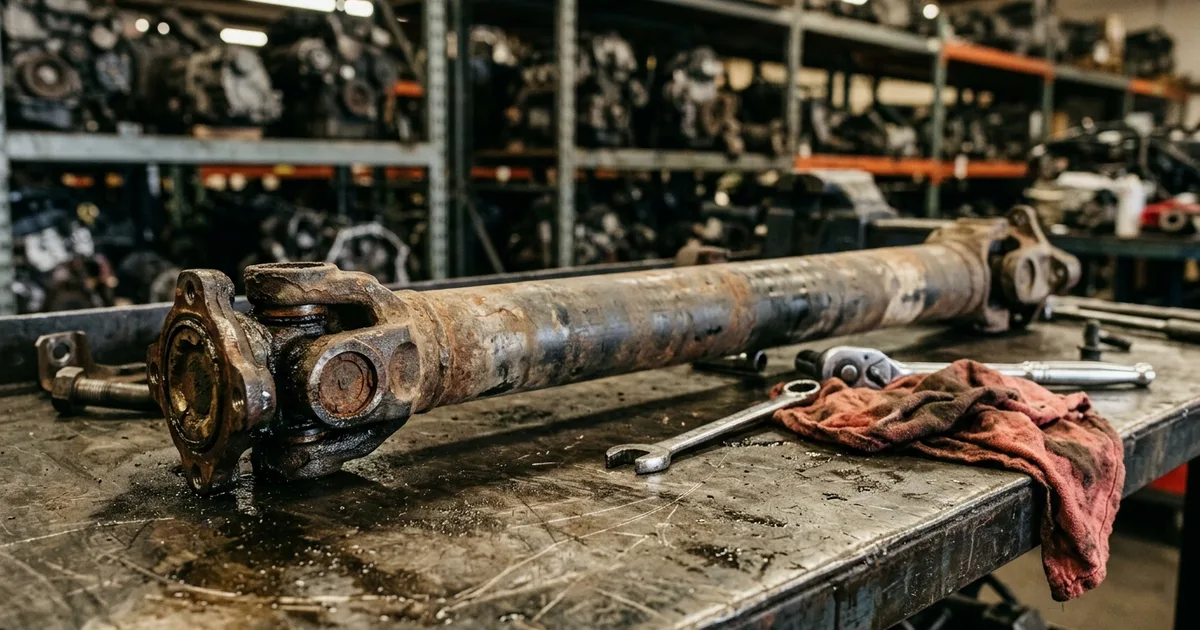
Vehicle-specific price guide
Saurabh Kumar
Co-Founder & CTO, Part Price Guide
Built the pricing pipeline that collects and normalizes used OEM part listings from salvage yards and online marketplaces across the US.
Ambika Sharma
Co-Founder & COO, Part Price Guide
12 years of project management and technical operations experience. Reviews price guides for sample size, fitment accuracy, and data freshness.
Part overview
What the drive shaft does, common failure signs, and prices across all vehicles: used drive shaft price guide →
A used Lexus RX drive shaft costs $70 to $584, with a median asking price of $215. Based on 374 priced salvage yard listings across the US, compatible across 2015–2025 (11 model years), updated Sep 23, 2026. Prices exclude shipping, core charges, and installation.
Condition comparison
| Grade | Price range | Relative range | Listings |
|---|---|---|---|
| Grade AClean / low wear | $70–$552 | 333 | |
| Grade BStandard used | $125–$300 | 24 | |
| Grade CVisible wear | $100–$100 | 1 | |
| Grade XUngraded | $75–$584 | 16 |
Median by grade
Median asking price by seller-reported condition grade · $70–$584 overall range
Regional supply
We found priced Lexus RX drive shaft listings at 141 salvage yards across 25 states. California supplies the most, with 80 listings (21% of the total) from 26 yards. Location matters: yards in Indiana ask a median $140, while Michigan yards ask $245, 75% more for the same part. Shipping usually costs less than that gap for smaller parts, so it can pay to buy out of state.
| State | Listings | Yards | Median ask |
|---|---|---|---|
| California | 80 | 26 | $200-7% |
| Michigan | 35 | 11 | $245+14% |
| Illinois | 32 | 13 | $227+6% |
| Texas | 24 | 10 | $201-7% |
| Wisconsin | 20 | 5 | $156-27% |
| Colorado | 20 | 3 | $204-5% |
| Indiana | 19 | 8 | $140-35% |
| North Carolina | 18 | 9 | $235+9% |
States with at least 10 priced listings. % is versus the $215 national median.
Replacement cost
Labor is a typical independent-shop range for drive shaft replacement, not a quote for your vehicle. The part price is the live median from the salvage-yard listings on this page. Full drive shaft replacement cost breakdown
Model-year comparison
Market analysis
Asking prices for a used Lexus RX drive shaft are unusually spread out: the top listing asks about 8 times what the cheapest does, so which unit you pick matters more than the median. Condition matters: grade-A units (lowest mileage, best condition) carry roughly a 117% premium over grade-C stock, with grade-A medians at $217.
Model year matters too: 2015 units carry the lowest median at $150, while 2023 tops the table at $300. Year-level pages linked in the table above break each one down by grade and variant.
Against comparable vehicles, the Lexus RX sits 13% above the Ram 1500 ($190), 6% below the Chevy Silverado 1500 ($228), and 12% below the GMC Sierra 1500 ($243) for the same part. The “similar vehicles” cards below open each comparison guide.
Keep browsing this vehicle

Price comparisons
Compare fitments
Price data updating
Common questions
The median asking price is $215 across 374 priced listings from 141 yards. Grade-A units, the cleanest stock, have a median of $217. 2015 is the cheapest model year we track, with a median of $150.
Using a used part, a Lexus RX drive shaft replacement typically runs $310–$665 all-in: the median used drive shaft for this model lists at $215, and independent-shop labor for drive shaft replacement typically takes 1–3 hours at $95–$150/hr ($95–$450). Labor is a national part-level estimate, not a quote for your vehicle.
This guide currently has year-level pricing for 2025, 2024, 2023, 2022, 2021, 2020, 2019, 2018, 2017, 2016, 2015. Other model years contribute to the overall range where sellers listed them without a year breakdown.
Salvage-yard interchange data links Lexus RX drive shaft fitments across 2015, 2016, 2017, 2018, 2019, 2020, 2021, 2022, 2023, 2024, 2025. Searching all 11 years widens the pool of units; confirm the part number against your VIN, since trim or drivetrain can split an interchange group.