Drive Shaft price snapshot
- Low
- $65
- Average
- $224
- High
- $1,000
Part price guide
Saurabh Kumar
Co-Founder & CTO, Part Price Guide
Built the pricing pipeline that collects and normalizes used OEM part listings from salvage yards and online marketplaces across the US.
Ambika Sharma
Co-Founder & COO, Part Price Guide
12 years of project management and technical operations experience. Reviews price guides for sample size, fitment accuracy, and data freshness.
Part overview
Across 156 vehicle models, the typical used drive shaft lists for $197, with model-level medians ranging from $65 to $1,000. Based on 212,462 priced salvage yard listings tracked by PartPriceGuide.
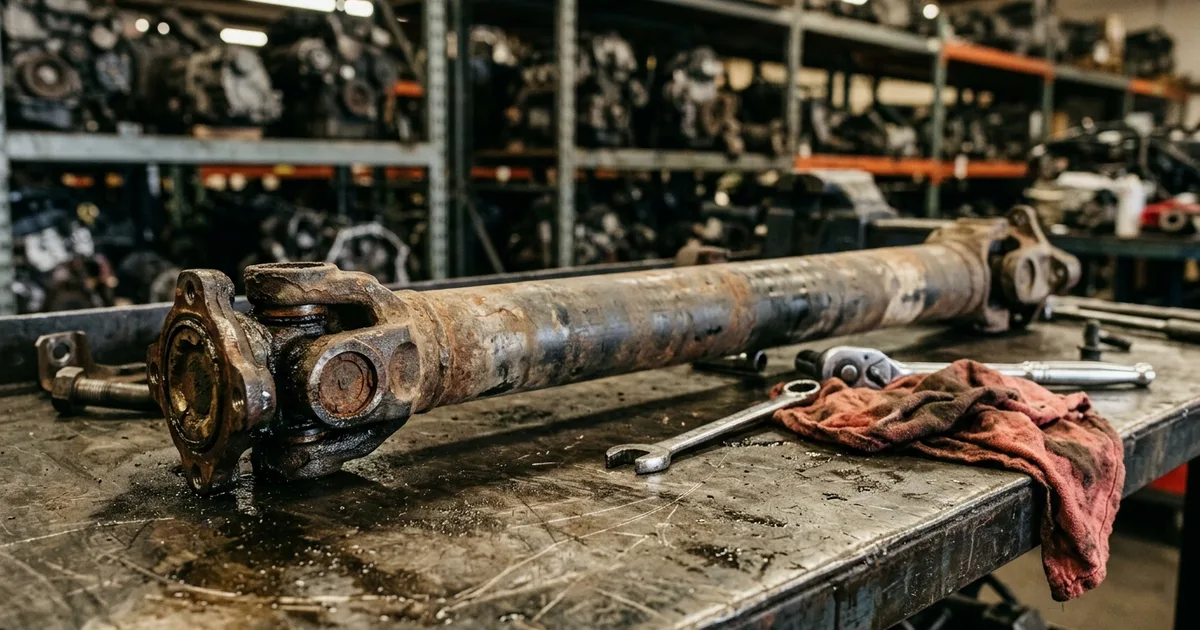
The drive shaft is a rotating tube that transmits mechanical torque from the transmission or transfer case to the differential.
Replaced when worn universal or velocity joints cause clunking during gear selection or heavy chassis vibration under acceleration.
A used drive shaft costs $65 to $1,000, with a median asking price of $197. Based on price data across 156 vehicle-specific guides. Prices exclude shipping, core charges, and installation.
Condition comparison
| Grade | Price range | Relative range | Listings |
|---|---|---|---|
| Grade AClean / low wear | $65–$1,000 | 164 | |
| Grade BStandard used | $100–$540 | 154 | |
| Grade CVisible wear | $60–$465 | 87 | |
| Grade XUngraded | $65–$1,050 | 153 |
Median by grade
Median asking price by seller-reported condition grade · $65–$1,000 overall range
Vehicle-specific reference
156 of 184 guides currently priced
Price data updating
Price data updating
Price data updating
Price data updating
Price data updating
Price data updating
Price data updating
Price data updating
Price data updating
Price data updating
Price data updating
Price data updating
Price data updating
Price data updating
Price data updating
Price data updating
Price data updating
Price data updating
Price data updating
Price data updating
Price data updating
Price data updating
Price data updating
Price data updating
Price data updating
Price data updating
Price data updating
Price data updating
Compare by vehicle
Keep comparing
Common questions
Across 156 vehicle-specific guides with current pricing, used drive shaft guide medians run from $65 to $1,000, with a typical median of $197. Condition grade, mileage, and fitment move the price within that range.
Usually, yes. Buying a used drive shaft from a salvage yard or auto recycler typically costs a fraction of the new drive shaft replacement cost at a dealership. Compare the grade-level medians above against any replacement quote you've received, and remember our figures exclude shipping and installation labor.
Salvage yards, junkyards, pick-and-pull lots, and online used parts marketplaces all sell used drive shafts. Our index tracks asking prices nationally, so you can benchmark a local quote against the market range before you buy.
Expect to pay toward the upper half of the $65–$1,000 range for a grade-A drive shaft with low mileage. Check the grade table above for the current grade-level medians, and confirm whether shipping and any core charge are included in the quote.
They can be — condition grade is the key. Grade A parts come off low-mileage vehicles with little to no damage, grade B is average, and grade C or ungraded parts are the gamble. Buy grade A or B from a yard that offers a return window or warranty, and confirm the mileage of the donor vehicle before paying. The grade-level medians above show what each tier should cost.
Yes. A driveshaft is another name for a drive shaft. Other common names include propeller shaft, prop shaft. The prices on this page apply regardless of what it's called in your region or by your mechanic.
No — a drive shaft (propeller shaft) is the long tube that carries power from the transmission or transfer case back to the differential on rear- or four-wheel-drive vehicles. An axle shaft carries power the final distance from the differential (or transaxle) out to the wheel itself. They connect to different ends of the drivetrain and rarely share the same length, diameter, or joint type, so a used drive shaft won't substitute for an axle shaft or vice versa.
Check the main tube for dents, bends, deep rust, or missing balance weights that could cause high-speed driveline vibration. Examine the universal joints and slip splines for loose play, binding, or rusty needle bearings, and check rubber flex discs for deep cracks.
A failing driveshaft causes intense floorboard vibrations that increase with vehicle speed, as well as clunking noises when shifting gears or accelerating from a stop. Squeaking or clicking sounds usually signal dry, worn-out universal joint bearings that are about to fail.
Driveshaft compatibility depends heavily on wheelbase length, transmission type, cab configuration, and engine option, so you must measure overall length precisely. Even small differences in transmission tail housing design or differential flange style can make a used shaft unmountable.
Buying a used driveshaft from a low-mileage salvage vehicle is a safe and reliable repair strategy, provided the U-joints turn smoothly. Installing new universal joints and center support bearings onto a sound used steel or aluminum shaft restores full factory performance.
Used factory driveshafts are balanced from the manufacturer and usually do not need rebalancing unless a balance weight was knocked off or the shaft suffered impact damage. If you experience high-speed vibration after installation, take the assembly to a driveline shop for a quick balance check.
Vibrations after installing a used shaft are typically caused by worn universal joints, improper phase alignment of a two-piece shaft, or a missing counterweight. Ensure the transmission output shaft and differential companion flanges are clean and seated evenly during installation.