Rear View Mirror price snapshot
- Low
- $31
- Average
- $113
- High
- $854
Part price guide
Saurabh Kumar
Co-Founder & CTO, Part Price Guide
Built the pricing pipeline that collects and normalizes used OEM part listings from salvage yards and online marketplaces across the US.
Ambika Sharma
Co-Founder & COO, Part Price Guide
12 years of project management and technical operations experience. Reviews price guides for sample size, fitment accuracy, and data freshness.
Part overview
Across 179 vehicle models, the typical used rear view mirror lists for $103, with model-level medians ranging from $31 to $854. Based on 171,193 priced salvage yard listings tracked by PartPriceGuide.
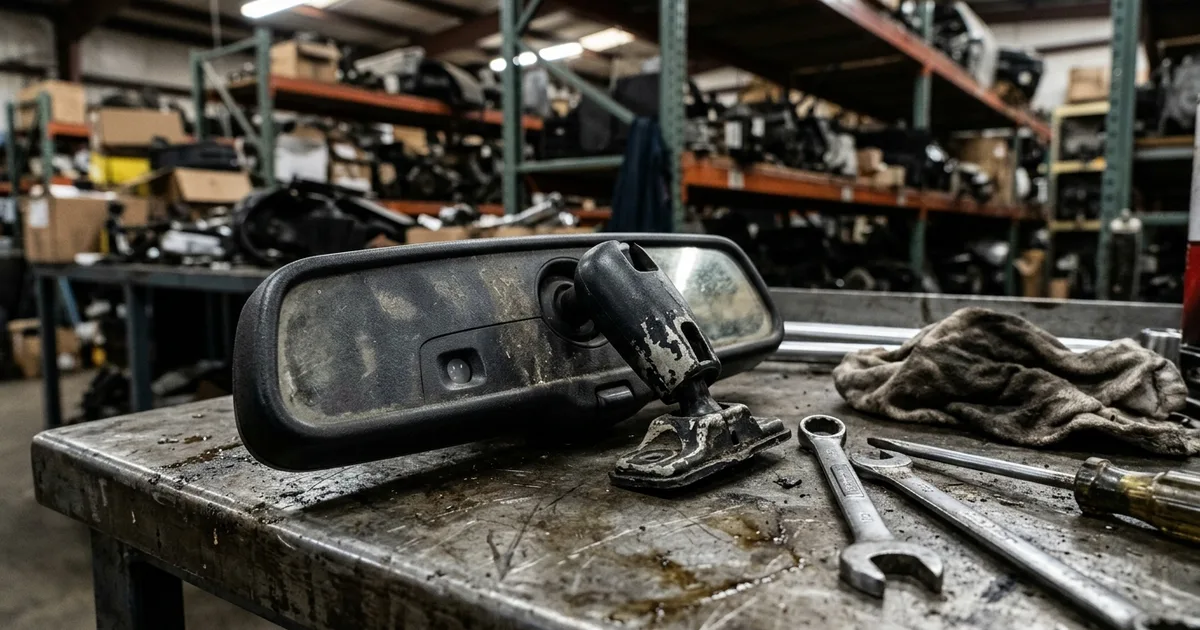
The rear view mirror is an interior windshield-mounted mirror providing the driver visibility of traffic directly behind the vehicle.
Replaced when auto-dimming fluid leaks and stains the glass, mounting joints become loose, or mirror glass cracks.
A used rear view mirror costs $31 to $854, with a median asking price of $103. Based on price data across 179 vehicle-specific guides. Prices exclude shipping, core charges, and installation.
Condition comparison
| Grade | Price range | Relative range | Listings |
|---|---|---|---|
| Grade AClean / low wear | $31–$250 | 179 | |
| Grade BStandard used | $31–$912 | 179 | |
| Grade CVisible wear | $30–$221 | 116 | |
| Grade XUngraded | $30–$219 | 177 |
Median by grade
Median asking price by seller-reported condition grade · $31–$854 overall range
Vehicle-specific reference
179 of 184 guides currently priced
Price data updating
Price data updating
Price data updating
Price data updating
Price data updating
Compare by vehicle
Keep comparing
Common questions
Across 179 vehicle-specific guides with current pricing, used rear view mirror guide medians run from $31 to $854, with a typical median of $103. Condition grade, mileage, and fitment move the price within that range.
Usually, yes. Buying a used rear view mirror from a salvage yard or auto recycler typically costs a fraction of the new rear view mirror replacement cost at a dealership. Compare the grade-level medians above against any replacement quote you've received, and remember our figures exclude shipping and installation labor.
Salvage yards, junkyards, pick-and-pull lots, and online used parts marketplaces all sell used rear view mirrors. Our index tracks asking prices nationally, so you can benchmark a local quote against the market range before you buy.
Expect to pay toward the upper half of the $31–$854 range for a grade-A rear view mirror with low mileage. Check the grade table above for the current grade-level medians, and confirm whether shipping and any core charge are included in the quote.
They can be — condition grade is the key. Grade A parts come off low-mileage vehicles with little to no damage, grade B is average, and grade C or ungraded parts are the gamble. Buy grade A or B from a yard that offers a return window or warranty, and confirm the mileage of the donor vehicle before paying. The grade-level medians above show what each tier should cost.
Yes. A rearview mirror is another name for a rear view mirror. The prices on this page apply regardless of what it's called in your region or by your mechanic.
The rear view mirror is the single mirror mounted to the windshield or headliner inside the cabin, giving the driver a view out the back window. Side mirrors (also called door mirrors) are mounted externally on each front door and give a view down each side of the vehicle. They're mounted, wired (if power or heated), and priced completely differently — confirm which one you actually need before buying a used replacement.
Buying a used rear view mirror is an inexpensive way to replace cracked glass, loose swivel joints, or leaking auto-dimming electrochromic fluid. High-end salvage mirrors equipped with built-in compasses, garage door openers, or backup camera displays offer substantial savings over new dealership replacement assemblies. Installation is fast and requires minimal tools.
Inspect the glass mirror surface for dark discoloration, chemical spotting, or glass delamination along the edges. Check the mounting wedge bracket and ball swivel joint to ensure the mirror stays firmly in position without drooping. For powered auto-dimming or compass mirrors, inspect the wiring connector pins for corrosion.
Auto-dimming mirrors contain an internal electrochromic gel layer that darkens when electric voltage is applied to eliminate headlight glare. Over time, heat exposure can cause the internal seals to fail, resulting in a dark bubble, rainbow distortion, or leaking fluid down the dashboard. Replacing the mirror unit with a salvage part resolves the vision defect.
While basic manual tab mirrors often share universal windshield button mounts, modern mirrors with integrated rain sensors, cameras, or auto-dimming features are model-specific. Pin configurations on electrical plugs differ significantly between car lines and option packages. Verify windshield mount style and electrical socket shape before purchasing.
You can upgrade a manual mirror to a used auto-dimming mirror if your vehicle's headliner harness includes the necessary ignition power and ground wires. If factory wiring is absent, you will need to run custom 12-volt accessory power to the mirror harness. Make sure to source the mating electrical pigtail connector along with the mirror.
To remove the mirror, loosen the hidden Torx set screw or gently depress the release spring tab at the base mounting wedge using a small screwdriver. Slide the mirror assembly upward parallel to the glass rather than pulling outward, which can shatter the windshield. Reattach the replacement mirror to the original metal windshield button.